Shop on Lazada
Pinkfong products
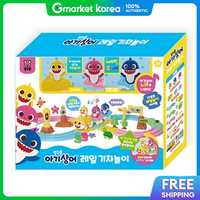
PINKFONG | Pinkfong Baby Shark Rail Train Play
₱2,890.08₱4,113.00
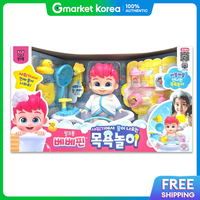
PINKFONG | Bebepin Bath Toy with Water Coming Out of the Shower.
₱2,721.03₱4,124.11
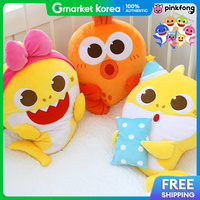
PINKFONG | Shark Family Baby Shark Plush Nap Line Cushion 3 Types 40cm
₱1,109.75₱1,658.24
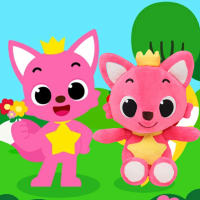
NEW Pinkfong Hogi Plush doll 30cm Official Korean Animation Soft Toy for kids Stuffed Toy 30cm
₱753.00₱1,506.00
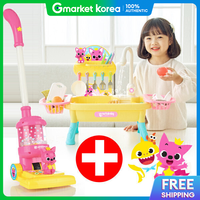
PINKFONG | Pinkfong Vacuum Cleaner + Pinkfong Dishwashing Play Sink 1+1
₱4,860.87₱7,263.37
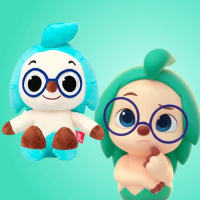
Pinkfong Hogi Doki Plush Toy Cute Stuffed Animal Gift for Kids 30cm
₱773.11₱1,546.21
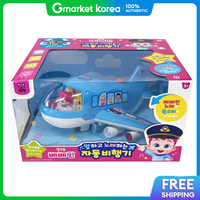
PINKFONG | Pinkfong Bebefinn Talking and Singing Automatic Airplane
₱1,638.18₱2,483.32
Pinkfong Hogi Doki Plush Toy Cute Stuffed Animal Gift for Kids 30cm
₱780.05₱1,552.30
About Pinkfong
Pinkfong is a South Korean children’s entertainment and educational brand owned by The Pinkfong Company. It is widely recognised for its colourful animated characters, nursery rhymes, original songs, stories, mobile applications, games, and interactive experiences.1 The brand achieved global prominence through its rendition of “Baby Shark,” a viral phenomenon that transformed Pinkfong from a digital content provider into an international family entertainment franchise.1
The Pinkfong Company currently describes itself as a global entertainment firm with a portfolio that includes Pinkfong, Baby Shark, Bebefinn, and Wonderstar.1 Its operations extend beyond video production to encompass animated series, live events, interactive games, mobile apps, merchandise, and licensing.1
Overview
| Attribute | Information |
|---|---|
| Brand | Pinkfong |
| Korean name | 핑크퐁 |
| Type | Children’s entertainment / educational brand |
| Founded | 2010 |
| Origin | South Korea |
| Headquarters of parent company | Seoul, South Korea |
| Owner | The Pinkfong Company |
| Parent company formerly known as | SmartStudy / Smart Books Media |
| Main audience | Children and families, particularly preschool-age audiences |
| Best known for | “Baby Shark” and Pinkfong children’s songs |
| Main character | Pinkfong, a pink fox-like character |
| Major formats | YouTube videos, music, animation, apps, books, toys, live shows, TV, films and merchandise |
| Global reach | Worldwide |
History
Foundation
Pinkfong traces its origins to June 2010, when the entity now known as The Pinkfong Company was established in South Korea under the name SmartStudy.2 The company’s early business model focused on children’s educational content and digital products, with a particular emphasis on mobile applications.2
Founded by former game developers, SmartStudy adopted a digital-first approach to children’s education. Rather than relying on traditional books or television broadcasting, the company developed short-form songs, stories, games, and interactive learning experiences optimised for smartphones and digital platforms.2 Pinkfong subsequently emerged as the company’s flagship children’s brand.
Development of the Pinkfong character
The brand is anchored by Pinkfong, a stylised pink fox-like character associated with the fictional planet Staria. This character serves as the primary visual identity for the company’s children’s content.3
Pinkfong videos typically combine several distinct elements:
- Bright, highly saturated animation
- Simple melodies
- Repetitive lyrics
- Dancing and physical movements
- Educational concepts
- Animal and nature themes
- Numbers, letters, and vocabulary
- Stories and imaginative adventures
This format proved particularly effective for young audiences consuming content via mobile devices and YouTube.
“Baby Shark” and global breakthrough
The production of “Baby Shark” marked a significant turning point for the brand. The Pinkfong version was released digitally in 2015, followed by the upload of the “Baby Shark Dance” video to YouTube in June 2016.2 The song features a simple, repetitive structure accompanied by hand motions, facilitating easy imitation by young children.2
While “Baby Shark” is based on a traditional campfire song, Pinkfong created a distinctive arrangement, choreography, visual presentation, and recording.2 After gaining initial popularity in parts of Asia, the song experienced a massive viral surge in 2018, becoming a worldwide phenomenon that crossed over from children’s entertainment into mainstream pop culture.
YouTube phenomenon
“Baby Shark Dance” eventually became the most-viewed video in YouTube history, surpassing Despacito in November 2020.2 The Pinkfong Company continues to cite this achievement, noting that the broader Pinkfong channel has become one of the world’s leading digital content channels for children.1
The song’s success spawned an extensive franchise comprising:
- Music releases and albums
- Streaming content
- Television series and animated films
- Toys, books, and clothing
- Games and licensed consumer products
- Live performances
- Theme and location-based experiences
In May 2026, The Pinkfong Company announced that “Baby Shark” had surpassed 1 billion streams on Spotify, indicating the property’s significant reach beyond video platforms.1
The Pinkfong Company
Pinkfong functions as a brand rather than a corporate entity. The parent company, originally known as SmartStudy, officially rebranded as The Pinkfong Company in January 2022.1 This change reflected a strategic shift from a focus on children’s educational content to a broader family entertainment strategy.1
The company now develops entertainment across multiple formats and intellectual properties, with a stated mission to connect people globally through joyful content and entertaining experiences.1
Brand universe
Pinkfong has expanded into a larger universe comprising multiple characters and franchises.
Pinkfong
The flagship character is a cheerful pink fox-like figure associated with curiosity, adventure, and positivity. Pinkfong serves as the host and central figure for much of the brand’s music and storytelling.3
Baby Shark
Baby Shark is arguably the most internationally recognisable property associated with the brand. The franchise features Baby Shark and his family, expanding the original nursery song into a broader fictional world.
Wonderstar
Pinkfong Wonderstar extends the universe into an animated storytelling setting featuring Pinkfong and friends.
Bebefinn
Bebefinn is another major property developed by The Pinkfong Company, centring on a young child and family-oriented everyday experiences and songs. The company regards Pinkfong, Baby Shark, and Bebefinn as its principal brands.1
Other properties
The current portfolio also includes Super Rescue Team, Dinolings, SEALOOK, and Kikipuppup, demonstrating the business’s evolution from a single character to a diverse IP portfolio.3
Content and educational philosophy
Pinkfong’s content operates at the intersection of education and entertainment, often described as “edutainment.” Rather than using conventional classroom formats, educational concepts are embedded within music, movement, and storytelling.
Common subjects include:
- Alphabet and phonics
- Numbers and counting
- Colours and shapes
- Animals and dinosaurs
- Nature and transportation
- Daily routines and hygiene
- Social skills and family relationships
- Basic English and vocabulary
- Traditional nursery rhyme concepts
The company’s mobile applications are designed to combine singing, playing, and learning. According to The Pinkfong Company, its app series has reached number one in sales rankings across 112 countries.1
YouTube
YouTube has been central to Pinkfong’s global expansion. The company utilises the platform as a primary distribution channel rather than merely an advertising venue. The Pinkfong channel hosts thousands of songs and stories, including nursery rhymes, original songs, dance videos, educational content, character stories, compilations, holiday specials, and language-learning material.1
This digital-first distribution model allowed Pinkfong to reach international audiences without first establishing traditional television distribution in each market.
Television and film
Following its online success, Pinkfong expanded into conventional screen entertainment. A key example is Baby Shark’s Big Show!, an animated television series developed in partnership with Nickelodeon Animation. The company has also produced feature-length content and other animated programming.1
This expansion represents an evolution in the business model, treating characters as entertainment IP capable of supporting multiple formats rather than solely as subjects of YouTube nursery rhymes.
Music
Music forms the foundation of the Pinkfong brand. Songs are generally designed around specific characteristics:
- Repetition: Lyrics and melodies are deliberately easy to remember.
- Movement: Many songs incorporate hand gestures or dances.
- Short formats: Tracks are designed for quick consumption and repeated playback.
- Simple vocabulary: Language is accessible to preschool-age children.
- Strong visual identity: Animation reinforces lyrical content.
This formula contributed to the memorability of songs such as “Baby Shark.” The brand has also released numerous albums and tracks covering themes including animals, dinosaurs, holidays, transportation, and educational subjects.
Merchandise and licensing
Pinkfong has developed a substantial licensing and merchandise business. Intellectual properties have been translated into products including plush toys, dolls, figures, books, clothing, educational toys, games, food and beverage products, children’s accessories, and audio products.1
This creates a media-franchise ecosystem where content leads to characters, audience engagement, licensing, merchandise, experiences, and further content generation. While similar to strategies used by major children’s entertainment companies, Pinkfong’s growth was notably driven by online video.
Live entertainment
The company produces live performances and family events that combine music, dancing, characters, storytelling, and audience participation. The live-event business ranges from musical productions to activations at shopping malls and other physical locations.1 These events provide opportunities for children to interact with characters originally encountered through digital platforms.
Global expansion
Although originating in South Korea, Pinkfong’s content is designed for international audiences. The brand’s strategy relies on universal themes, simple melodies, visual storytelling, repetition, translation, localisation, multilingual content, and digital distribution.1
Consequently, Pinkfong has achieved recognition in markets far outside South Korea. The company’s operations and partnerships span international markets, and it identifies as a global family entertainment company.1
Corporate evolution
Pinkfong’s development can be categorised into several stages:
| Period | Development |
|---|---|
| 2010 | SmartStudy established in South Korea |
| Early 2010s | Focus on children’s educational apps and digital content |
| 2010s | Pinkfong develops into a major children’s brand |
| 2015 | Pinkfong releases its version of “Baby Shark” |
| 2016 | “Baby Shark Dance” appears on YouTube |
| 2018 | “Baby Shark” becomes a worldwide viral phenomenon |
| 2019–2021 | Expansion into television, licensing and broader entertainment |
| 2022 | SmartStudy renamed The Pinkfong Company |
| 2020s | Expansion into animation, films, live events, merchandise and additional IP |
| 2026 | “Baby Shark” surpasses 1 billion Spotify streams |
The 2022 name change signifies a strategic transition from a company primarily associated with children’s education to a global family entertainment and IP company.1
Cultural impact
Pinkfong’s cultural significance lies in demonstrating how children’s content can achieve global pop culture status through digital platforms. “Baby Shark” gained recognition among teenagers, adults, celebrities, sports fans, and families worldwide, extending well beyond its target demographic.
The song’s choreography encouraged active participation rather than passive viewing, creating a form of participatory children’s media where viewers became performers.
Factors in success
Several factors explain Pinkfong’s success:
Digital-first strategy
The business developed during the rise of smartphones, apps, and YouTube, rather than relying entirely on traditional children’s television.
Extremely simple songs
The music is designed to be easily remembered and repeated by very young children.
Strong visual branding
The distinctive pink character and bright animation make videos immediately recognisable.
Localisation
Core concepts such as animals, families, numbers, colours, dancing, and nursery rhymes translate easily between cultures.
Repeat viewing
Preschool children frequently watch the same content repeatedly; Pinkfong’s short, repetitive videos suit this behaviour.
Characters as intellectual property
Characters are reused across videos, television, apps, books, toys, live events, and licensing.
“Baby Shark” as a gateway
The extraordinary popularity of “Baby Shark” introduced millions of families to the wider Pinkfong ecosystem.
Place in children’s entertainment
Pinkfong is now understood as a global children’s entertainment franchise rather than simply a YouTube channel. Its ecosystem encompasses music, YouTube, apps, animation, television, films, books, toys, merchandise, licensing, live events, and family experiences.1
The Pinkfong Company explicitly describes its business as spanning original animated shows, live tours, interactive games, merchandise, and other formats.1 This positions Pinkfong within a broader shift in children’s entertainment where characters originating in digital video develop into global multimedia franchises.
Legacy
Pinkfong’s legacy is closely tied to “Baby Shark,” one of the most successful children’s songs and internet videos ever produced. However, the brand has evolved beyond this single property into a growing portfolio of characters and entertainment assets, expanding from educational apps into a global family entertainment business.
As of 2026, the ecosystem includes Pinkfong, Baby Shark, Bebefinn, and numerous other IPs, with content distributed through video, music, apps, television, films, live entertainment, and consumer products.1 Pinkfong stands as a South Korean-born global children’s entertainment brand whose rise illustrates the power of combining music, animation, educational content, character IP, and digital distribution.