Shop on Lazada
Plantronics products
![[TOP SELLER] Original Plantronics Poly Voyager Focus UC B825 Bluetooth Headset w/ BT600/BT700 USB-A Adapter - Active Noise Cancelling Mic | Wireless Call Center / BPO Wireless Headset | Bluetooth Headset | Work From Home Headset (Refurbished) Good as New](https://filebroker-cdn.lazada.com.ph/kf/S5b7f18573e36434fa18cd0bc6ea89c9cc.jpg_200x200q80.jpg)
[TOP SELLER] Original Plantronics Poly Voyager Focus UC B825 Bluetooth Headset w/ BT600/BT700 USB-A Adapter - Active Noise Cancelling Mic | Wireless Call Center / BPO Wireless Headset | Bluetooth Headset | Work From Home Headset (Refurbished) Good as New
₱6,599.00₱18,000.00
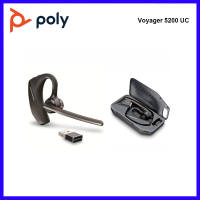
Original Plantronics Voyager 5200 UC Bluetooth Earphone Noise Reduction Sport Headphone
₱7,590.00₱11,999.00
![[TOP SELLER] Original Plantronics Poly Voyager Focus 2 Bluetooth Headset for UC Apps - Active Noise Cancelling Mic | Wireless Call Center / BPO Wireless Headset | Bluetooth Headset | Work From Home Headset (Refurbished) Good as New](https://filebroker-cdn.lazada.com.ph/kf/S9dd548b5d8014127acca11574a08368bV.jpg_200x200q80.jpg)
[TOP SELLER] Original Plantronics Poly Voyager Focus 2 Bluetooth Headset for UC Apps - Active Noise Cancelling Mic | Wireless Call Center / BPO Wireless Headset | Bluetooth Headset | Work From Home Headset (Refurbished) Good as New
₱7,899.00₱25,000.00
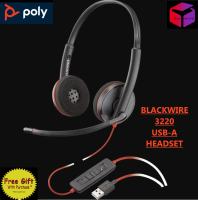
POLY BLACKWIRE C3220 USB-C/A NOISE CANCELLING HEADSET
₱1,988.00₱3,600.00
![[TOP SELLER] Original Plantronics Poly Blackwire C3220 Wired Headset USB-A | USB-C Plantronics Noise Cancelling | Best Wired Call Center Headset | Best BPO Wired Headset | Work From Home Headset | Noise Reduction Headset (Refurbished) Good as new](https://filebroker-cdn.lazada.com.ph/kf/S9499e833604d49f78d8cd32e1bbe82bbW.jpg_200x200q80.jpg)
[TOP SELLER] Original Plantronics Poly Blackwire C3220 Wired Headset USB-A | USB-C Plantronics Noise Cancelling | Best Wired Call Center Headset | Best BPO Wired Headset | Work From Home Headset | Noise Reduction Headset (Refurbished) Good as new
₱1,599.00₱5,500.00

Plantronics Voyager 5200 UC Bluetooth headset noise reduction business office dedicated
₱8,185.00₱12,154.00
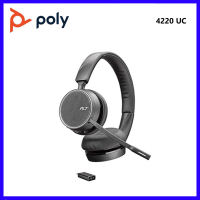
Original Plantronics Voyager 4220 UC USB-A Stereo Wireless Bluetooth Headset
₱7,990.00₱10,999.00
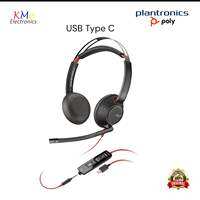
Original Plantronics Poly Blackwire C5220 USB-A Wired Headset Dual-Ear Headset w/ Mic - USB-A 3.5 mm to connect to PC Mac and/or Cell Phone - Plantronics Noise Cancelling (Refurbished) | Best Wired / Corded Call Center Headset | Work From Home Headset
₱1,899.00₱7,000.00
About Plantronics
Plantronics is an American communications and audio-technology brand best known for professional headsets, telephone headsets, wireless communication devices, and business collaboration equipment. Founded in 1961, the company became particularly influential in the development of lightweight headsets for aviation and telecommunications. Over time, Plantronics expanded from telephone headsets into wireless audio, unified communications, conference-room systems, and enterprise collaboration technology.
Today, Plantronics is no longer an independent company. Its former parent company, Plantronics, Inc., acquired Polycom in 2018, adopted Poly as its market-facing name in 2019, and was subsequently acquired by HP Inc. in August 2022. HP now markets the resulting collaboration portfolio primarily under the HP Poly brand. HP itself describes HP Poly as its collaboration-technology brand and its current products as the successors to the former Plantronics and Polycom portfolios.1 In the Philippines, HP officially positions these solutions as “HP Poly Video & Voice Solutions – Formerly Polycom & Plantronics”.2
Quick facts
| Field | Information |
|---|---|
| Brand | Plantronics |
| Original company | Plantronics, Inc. |
| Founded | 1961 |
| Origin | United States |
| Historical headquarters | Santa Cruz, California |
| Industry | Audio, telecommunications, communications technology |
| Best known for | Headsets and professional communications equipment |
| Major expansion | Enterprise communications and unified communications |
| Polycom acquisition | 2018 |
| Market name changed to Poly | 2019 |
| Acquired by HP | 2022 |
| Current corporate owner | HP Inc. |
| Current related brand | HP Poly |
| Current product areas | Headsets, video conferencing, phones, cameras, collaboration software and services |
The original company was incorporated as Plantronics in 1961 and became publicly traded in 1994. Its legal corporate name remained Plantronics, Inc. even after the company began marketing itself as Poly in 2019.3
Origins
Plantronics was founded in 1961 in the United States at a time when communications equipment was dominated by relatively large and cumbersome telephone technology.
The company’s original focus was the development of lightweight communications headsets. This was particularly important in aviation, where pilots and air-traffic personnel needed to communicate clearly while keeping their hands available for other tasks.
Plantronics consequently became associated with a basic idea that would define the company for decades:
Making professional communication easier, clearer, and more practical through head-worn audio technology.
Rather than positioning itself primarily as a traditional consumer headphone company, Plantronics developed a strong identity around communication.
That distinction is important. A Plantronics headset was historically designed less around listening to music and more around:
- telephone conversations
- aviation communications
- call centers
- office telephony
- customer service
- business communications
- conference calls
- professional voice communication
The NASA connection
One of the most recognizable chapters in Plantronics’ history is its association with NASA’s space program.
Plantronics headsets became associated with NASA during the early era of human spaceflight. The company is particularly famous for the communications headset used during the Apollo 11 mission.
This helped establish an extremely strong reputation for the brand: if a headset could be trusted for critical communications in spaceflight, the technology had an obvious credibility advantage in professional communications.
The NASA association therefore became an important part of Plantronics’ historical identity and marketing story. It also reflects the company’s fundamental specialization: reliable voice communication in demanding environments.
Expansion into telecommunications
After establishing itself in specialized communications, Plantronics increasingly moved into the much larger telecommunications and business markets.
Its products became common in environments such as:
- corporate offices
- call centers
- customer-service departments
- reception desks
- telecommunications operations
- aviation
- government
- professional services
The company developed both corded and wireless headsets, allowing employees to communicate while keeping their hands free. This was particularly useful in call-center environments, where employees could spend many hours on the telephone. Plantronics consequently became one of the recognizable names in business headsets.
From telephone headsets to wireless audio
As telecommunications technology changed, Plantronics expanded beyond traditional wired telephone headsets.
The company developed products using technologies such as:
- Bluetooth
- DECT
- USB
- wireless digital communication
- noise cancellation
- microphone noise reduction
- computer-based communications
This allowed Plantronics to participate in the transition from the traditional office telephone to the modern computer-based workplace.
A Plantronics headset could increasingly be connected to:
- a desk phone
- a PC
- a smartphone
- a tablet
- a video-conferencing system
This evolution was crucial because workplace communication was gradually moving from dedicated telephones toward software such as Skype, Microsoft Teams, Zoom, and other unified-communications platforms.
Consumer products
Although Plantronics became particularly famous in business communications, it also entered the consumer market.
Its consumer products included:
- Bluetooth headsets
- wireless headphones
- earbuds
- gaming headsets
- mobile-phone headsets
- portable audio products
The company therefore developed two somewhat different identities.
Professional Plantronics
Focused on:
- telephone calls
- office communication
- call centers
- enterprise IT
- unified communications
- professional reliability
Consumer Plantronics
Focused more on:
- music
- smartphones
- wireless listening
- gaming
- everyday communication
This combination allowed Plantronics to become recognizable to both businesses and ordinary consumers.
Acquisition of Polycom
One of the biggest turning points in the company’s history occurred in 2018.
Plantronics acquired Polycom, a major company known for conference phones, video-conferencing systems, voice technology, and enterprise collaboration.
The acquisition was completed on July 2, 2018, for approximately $2.2 billion in cash and stock.2
This was strategically important because it transformed Plantronics from primarily a headset company into a much broader communications and collaboration company.
Before the acquisition, Plantronics was particularly strong in personal audio and headsets.
Polycom brought expertise in areas such as:
- conference-room phones
- video conferencing
- business telephony
- microphones
- cameras
- collaboration systems
- enterprise communications
The combined portfolio could therefore cover both ends of a communication system:
Individual user → headset → desk phone → meeting room → video conference → enterprise collaboration platform
The transition from Plantronics to Poly
Following the Polycom acquisition, the company decided that the name Plantronics no longer fully represented the breadth of its business.
In March 2019, the company changed the name under which it marketed itself to Poly.
Importantly, this did not mean that the legal corporate entity instantly became a completely different company. The corporation remained incorporated as Plantronics, Inc., while Poly became its market-facing identity.3
This is why you may encounter all three names in historical documentation:
Plantronics → Plantronics + Polycom → Poly
The company’s stock ticker also changed from PLT to POLY in May 2021.4
What was Poly?
The Poly brand essentially represented the combination of two major communications companies:
Plantronics
- headsets
- personal audio
- business communications
- wireless communications
Polycom
- conference phones
- video conferencing
- business phones
- room collaboration
Together, they produced a much broader enterprise communications portfolio.
The company’s products included headsets, desktop phones, conference-room equipment, video endpoints, cameras, microphones, software, and services.5
Acquisition by HP
The next major transformation came in 2022, when HP Inc. announced that it would acquire Poly.
HP announced the transaction on March 28, 2022, valuing Poly at approximately $3.3 billion including net debt, or $40 per share in cash.6
The acquisition was completed on August 29, 2022. Poly subsequently became part of HP.
This was a logical strategic combination.
HP was already a major PC and workplace-technology company, while Poly provided:
- headsets
- video-conferencing equipment
- professional audio
- business phones
- collaboration software
- meeting-room technology
HP could therefore combine its computers, peripherals, security and IT-management capabilities with Poly’s communications technology.
Plantronics today
This is the most important distinction if you’re researching the brand in 2026:
Plantronics is historically important, but it is no longer an independent company.
The corporate lineage is approximately:
Plantronics (1961)
↓
Plantronics acquires Polycom (2018)
↓
Marketed as Poly (2019)
↓
Poly acquired by HP (2022)
↓
HP Poly
HP currently describes HP Poly as its collaboration-technology brand. Its portfolio includes headsets, video-conferencing systems, phones, cameras, software and services. HP’s current site explicitly describes the business as being formerly associated with Polycom and Plantronics.7
HP’s support infrastructure also currently identifies the “Plantronics series” under the HP Poly brand.8
So if you see a modern product associated with the old Plantronics lineage, it will generally be branded Poly or HP Poly, rather than being marketed as a new standalone Plantronics company.
Major product categories
Historically and currently, the Plantronics/Poly lineage covers a surprisingly broad range of communications products.
Headsets
This remains the core of Plantronics’ historical identity.
Product types include:
- wired headsets
- Bluetooth headsets
- wireless office headsets
- DECT headsets
- USB headsets
- call-center headsets
- gaming headsets
- mobile headsets
- earbuds
Modern HP Poly headsets include technologies such as active noise cancellation, microphone noise reduction, Bluetooth connectivity and USB connectivity.9
Business phones
The Poly side of the business also produces:
- IP phones
- SIP phones
- conference phones
- desk phones
- speakerphones
Video conferencing
This has become one of the most important parts of the modern portfolio.
Products include:
- conference cameras
- video bars
- meeting-room systems
- microphones
- room-control equipment
Collaboration software
The company also developed software and services for:
- device management
- analytics
- remote administration
- conferencing
- enterprise collaboration
HP currently positions these technologies as part of an integrated collaboration ecosystem.10
Major technologies associated with Plantronics
Plantronics’ technological identity has historically centered around voice communication rather than audiophile music reproduction.
Important areas include:
Noise cancellation
Plantronics developed technologies designed to reduce environmental noise and improve speech intelligibility.
Microphone noise reduction
This is particularly important in offices and call centers, where the goal is not simply to make the user hear better, but to make the other person hear the user clearly.
Wireless communication
Bluetooth and DECT allowed workers to move around while remaining connected.
Unified communications
Plantronics increasingly designed equipment for computer-based communications platforms rather than only traditional telephones.
Device integration
Modern Poly products are designed to work with major collaboration platforms, including Microsoft Teams, Zoom and Google Meet.11
Brand reputation
Plantronics historically developed a reputation around several characteristics:
Reliability
Professional headsets were expected to operate for long periods in demanding business environments.
Voice quality
The company concentrated heavily on speech clarity and microphone performance.
Comfort
Call-center and office users could wear a headset for hours, making ergonomics particularly important.
Professional use
The brand became strongly associated with offices, call centers, aviation and telecommunications.
Innovation in communications
Rather than competing exclusively with consumer headphone companies on music quality, Plantronics focused on the problem of human communication.
This positioning distinguished it from brands whose primary identity was hi-fi music or lifestyle audio.
Plantronics vs. consumer headphone brands
It is useful to understand that Plantronics was never exactly the same type of company as Bose, Sony or Sennheiser.
A simplified comparison would be:
| Brand tradition | Primary emphasis |
|---|---|
| Plantronics | Communication and professional headsets |
| Polycom | Business voice/video conferencing |
| Bose | Consumer/professional audio and noise cancellation |
| Sony | Consumer electronics and audio |
| Sennheiser | Professional and consumer audio |
| Jabra | Communication headsets + consumer audio |
Plantronics’ historical competitive advantage was especially strong when voice communication was the primary requirement.
Important product families
Some historically significant Plantronics product families include:
Voyager
The Voyager family became one of Plantronics’ best-known Bluetooth headset lines. It was particularly associated with mobile professionals and business users.
Blackwire
Blackwire became associated with USB-connected wired computer headsets, especially for office and unified-communications applications.
Savi
Savi represented wireless professional office headsets, particularly systems designed to connect to multiple communication devices.
BackBeat
BackBeat was more consumer-oriented, covering wireless headphones and sports/lifestyle audio.
RIG
The RIG brand was associated with gaming headsets.
Many of these product families illustrate the transition from traditional telephone communications toward computers, smartphones and modern collaboration platforms.
Plantronics and the modern hybrid workplace
The company’s historical evolution makes more sense when viewed against the changing workplace.
1960s–1980s
Telephone and aviation communication
↓
1990s
Corporate headsets and call centers
↓
2000s
Mobile phones + Bluetooth
↓
2010s
PC communications + unified communications
↓
2018
Plantronics + Polycom
↓
2019
Poly
↓
2022
HP acquisition
↓
2020s
Hybrid work + AI-enhanced audio/video + collaboration platforms
HP’s current HP Poly portfolio reflects this final stage, combining headsets, video conferencing, phones, software and meeting-room solutions.12
Corporate timeline
| Year | Event |
|---|---|
| 1961 | Plantronics founded |
| 1960s | Becomes associated with professional communications and aviation |
| 1994 | Plantronics becomes a public company |
| 2000s | Expands heavily into Bluetooth, wireless and computer communications |
| 2010s | Expands into consumer and enterprise wireless audio |
| 2018 | Acquires Polycom for about $2.2 billion |
| 2019 | Begins marketing itself as Poly |
| 2021 | NYSE ticker changes from PLT to POLY |
| 2022 | HP announces acquisition of Poly |
| August 29, 2022 | HP completes Poly acquisition |
| 2020s–2026 | Portfolio develops under HP Poly |
The historical dates for the company’s founding, public listing, Polycom acquisition and rebranding are documented in Plantronics/Poly’s SEC filings, while HP confirms the completion of the acquisition in August 2022.13
What happened to the Plantronics name?
This is a common source of confusion.
Plantronics did not simply disappear because its technology disappeared.
Instead, its corporate history went through several stages:
Plantronics → Poly → HP Poly
The original Plantronics technology and product heritage became part of the larger Poly portfolio, which then became part of HP.
That is why HP’s current website can simultaneously refer to “formerly Polycom & Plantronics” while selling products under the HP Poly identity.7
HP also still maintains support and store pages that can be reached through searches for Plantronics, but the current products shown there are largely HP Poly products.14
Overall significance
Plantronics is significant in technology history because it helped turn the headset from a specialized communications accessory into a fundamental workplace device.
Its importance isn’t primarily that it created consumer headphones. Rather, it helped establish the modern idea that a worker could have a lightweight personal communications device that:
- keeps the hands free
- provides clear two-way communication
- connects wirelessly
- suppresses surrounding noise
- connects to computers and phones
- integrates with enterprise communications systems
The acquisition of Polycom then extended that concept from the individual user to the entire meeting room.
Finally, HP’s acquisition connected the communications portfolio to the broader PC and workplace-technology ecosystem.
Summary
Plantronics is a historic American communications-technology brand founded in 1961, famous for professional headsets and its role in aviation and telecommunications, which expanded through the acquisition of Polycom, became marketed as Poly in 2019, and was acquired by HP in 2022; its technology and product heritage now primarily live on under the HP Poly brand.15
The simplest way to remember the history
Plantronics = the headset heritage
Polycom = the conference/video heritage
Poly = the combined company
HP Poly = the current HP-owned collaboration business
References
- Document
- HP Poly Video & Voice Solutions – Formerly Polycom & Plantronics | HP® Philippines
- plt-20210403
- SEC
- poly-20220702
- SEC
- HP Poly Video & Voice Solutions – Formerly Polycom & Plantronics | HP® Official Site
- Plantronics series – Specifications & Accessories | HP® Support
- Plantronics Headsets | HP® Store
- HP Poly Video & Voice Solutions – Formerly Polycom & Plantronics | HP® Official Site
- HP Poly Video & Voice Solutions – Formerly Polycom & Plantronics | HP® Official Site
- Plantronics series – Specifications & Accessories | HP® Support
- Plantronics series – Specifications & Accessories | HP® Support
- sec.gov
- The History And Evolution of Poly | HP® Tech Takes