Shop on Lazada
Pokémon products
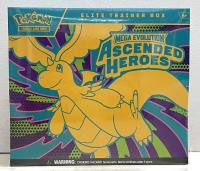
Pokemon TCG Mega Evolution Ascended Heroes Elite Trainer Box
₱12,080.00
Buy on Lazada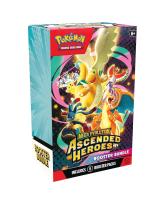
Pokemon TCG Mega Evolution - Ascended Heroes Booster Bundle (6 Packs)
₱6,830.00
Buy on Lazada
Pokemon TCG Scarlet & Violet Black Bolt and White Flare Booster Bundle (6 Packs) (Set of 2)
₱16,280.00
Buy on Lazada
Pokemon TCG Scarlet & Violet Prismatic Evolutions Elite Trainer Box
₱12,600.00
Buy on Lazada
Pokemon TCG Mega Evolution HALF Booster Box (18 Packs)
₱9,980.00
Buy on Lazada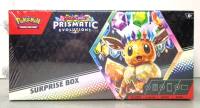
Pokemon TCG Scarlet & Violet Prismatic Evolutions Surprise Box
₱5,460.00
Buy on Lazada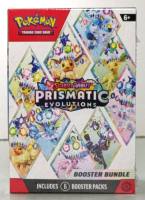
Pokemon TCG Scarlet & Violet Prismatic Evolutions Booster Bundle (6 Packs)
₱7,140.00
Buy on Lazada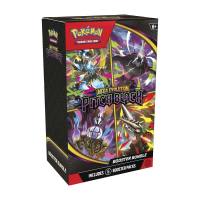
Pokemon TCG Mega Evolution - Pitch Black Booster Bundle (6 Packs)
₱2,630.00
Buy on LazadaAbout Pokémon
Pokémon (Japanese: ポケットモンスター, Poketto Monsutā; commonly abbreviated ポケモン, Pokémon) is a Japanese multimedia entertainment franchise centered on fictional creatures called Pokémon. It originated as a pair of role-playing games developed by Game Freak and published by Nintendo for the Game Boy in Japan in 1996. The franchise subsequently expanded into trading cards, animation, films, manga, toys, mobile applications, merchandise, competitive events, and numerous other forms of entertainment.1
As of 2026, Pokémon is one of the world’s most recognizable entertainment franchises. The Pokémon Company describes its mission as enriching both the real and virtual worlds through Pokémon characters, while The Pokémon Company International emphasizes Pokémon’s ability to connect people across cultures through play, discovery, and competition.24
Infobox
| Information | Details |
|---|---|
| Name | Pokémon |
| Japanese name | ポケットモンスター (Poketto Monsutā) |
| Japanese abbreviation | ポケモン (Pokémon) |
| Genre | Role-playing game; multimedia franchise |
| Origin | Japan |
| First released | February 27, 1996 |
| Original games | Pokémon Red and Pokémon Green |
| Original platform | Game Boy |
| Creators | Satoshi Tajiri, Game Freak, Nintendo, Creatures |
| Primary company | The Pokémon Company |
| Main video-game developer | Game Freak |
| Major corporate partners | Nintendo, Creatures, Game Freak |
| Mascot | Pikachu |
| Major media | Video games, trading card game, anime, films, manga, apps, merchandise |
| Official international company | The Pokémon Company International |
| Current anniversary | 30th anniversary in 2026 |
The Pokémon Company was established as Pokémon Center Co., Ltd. in 1998 by Nintendo, Creatures, and Game Freak, and was renamed The Pokémon Company in October 2000.2
Name and terminology
The English name Pokémon is derived from the Japanese Poketto Monsutā (ポケットモンスター), meaning “Pocket Monsters.” The accented é in Pokémon is used to indicate the pronunciation of the name.
In the fictional world, the term Pokémon refers to the creatures themselves. In the real world, “Pokémon” also refers to the entire intellectual-property franchise.
The franchise’s central concept is that humans and Pokémon coexist. People known as Pokémon Trainers encounter, catch, raise, train, trade, and battle Pokémon. These ideas—particularly collection, training, battling, and trading—have remained fundamental to the series since the original games.1
Creation
Pokémon originated from the ideas of Japanese game designer Satoshi Tajiri, founder of Game Freak. Tajiri was inspired in part by his childhood interest in collecting insects. This concept eventually developed into a video game centered around finding and collecting creatures.
The project was developed by Game Freak with Nintendo, with Creatures also becoming a major partner in the Pokémon business. The first games were released in Japan in 1996 as Pokémon Red and Pokémon Green for the Game Boy.2
The original concept was relatively simple:
- Discover creatures.
- Catch them.
- Train them.
- Battle them.
- Trade them with other players.
- Complete the Pokédex.
The ability to trade Pokémon between different game versions became one of the franchise’s defining features.
The original video games
The Pokémon video-game series is the foundation from which the rest of the franchise developed. The Pokémon Company describes the games as the source from which the wider Pokémon universe evolved.2
The traditional main series follows a player character who becomes a Pokémon Trainer and travels through a fictional region. During the journey, the player catches Pokémon, battles other Trainers, explores towns and wilderness areas, completes story objectives, and usually challenges a series of powerful Gym Leaders or equivalent opponents.
A typical adventure involves:
- Exploring a region
- Encountering wild Pokémon
- Catching Pokémon
- Building a team
- Training and leveling Pokémon
- Learning moves
- Evolving Pokémon
- Battling other Trainers
- Completing the Pokédex
- Defeating major opponents
- Becoming the region’s Champion or otherwise completing the central challenge
The games have evolved substantially over three decades, moving from the monochrome Game Boy graphics of 1996 to large 3D environments and open-world gameplay.
Generations
The main Pokémon games are commonly divided into Generations, with each generation generally introducing a new group of Pokémon and a new region.
| Generation | Main setting/region | Representative games |
|---|---|---|
| I | Kanto | Red, Green, Blue, Yellow |
| II | Johto | Gold, Silver, Crystal |
| III | Hoenn | Ruby, Sapphire, Emerald |
| IV | Sinnoh | Diamond, Pearl, Platinum |
| V | Unova | Black, White, Black 2, White 2 |
| VI | Kalos | X, Y |
| VII | Alola | Sun, Moon, Ultra Sun, Ultra Moon |
| VIII | Galar / Hisui | Sword, Shield, Legends: Arceus |
| IX | Paldea | Scarlet, Violet |
The series has continued beyond the traditional structure with games such as Pokémon Legends: Z-A and Pokémon Champions, which expand the ways in which Pokémon games can be played. Official Pokémon listings currently include Pokémon Legends: Z-A, Pokémon Scarlet and Violet, Pokémon Legends: Arceus, and other titles.1
Pokémon themselves
A Pokémon is a fictional creature possessing distinctive biological, elemental, supernatural, or otherwise extraordinary characteristics. Pokémon can vary enormously in appearance and behavior. Some resemble real-world animals, while others resemble plants, objects, mythical creatures, machines, ghosts, or completely fantastical organisms.
The Pokémon world contains more than 1,000 species, with new Pokémon introduced over successive generations.1
Examples include:
- Pikachu — Electric
- Charizard — Fire/Flying
- Bulbasaur — Grass/Poison
- Squirtle — Water
- Eevee — Normal
- Lucario — Fighting/Steel
- Gengar — Ghost/Poison
- Mewtwo — Psychic
- Rayquaza — Dragon/Flying
- Greninja — Water/Dark
Pokémon can learn different moves, possess different abilities, and become stronger through battles and experience.
Pokémon Types
One of Pokémon’s most important gameplay systems is its Type system. There are currently 18 Pokémon types:
- Normal
- Fire
- Water
- Electric
- Grass
- Ice
- Fighting
- Poison
- Ground
- Flying
- Psychic
- Bug
- Rock
- Ghost
- Dragon
- Dark
- Steel
- Fairy
A Pokémon can have one or two types. Types influence how effective attacks are against different Pokémon. For example, Water-type attacks are generally strong against Fire-type Pokémon, while Electric-type attacks are particularly effective against Water-type Pokémon. This system gives Pokémon battles a strategic component beyond simply choosing the Pokémon with the highest statistics.
Evolution
One of Pokémon’s most recognizable concepts is evolution. Certain Pokémon can transform into stronger or substantially different forms. This usually occurs after reaching a particular level, using an item, learning a particular move, developing a friendship with the Trainer, or fulfilling another condition.
For example:
- Bulbasaur → Ivysaur → Venusaur
- Charmander → Charmeleon → Charizard
- Squirtle → Wartortle → Blastoise
- Pichu → Pikachu → Raichu
Evolution is not necessarily equivalent to biological evolution in the scientific sense. Within the Pokémon universe, it is primarily a fictional transformation mechanism.
The Pokédex
The Pokédex is a fictional electronic encyclopedia used to record information about Pokémon. In the video games, the player generally receives a Pokédex early in the adventure. Pokémon that the player encounters or catches are recorded in it.
One of the franchise’s longstanding objectives is therefore: “Gotta catch ’em all!” The Pokédex concept reinforces Pokémon’s original emphasis on discovery and collection.3
Pokémon Trainers
A Pokémon Trainer is a human who travels with Pokémon and participates in the Pokémon world’s activities. Trainers can:
- Catch Pokémon
- Raise Pokémon
- Train Pokémon
- Battle other Trainers
- Participate in tournaments
- Trade Pokémon
- Explore regions
- Research Pokémon
- Form friendships with Pokémon
The relationship between Trainer and Pokémon is one of the central themes of the franchise. Pokémon are generally presented not merely as tools for battle, but as companions and partners.
Pokémon battles
Battling is one of the franchise’s fundamental mechanics. A typical Pokémon battle involves Trainers commanding their Pokémon to use moves against an opponent’s Pokémon.
Important battle factors include:
- Type effectiveness
- Attack and defensive statistics
- Speed
- Moves
- Abilities
- Status conditions
- Team composition
- Switching
- Strategy
- Held items
- Special battle mechanics
Competitive Pokémon battling has developed into a sophisticated strategy game. Official tournaments culminate in the Pokémon World Championships, which include competitive video-game and Pokémon Trading Card Game events. The first official Pokémon World Championships were held in 2009.2
The Pokémon Trading Card Game
The Pokémon Trading Card Game (TCG) is a collectible card game based on Pokémon battles. Players construct decks containing Pokémon cards, Energy cards, Trainer cards, and other components. They then battle another player’s deck.
The Pokémon TCG combines:
- Collecting
- Deck building
- Strategy
- Trading
- Competition
- Artwork
The TCG was introduced internationally in the late 1990s. The Pokémon Company describes it as a long-running global product available across dozens of countries and languages.4 The competitive scene includes official tournaments ranging from beginner-level events to international championships.1
Anime
The Pokémon animated television series began broadcasting in Japan in April 1997, shortly after the video games’ debut. For many audiences outside Japan, the anime became the primary introduction to Pokémon.
The original series followed Ash Ketchum and his partner Pikachu as they traveled through numerous Pokémon regions. The anime expanded the Pokémon universe beyond the mechanics of the games by presenting:
- Character relationships
- Pokémon personalities
- Emotional stories
- Rivalries
- Adventures
- Pokémon competitions
- New interpretations of Pokémon abilities and behavior
Ash’s journey eventually reached its conclusion after he became a World Champion, after which the anime introduced new protagonists and storylines. The franchise’s animation has become a major international media property, with The Pokémon Company International reporting more than 1,000 episodes across its earlier major series and worldwide licensing in numerous countries and languages.4
Pikachu
Pikachu is the most recognizable Pokémon character and the franchise’s primary mascot. Pikachu is an Electric-type Pokémon resembling a small yellow rodent. Its most recognizable features include:
- Yellow fur
- Long pointed ears
- Red cheek patches
- Brown markings
- Lightning-bolt-shaped tail
Pikachu became particularly famous through its role as Ash’s partner in the anime. Although the original games contain hundreds of Pokémon, Pikachu became the character most strongly associated with the brand.
Pokémon films
Pokémon has also produced numerous animated films. The first major Pokémon film, Pokémon: The First Movie, was released internationally in 1998–1999 and focused heavily on Mewtwo and the themes of identity, creation, and the relationship between Pokémon and humans. Subsequent films introduced legendary and mythical Pokémon while telling stories largely separate from the main video games.
The franchise later produced its first major live-action theatrical film, Pokémon Detective Pikachu, released in 2019. The Pokémon Company International identifies it as the first live-action Pokémon movie.4
Manga
Pokémon has been adapted into numerous manga series. These manga do not all share exactly the same continuity or storytelling style as the video games or anime. One of the best-known adaptations is Pokémon Adventures, which uses characters, Pokémon, regions, and concepts from the games while developing a distinct narrative. Other manga have included comedy, children’s stories, game adaptations, and specialized publications.
Mobile games and applications
Pokémon has expanded significantly into smartphones and online services. One of the most famous examples is Pokémon GO, developed with Niantic. Released in 2016, Pokémon GO uses location-based technology and augmented reality to allow players to encounter Pokémon in the real world.
Other Pokémon mobile products have included games and services such as:
- Pokémon Masters EX
- Pokémon Café ReMix
- Pokémon UNITE
- Pokémon Sleep
- Pokémon Trading Card Game Pocket
- Pokémon HOME
Pokémon HOME functions as a major Pokémon storage and connectivity service, allowing compatible Pokémon to be transferred or managed across supported games.
Pokémon GO
Pokémon GO became a cultural phenomenon following its release in 2016. Unlike traditional Pokémon games, Pokémon GO uses a player’s real-world location as part of its gameplay.
Players can:
- Find Pokémon in real-world locations
- Catch Pokémon
- Collect items
- Battle
- Participate in events
- Trade Pokémon
- Cooperate with other players
The game helped introduce Pokémon to people who had never previously played the traditional games. The Pokémon Company describes the project as having begun from an April Fools’ concept before being developed into an actual game with Niantic.
Merchandise and licensing
Pokémon is much larger than its games and television programs. The brand is licensed for an enormous range of products, including:
- Plush toys
- Trading cards
- Clothing
- Shoes
- Bags
- Toys
- Stationery
- Electronics accessories
- Home goods
- Food products
- Collectibles
- Designer collaborations
The Pokémon Company International specifically describes licensing programs covering toys, apparel, accessories, technology products, home décor, and designer collaborations.4 Official Pokémon Center stores are another major part of the franchise’s retail presence.
Corporate structure
Pokémon is unusual because it is not simply the property of a single conventional game studio. The Pokémon brand is associated with three foundational companies:
Nintendo
Nintendo has been deeply involved in publishing, distribution, and the Pokémon video-game business since the franchise’s beginning.
Game Freak
Game Freak created the original Pokémon concept and remains the principal developer of the main Pokémon video-game series.2
Creatures
Creatures has contributed to the Pokémon Trading Card Game, video-game development, 3D Pokémon models, animation, and other aspects of the franchise.2
The Pokémon Company
The Pokémon Company manages the overall Pokémon brand, including businesses such as video games, trading cards, applications, videos, official stores, licensing, and international operations.2
The Pokémon Company International
The Pokémon Company International (TPCi) manages the Pokémon property outside Asia and handles areas including brand management, licensing, marketing, the Trading Card Game, animation, home entertainment, and the official Pokémon website.4
Global popularity
Pokémon became an international phenomenon remarkably quickly. The games arrived in North America in 1998, followed by the animated series and other products. The Pokémon TCG debuted in North America and Europe in 1999.4
According to The Pokémon Company International, more than 380 million Pokémon video games had been sold worldwide according to its published corporate figures.4 The franchise has also crossed language and cultural boundaries. Its basic concepts—collecting, friendship, competition, exploration, and discovery—can be understood without requiring players to share the same language or cultural background.
Pokémon’s core themes
Despite the franchise’s enormous size, several ideas have remained remarkably consistent.
Collection
Players discover and collect Pokémon.
Friendship
Pokémon and Trainers are portrayed as companions rather than simply master and servant.
Training
Players raise Pokémon and help them become stronger.
Competition
Battles and tournaments provide a competitive dimension.
Exploration
Each region introduces new environments, people, cultures, Pokémon, and mysteries.
Discovery
The Pokédex and the search for new Pokémon encourage curiosity.
Cooperation
Trading and multiplayer features were part of the original design philosophy, encouraging players to interact with one another.
The official Pokémon website identifies collection, training, battle, and trading as the core concepts that have persisted throughout the franchise.1
Cultural impact
Pokémon has had an unusually broad influence on popular culture. Its impact can be seen in:
- Video-game design
- Collectible card games
- Children’s animation
- Character merchandising
- Internet culture
- Competitive gaming
- Mobile gaming
- Toy collecting
- Fashion collaborations
- Theme attractions and events
- Advertising and brand collaborations
The franchise’s greatest achievement may be its ability to turn a relatively straightforward RPG concept into a shared cultural universe that can be experienced through games, cards, television, movies, physical merchandise, and social activities.
Pokémon in 2026
2026 marks Pokémon’s 30th anniversary. The original Pokémon Red and Pokémon Green launched in Japan in 1996, establishing the foundation for the franchise.1
The franchise remains active across multiple forms of media. Current official game listings include Pokémon Legends: Z-A, Pokémon Scarlet and Violet, and other Nintendo Switch titles, while Pokémon Champions has expanded competitive Pokémon battles to Nintendo Switch and mobile platforms.1 The Pokémon TCG is likewise continuing its global expansion, with the official Pokémon site highlighting its 30th anniversary in 2026.1
Legacy
Pokémon’s historical importance comes from the way its original game design connected several ideas that were relatively unusual to combine at the time: single-player RPG, collection, trading, multiplayer, character merchandise, television, and physical cards.
The original Game Boy games were therefore not merely standalone RPGs. They established a model in which players could encounter the same characters across multiple forms of media and could carry the Pokémon concept from a game cartridge into cards, toys, television, friendships, competitions, and eventually smartphones. That model became one of the defining examples of a modern multimedia franchise.