Shop on Lazada
poly products
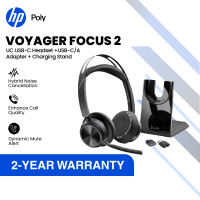
HP Poly Voyager Focus 2 Stereo Wireless Bluetooth Headsets USB-C/A Active Noise Canceling (ANC) With BT700 Dongle Charging Stand Headphones
₱15,999.00₱20,640.00
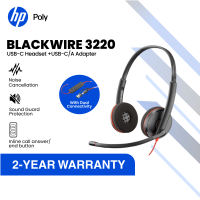
HP Poly Blackwire 3220 Stereo Noise-Canceling Mic PC/Mac USB-C or USB-A Works With Teams Zoom Headset
₱1,772.82₱3,250.00
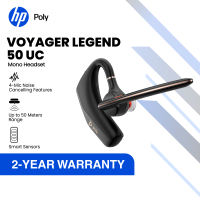
HP Poly Voyager Legend 50 Headset UC (AT9M9AA)
₱12,995.00₱17,995.00
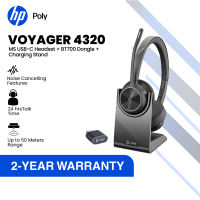
HP Poly Voyager 4320 Stereo Wireless Bluetooth Headsets USB-C With BT700 Dongle Charging Stand Headphones
₱12,995.00₱14,599.00
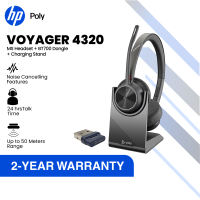
HP Poly Voyager 4320 Stereo Stereo Wireless Bluetooth Headsets USB-A With BT700 Dongle Charging Stand Headphones
₱12,995.00₱14,599.00
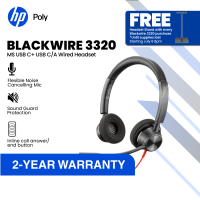
HP Poly Blackwire 3320 Stereo Microsoft Teams Certified USB-C Headset +USB-C/A (8X220AA)
₱3,955.00₱5,999.00
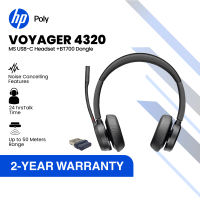
HP Poly Voyager 4320 Stereo Wireless Bluetooth Headsets USB-C With BT700 Dongle Headphones
₱10,999.00₱12,999.00
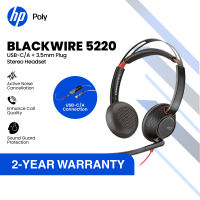
HP Poly Blackwire 5220 Stereo USB-C Headset +3.5mm Plug +USB-C/A Adapter
₱6,985.00₱7,990.00
About poly
Overview
Poly is a communications technology brand best known for professional headsets, video-conferencing equipment, business phones, speakerphones and collaboration software. It is particularly associated with workplace communication, unified communications, meeting rooms and hybrid work environments.
Today, Poly is part of HP Inc. following HP’s acquisition of the company in August 2022. HP currently markets these products under the HP Poly name.1
| Field | Information |
|---|---|
| Brand | Poly / HP Poly |
| Former names | Plantronics, Polycom |
| Parent company | HP Inc. |
| Industry | Communications technology / enterprise collaboration |
| Main products | Headsets, video conferencing, phones, speakerphones, collaboration software |
| Primary market | Businesses, enterprises, contact centres, professionals and hybrid workers |
| Major technologies | Noise cancellation, AI-assisted video, voice processing, conferencing and device management |
| Notable predecessor | Plantronics |
| Major corporate milestone | Plantronics acquired Polycom in 2018; HP acquired Poly in 2022 |
Poly is not simply a headphone manufacturer. Its roots lie in professional telecommunications, and the company has expanded from telephone headsets into a broader ecosystem covering professional headsets, video-conferencing cameras and systems, business and conference phones, speakerphones, meeting-room equipment, USB collaboration devices, AI-assisted conferencing technologies, device-management and analytics software, and contact-centre solutions.2
HP describes its current Poly portfolio as covering headsets, video conferencing and phones, alongside software and services for workplace collaboration.1
History
The Plantronics era
The history of Poly predates the current brand name. The company’s predecessor, Plantronics, established a reputation for professional communications headsets. A significant aspect of this historical standing was its connection to aerospace and space programmes, with its technology utilised in communications applications for astronauts. HP traces this development from the 1950s and 1960s through the digital and unified-communications eras.2
This heritage explains Poly’s continued emphasis on voice clarity, microphone performance, comfort during extended use, reliability, professional communications standards and noise reduction. Consequently, Poly developed primarily from professional communications technology rather than the consumer headphone market.
Plantronics acquires Polycom
A major transformation occurred in 2018 when Plantronics acquired Polycom. This merger united two complementary areas: Plantronics’ expertise in audio and headsets, and Polycom’s capabilities in video conferencing, voice and collaboration. The combination provided the company with a significantly broader communications portfolio, which HP describes as the foundation for the later Poly brand.2
Polycom had been a prominent name in business conferencing, particularly regarding conference phones and video-conferencing systems. Following the combination, the company could address a wider scope of the meeting experience beyond individual headsets.
The birth of the Poly brand
Following the Plantronics–Polycom combination, the company adopted the Poly brand. The name represented the union of the two technological heritages. The company positioned Poly as a professional communications and collaboration brand rather than a traditional consumer electronics manufacturer. During this period, the company moved away from consumer and gaming markets to concentrate more heavily on enterprise products.2
Poly characterised itself as a global communications company combining audio expertise with video and conferencing capabilities.3
HP acquires Poly
On 25 March 2022, HP announced an agreement to acquire Poly in an all-cash transaction valued at approximately $3.3 billion, including Poly’s net debt. The acquisition was completed on 29 August 2022.1
HP stated that the combination would strengthen its position in hybrid-work solutions by integrating Poly’s video-conferencing technology, cameras, headsets, voice products and software with HP’s existing computing, device-management and security capabilities. This transitioned Poly from an independent publicly traded company to a division of HP.1
Current product portfolio
Today, the brand is commonly presented as HP Poly. It remains focused on professional collaboration rather than competing primarily with consumer headphone brands. The current portfolio includes three principal categories.
Headsets
Poly produces professional Bluetooth, DECT, USB, wired and wireless headsets, as well as specialised models for contact centres. These are designed for applications ranging from standard office work to call-intensive environments. HP currently highlights the HP Poly Mission USB Series as a newer headset family for call-intensive work.2
Video conferencing
The brand manufactures equipment for meeting rooms and video calls, including video bars, conferencing cameras, room systems, modular conferencing systems, USB video solutions and room-control equipment. These products aim to provide an integrated audio and video experience rather than functioning solely as webcams.2
Business phones
The voice portfolio includes SIP desk phones, IP conference phones, USB and Bluetooth speakerphones, and business communication devices aimed primarily at professional and enterprise environments.2
Major product families
Poly’s extensive product range is best understood through its key product families.
Voyager
Voyager is one of Poly’s most recognised headset families. It is particularly associated with wireless Bluetooth headsets intended for professionals who move between desks, computers and mobile devices. The line has included both traditional office headsets and compact earbuds.
Blackwire
Blackwire is a major family of wired USB and PC headsets. These are commonly used in offices, contact centres, remote work setups, customer-service environments and Microsoft Teams or Zoom deployments. They are designed for direct connection to computers for calls and meetings.
Savi
Savi is targeted at professional office and enterprise users, particularly those requiring mobility while remaining connected to communications equipment. Savi products have historically emphasised wireless office connectivity and multi-device usage.
EncorePro
EncorePro is strongly associated with contact centres and call-intensive professional environments. The series emphasises durability, microphone performance, all-day usage comfort, manageability and professional voice communication quality.
Studio
Poly Studio is the company’s video-conferencing family. It includes products designed for personal workspaces, small meeting rooms, medium-sized rooms and larger collaboration environments. The Studio family represents the segment of Poly’s business derived from its Polycom heritage.
Technology
Poly differentiates itself through a focus on communication quality rather than specifications such as driver size or megapixels alone.
Noise cancellation
The company has developed technologies to reduce unwanted sounds during calls. Historical product technologies include NoiseBlockAI and Acoustic Fence, designed to reduce or isolate background noise.2 These features are particularly relevant in open offices, home offices, contact centres, cafés and shared workspaces.
AI-assisted video
Poly has developed AI-assisted camera technologies. Its DirectorAI technology can automatically perform framing, tracking and transitions during video meetings, allowing the camera to function intelligently without manual user control.2
Compatibility
Poly products are designed to integrate with major business communication platforms. Current HP Poly products are marketed as compatible with leading platforms, including Microsoft Teams, Zoom and Google Meet. Specific compatibility and certification vary by model.2
This interoperability allows organisations to deploy Poly hardware regardless of whether employees use Microsoft Teams, Zoom or another supported platform, avoiding vendor lock-in within a single communications ecosystem.
Target market
Poly is primarily a B2B and professional technology brand. Its products are particularly relevant to specific sectors.
Enterprises
Large organisations deploy Poly equipment across offices, meeting rooms, executive suites, call centres and for remote employees.
Contact centres
Headsets are a central component of Poly’s professional identity. For call-centre workers who communicate via headset for extended periods, microphone quality, comfort and durability are critical factors.
Hybrid workers
Poly became increasingly relevant as companies adopted hybrid working models. A typical hybrid employee configuration may involve a laptop paired with a Poly headset and webcam or video bar, utilising platforms such as Teams or Zoom.
Meeting rooms
Organisations equip meeting rooms with Poly cameras, microphones, speakers and video-conferencing systems to create a consistent experience between in-room and remote participants.
Comparison with consumer brands
While Poly sells products that may resemble ordinary headphones, its priorities differ from consumer brands such as Bose, Sony or JBL.
| Poly | Typical consumer headphone brand |
|---|---|
| Professional communication | Music/media consumption |
| Business calls | Music and entertainment |
| Enterprise deployment | Individual consumers |
| Microphone performance | Often secondary |
| UC/Teams/Zoom integration | Consumer-device integration |
| Contact-centre products | Rare |
| Meeting-room systems | Usually not a core business |
| Device management | More important |
| Long-duration professional use | Often a major design goal |
Music listening is not necessarily the primary design objective for Poly products, although they remain functional for media consumption.
Brand lineage and corporate structure
Confusion often arises regarding the relationship between Poly, Plantronics and Polycom. Plantronics is the historical predecessor of Poly, while Polycom was the video-conferencing and voice company that merged with Plantronics. The combined entity adopted the Poly brand before being acquired by HP in 2022.12
Therefore, older headsets labelled Plantronics and older conferencing systems labelled Polycom are predecessors to modern Poly products. The corporate evolution can be summarised as follows:
- Plantronics: Historic headset heritage
- Polycom: Historic video and voice-conferencing heritage
- Poly: Combined professional communications brand
- HP Poly: Current HP-owned incarnation
Poly is best understood today as an HP brand and business portfolio rather than an independent publicly traded company.1
Market significance
Poly occupies a position at the intersection of several major technology trends, spanning telecommunications, unified communications, video conferencing, hybrid work and AI-assisted collaboration. The company has transferred expertise from traditional telephone systems into modern cloud-based meetings, creating a technological lineage that stretches from legacy business telephony to contemporary collaboration platforms.
The brand is broadly characterised as professional, reliable, communication-focused and enterprise-oriented. Its reputation is built on headset quality, microphone performance, business communications, video conferencing, meeting-room technology, enterprise deployment, noise reduction and intelligent conferencing. HP’s current positioning presents Poly as part of a broader hybrid-work and workplace collaboration ecosystem.1