Shop on Lazada
prgr products

prgr | Prgr Super Egg 500 High Repulsion Driver 2024 Model Japan P R Sr S Da3838070
₱37,395.12₱57,192.53
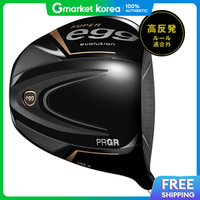
prgr | Super Egg 500 High Repulsion Driver 2024 Model Japan P
₱41,493.13₱59,934.52
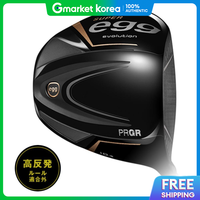
prgr | Super Egg 500 High Repulsion Driver 2024 Model Japan Parallel Import P
₱41,493.13₱59,934.52
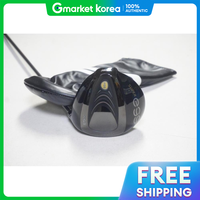
prgr | Super Egg Mens Driver 10.5 Ultra-High Repulsion R Flex Shaft Korea
₱23,796.69₱34,372.99
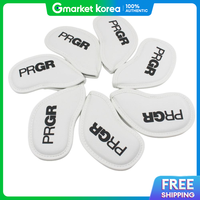
prgr | White 7-Piece Iron Headcover Set Golf Club Protective Cover Scratch Prevention
₱1,855.81₱2,680.62
About prgr
Brand Overview
prgr, commonly pronounced Pro Gear, is a Japanese golf equipment manufacturer recognised for its scientific approach to club design, emphasis on distance and ease of use, and willingness to challenge conventional industry norms. Launched in Japan in 1983 as a new business initiative of The Yokohama Rubber Co., Ltd., it has developed into a specialist company producing clubs, balls, accessories, and golf-related services 1.
The name prgr derives from PROGEAR, itself an abbreviation of Professional Gear. The original concept was to create equipment that could provide amateur golfers with performance and consistency typically associated with professional players.
| Category | Information |
|---|---|
| Brand | prgr / Pro Gear |
| Origin | Japan |
| Founded | 1983 |
| Parent Company | The Yokohama Rubber Co., Ltd. |
| Industry | Golf equipment & golf services |
| Core Products | Drivers, fairway woods, utilities, irons, wedges, putters, balls, women’s equipment, accessories |
| Major Philosophy | Science-based golf equipment development |
| Key Concept | Head speed / matching equipment to golfer power |
| Japanese Entity | PRGR Co., Ltd. |
| Headquarters | Hiratsuka, Kanagawa, Japan |
PRGR Co., Ltd. was established in November 1983. Its corporate activities encompass the planning, development, manufacturing, and sale of golf equipment and related products, alongside golf school and fitting services.
History
Origins: 1983
The history of prgr began within Yokohama Rubber in the early 1980s. A small team of engineers, including personnel associated with the development of ADVAN tyres, was assembled to investigate new sporting goods opportunities. Golf was identified as a primary avenue because the company believed its engineering and materials expertise could be effectively applied to equipment design 1.
Rather than producing another conventional golf club, the team questioned assumptions that had traditionally governed the industry. One of the most significant concepts to emerge was head speed. prgr argued that a golfer’s club-head speed should be a critical metric in determining appropriate equipment. Instead of selecting clubs based primarily on appearance, experience, or intuition, the company developed measurement equipment capable of quantifying a golfer’s power level. This focus became one of the brand’s defining characteristics.
The prgr Philosophy
The brand’s development ethos is encapsulated by the Japanese expression:
「人の歩いた道は、歩かない。」
This translates approximately to: “We don’t walk the path that others have already walked.” It reflects a longstanding preference for questioning established conventions rather than simply following them.
The Head Speed Revolution
Perhaps the most significant historical contribution of prgr to golf equipment was popularising the concept of club-head speed as a method for understanding golfer performance. The company reasoned that physical power and swing speed should directly influence equipment specifications.
To support this, prgr created its own Head Speed Tester and began conducting measurement events. In 1984, one such event attracted approximately 20,000 participants. These events were also used to promote the concept of fitting equipment according to individual golfers rather than selling standard specifications to all players. Today, club-head speed is a fundamental concept in golf fitting and launch monitor analysis, with prgr’s early work helping to establish it as a practical criterion for equipment selection.
First Products
The first generation of prgr products appeared in 1983. This included the M-1 driver, a carbon-head model developed around the company’s head-speed theory, alongside golf balls designed for different head-speed levels 1. At the time, drivers were still commonly associated with traditional persimmon wood heads, making prgr’s experimentation with carbon-based construction highly unconventional.
In 1984, the company introduced the M-1 and M-2 carbon-head drivers while simultaneously developing irons with varying designs according to club number.
Major Innovations
μ-240 Driver
An early breakthrough was the μ-240 driver, introduced in 1986. While approximately 43-inch drivers were mainstream at the time, prgr introduced a lightweight 44-inch driver based on the premise that additional length could increase club-head speed and, consequently, distance. The μ-240 demonstrated the brand’s approach of questioning whether changing traditional specifications could improve performance.
INTEST LX — the “Tarako”
In 1988, prgr introduced the INTEST LX, a carbon iron that became famous in Japan under the nickname “Tarako” due to its distinctive shape. It addressed the longstanding difficulty many golfers faced with long irons. Rather than accepting conventional shapes, prgr experimented with alternative construction intended to make long irons easier to launch and control. This product embodied the philosophy of easy long irons, controllable short irons 1.
Women’s Golf Equipment
prgr also became notable for developing equipment specifically around the characteristics of female golfers. In 1988, it introduced the M-30, described as its first full set designed specifically for women. The company studied factors including strength, head speed, and swing characteristics, adjusting materials and design accordingly. This research eventually evolved into the SWEEP women’s golf line.
1990s: DATA and Titanium
During the 1990s, prgr increasingly focused on sophisticated weight distribution and club-head engineering. In 1993, it introduced the DATA series, based on its “REVERSE” theory of manipulating the centre of gravity.
In 1994, the DATA WOOD REVERSE SD Titanium, nicknamed “Red Titanium,” combined a large head with lightweight titanium construction. The company also released the DATA601 forged cavity irons, designed to make long irons easier to hit while maintaining control in shorter irons. prgr subsequently participated in the large titanium-driver movement that transformed the industry in the late 1990s. The REVERSE Titanium Type 300, introduced in 1998 and nicknamed “Silver Titanium,” combined a large head with a long shaft and reportedly sold around 90,000 units, marking a major commercial success.
2000s: High-Performance Engineering
In 2001, the company introduced the SPEED TITAN TR, focusing on face flexing characteristics. The head was designed so that the face centre, centre of gravity, and maximum flexion point worked together around a common point. In 2003, the DUO driver utilised a combination of a carbon crown and titanium body to pursue high initial ball speed, higher launch, and reduced spin. These products demonstrated a broader philosophy of using materials engineering and physics to manipulate launch conditions rather than relying solely on traditional shapes.
Differentiating Characteristics
Science Before Tradition
The most distinctive characteristic of prgr is its application of measurement, physics, and engineering to golf. The company investigates factors such as club-head speed, ball speed, spin, launch angle, centre of gravity, face flexion, shaft length, weight distribution, and golfer strength. prgr specifically identifies ball speed, spin rate, and launch angle as the three major factors determining distance.
Equipment Matched to the Golfer
prgr does not view the “best club” as universally identical. Its original head-speed concept was predicated on the idea that equipment should correspond to the golfer’s power level. This philosophy remains visible in modern fitting and measurement services, where data is used to determine appropriate specifications.
Distance Without Sacrificing Ease of Use
Historically, prgr has pursued more distance and easier-to-hit equipment simultaneously. This combination is significant because the brand has never positioned itself exclusively as a tour player manufacturer. Many innovations were specifically intended to help ordinary amateur golfers achieve longer, higher, and more consistent shots.
Product Families
The current prgr portfolio covers most major categories of golf equipment, including drivers, fairway woods, utilities, irons, wedges, putters, women’s equipment, balls, and accessories. Major contemporary families include RS, PRGR IRONS, egg, SWEEP, Q, and TUNE.
- RS: A principal performance-oriented line embodying the company’s interest in maximising ball speed, forgiveness, and overall driver performance.
- egg: A distinctive product concept associated with unconventional construction and a strong emphasis on ease of use and distance generation.
- SWEEP: The women’s-oriented line, tracing its roots to early research into equipment designed specifically for female golfers.
- TUNE: Aimed at golfers seeking greater customisation, featuring head components intended for detailed adjustment and fitting.
Design Philosophy
The design philosophy of prgr combines Japanese engineering aesthetics with a modernist approach. Three key concepts guided early development:
- New Wave: Creating equipment appropriate for a new era rather than following traditional forms.
- Simple: Treating the club as a precise machine designed to aid concentration.
- Long Life: Integrating technology and materials to create lasting products.
This resulted in a technical, mechanical, and modern aesthetic that deliberately diverged from traditional “golf-like” appearances.
Professional Golf Presence
Although prgr’s roots are strongly connected to amateur golfers and fitting, the company has maintained a presence in professional golf. In 1997, it signed an endorsement agreement with American professional Corey Pavin, winner of the 1995 U.S. Open. prgr products have been used by professionals throughout its history, particularly as experimental designs attracted attention on tour. However, compared to brands built entirely around tour professionals, prgr’s identity remains more closely associated with engineering, fitting, and amateur performance.
Relationship with Yokohama Rubber
The corporate history of prgr is inseparable from Yokohama Rubber. Yokohama Rubber originally entered the sports business to diversify beyond tyres and industrial products. Existing engineering capabilities, particularly in materials and rubber technologies, provided the foundation for entering the golf market. The operation eventually became prgr. Today, PRGR Co., Ltd. is a separate corporate entity with headquarters located within the Yokohama Rubber facility in Hiratsuka, Kanagawa.
Market Position
prgr occupies a distinctive position within the golf market. It is neither a budget manufacturer nor purely a traditional premium forged-iron brand. Its identity is closely tied to engineering-led Japanese golf equipment. The brand appeals particularly to golfers who value Japanese club engineering, innovative designs, distance-oriented technology, forgiveness, detailed fitting, and data-driven selection. Historically, prgr is significant to equipment enthusiasts because concepts now considered standard—such as head-speed-based fitting and extensive performance measurement—were areas where the brand was an early pioneer 1.
Note: There is a separate golf accessories company called PRG (Pro Range Golf), founded in Northern Ireland in 2006. This article specifically concerns prgr / Pro Gear, the Japanese golf club brand founded in 1983.