Shop on Lazada
PS3 products
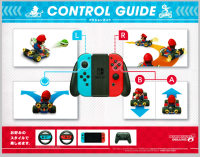
Switch Art Cover. Switch Front Cover. Switch Case Cover. Nintendo Switch Cover. Reprinting Only.
₱170.00
Buy on Lazada
HEAVENLY SWORD PS3 Game Playstation 3 Games Mint Condition
₱749.95₱1,088.95
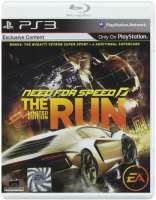
NEED FOR SPEED THE Run Limited Edition Mint Condition PS3 Game Playstation 3
₱1,288.95₱1,588.95

SLEEPING DOGS (Square Enix) PS3 Game Playstation 3 Games Mint Condition
₱1,299.95
Buy on Lazada
NEED FOR SPEED UNDERCOVER Playstation 3 Games Mint Condition
₱1,048.95
Buy on Lazada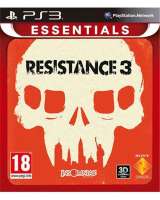
RESISTANCE 3 Playstation 3 Games PS3 Game Mint condition
₱849.95
Buy on Lazada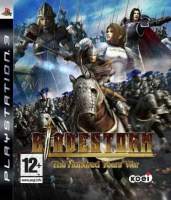
BLADESTORM: The Hunderd Years War PS3 Playstation 3 PS3Game PS3Games Mint condition HEGEY
₱749.95₱988.95

INFAMOUS 2 PS3 Playstation 3 Mint condition
₱599.95₱749.95
About PS3
Overview
| Attribute | Details |
|---|---|
| Product Name | PlayStation 3 (PS3) |
| Manufacturer | Sony Computer Entertainment (now Sony Interactive Entertainment) |
| Product Type | Home video game console |
| Generation | Seventh generation |
| Announced | May 16, 2005 |
| First Released | November 11, 2006 (Japan) |
| Discontinued | Production ended in 2017 |
| Successor | PlayStation 4 |
| Media Format | Blu-ray Disc, DVD, CD, Digital Downloads |
| Operating System | PlayStation System Software |
| Online Service | PlayStation Network (PSN) |
PlayStation 3 (PS3) is a home video game console developed and marketed by Sony Computer Entertainment (now Sony Interactive Entertainment) as part of the PlayStation family. It is the third major home console in the PlayStation lineup, succeeding the PlayStation 2 (PS2) and preceding the PlayStation 4 (PS4). The PS3 belongs to the seventh generation of video game consoles, where it competed primarily against Microsoft’s Xbox 360 and Nintendo’s Wii. [1]
History
Development
Sony officially introduced the PlayStation 3 during E3 2005, presenting it as the company’s most advanced gaming system. It featured the new Cell Broadband Engine processor, developed jointly by Sony, IBM, and Toshiba, alongside the NVIDIA-based RSX graphics processor. Sony positioned the PS3 as both a gaming console and a multimedia entertainment system capable of high-definition gaming and Blu-ray movie playback. [2]
Launch
The console launched in three major regions:
-
Japan: November 11, 2006
-
North America: November 17, 2006
-
Europe: March 23, 2007
At launch, it was one of the most expensive mainstream consoles ever released, largely due to its inclusion of a Blu-ray Disc drive and advanced hardware. [1]
Design
The PlayStation 3 underwent three major hardware revisions.
Original PS3 (2006)
Features included:
-
Glossy black curved design
-
Slot-loading Blu-ray drive
-
Some early models supported PlayStation 2 games via hardware or software backward compatibility
-
Memory card readers (select models)
-
Four USB ports (select models)
PS3 Slim (2009)
Sony redesigned the console with:
-
Smaller and lighter body
-
Lower power consumption
-
Quieter cooling
-
Matte finish
-
120 GB and larger storage options
-
Updated “PS3” branding
PS3 Super Slim (2012)
Final redesign featuring:
-
Even smaller chassis
-
Sliding disc cover
-
Reduced manufacturing cost
-
Up to 500 GB storage
Hardware Specifications
| Component | Specification |
|---|---|
| CPU | Cell Broadband Engine |
| GPU | NVIDIA RSX Reality Synthesizer |
| RAM | 256 MB XDR RAM |
| VRAM | 256 MB GDDR3 |
| Storage | 20 GB–500 GB HDD (model dependent) |
| Optical Drive | Blu-ray Disc |
| Video Output | HDMI, AV Multi Out, Optical Audio |
| Networking | Ethernet, Wi-Fi (most models), Bluetooth |
Key Features
Blu-ray Disc
The PS3 was the first major game console to use Blu-ray Disc as its primary game format, enabling much larger game sizes and serving as a high-definition movie player. [2]
PlayStation Network (PSN)
Sony introduced its online gaming ecosystem with the PS3, including:
-
Online multiplayer
-
Digital game purchases
-
Friends list
-
Messaging
-
PlayStation Store
-
Trophy achievements (added in 2008)
Multimedia Functions
The PS3 was also marketed as a home entertainment hub capable of:
-
Blu-ray movie playback
-
DVD playback
-
CD playback
-
Music playback
-
Photo viewing
-
Internet browsing
-
Streaming media applications (later in its lifecycle)
Controllers
The PS3 supported:
-
Sixaxis Wireless Controller
-
DualShock 3 Wireless Controller
-
PlayStation Move Motion Controller
-
Various USB and Bluetooth accessories
Popular Games
Some of the most acclaimed PS3 titles include:
-
The Last of Us
-
Uncharted 2: Among Thieves
-
Uncharted 3: Drake’s Deception
-
Metal Gear Solid 4: Guns of the Patriots
-
Gran Turismo 5
-
Gran Turismo 6
-
God of War III
-
LittleBigPlanet
-
Demon’s Souls
-
Journey
-
Infamous
-
Killzone 2
-
Resistance series
-
Heavy Rain
-
Persona 5 (original release)
Sales
The PlayStation 3 sold over 87 million units worldwide during its lifetime, making it one of Sony’s most successful home consoles despite a slow start due to its high launch price. Over time, price reductions and a strong exclusive game library helped improve its market performance. [1]
Competition
During the seventh console generation, the PS3 competed directly with:
-
Microsoft Xbox 360
-
Nintendo Wii
Each system emphasized different strengths:
-
PS3: Powerful hardware, Blu-ray, multimedia features, exclusive games
-
Xbox 360: Strong online gaming ecosystem and earlier release
-
Wii: Motion controls and family-oriented gaming
Legacy
The PlayStation 3 is remembered for introducing several technologies and services that shaped future PlayStation systems:
-
Blu-ray as the standard game medium
-
PlayStation Network expansion
-
Digital game distribution
-
Trophy achievement system
-
HD gaming for Sony consoles
-
Strong first-party exclusives with cinematic storytelling
Its exclusive titles, multimedia capabilities, and technological innovations continue to influence later PlayStation consoles. [1]
Timeline
| Year | Event |
|---|---|
| 2005 | Officially announced at E3 |
| 2006 | Released in Japan and North America |
| 2007 | European launch |
| 2008 | Trophy system introduced |
| 2009 | PS3 Slim released |
| 2012 | PS3 Super Slim released |
| 2013 | PlayStation 4 announced and launched |
| 2017 | PS3 production officially ended |
Impact
The PlayStation 3 marked a significant evolution for the PlayStation brand by combining advanced gaming hardware with high-definition multimedia capabilities. Although its premium launch price presented early challenges, the console ultimately became known for its strong exclusive game library, introduction of Blu-ray technology to millions of homes, and expansion of the PlayStation Network. Many of the online services, digital distribution features, and cinematic game design approaches pioneered during the PS3 era laid the foundation for subsequent PlayStation consoles. [1]