Shop on Lazada
Pur products
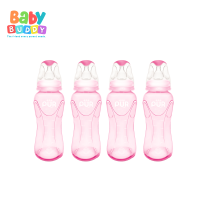
Pur Promo Bundles - BUY 3 GET 1 Advanced Slim Neck Feeding Bottle (100% Anti-Colic Bottles)
₱1,099.00₱2,036.00
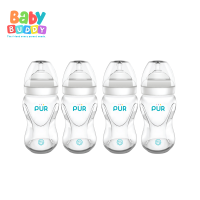
Pur Promo Bundles - BUY 3 GET 1 Advanced Wide Neck Feeding Bottle (100% Anti-Colic Bottles)
₱1,299.00₱2,796.00
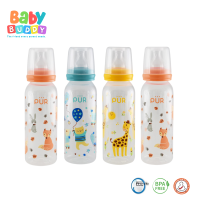
Pur Promo Bundles - BUY 3 GET 1 Round Classic Feeding Bottle
₱499.00₱1,396.00
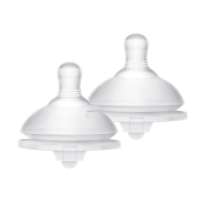
Pur Gentle Touch Advanced Wide Neck Silicone Nipple - Fast Flow - L
₱429.00
Buy on Lazada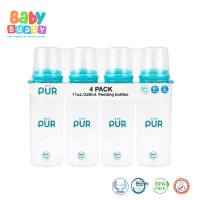
PUR Pack of 4 Standard BPA Free Feeding Bottle
₱739.00
Buy on Lazada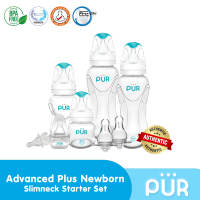
Pur Promo Bundles - Advanced Plus Slim Neck Feeding Bottle Gift Set (100% Anti-Colic Bottles)
₱999.00₱1,989.00

PUR Gum Xylitol Chewing Gum - No Artificial Flavor 9 Count
₱185.00
Buy on Lazada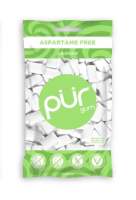
PUR Xylitol Chewing Gum (Coolmint 1 Pack 55 Pieces)
₱400.00
Buy on LazadaAbout Pur
Overview
Pur is an American water-filtration brand best known for faucet-mounted filters, water-filter pitchers, dispensers, and replacement cartridges. The brand’s central proposition is to improve the taste and quality of tap water by reducing a range of chemical and physical contaminants, including lead, mercury, chlorine-related taste and odour, and—in certain products—microplastics and other emerging contaminants.1
| Field | Information |
|---|---|
| Brand | Pur |
| Industry | Water filtration / consumer home appliances |
| Primary products | Faucet filters, pitchers, dispensers, replacement filters |
| Origin | United States |
| Original company | Recovery Engineering, Inc. |
| Founded | 1986 |
| Current owner | Helen of Troy Limited |
| Major previous owner | Procter & Gamble |
| Core proposition | Filtering tap water for better taste and reduced contaminants |
| Major competitors | Brita, ZeroWater and other home water-filtration brands |
| Website | PUR.com |
History
1986–1990s: Origins
The history of Pur begins in 1986, when Recovery Engineering was founded by Brian Sullivan, a 24-year-old Harvard economics graduate. The company initially developed water-treatment technology, including portable and desalination equipment. Company records note that in 1989, William Butler survived 66 days at sea using the Pur Survivor 35, a hand-operated desalination device.
The company subsequently moved towards consumer water filtration. In 1994, Pur introduced what it describes as the first faucet-filtration system incorporating an Automatic Safety Monitor (ASM) gauge, designed to indicate when the filter had reached the end of its useful life.
1999: Acquisition by Procter & Gamble
In 1999, Procter & Gamble acquired the Pur water-filtration business from Recovery Engineering for approximately $213 million.2 This brought Pur under the umbrella of one of the world’s largest consumer-goods companies.
During this period, P&G also developed a separate technology called Pur Purifier of Water. This product consisted of treatment sachets designed for communities without reliable access to safe drinking water. It was developed with the U.S. Centers for Disease Control and Prevention and became part of P&G’s humanitarian water programme.3
It is therefore useful to distinguish between the two entities:
- Pur consumer filtration brand: The faucet filters, pitchers, and dispensers discussed in this article.
- P&G Pur Purifier of Water: A humanitarian water-treatment technology and programme developed by P&G.
While they share historical connections, they are not the same consumer product line.
2012: Helen of Troy
P&G subsequently sold the consumer Pur brand to Helen of Troy Limited in January 2012.2 This acquisition established Helen of Troy as the company’s owner and placed Pur within its portfolio of consumer brands. Today, the consumer water-filtration business operates under Helen of Troy.
2014: Emerging contaminants
A notable milestone occurred in 2014, when Pur states it became the first company to obtain NSF certification for a new category of “emerging contaminants”. The category included substances such as DEET and certain pharmaceuticals for applicable faucet and pitcher filters.
2016: Flint water crisis
Pur also became involved in the Flint, Michigan water crisis. According to the company’s history, Pur scientists travelled to Flint in January 2016 to assist with testing and relief efforts, and the company donated filtration products. Pur states it has subsequently distributed more than half a million filtration systems and replacement filters to communities in the United States and Canada.1
Product Portfolio
The modern Pur product portfolio is centred around four major categories.
Faucet filtration systems
This is arguably the product category most strongly associated with Pur. A Pur faucet filter attaches directly to a compatible kitchen tap. Users can switch between filtered and unfiltered water, allowing the filter to be used primarily for drinking and food preparation rather than for every use of the tap.
The current Pur PLUS faucet systems use a combination of activated carbon and ion-exchange materials. Pur states these filters can reduce up to 70 contaminants, including lead and mercury, depending on the specific certified model.1 A typical Pur PLUS faucet filter is rated for approximately 100 gallons or up to three months of use, depending on the model and conditions. Some models include a Filter Change Light, which indicates when the cartridge needs replacement.
Water-filter pitchers
Pur also sells pitcher-style filtration systems. For example, the Pur PLUS 7-Cup Pitcher uses a multi-stage filtration system and is designed to reduce various chemical and physical substances. Pur states the product’s filter is WQA-certified for lead reduction and NSF-certified for the reduction of microplastics, as well as several other substances.
The pitcher category is particularly significant as it places Pur in direct competition with brands such as Brita.
Dispensers
Pur produces larger-capacity water dispensers designed for households requiring more filtered water at once. These generally utilise the same broader pitcher and dispenser replacement-filter ecosystem.
Replacement filters
Replacement cartridges are a major part of the Pur ecosystem. The Pur PLUS pitcher and dispenser filter, for example, uses activated carbon and ion-exchange materials and is rated for up to 40 gallons or two months of use.
This creates a classic razor-and-blades business model where consumers purchase a filtration device and then repeatedly purchase replacement cartridges. This recurring filter business is strategically important because the initial pitcher or faucet system represents only one part of the customer’s lifetime relationship with the brand.
Filtration Technology
Pur filtration technology varies by product, but its filters commonly incorporate activated carbon and ion-exchange materials.
Activated carbon
Activated carbon is particularly useful for the adsorption of many organic compounds and substances affecting taste and odour. Pur states its carbon filtration can reduce contaminants such as certain pesticides and pharmaceuticals in applicable systems.
Ion exchange
Ion-exchange materials are particularly relevant to certain dissolved metals. Pur states the ion-exchange component of its faucet filters can capture heavy metals such as lead and mercury.
Mineral Core technology
Some Pur PLUS faucet products incorporate Mineral Core™ Technology, in which water passes through minerals as part of the filtration system. Pur markets this primarily as a method to produce better-tasting water.
Contaminant Reduction
Contaminant reduction depends heavily on the specific Pur filter model. It would be misleading to state that every Pur product removes the same substances. Current contaminant comparison information lists reductions for substances including:
- Lead
- Mercury
- Chlorine taste and odour
- Microplastics
- Certain pesticides and chemicals
- TTHMs
- DEET
- Copper
- Zinc
Not every filter is certified for every contaminant. For example, current faucet filtration documentation identifies certification under NSF/ANSI 42, 53, and 401 for specified reduction claims.
Important limitations
Pur filters are not water purifiers in the microbiological sense. Pur explicitly states that its consumer filtration systems do not filter microbes and that its products should not be used with microbiologically unsafe or unknown-quality water without appropriate disinfection.
Filtration is distinct from sterilisation or purification. A Pur filter is primarily intended to improve treated tap water by reducing specified contaminants, not to make contaminated or microbiologically unsafe water safe to drink.
Certification
A major selling point for Pur is third-party certification. Pur states that its filtration systems have certifications from organisations including NSF and WQA for particular contaminant-reduction claims.
Certification applies to specific products and specific claims. A filter being NSF-certified does not automatically mean it removes every contaminant; consumers must check the performance data for the particular cartridge. Performance documentation provides detailed reduction figures and certification information for current filters.
Brand Positioning
Pur generally positions itself around three core concepts:
Cleaner-tasting water
The most immediately understandable consumer benefit is improved taste and odour. Reducing chlorine and other substances can make tap water more pleasant to drink.
Contaminant reduction
Pur differentiates itself by emphasising the number and types of contaminants its certified filters can reduce. Lead reduction is particularly prominent in marketing because lead contamination can occur through ageing plumbing and lead service lines.
Alternative to bottled water
Instead of purchasing bottled water, consumers can filter tap water at home. Pur consequently competes not only with other filtration brands but also indirectly with bottled water.
Comparison with Brita
The most obvious competitor to Pur is Brita. Both brands sell water pitchers, replacement filters, faucet filtration products, and consumer-oriented filtration systems.
However, Pur frequently differentiates its products by highlighting the number of substances its filters are certified to reduce. For example, Pur currently advertises its PLUS faucet system as certified to reduce 70 contaminants, while its marketing makes comparisons with specific Brita products.1 Pur also claims that its PLUS pitcher filter is certified to reduce substantially more chemical and physical substances than the specific Brita pitcher filter used for comparison.
These are model-specific marketing comparisons rather than a universal statement that Pur is superior to every Brita product.
Business Model
The Pur business model combines hardware sales with recurring cartridge purchases. A customer typically buys a Pur pitcher or faucet system, purchases replacement cartridges every several weeks or months, and continues buying cartridges for the life of the device.
This makes replacement-filter sales strategically important. It also provides an advantage in customer retention, as purchasing compatible replacement filters is easier for existing owners than replacing the entire system.
Ownership History
The ownership history of the brand follows a trajectory from Recovery Engineering to Procter & Gamble, and finally to Helen of Troy.2 Recovery Engineering developed the original Pur consumer filtration technology and brand. P&G acquired the business in 1999 and later sold the consumer Pur brand to Helen of Troy in 2012.
Today, Pur is part of Helen of Troy’s consumer-brand portfolio. Historically, the brand is notable for beginning as a specialised water-treatment company, becoming part of a massive global FMCG company, and ultimately becoming a brand within another diversified consumer-products corporation.
Brand Identity
The identity of Pur is built around clean water, filtration technology, and everyday household convenience. Rather than presenting itself as a luxury appliance brand, Pur is positioned as an accessible household solution that transforms tap water into better-tasting, lower-contaminant drinking water.
Its visual identity has traditionally emphasised blue and teal colours, water imagery, and a clean, straightforward aesthetic associated with purity and freshness. The name “Pur” reinforces the idea of pure water, although the products are technically filtration systems rather than complete water-purification systems.
Environmental Considerations
Pur positions filtration as an alternative to buying bottled water. The basic environmental argument is that filtering water at home can reduce the need for single-use plastic bottles.
However, Pur products themselves contain plastic filter cartridges and electronic components in some models, making the environmental picture more complex. Pur currently states it is working on implementing a recycling programme for its customers and provides disposal guidance for pitcher filter-change-light batteries.
Humanitarian Legacy
A significant aspect of the wider Pur story is its connection to humanitarian drinking-water initiatives. During the P&G era, Pur Purifier of Water was developed as an inexpensive household water-treatment technology. A single packet could treat approximately 10 litres of contaminated water using a process based on municipal water treatment principles.3
P&G later incorporated this technology into its Children’s Safe Drinking Water programme. According to P&G, the programme has provided 25 billion litres of clean water through partnerships with more than 150 organisations. This humanitarian product is distinct from the current consumer Pur pitcher and faucet filters.
Current Status
As of 2026, Pur remains primarily a consumer water-filtration brand, with its core portfolio consisting of faucet filtration systems, pitchers, dispensers, and replacement filters.1
Its modern strategy is centred on lead and contaminant reduction, better-tasting tap water, NSF and WQA-certified filtration claims, faucet-mounted convenience, pitcher-based filtration, recurring replacement-filter sales, and providing alternatives to bottled water. Its strongest consumer proposition remains delivering better tap water without the need to purchase bottled water.