Shop on Lazada
Rainbow Loom products
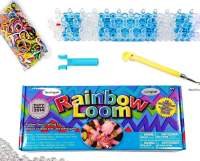
Original Rainbow Loom Bracelet Kit
₱400.00
Buy on Lazada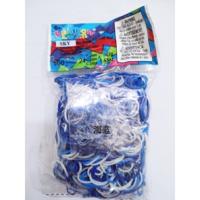
Rainbow Loom Refill (Mixed Opaque)
₱50.00₱75.00
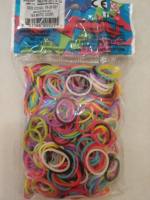
Rainbow Loom Refill (Mixed Opaque)
₱50.00₱75.00
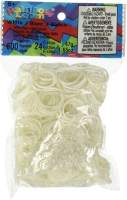
Rainbow Loom White Opaque
₱179.75
Buy on Lazada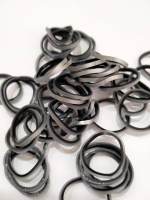
Rainbow Loom Refill (Black Medieval)
₱50.00₱75.00
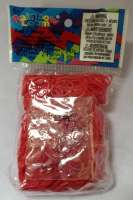
Rainbow Loom Refill (Red Opaque)
₱50.00₱75.00
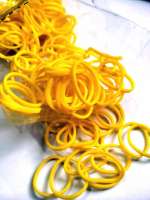
Rainbow Loom Refill (Yellow Opaque)
₱50.00₱75.00
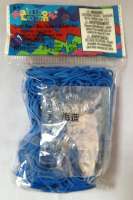
Rainbow Loom Refill (Ocean Blue Opaque)
₱50.00₱75.00
About Rainbow Loom
Rainbow Loom is an American craft-toy brand best known for its plastic looms, colourful elastic bands, hooks, clips, and related accessories used to create bracelets, charms, figures, jewellery, and other decorative objects. The brand achieved widespread fame during the global loom-band craze of the early-to-mid 2010s, when rubber-band bracelet making became a major trend among children and families.1
The company behind the brand is Choon’s Design, LLC, which was founded around the invention of Malaysian-born engineer Cheong Choon Ng. Rainbow Loom is notable for originating as a home-made solution to a practical problem—Ng’s difficulty manipulating tiny rubber bands with his hands—before evolving into a significant toy phenomenon.1
Quick facts
| Category | Information |
|---|---|
| Brand | Rainbow Loom® |
| Industry | Toys, arts & crafts, children’s activities |
| Product type | Rubber-band weaving/crafting kits |
| Founder / inventor | Cheong Choon Ng |
| Company | Choon’s Design, LLC |
| Origins | Michigan, United States |
| Development began | Around 2010 |
| Commercial launch | 2011 |
| Signature material | Small colourful elastic/rubber bands |
| Signature tool | Plastic peg loom |
| Primary uses | Bracelets, jewellery, charms, figures and decorative designs |
| Major breakthrough | 2012–2013 |
| Notable recognition | Multiple 2014 Toy of the Year-related awards |
| Official website | rainbowloom.com |
History
Origins
The origins of Rainbow Loom date back to 2010, when Cheong Choon Ng was employed as an automotive crash-test engineer. Ng, who had immigrated to the United States from Malaysia, possessed a background in mechanical engineering.2
At the time, his two daughters were making bracelets by connecting small elastic bands with their fingers. Although Ng wished to participate, he found the tiny bands difficult to manipulate with his larger adult hands. Rather than abandoning the activity, he approached the challenge as an engineer and developed a small peg-based device to facilitate band manipulation.1
His early prototype was considerably more primitive than the modern Rainbow Loom, consisting of a wooden board, pegs, and a hook. Ng reportedly underwent numerous design iterations and invested approximately $10,000 of his savings into the project.1
From prototype to Rainbow Loom
The original concept eventually evolved into a plastic loom featuring rows of pegs. Users could place elastic bands over the pegs and manipulate them with a hook to create interconnected loops.
The product was initially named Twistz Bandz, but Ng later adopted the name Rainbow Loom. It was commercialised through his company, Choon’s Design.2
A significant early obstacle was consumer confusion regarding the product’s function and usage. Instead of relying solely on conventional toy advertising, Ng and his family produced instructional videos demonstrating various creations possible with the loom. This content strategy became integral to the brand’s growth.1
Rise to popularity
Rainbow Loom experienced its commercial breakthrough around 2012–2013.
Specialty toy retailers began stocking the product, and its popularity accelerated rapidly. In 2013, Michaels tested Rainbow Loom in select stores before expanding distribution across its U.S. locations. The product also benefited significantly from children and parents sharing designs and tutorials online.2
YouTube proved particularly influential. Rather than requiring the company to instruct every customer directly, users could access tutorials to learn increasingly complex patterns. This effectively established a large user-generated instructional ecosystem surrounding the product.
By 2013, Rainbow Loom had become one of the most prominent children’s craft crazes in the United States. Contemporary reports described it as a major summer obsession, with hundreds of thousands of children and parents participating.3
How Rainbow Loom works
The basic Rainbow Loom system is relatively straightforward.
A typical kit contains:
- A plastic loom with multiple pegs
- Small colourful elastic bands
- A plastic hook
- C-shaped clips or fasteners
- Instructions or access to tutorials
Users place bands around the loom’s pegs and use the hook to pull and loop bands over one another. The resulting links can be connected into chains and patterns.
The underlying construction relates to Brunnian links—interconnected loops that form stable structures even though individual components are not permanently tied together. This concept became central to the technical description of the Rainbow Loom invention.4
Simple projects can be completed relatively quickly, while advanced patterns may require hundreds of bands and considerable precision.
Products and product ecosystem
Rainbow Loom expanded beyond its original basic loom to encompass a broader product ecosystem, including:
- Original Rainbow Loom — the classic peg-based loom.
- Mini looms — smaller, portable devices designed particularly for bracelets and similar projects.
- Elastic-band assortments — bands in different colours, finishes, and combinations.
- Hooks and tools — used to manipulate the bands.
- C-clips — used to connect the ends of finished creations.
- Charms and accessories — decorative components used with loom creations.
- Specialized looms — products designed for particular techniques and patterns.
- Pattern-oriented products — tools and kits that allow users to create more complex designs.
The company continues to position Rainbow Loom as a creativity-focused craft system rather than merely a bracelet-making toy. Its official site emphasises creativity, fine-motor skills, and social interaction.1
The Rainbow Loom craze
During its peak, Rainbow Loom transcended its status as an individual toy to become a social craft phenomenon.
Children exchanged bands, demonstrated patterns to peers, created friendship bracelets, and watched tutorials to learn sophisticated designs. Schools and summer camps served as venues for sharing techniques, while YouTube enabled individual creators to reach wide audiences.
This dynamic created a distinctive feedback loop:
Toy → user creativity → tutorial videos → new designs → more users → greater demand for the toy.
This model distinguished Rainbow Loom from many conventional children’s toys, as the product essentially provided a platform upon which users generated much of the content themselves.
Cultural impact
The Rainbow Loom phenomenon is frequently recalled alongside other major children’s crazes of the 2010s.
Its cultural significance stemmed partly from its combination of:
- Low-tech physical play
- Personal creativity
- Collecting
- Social interaction
- Online video tutorials
- Shareable finished products
A Rainbow Loom bracelet was not merely a retail purchase; a child could manufacture it, customise its colours, gift it to a friend, and teach that friend to create another. This aligned the product with the friendship-bracelet tradition while introducing a more systematic and technically sophisticated construction method.
Awards
Rainbow Loom received significant recognition within the toy industry.
In 2014, Choon’s Design and Rainbow Loom were honoured with several Toy Industry Association awards, including Toy of the Year, Activity Toy of the Year, Girl Toy of the Year, and Specialty Toy of the Year, according to court records summarising the company’s history.4
These accolades reflected Rainbow Loom’s unique position at the intersection of traditional toys, children’s crafts, and do-it-yourself activities.
Patents and intellectual property
The rise of Rainbow Loom was accompanied by substantial intellectual-property activity.
Cheong Choon Ng was listed as the inventor on U.S. Patent 8,485,565, titled Brunnian Link Making Device and Kit. The patent was issued on July 16, 2013, based on an application filed in 2011 and claiming priority to a provisional application from 2010.4
Choon’s Design subsequently obtained additional patents relating to loom designs and methods of creating linked articles. Patent records continue to associate Cheong Choon Ng and Choon’s Design with later loom inventions and designs.
The company also engaged in intellectual-property disputes with manufacturers and distributors of competing loom products, including FunLoom and Cra-Z-Loom.2
More recently, court records indicate that Choon’s Design has continued to enforce patents concerning Rainbow Loom kits and related mini-loom products.4
Safety and authenticity
As the popularity of loom bands led to numerous competing and imitation products, safety concerns emerged during the craze.
The official Rainbow Loom website states that authentic Rainbow Loom products meet U.S. toy-safety standards and are free from substances including phthalates, lead, cadmium, chromium, mercury, and arsenic. The company recommends purchasing authentic products through its own store or authorised retailers.1
Notably, safety concerns reported during the loom-band craze were associated with some imitation or non-Rainbow Loom products, rather than being a blanket finding regarding genuine Rainbow Loom bands.2
Business model
Rainbow Loom’s business model centres on a core tool plus consumables and accessories.
The loom serves as the enabling product. Once acquired, owners can continue purchasing different colours and types of bands, accessories, and specialised kits.
This approach mirrors the model used by many craft and hobby companies:
Starter kit → learning → additional materials → increasingly complex projects → repeat purchases
The instructional ecosystem is also vital to this model. Tutorials lower the learning barrier while encouraging customers to attempt more elaborate designs.
Educational and developmental appeal
Rainbow Loom is marketed partly on the basis of creativity and skill development.
Using a loom requires users to:
- Coordinate their hands and fingers.
- Manipulate small objects precisely.
- Follow sequences and patterns.
- Recognise colours and shapes.
- Exercise patience.
- Experiment with designs.
- Plan a finished object before completing it.
The company highlights creativity, fine-motor skills, and social interaction as key benefits associated with its products.1 Consequently, the brand is positioned between a conventional toy and a craft activity.
Founder: Cheong Choon Ng
Cheong Choon Ng is the central figure in the Rainbow Loom story.
A Malaysian immigrant with a mechanical-engineering background, Ng was working in the automotive industry when he developed the product. His engineering expertise influenced his approach to what initially appeared to be a simple children’s craft; rather than attempting to manipulate rubber bands directly, he created a mechanical system to facilitate the process.1
His narrative is often cited as an example of user-driven invention, where an everyday problem encountered during interaction with his children served as the starting point for a commercial innovation.
Company
Rainbow Loom products are associated with Choon’s Design, LLC, the Michigan-based company behind the brand.
Court documents describe Choon’s Design as a Michigan company built around rubber-band crafting kits sold under the Rainbow Loom name. Records state that the company has sold multiple millions of Rainbow Loom kits in the United States and has invested millions of dollars in developing the brand over the years.4
The company remains associated with the Rainbow Loom brand and continues to develop loom-related products.
Legacy
Rainbow Loom’s most significant legacy is arguably not the physical plastic loom itself, but the crafting culture that developed around it.
It demonstrated how a relatively inexpensive physical toy could become a large-scale cultural phenomenon when combined with:
physical creativity + social sharing + online tutorials + user-generated designs.
The brand also helped popularise the broader category of loom-band crafts, inspiring numerous competing products and millions of individual designs.
Its history is particularly noteworthy in the toy industry because the product did not originate from a large, established corporation. Instead, it emerged from a father’s attempt to solve a practical problem for himself and his children, was developed largely through family involvement, and grew through specialty retailers and online communities.1
Timeline
- 2010 — Cheong Choon Ng develops the initial concept for a rubber-band loom.2
- 2010–2011 — Ng develops and refines numerous prototypes and invests approximately $10,000 of his savings.
- 2011 — Rainbow Loom begins commercial development and sales.
- 2012 — Specialty retailers begin ordering the product; instructional videos help consumers understand the system.2
- 2013 — Rainbow Loom experiences explosive growth and becomes a major children’s craft craze in the United States.3
- July 2013 — U.S. Patent 8,485,565 is issued for the Brunnian-link-making device and kit.4
- 2014 — Rainbow Loom receives several major Toy Industry Association awards, including Toy of the Year.4
- 2010s onward — The brand expands into additional looms, mini-looms, accessories, and specialised products.
- 2020s — Choon’s Design continues developing and patenting loom-related products and designs.