Shop on Lazada
Rotring products
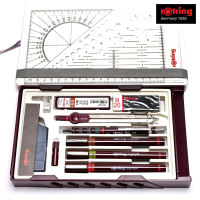
rOtring Isograph Technical Drawing Pen Set - Master College Set with Compass and Adaptor for Architecture and Engineering Student School
₱3,468.25
Buy on Lazada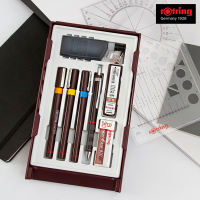
rOtring Isograph Technical Drawing Pen Set - College Set with Adaptor for Drafting Architecture and Engineering Student School
₱2,960.00
Buy on Lazada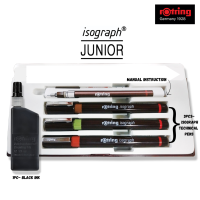
rOtring Isograph Junior Technical Drawing Pen Set - for College Drafting Architecture Engineering School Office
₱2,640.00
Buy on Lazada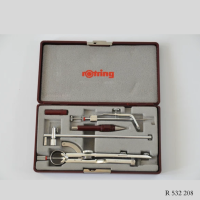
rOtring Compass Set for Technical Drawing Drafting Geometry Architecture and Engineering College Student School
₱6,519.00
Buy on Lazada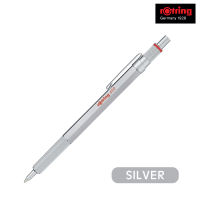
rOtring 600 Premiun Ballpoint Pen - Medium Tip Full Metal Hexagonal Body 0.5/0.7 Black Silver Red Blue Green for College Writing Pen Architecture Engineering School Office
₱2,509.00
Buy on Lazada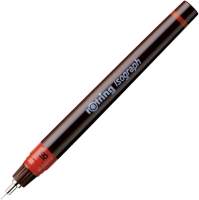
rOtring Isograph Technical Drawing Pen for College Drawing Drafting Architecture Engineering School Office
₱853.00
Buy on Lazada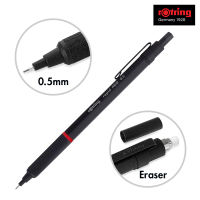
rOtring Rapid PRO Premiun Mechanical Pencil Full metal hexagonal body 0.5/0.7/2.0 Black or Silver for College Drafting Drawing Pen Architecture Engineering School Office
₱2,021.00
Buy on Lazada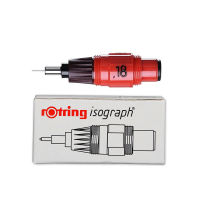
rOtring Isograph Nib Replacement for Technical Drawing Pen for College Drawing Drafting Architecture Engineering
₱748.00
Buy on LazadaAbout Rotring
Overview
Rotring, usually stylized as rOtring, is a German-origin brand best known for technical drawing instruments, mechanical pencils, technical pens, and precision writing tools. The brand is particularly associated with architects, engineers, designers, artists, draftspeople, students, and stationery enthusiasts.
Its defining visual feature is the red ring around many of its instruments. Indeed, the German name roter Ring literally means “red ring,” and the red ring became an official symbol associated with the brand in 1961.
Today, Rotring is owned by Newell Brands and operates within its writing-instrument portfolio. 1 Newell describes Rotring as a brand focused on precision and quality tools for sketching, writing and drawing, serving everyone from industrial designers and architects to artists and students. 2
| Category | Information |
|---|---|
| Brand | Rotring |
| Founded | 1928 |
| Origin | Germany |
| Original base | Hamburg |
| Industry | Writing instruments / technical drawing / stationery |
| Known for | Mechanical pencils, technical pens, drafting instruments |
| Famous design element | Red ring |
| Major product families | 600, 800, Tikky, Isograph, Rapidograph, ArtPen |
| Current owner | Newell Brands |
| Parent/operating organization | Sanford / Newell Brands |
| Primary users | Architects, engineers, designers, artists, students and writers |
The Name “Rotring”
The name Rotring comes from the German words “roter Ring,” meaning “red ring.”
The red ring is not merely decorative. It became one of the most recognizable elements of Rotring’s product identity and eventually gave the company its name. The brand’s own historical material says that in 1961, the German roter Ring became the official name for products carrying the red-ring identity. 3
This is why a classic Rotring instrument is immediately recognizable by a combination of:
- A restrained industrial design
- Black, silver, or dark metallic finishes
- A red identifying ring
- Cylindrical or hexagonal geometry
- Strong emphasis on precision
- Relatively substantial construction
Foundation — 1928
Rotring’s history begins in 1928 in Hamburg, Germany.
The company initially developed writing instruments rather than mechanical pencils. Its early breakthrough was an unusual nibless fountain pen, later known as the Tintenkuli or Tiku. Instead of a conventional fountain-pen nib, it used a tubular writing point combined with an ink-flow regulating system. 4
This was an important conceptual step toward the type of precision writing technology for which Rotring would eventually become famous. The company’s early development also coincided with the enormous influence of Bauhaus and German modernism.
Rotring and Bauhaus Design
One of the most important things about Rotring is that its visual identity developed during the same period in which Bauhaus was transforming European design.
Bauhaus emphasized:
- Functionality
- Simplicity
- Geometric forms
- Industrial production
- Eliminating unnecessary ornament
- Combining art with technology
Rotring’s own heritage material explicitly identifies Bauhaus as a major influence on its design philosophy.
This helps explain why Rotring products tend to look functional rather than decorative. A Rotring pencil is generally designed to look like a tool. That distinction is important. For example, a luxury fountain pen might emphasize jewelry-like materials, decorative finishes and traditional craftsmanship. Rotring historically approached writing instruments more like precision instruments.
The Tintenkuli
The Tintenkuli was one of the foundational products in Rotring’s history.
Introduced in 1928, it used a tubular point rather than a conventional fountain-pen nib. The design was subsequently patented in 1931. By 1932, Rotring was exporting the product to 34 countries.
The significance of the Tintenkuli is that it established several characteristics that would later become central to Rotring:
controlled ink flow + precision + technical functionality + industrial design
This was essentially the beginning of the company’s transition toward specialized precision writing.
Expansion During the 1930s–1950s
During the 1930s, Rotring continued experimenting with writing instruments. In 1935, it introduced an early Multipen, allowing multiple writing functions to be combined into one instrument. 5
After World War II, the company continued developing technical writing technologies. The most important development came in 1953:
Rapidograph
Rotring developed the Rapidograph, a technical pen designed specifically to make technical drawing easier and more precise. The company describes the Rapidograph as a development that helped establish the technical pen category. 6
This was arguably the most important technological stage in Rotring’s history. Instead of being primarily a fountain-pen company, Rotring increasingly became associated with technical drawing.
The Rise of the Technical Pen
Before modern CAD software, architects and engineers often produced drawings by hand. Technical drawings required:
- Consistent line widths
- Extremely precise lines
- Controlled ink flow
- Repeatable results
- Specialized nib sizes
- Compatibility with drawing standards
Rotring’s technical pens were designed for exactly this environment. The company’s Rapidograph and later Isograph systems became particularly associated with architectural and engineering drawing.
This explains why older Rotring advertisements and catalogs are strongly connected with architecture, engineering, industrial design, cartography, drafting, and technical illustration.
Isograph
The Rotring Isograph was introduced in 1976.
It became one of Rotring’s major technical drawing pens and remains part of the brand’s product portfolio today. The original Isograph development emphasized grip comfort and precision. 7
Unlike an ordinary ballpoint or fountain pen, an Isograph is intended for controlled technical lines. Different nib sizes allow users to create standardized line widths, making the system especially useful for technical drawing.
The Red Ring Becomes the Identity
The red ring became formally associated with the Rotring identity in 1961. 8
This is probably the single most important piece of Rotring’s branding. Instead of relying on a large logo, Rotring could put a small red ring on a mostly black or metallic instrument. The result is extremely recognizable.
It also fits the company’s design philosophy: minimal visual information, maximum functional identity.
Mechanical Pencils Enter the Picture
Although Rotring is historically famous for technical pens, mechanical pencils eventually became one of its most recognizable product categories.
A major milestone occurred in 1979, when the first Rotring Tikky fine-lead mechanical pencil was introduced. 9
The Tikky became particularly famous for its ergonomic grip and technical-pencil character. It helped move Rotring beyond professional drafting into the broader worlds of education, everyday writing, sketching, design, illustration, and stationery collecting.
The Tikky
The Tikky is arguably Rotring’s most accessible mechanical-pencil family.
Its design emphasizes:
- Relatively light weight
- Comfortable grip
- Precise lead control
- Replaceable leads
- Technical-pencil geometry
- Practical everyday use
The Tikky became especially associated with 0.5 mm mechanical pencils, although the family has existed in different configurations. The second-generation Tikky II arrived in 1997.
Today, Rotring continues to sell Tikky products, including mechanical pencils and writing instruments.
The Legendary Rotring 600
If someone asks for the most iconic modern Rotring mechanical pencil, the answer is probably the Rotring 600.
The original 600 debuted in 1989. It represented Rotring’s move into the premium writing-instrument market.
The design is famous for its:
- Hexagonal barrel
- Metal construction
- Knurled grip
- Substantial weight
- Fixed lead sleeve
- Minimalist industrial appearance
- Red ring
The hexagonal shape has a practical purpose: it prevents the pencil from rolling around on a drafting table. Rotring’s historical account says the 600 was machined from a single piece of brass and given substantial weight so that users did not need to apply excessive pressure when drawing.
That is a very good example of Rotring’s design philosophy: form follows function. The unusual shape isn’t there simply to look cool—it solves a practical problem.
Why the 600 Became a Cult Product
The Rotring 600 eventually became much more than a professional drafting pencil. It became popular among architects, designers, engineers, students, writers, stationery collectors, and mechanical-pencil enthusiasts.
Its appeal comes from the combination of industrial design and tactile experience. The pencil feels like a miniature piece of machinery rather than a disposable stationery product. This has helped the 600 remain culturally relevant even as digital design tools have largely replaced traditional drafting.
The Rotring 800
The Rotring 800 arrived in 1993.
Interestingly, the original line was known as the Rotring 600 Gold before becoming the 800 series.
The 800 occupies a more premium position than the 600. One of its most recognizable features is the retractable mechanism, which protects the writing tip when the pencil is not being used.
The basic philosophy remains the same: precision instrument + minimal industrial design.
Rotring and Fountain Pens
Although Rotring is most famous today for mechanical pencils and technical pens, it has also produced conventional writing instruments. Notable examples include fountain pens, rollerballs, ballpoints, calligraphy pens, and multipens.
The ArtPen, introduced in 1984, was an important example. It was designed as a calligraphy fountain pen and expanded Rotring’s presence in artistic handwriting.
The ArtPen
The ArtPen occupies an interesting position within the brand.
Where a Rapidograph is primarily about technical precision, the ArtPen is about expressive writing. It is associated with calligraphy, handwriting, lettering, creative writing, and artistic typography.
This demonstrates that Rotring’s concept of precision isn’t restricted to engineering. The brand has historically tried to cover both sides: technical precision and creative expression.
Rotring’s Design Philosophy
The easiest way to understand Rotring is through five concepts:
1. Precision
The brand was built around controlled writing and drawing.
2. Functionality
Products are designed primarily as tools.
3. Ergonomics
Grip, weight, balance and handling are treated as important engineering problems.
4. Minimalism
Decoration is generally secondary to the function of the object.
5. Durability
Many classic Rotring products are constructed to feel substantially more durable than ordinary disposable stationery.
These ideas are closely connected with the Bauhaus influence acknowledged by Rotring itself.
Major Product Families
Today, the Rotring catalog includes several important categories.
Technical pens
- Isograph
- Rapidograph
Mechanical pencils
- 600
- 800
- 500
- Tikky
- Other educational/everyday models
Ballpoint and rollerball pens
- 600
- 800
- Other writing ranges
Fountain/calligraphy pens
- ArtPen and related products
Accessories
- Technical ink
- Pencil leads
- Refills
- Drawing accessories
The current official catalog includes products such as the Isograph Set, 600 Gel, 500, Tikky Graphic Fineliner, 800 Ballpoint and Tikky mechanical pencils. 10
Rotring and Architecture
Perhaps no professional field is more closely associated with Rotring than architecture.
Before widespread CAD adoption, architectural drawing was a highly specialized manual process. A typical drafting setup could contain technical pens, mechanical pencils, drawing boards, rulers, templates, compasses, technical ink, and lettering tools.
Rotring eventually produced many of these tools. Its 600 mechanical pencil, in particular, was designed with the architectural drawing environment in mind.
Even after CAD became dominant, Rotring retained a strong connection with architecture because architects continued using mechanical pencils for sketching, concept development, diagrams, notes, and freehand studies.
Rotring and Engineering
The engineering connection is similar. Technical pens were historically important for producing precise engineering drawings, while mechanical pencils were useful for calculations, annotations, construction drawings, diagrams, and technical sketches.
The brand therefore developed an identity closer to engineering equipment than ordinary stationery. That is one reason Rotring products often feel different from brands such as Paper Mate, BIC or ordinary school-pencil manufacturers.
Rotring and Artists/Designers
Rotring is not exclusively an engineering brand. Artists and designers use its products for line drawing, illustration, architectural sketching, typography, concept art, technical illustration, and graphic design.
The Isograph and Rapidograph are particularly useful when a creator wants a highly controlled line. Meanwhile, the mechanical pencils are useful for preliminary sketches.
Acquisition by Sanford / Newell
A major turning point came in 1998. Rotring became part of Sanford, which was itself part of the Newell organization. Newell’s SEC filings record the acquisition of the Rotring Group on September 30, 1998.
Newell Brands now identifies Rotring as one of its brands. This means that modern Rotring is not an independent German stationery company in the way it was during much of the 20th century. Instead, it is a heritage brand within a much larger international consumer-products company.
Rotring After the 1990s
The late 1990s and early 2000s saw Rotring expand beyond its traditional technical-drawing identity. The company introduced products such as Initial, Core, SKYYN, Newton, updated Tikky products, and various premium writing instruments.
Its brand strategy increasingly combined fine writing, education and office products with its traditional technical identity.
The Digital Age
Ironically, Rotring’s traditional products became increasingly specialized as computers transformed professional drafting. CAD software reduced the need for manual technical drawings, technical pens, drafting boards, mechanical lettering, and hand-produced engineering plans.
Yet this did not eliminate Rotring. Instead, the brand increasingly occupied three different markets: Professional tools → Education → Enthusiast/stationery culture.
The 600 and 800 mechanical pencils are particularly important here. They are no longer only tools for professional draftspeople. They have become desirable objects for people who simply appreciate well-designed stationery.
Why Rotring is Popular with Stationery Enthusiasts
There are several reasons:
Industrial aesthetics
The products look like precision machinery.
Tactile quality
Metal barrels, knurled grips and substantial weight make them physically distinctive.
Heritage
The brand has nearly a century of history.
Recognition
The red ring is instantly identifiable.
Engineering logic
Many design decisions have functional explanations.
Collectibility
Different generations and discontinued models have created a significant collector community.
There is even a privately operated Online Rotring Museum documenting vintage and rare Rotring instruments, although it is not officially operated by Rotring or Newell Brands.
Rotring’s Visual Identity
A classic Rotring object often has a recognizable visual vocabulary: Black / silver + red ring + geometric form + exposed engineering details.
This is quite different from traditional luxury stationery. Montblanc, for example, generally communicates luxury through precious materials and formal styling. Rotring communicates quality through engineering.
The message is essentially: This isn’t jewelry that happens to write. It’s a precision tool. That distinction is central to the brand.
Rotring vs. Ordinary Mechanical Pencils
A cheap mechanical pencil is usually designed around low manufacturing cost + adequate performance + disposable consumer use.
A classic Rotring is designed around precision + ergonomics + durability + tactile experience + professional identity.
That’s why a Rotring can cost substantially more than a basic mechanical pencil despite performing the same fundamental task. You’re paying not just for the ability to hold 0.5 mm lead, but for the engineering, construction, design and brand heritage surrounding the instrument.
Rotring’s Cultural Significance
Rotring occupies an unusual position in stationery. It is simultaneously a German industrial-design heritage brand, a technical-drawing brand, an architectural tool brand, a mechanical-pencil brand, a premium stationery brand, and a collector’s brand.
Its strongest cultural achievement may be turning an otherwise ordinary object—a pencil—into something that people associate with professional precision and industrial design.
Important Historical Timeline
| Year | Event |
|---|---|
| 1928 | Rotring founded in Hamburg; Tintenkuli introduced |
| 1931 | Tubular-nib writing technology patented |
| 1932 | Tintenkuli exported to 34 countries |
| 1935 | Early Multipen introduced |
| 1953 | Rapidograph technical pen developed |
| 1954 | Rapidograph Inc. established in the USA |
| 1961 | “Red ring” becomes official brand identity |
| 1967 | Drawing sets, compasses and stencils added |
| 1976 | Isograph introduced |
| 1979 | First Tikky mechanical pencil |
| 1984 | ArtPen introduced |
| 1989 | Rotring 600 introduced |
| 1993 | Rotring 800 introduced |
| 1997 | Tikky II introduced; Rotring goes online |
| 1998 | Rotring acquired by Sanford/Newell |
| 1999 | Initial introduced |
| 2000 | Core introduced |
| 2003 | SKYYN introduced |
| Today | Brand focuses on precision writing, drawing and creative tools |
The historical dates above are primarily based on Rotring’s own heritage chronology.
What Makes Rotring Distinctive?
If you reduced the entire brand to one sentence: Rotring is a German-origin precision-writing brand that applies industrial-design and engineering principles to pens, pencils and drawing instruments.
Its identity rests on three things:
German design heritage
The brand emerged during the era of Bauhaus and European modernism.
Technical precision
Its historical innovations—particularly the Rapidograph and Isograph—were developed around technical drawing.
Industrial aesthetics
The red ring, hexagonal barrels, knurled grips, metal construction and minimalist forms became its signature.
The Rotring Legacy
Nearly a century after its foundation, Rotring’s most interesting achievement isn’t simply that it makes pencils. It created a recognizable design language for precision tools.
The classic Rotring 600, for example, is immediately recognizable even without a large logo. The same is true of its technical pens and red-ring identity. That is a sign of unusually successful industrial branding.
From the Tintenkuli in 1928 to the Rapidograph, Isograph, Tikky, 600 and 800, Rotring’s history can essentially be viewed as a progression: fountain pen → precision pen → technical drawing tool → mechanical pencil → premium industrial stationery.
And that is why Rotring remains one of the most recognizable names in the world of technical and precision stationery.