Shop on Lazada
Royal Enfield products
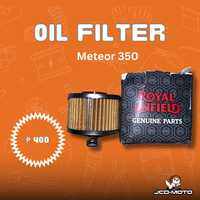
ROYAL ENFIELD METEOR 350 GENUINE OIL FILTER 1570120/B HUNTER 350 METEOR 350 CLASSIC 350
₱500.00
Buy on Lazada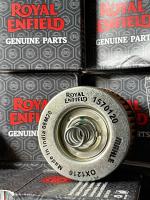
ROYAL ENFIELD OIL FILTER FOR CLASSIC 350 REBORN / 350 METEOR PARTS NO. 1570120/B
₱510.00
Buy on Lazada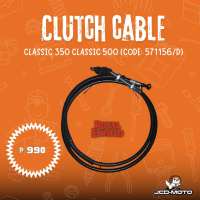
ROYAL ENFIELD CLUTCH CABLE FOR CLASSIC 350 CLASSIC 500
₱1,300.00
Buy on Lazada
ROYAL ENFIELD OIL FILTER FOR CLASSIC 350 500 AND GT 5353
₱450.00
Buy on Lazada
ROYAL ENFIELD CLASSIC 350 AIR FILTER
₱1,200.00
Buy on Lazada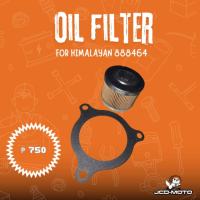
ROYAL ENFIELD HIMALAYAN OIL FILTER 888464
₱750.00
Buy on Lazada
ROYAL ENFIELD AIR FILTER FOR CLASSIC 500 581007/A
₱1,350.00
Buy on Lazada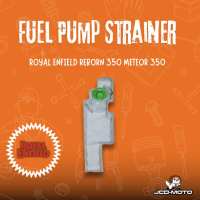
ROYAL ENFIELD METEOR 350 REBORN 350 FUEL FILTER
₱1,200.00
Buy on LazadaAbout Royal Enfield
Royal Enfield is a historic motorcycle marque with origins in Redditch, Worcestershire, England, though its modern manufacturing and corporate identity are centred in India. The company traces its motorcycle lineage to 1901, when the first Royal Enfield motorcycle was produced.1 Today, Royal Enfield operates as a division of Eicher Motors Limited and is best known for motorcycles that blend classic styling, relatively simple mechanical character, and modern engineering.1
Royal Enfield describes itself as the oldest motorcycle brand in continuous production, a distinction based on its unbroken manufacturing history beginning in 1901.1
Quick facts
| Category | Information |
|---|---|
| Brand | Royal Enfield |
| Industry | Motorcycles / Automotive |
| Founded | 1901 as a motorcycle manufacturer |
| Origin | Redditch, Worcestershire, England |
| Modern headquarters / major operations | Chennai, Tamil Nadu, India |
| Parent company | Eicher Motors Limited |
| First motorcycle | Royal Enfield motorcycle, 1901 |
| Most iconic model | Bullet |
| Bullet introduced | 1932 |
| Major Indian production | Began in 1955–56 |
| Current identity | Indian-based global motorcycle brand with British heritage |
| Main market segment | Middleweight motorcycles |
| Known for | Retro design, distinctive engines, touring, adventure and classic motorcycles |
| Historic slogan | “Made Like a Gun” |
Origins: before the motorcycles
The Royal Enfield story begins before motorcycles existed. In 1891, entrepreneurs Albert Eadie and Robert Walker Smith acquired George Townsend & Co., a business in Redditch with experience producing needles and bicycles. In 1893, the company obtained a contract to supply precision components to the Royal Small Arms Factory at Enfield, Middlesex.1
This association with Enfield inspired the adoption of the Enfield name, while the word “Royal” was later added to create the Royal Enfield identity. The famous phrase “Made Like a Gun” also emerged from this connection to precision arms manufacturing.1 The company initially produced bicycles and experimented with motorised vehicles before moving into motorcycles.
The first Royal Enfield motorcycle — 1901
Royal Enfield produced its first motorcycle in 1901.1 Designed by Robert Walker Smith and French engineer Jules Gotiet/Gobiet, the machine used a small approximately 1.5 hp engine mounted ahead of the steering head, with power transmitted to the rear wheel through a long rawhide belt.
Although it looked radically different from the motorcycles associated with Royal Enfield today, this machine established the beginning of a lineage spanning more than a century.1 This foundation supports Royal Enfield’s claim to being the world’s oldest motorcycle brand in continuous production.1
Early motorcycles and racing
During the early 20th century, Royal Enfield experimented with numerous motorcycle configurations. The company produced single-cylinder, V-twin, two-stroke, four-stroke, competition, sidecar-capable, and military motorcycles.1
Royal Enfield also participated in motorcycle competitions and reliability trials. In 1904, a Royal Enfield reportedly won a documented road race in Ireland, demonstrating an interest in performance as well as transportation.1 In 1909, the company introduced its first V-twin, powered by a Swiss Motosacoche engine.1
Royal Enfield and the World Wars
Royal Enfield became heavily involved in military production during both World Wars. During World War I, the company supplied motorcycles to several Allied forces, including the British, Belgian, French, United States, and Imperial Russian armies.1
During World War II, Royal Enfield produced motorcycles and bicycles for military purposes. One of its most famous wartime machines was the 125cc Royal Enfield WD/RE, popularly known as the “Flying Flea.” It was designed to be transported and dropped with paratroopers in a specially designed parachute container.1 This military history contributed significantly to the brand’s later reputation for ruggedness and durability.
The birth of the Bullet — 1932
Perhaps the single most important event in Royal Enfield history occurred in 1932, when the Bullet was introduced.1 The original Bullet was offered in 250cc, 350cc, and 500cc versions. It featured an inclined “sloper” engine, twin-port cylinder head, foot-operated gear change, and high-compression pistons. The 500cc version used a four-valve cylinder head and was capable of around 90 mph in period form.1
The Bullet eventually became the defining symbol of Royal Enfield. Its name has survived for generations, making it one of the longest-running motorcycle model names in automotive history.
Royal Enfield comes to India
Royal Enfield’s relationship with India began before local manufacturing commenced. In 1949, Madras Motors began importing Royal Enfield motorcycles into India. The relationship gained importance when the Indian Army began purchasing Bullets.1
In 1952, the Indian Army ordered hundreds of 350cc Bullets for border patrol duties. The motorcycles proved particularly useful because they were considered rugged, relatively simple, and suitable for difficult terrain.1 This military connection was critical to Royal Enfield’s future in India.
Enfield India — 1955
In 1955, the British Royal Enfield company partnered with Madras Motors to establish Enfield India.1 A manufacturing facility was constructed at Tiruvottiyur near Madras (now Chennai). Initially, motorcycles were supplied as completely knocked-down (CKD) kits from Britain and assembled locally; over time, increasing numbers of components were manufactured in India. The factory opened in 1956.1
This decision ultimately changed the history of Royal Enfield. While motorcycle production eventually disappeared from the original Redditch operation in Britain, Royal Enfield survived in India.
The British factory closes
The original British Royal Enfield motorcycle business struggled as the industry became increasingly competitive and manufacturers moved toward newer technology and modern designs. By the 1960s, the Redditch operation had been reduced to a small number of models, and the factory eventually closed in 1967.1
However, production continued in India. This remains one of the most unusual aspects of the company’s history: a motorcycle brand originating in Britain effectively survived through its Indian manufacturing operation.1
The Indian Bullet era
For decades, the Indian-made Bullet remained remarkably close to its historical design. While competitors adopted lighter motorcycles, modern engines, and changing styling, Royal Enfield retained the Bullet’s traditional character.1
This created contrasting perceptions. To some riders, the machine was technologically old-fashioned; to others, that mechanical character was precisely what made it special. The Bullet became deeply associated with Indian military and police use, long-distance touring, rural transportation, enthusiast culture, customisation, the Himalayan region, and traditional Indian motorcycling. Consequently, Royal Enfield developed an identity that was increasingly Indian in culture while retaining British historical roots.1
Eicher Motors acquires Enfield India — 1994
A major turning point occurred in 1994, when the Eicher Group acquired Enfield India Limited.1 The company was subsequently renamed Royal Enfield Motors Limited.1 Eicher eventually developed Royal Enfield into the core of its two-wheeler business.
This ownership structure remains significant today: Royal Enfield is not an independent publicly traded motorcycle company but operates as a division under Eicher Motors.1
The Classic revival
One of Royal Enfield’s most important modern developments was the revival of the classic motorcycle aesthetic. Rather than competing directly with Japanese manufacturers on outright performance, the company focused on motorcycles combining classic appearance, modern reliability, and accessible performance.1
The Classic 500, introduced during this revival, became particularly successful and helped establish the modern design philosophy. The company describes its strategy as centred on simple, engaging, and accessible motorcycling within the middleweight segment.1
The 2000s revival
During the 2000s, Royal Enfield began transforming from a largely old-fashioned Indian manufacturer into a global lifestyle brand. A key development was the introduction of the Unit Construction Engine (UCE).1
The 500cc UCE arrived in India in 2008, providing a more modern platform while retaining the classic appearance.1 This period established the formula defining modern Royal Enfield: maintaining visual and emotional connections to the past while progressively modernising underlying engineering.
The Continental GT and return to international markets
Royal Enfield expanded beyond its traditional Bullet and Classic lines with the Continental GT. Reviving the classic café racer concept, it offered a lighter and sportier motorcycle.1
This represented a strategic shift: rather than relying entirely on historical models, the company began creating motorcycles for specific modern riding styles.
The Himalayan
In 2016, Royal Enfield introduced the Himalayan, its first purpose-built adventure motorcycle.1 Unlike traditional road-oriented machines, the Himalayan was designed specifically for mixed-terrain riding and long-distance travel. It used the 410cc LS410 engine, a purpose-designed chassis, and long-travel suspension.1
The model demonstrated that Royal Enfield could use its heritage to create something new rather than simply reproducing old designs. It also connected strongly with India’s Himalayan riding culture.1
The 650 Twin revolution
Another major turning point came with the Interceptor 650 and Continental GT 650. These models introduced the modern 648cc parallel-twin engine, providing a significantly more powerful and sophisticated platform while retaining classic styling.1
The 650 twins allowed Royal Enfield to compete in a higher-performance middleweight category without abandoning its identity. The philosophy remained focused not on maximum horsepower, but on accessible performance and character.1
What Royal Enfield stands for
Royal Enfield’s identity differs from manufacturers such as Yamaha, Kawasaki, Honda, or Ducati. It does not primarily sell motorcycles based on maximum horsepower, acceleration, cutting-edge racing technology, or ultra-lightweight construction.1
Instead, Royal Enfield emphasises heritage, design, mechanical character, riding experience, adventure, touring, individuality, community, and accessible middleweight motorcycles. This approach has secured a distinctive position in the global market.1
Design philosophy
Royal Enfield motorcycles generally employ a neo-retro design language, appearing traditional while incorporating contemporary engineering.1 Typical elements include round headlights, teardrop or traditionally shaped fuel tanks, exposed mechanical components, spoked or classic-style wheels, simple instrument layouts, traditional paint schemes, visible engine architecture, upright riding positions, and minimalist bodywork.
The result is a motorcycle that visually connects with mid-20th-century machines while functioning as a modern vehicle.1
Major Royal Enfield motorcycle families
Over its history, Royal Enfield has produced numerous motorcycles. Key families include:
Bullet
Introduced in 1932, the Bullet is arguably Royal Enfield’s most famous name and became synonymous with the brand, developing a particularly strong following in India.1
Classic
The Classic family emphasises traditional styling inspired by Royal Enfield’s mid-century motorcycles.1
Thunderbird
Developed as a cruiser-oriented motorcycle, the Thunderbird was particularly popular in the Indian market.1
Continental GT
A café-racer-inspired motorcycle designed around a more sporting riding position.1
Interceptor
The modern Interceptor 650 combines classic styling with the 648cc parallel-twin engine.1
Himalayan
An adventure-oriented motorcycle designed for touring and mixed-terrain riding.1
Manufacturing
Modern Royal Enfield motorcycles are primarily manufactured in India, with major operations based around Chennai, Tamil Nadu.1 The company also maintains engineering and development capabilities in the United Kingdom alongside its Indian operations.1
This gives the modern brand an unusual international character: British heritage combined with Indian manufacturing and global engineering and marketing. This combination is a defining characteristic of contemporary Royal Enfield.1
Global expansion
Royal Enfield has expanded substantially beyond India, selling motorcycles internationally in markets including the United Kingdom, United States, Europe, Japan, Latin America, the Middle East, South Asia, and other regions.1 The company’s strategy has increasingly focused on the global middleweight motorcycle market rather than competing primarily in the small-displacement commuter segment.1
Motorcycle culture
Royal Enfield has cultivated a culture around the idea that the journey matters as much as the destination. The brand organises and supports rides, owner gatherings, and adventure events associated with its global rider community.1
This forms a key part of its marketing strategy. Royal Enfield is positioned not merely as a transportation product but as a lifestyle and community brand.1
Significance in India
Royal Enfield’s importance in India extends beyond sales. Its motorcycles became associated with army and police service, long-distance touring, Himalayan travel, youth culture, rural India, motorcycle clubs, customisation, road trips, and a sense of rugged masculinity and individuality.1
The Bullet, in particular, achieved cultural recognition far beyond the motorcycling community. For many Indian riders, owning a Royal Enfield became less about simple transport and more about possessing a piece of motorcycling history.1
Unique market position
Royal Enfield occupies an unusual position in the global industry. It is simultaneously British in origin, Indian in survival and development, and global in current ambitions.1 Few motorcycle companies have such a complex history: a brand founded in England in 1901 ultimately found its strongest long-term base in India while using British heritage as a major component of its modern global identity.1
Philosophy
Understanding Royal Enfield requires contrasting it with performance-focused manufacturers. While typical performance brands ask how to make motorcycles faster, lighter, and more powerful, Royal Enfield asks how to make them enjoyable, distinctive, and emotionally engaging.1
Modern Royal Enfields are not technologically primitive; rather, the company deliberately emphasises character and riding experience over outright performance. This explains why models with modest specifications can maintain strong followings.1
Heritage versus modern engineering
A persistent challenge has been balancing heritage with modernisation. Excessive modernisation risks losing the character that defines the brand, while insufficient updates risk unreliability or uncompetitiveness.1
Modern history has largely involved finding a middle ground: old-school design combined with modern manufacturing, contemporary safety and emissions technology, and accessible performance. The evolution from the old Bullet platform to modern 350cc, 450cc, and 650cc families illustrates this transition.1
Significance in motorcycle history
Royal Enfield is historically significant for several reasons:1
- It traces its motorcycle history to 1901.
- It is associated with one of the world’s longest-running motorcycle names, the Bullet.
- It played a major military role during the World Wars.
- It became deeply integrated into India’s motorcycle history.
- Original British production ended, but the brand survived through India.
- It successfully transformed from a traditional manufacturer into a global modern-classic brand.
- It helped popularise the modern middleweight retro motorcycle category.
Timeline
| Year | Event |
|---|---|
| 1891 | Albert Eadie and Robert Walker Smith acquire George Townsend & Co. |
| 1893 | Company becomes associated with Enfield and the “Royal Enfield” identity develops |
| 1898 | First motorized vehicle/quadricycle developed |
| 1901 | First Royal Enfield motorcycle produced |
| 1909 | First Royal Enfield V-twin introduced |
| 1914 | First Royal Enfield two-stroke enters production |
| 1932 | Bullet introduced |
| 1940s | Major wartime motorcycle production, including Flying Flea |
| 1949 | Royal Enfield motorcycles imported into India by Madras Motors |
| 1952 | Indian Army places major Bullet orders |
| 1955 | Enfield India established |
| 1956 | Tiruvottiyur factory begins motorcycle production |
| 1967 | Original Redditch motorcycle production ends |
| 1977 | Indian Royal Enfield begins exporting 350cc Bullets to Britain and Europe |
| 1993 | Enfield Diesel introduced |
| 1994 | Eicher acquires Enfield India |
| 2008 | 500cc Unit Construction Engine introduced in India |
| 2013 | Continental GT introduced |
| 2016 | Himalayan introduced |
| 2018 | Interceptor 650 and Continental GT 650 introduced |
| 2020s | Royal Enfield expands its modern-classic, roadster, cruiser and adventure ranges globally |
Royal Enfield today
As of 2026, Royal Enfield remains a major global middleweight motorcycle manufacturer under Eicher Motors. Its portfolio spans classic roadsters, roadsters, cruisers, café-racer-inspired motorcycles, and adventure motorcycles, continuing to build its identity around heritage-inspired styling and modern engineering.1
The brand’s greatest competitive advantage is the story surrounding the motorcycle. A Royal Enfield connects modern riders to a history beginning with bicycles and precision engineering in Victorian-era England, passing through two World Wars, the British motorcycle industry, the Indian Army, the birth of Indian manufacturing, the survival of the Bullet, and finally the modern global market.1