Shop on Lazada
Russell Hobbs products
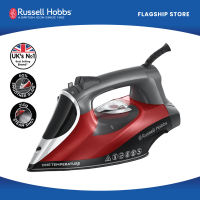
Russell Hobbs 25090-PH One Temperature Garment Flat Iron l Stainless Steel Body Rapid Boil Function Auto Shut Off Feature
₱5,950.00
Buy on Lazada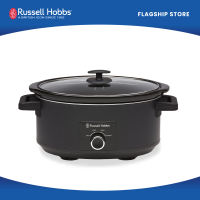
Russell Hobbs RHSC7-PH 7L Slow Cooker l 3 Heat Settings Non-Stick Ceramic Bowl Tempered Glass Lid
₱4,225.00
Buy on Lazada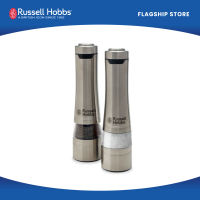
Russell Hobbs RHPK4000 Salt and Pepper Electric Grinder l Battery Operated Adjustable Grinding Size
₱3,055.00
Buy on Lazada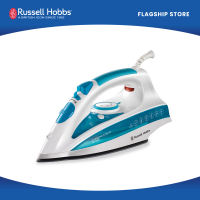
Russell Hobbs 20562-PH Professional Steam Glide Iron l Ceramic Soleplate Dry Steam Spray Burst 300ml Water Tank
₱2,850.00
Buy on Lazada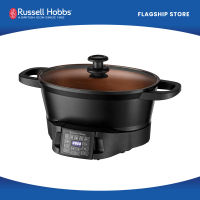
Russell Hobbs RHMC30-PH Good to Go 6.5L Multi Cooker l Sear Roast Sous Vide Slow Cook Steam Rice Boil Keep Warm
₱8,395.00
Buy on Lazada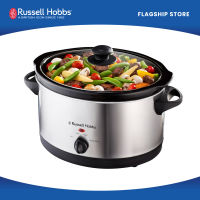
Russell Hobbs 22740-PH Cook at Home Electric Slow Cooker l Ceramic Pot 3 Temperature Settings
₱3,948.00₱4,935.00
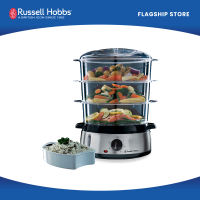
Russell Hobbs 19270-PH Cook at Home Food Steamer l 3 Layers Drip Tray Auto Shut-Off Function
₱4,975.00
Buy on Lazada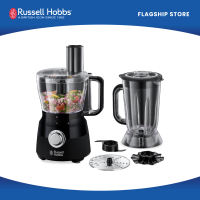
Russell Hobbs RHFP5BLK-PH Desire Matte Black Food Processor | 5 Chopping Slicing and Dough Attachments
₱9,750.00
Buy on LazadaAbout Russell Hobbs
Russell Hobbs is a British-origin consumer appliance brand best known for its kettles, toasters, coffee makers, cooking appliances, irons, and other small household devices. Founded in the United Kingdom in 1952 by Bill Russell and Peter Hobbs, the brand played a significant role in the development of automatic electric kettles and modern kitchen appliances. Today, Russell Hobbs operates as part of Spectrum Brands, a multinational consumer products company.1
Overview
| Category | Information |
|---|---|
| Brand | Russell Hobbs |
| Founded | 1952 |
| Founders | Bill Russell and Peter Hobbs |
| Origin | United Kingdom |
| Industry | Consumer electronics / household appliances |
| Main products | Kettles, toasters, coffee makers, air fryers, cooking appliances, irons, steamers, blenders and other small appliances |
| Notable innovation | Automatic electric kettle |
| Current parent company | Spectrum Brands |
| Brand positioning | Practical, design-focused household appliances |
| Key markets | United Kingdom, Europe, Australia and other international markets |
History
Foundation — 1952
Russell Hobbs was established in 1952 when Bill Russell and Peter Hobbs joined forces to develop household appliances designed around everyday domestic needs.
Their first major product was the CP1 coffee maker, which incorporated a keep-warm function. At the time, this feature provided important convenience by allowing brewed coffee to remain warm without requiring immediate preparation before drinking. Russell Hobbs identifies the CP1 as its inaugural product and the beginning of its focus on practical innovations for the home.2
The K1 automatic kettle — 1955
A pivotal milestone in the company’s history occurred in 1955 with the introduction of the K1 automatic electric kettle.
The K1 is widely associated with the early identity of Russell Hobbs and is described by the company as the first automatic electric kettle. Its automatic shut-off mechanism transformed the kettle from a manually monitored device into a more convenient everyday household product.3
This innovation became particularly significant in Britain, where electric kettles subsequently became a staple of domestic kitchens.
Rapid expansion — 1960s–1970s
Russell Hobbs expanded rapidly during the following decades. Historical records indicate that production exceeded one million appliances in 1967 and reached more than five million products by 1975.4
During this period, Russell Hobbs developed a strong position in several everyday appliance categories, particularly:
- Electric kettles
- Coffee makers
- Toasters
- Irons
- Other kitchen appliances
By 1977, the company described itself as the world’s leading kettle producer and the UK’s number-one brand for coffee makers and toasters.5
Development of the product range
Over the decades, Russell Hobbs moved beyond its original kettle and coffee maker business.
Important products and ranges included the Chelsea Tea Machine, introduced in 1980; the Classic Toaster, launched in the 1990s; and the Millennium Kettle, which introduced fast-boiling technology. The company also developed glass appliances, steam irons, and increasingly sophisticated kitchen products.6
This evolution reflects a broader change in the small appliance industry: rather than simply manufacturing functional heating appliances, Russell Hobbs increasingly emphasized design, convenience, speed, and ease of use.
Corporate ownership
Russell Hobbs has undergone several changes in corporate ownership throughout its history.
In the late 20th century, the brand became associated with Pifco and subsequently Salton, a US-based appliance company. Salton acquired Pifco in 2001 and increasingly focused on Russell Hobbs as one of its principal brands.7
In 2007, Salton and Applica merged. The combined business subsequently adopted the Russell Hobbs name, becoming Russell Hobbs, Inc. in 2009.8
Acquisition by Spectrum Brands — 2010
A major turning point occurred in 2010 when Russell Hobbs combined with Spectrum Brands.
The transaction was completed on June 16, 2010, after which Russell Hobbs became part of the Spectrum Brands corporate structure.9
This combination brought Russell Hobbs together with a much broader portfolio of consumer brands and established Spectrum Brands as a major player in the global household appliance market.10
Today, Russell Hobbs remains a brand within the Global Appliances business of Spectrum Brands, rather than operating as the independent British appliance company founded in 1952.
Products
The current product portfolio of Russell Hobbs covers several areas of the home.
Kitchen appliances
The company’s most recognizable products remain small kitchen appliances, including:
- Electric kettles
- Toasters
- Coffee makers
- Espresso and coffee machines
- Air fryers
- Slow cookers
- Rice cookers
- Blenders
- Food processors
- Hand mixers
- Juicers
- Grills and sandwich makers
The kettle remains particularly important to the brand due to its historical connection with the K1.
Floor and garment care
Russell Hobbs also produces appliances designed for household cleaning and garment care, including:
- Steam irons
- Steam generators
- Garment steamers
- Vacuum cleaners
- Other home-care appliances
The company has consequently evolved from a specialist kettle and coffee maker manufacturer into a broader small domestic appliance brand. Its current positioning emphasizes helping consumers spend less time on routine household tasks.11
Design philosophy
A defining characteristic of Russell Hobbs is its combination of functionality and visual design.
The brand’s products traditionally emphasize relatively simple controls and recognizable forms, while newer ranges incorporate features such as:
- Touch controls
- Digital displays
- Fast-boiling technology
- Removable components
- Dishwasher-safe parts
- Temperature controls
- Programmable functions
- Energy-conscious features
Russell Hobbs describes its philosophy as developing “thoughtful” products based on people’s everyday lives and household routines.12
This places the brand somewhere between purely utilitarian appliance manufacturers and highly design-oriented premium appliance brands.
Brand identity
The identity of Russell Hobbs is strongly connected to British kitchen culture.
Its historical association with the electric kettle is especially important. The K1 helped establish a product category that became an everyday fixture in British homes, giving Russell Hobbs a distinctive place in the history of UK household appliances.
The brand has also maintained a visual connection between traditional British appliance design and modern consumer technology. Older products such as the K1 are remembered for their functional engineering, while contemporary ranges tend to emphasize appearance, convenience, and modern features.
Notable milestones
| Year | Milestone |
|---|---|
| 1952 | Bill Russell and Peter Hobbs establish Russell Hobbs |
| 1952 | CP1 coffee maker introduced with keep-warm function |
| 1955 | K1 automatic electric kettle introduced |
| 1967 | Production exceeds one million appliances |
| 1975 | Production exceeds five million products |
| 1977 | Brand reaches major position in kettles, coffee makers and toasters |
| 1980 | Chelsea Tea Machine introduced |
| 1990s | Classic Toaster and other major ranges developed |
| 1996 | Millennium Kettle introduced |
| 2001 | Salton acquires Pifco and develops Russell Hobbs as a key brand |
| 2007 | Salton and Applica merge |
| 2009 | Combined company adopts Russell Hobbs, Inc. name |
| 2010 | Russell Hobbs merges with Spectrum Brands |
| Today | Russell Hobbs continues as a major small-appliance brand within Spectrum Brands |
Historical milestones are based primarily on the corporate history of Russell Hobbs and transaction records of Spectrum Brands.13
Russell Hobbs and Spectrum Brands today
The modern Russell Hobbs brand is best understood as a global consumer appliance brand with British origins, rather than simply as an independent British manufacturer.
Its parent company, Spectrum Brands, owns and manages a portfolio of consumer brands across areas including appliances and other household products. The 2010 combination formally brought Russell Hobbs into the corporate structure of Spectrum Brands.14
The Russell Hobbs name, however, continues to be used prominently on consumer products and maintains its own brand identity, product ranges, and regional websites.
Reputation and market position
Russell Hobbs is generally positioned in the mainstream-to-mid-range household appliance market. Its appeal comes from a combination of factors:
- Long history — more than seven decades of appliance development.
- Strong kettle heritage — particularly its association with the automatic electric kettle.
- Broad product selection — covering kitchen, garment-care, and household appliances.
- Accessible pricing — generally aimed at ordinary household consumers rather than the ultra-premium market.
- Design emphasis — products often combine conventional appliance functionality with contemporary styling.
- International presence — the brand operates across multiple markets rather than being limited to the UK.
What makes Russell Hobbs distinctive?
If the brand’s history is reduced to a single idea, it would be making everyday household tasks easier through small but meaningful appliance innovations.
The CP1 coffee maker addressed the inconvenience of keeping coffee warm. The K1 addressed the inconvenience of manually monitoring a boiling kettle. Later products continued the same philosophy through faster boiling, easier filling, programmable cooking, and simplified garment care.15
In that sense, the historical importance of Russell Hobbs is not necessarily that it invented every type of household appliance, but that it helped turn convenience-oriented electrical appliances into normal parts of everyday domestic life.
Official website
For current products, manuals, support information, and the company’s own history, the primary source is the Russell Hobbs official website. The company’s official history specifically documents the 1952 founding, CP1 coffee maker, and 1955 K1 kettle.16
References
- About Us | Russell Hobbs Europe
- Spectrum Brands Adds Russell Hobbs’ Portfolio of Small Appliance Brands to its Portfolio | Spectrum Brands, Inc.
- About Us
- About Us | Russell Hobbs Australia
- en.russellhobbs.com None | | Spring/Summer 202 2 | Spring/Summer 2022
- Russell Hobbs
- SEC
- Spectrum Brands Adds Russell Hobbs to Its Portfolio to Create a $3 Billion Global Consumer Products Company | Spectrum Brands, Inc.
- RUSSELL HOBBS® Celebrates U.S. Launch and Distribution with First Brand Ambassador, Kate Beckinsale | Spectrum Brands, Inc.
- Russell Hobbsの歴史 | Russell Hobbs – ラッセルホブス –
- sec.gov
- sec.gov
- sec.gov
- sec.gov
- Spectrum Brands’ Shareholders Approve Transaction With Russell Hobbs | Spectrum Brands, Inc.
- Spectrum Brands’ Shareholders Approve Transaction With Russell Hobbs | Spectrum Brands, Inc.