Shop on Lazada
RUYI products
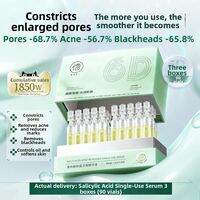
RUYI | Acne Scar Removal & Pore Minimizing Salicylic Acid & AHA Essence
₱1,607.08₱2,984.75
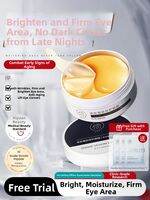
RUYI | Anti-dark Circles Under-eye Patches
₱2,207.62
Buy on Lazada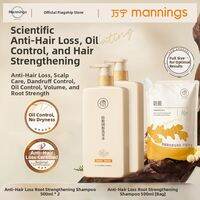
RUYI | Anti Hair Loss Strengthening Dandruff Control Shampoo
₱1,277.36₱3,496.53

RUYI | Blackhead Removal Pore Tightening Deep Cleansing Nose Mask
₱1,288.28₱2,216.83
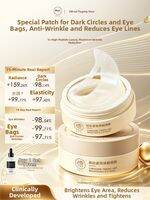
RUYI | Anti-aging Anti-wrinkle Tightening Eye Patches
₱1,951.68₱4,299.88
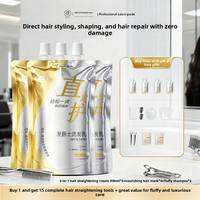
RUYI | Protein Straightening Hair Gel Softener Styling Smoothing Repair
₱2,651.87₱3,165.92
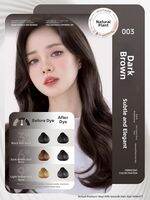
RUYI | Plant-based Natural Black Hair Dye
₱843.83₱2,221.50
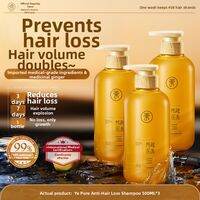
RUYI | Anti-Hair Loss Oil Control Volumizing Growth Thickening Shampoo
₱1,894.85₱2,511.71
About RUYI
Shandong Ruyi Technology Group Co., Ltd. (Chinese: 山东如意科技集团有限公司), commonly referred to as Ruyi Group or simply RUYI, is a Chinese textile, apparel, and fashion conglomerate headquartered in Jining, Shandong, China. The company traces its origins to 1972 with the establishment of the Shandong Jining Woolen Mill. Over subsequent decades, RUYI evolved from a traditional textile manufacturer into a vertically integrated group with ambitions of becoming a major global fashion entity 1.
Historically, RUYI’s business operations have encompassed wool and cotton production, spinning, weaving, dyeing, fabric manufacturing, garment production, fashion retail, and international brand management. Its corporate strategy has combined industrial textile technology with the acquisition of established fashion brands across Europe and Asia 1.
Note: “Ruyi” is not a unique brand name. Unrelated businesses using the name include a London-based womenswear label, a Chinese skincare brand, and Ningbo Ruyi/Xilin, a material-handling equipment manufacturer. This profile refers specifically to Shandong Ruyi Technology Group 2.
Company profile
| Field | Information |
|---|---|
| Full name | Shandong Ruyi Technology Group Co., Ltd. |
| Chinese name | 山东如意科技集团有限公司 |
| Common name | Ruyi Group / Shandong Ruyi |
| Founded | 1972 |
| Original name | Shandong Jining Woolen Mill |
| Headquarters | Jining, Shandong, China |
| Industry | Textiles, apparel, fashion, and manufacturing |
| Core expertise | Wool, cotton, fabrics, garment manufacturing, and fashion |
| Business model | Vertically integrated textile and apparel production + fashion brands |
| Website | chinaruyi.com |
| Positioning | Chinese textile and fashion conglomerate |
The corporate website outlines an overall philosophy centred on three themes: technology, fashion, and sustainability, utilising the slogan “Setting today’s standards with tomorrow’s vision” 1.
Name and meaning
The name Ruyi (如意) is a Chinese expression generally associated with the meanings “as one wishes”, “according to one’s wishes”, or “auspicious/fulfilling one’s wishes”. The term is also linked to the traditional Chinese ruyi scepter, a cultural object symbolising good fortune and the fulfilment of desires. Due to this positive cultural connotation, the name has been adopted by various Chinese enterprises and is not exclusive to Shandong Ruyi.
History
1972–2000: Textile origins
RUYI’s history began in 1972 when the organisation that would become Shandong Ruyi was established as the Shandong Jining Woolen Mill in Jining, Shandong. Its original business focused on wool textiles and garment manufacturing 3. During its early decades, the company developed expertise in wool spinning, worsted fabrics, weaving, dyeing and finishing, textile manufacturing, and men’s clothing. This manufacturing foundation remained central to the group even as it later pursued international fashion brands.
1990s: Expansion under Qiu Yafu
A pivotal figure in RUYI’s development was Qiu Yafu (邱亚夫), who joined senior management in the 1990s and became central to the company’s expansion. He later served as chairman of RUYI’s fashion and textile operations 3. Under his leadership, the group increasingly sought to move beyond commodity textile production towards higher-value fabrics, advanced manufacturing, and branded fashion.
2000s: From textile manufacturer to fashion group
In the early 2000s, RUYI expanded its corporate structure and increased investment in technology and international operations. The company’s strategy became increasingly vertically integrated; rather than specialising in a single stage of textile production, RUYI sought to control multiple stages of the supply chain, from raw materials to finished garments. The company describes this approach as a wool- and cotton-based integrated chain covering activities from raw-material sourcing and spinning through to weaving, dyeing, printing, and garment manufacturing 1. This vertical integration became a defining characteristic of the enterprise.
International expansion
During the 2010s, RUYI pursued an aggressive international expansion strategy. Rather than merely exporting Chinese-manufactured textiles, the company began acquiring stakes in established foreign companies and fashion houses.
Renown
Beginning in 2010, RUYI acquired a significant stake in Renown Inc., a Japanese apparel company. This investment provided exposure to an established Japanese fashion and retail business 3.
Trinity Limited
RUYI also acquired control of Trinity Limited, a Hong Kong-based premium menswear group. At various points in its development, Trinity’s portfolio included internationally recognised names such as Cerruti 1881, Gieves & Hawkes, Kent & Curwen, and D’Urban.
SMCP
One of RUYI’s most significant international investments was SMCP, the French fashion group behind Sandro, Maje, and Claudie Pierlot. RUYI acquired a controlling interest in SMCP in 2016. This acquisition was particularly notable as it granted access to the international “accessible luxury” fashion segment 1.
Aquascutum
RUYI also acquired the British heritage fashion label Aquascutum, founded in London in 1851. Aquascutum became another key component of the group’s international fashion portfolio 1.
The “Chinese LVMH” ambition
In the late 2010s, RUYI attracted substantial international attention due to its ambition to become a Chinese equivalent of LVMH. The strategy combined Chinese textile manufacturing and advanced technology with international fashion brands and global retail. The company accumulated interests in brands and companies across China, Japan, France, Britain, Switzerland, and other markets, creating what it described as a global fashion ecosystem 4. At the peak of its expansion, RUYI was associated with a portfolio containing more than 20 international brands and thousands of retail locations worldwide 4.
Major brands and assets associated with RUYI
RUYI’s historical portfolio has included or been associated with numerous international names:
| Brand / company | Country / region | Category |
|---|---|---|
| Sandro | France | Contemporary fashion |
| Maje | France | Contemporary fashion |
| Claudie Pierlot | France | Contemporary fashion |
| Aquascutum | United Kingdom | Heritage fashion |
| Cerruti 1881 | Italy/France | Luxury fashion |
| Gieves & Hawkes | United Kingdom | Bespoke/traditional menswear |
| Kent & Curwen | United Kingdom | Menswear |
| D’Urban | Japan | Menswear |
| Renown | Japan | Apparel |
| Bally | Switzerland | Luxury fashion/leather goods |
| The Lycra Company | International | Textile fibers/materials |
Historical ownership should not be confused with current ownership. RUYI’s international fashion empire underwent significant restructuring following debt issues, and some assets were subsequently sold, transferred, or placed under different ownership. For example, RUYI’s acquisition of the former Invista Apparel & Advanced Textiles business created The Lycra Company, but ownership of that business was transferred to an investment group in 2022 following financial difficulties 3.
Textile and manufacturing business
Although RUYI gained international prominence for fashion acquisitions, its foundational strength remains textile manufacturing. The company emphasises an integrated production model covering raw materials, spinning, weaving, dyeing, finishing, fabric production, and garment manufacturing. This allows RUYI to operate not merely as a fashion retailer but as a manufacturer and supplier within the textile value chain 1.
Its wool business has been particularly significant. RUYI’s textile operations have produced high-quality worsted wool and wool-blended fabrics used for suits and other garments. Manufacturing operations have also included OEM, ODM, and made-to-measure men’s tailoring 5.
Technology and innovation
Technology constitutes a major part of RUYI’s corporate identity. The company has invested in textile research and development, intelligent manufacturing, automated production, advanced spinning and weaving, dyeing and finishing technologies, fabric development, integrated production systems, and digital manufacturing. RUYI states that its intelligent-manufacturing approach applies advanced equipment across the numerous individual processes involved in transforming raw materials into finished clothing 1.
It is important to note that RUYI was not originally created as a fashion-label company; it is fundamentally a textile-manufacturing group that later expanded into branded fashion.
Fashion philosophy
RUYI’s fashion strategy has historically been based on combining Chinese industrial capabilities with established Western and Asian fashion brands. Rather than attempting to rebrand acquired labels with a Chinese identity, RUYI generally allowed individual brands to retain their existing identities. For example, Sandro represents Parisian contemporary fashion, Maje represents French women’s fashion, Aquascutum represents British heritage, Cerruti 1881 represents European luxury menswear, and Renown represents Japanese apparel heritage. This approach resulted in a diversified international brand portfolio rather than a single homogeneous fashion identity.
Global presence
At the height of its expansion, RUYI stated that its brand network reached thousands of stores across dozens of countries and regions. Corporate materials have described a network of more than 6,000 stores in over 80 countries and regions, although these figures reflect the group’s broader historical brand portfolio and should not be interpreted as a current store count for every RUYI-owned business 41. The group’s international activities have extended across China, Japan, Europe, Australia, New Zealand, North America, and other international textile and fashion markets.
Financial difficulties and restructuring
RUYI’s rapid international expansion was accompanied by substantial borrowing and financial commitments. The company’s challenges became increasingly visible around 2019–2020, when debt pressures, difficulties surrounding certain acquisitions, and the COVID-19 pandemic placed significant strain on the group 3.
One prominent example involved the former Invista Apparel & Advanced Textiles business. RUYI acquired the business in 2019 in a transaction reported at more than US$2 billion. While the business subsequently became The Lycra Company, RUYI’s financial problems eventually contributed to a change in ownership 3. Consequently, RUYI represents a notable case in the fashion industry: a company that successfully built an enormous international acquisition portfolio but subsequently faced significant financial and restructuring challenges.
Corporate identity
RUYI’s corporate website organises its identity around three major areas:
Technology
The company presents itself as a technologically advanced textile manufacturer, emphasising R&D and intelligent manufacturing.
Fashion
RUYI positions its international brand portfolio as a bridge between Chinese manufacturing capabilities and global fashion.
Sustainability
The group presents sustainability and environmental responsibility as part of its long-term development strategy 1.
Its corporate slogan is: “Setting today’s standards with tomorrow’s vision” 1.
Significance in the fashion industry
RUYI is significant within the industry for several reasons:
Illustration of China’s move up the textile value chain
Historically, China was strongly associated with large-scale garment manufacturing. RUYI attempted to move further up the value chain into premium fabrics, technology, branded apparel, and luxury fashion.
Pursuit of global acquisitions
Instead of building every fashion brand from scratch, RUYI purchased established companies with existing histories, customer bases, and distribution networks.
Combination of manufacturing and fashion
This is perhaps RUYI’s most distinctive characteristic. While traditional luxury groups often focus primarily on design, branding, and retail, RUYI has deep roots in actual textile production.
Example of the risks of rapid fashion consolidation
Its aggressive acquisition strategy created a vast international portfolio, but the associated debt and financial pressures demonstrated the risks involved in rapidly constructing a global luxury conglomerate 3.
Headquarters
Ruyi Group lists its headquarters at:
Ruyi Mansion
No. 72 Guanghe Road
Jining, Shandong, China
The official website identifies the legal corporate name as Shandong Ruyi Technology Group Co., Ltd. 1.
Distinction from other companies named RUYI
Searches for “RUYI” can produce misleading results due to unrelated entities sharing the name.
Shandong Ruyi
Textiles, apparel, and fashion — the company described in this article.
Ningbo Ruyi / XILIN
A completely different Chinese company involved in forklifts, pallet trucks, and logistics equipment. Its own history page describes Ruyi as a logistics-equipment manufacturer 6.
RUYI London
A London-based womenswear label founded and designed by Abi Imasekha and Greta Matusaite, unrelated to Shandong Ruyi 2.
RUYI / 儒意 skincare
A Chinese skincare and personal-care brand established in 2019, also unrelated to the textile conglomerate.
For research regarding the fashion and textile company, the precise full name to use is Shandong Ruyi Technology Group Co., Ltd.
Summary
RUYI is essentially a Chinese textile-to-fashion conglomerate. Its trajectory can be summarised as follows:
- 1972: Began as a woolen textile manufacturer in Shandong.
- 1990s–2000s: Developed manufacturing and textile technology.
- 2010s: Expanded aggressively internationally, acquiring and investing in major fashion companies and brands.
- Late 2010s: Sought to become a Chinese global luxury-fashion powerhouse.
- 2019–2022: Heavy debt and acquisition-related difficulties emerged.
- 2020s: Restructuring, asset disposals, and a more complex ownership landscape.
RUYI is best understood as a textile and fashion group rather than a single fashion brand. Its historical importance stems from its attempt to transform a Chinese textile manufacturer into a global fashion conglomerate 1.