Shop on Lazada
SABUY products
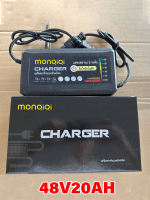
【24 hours shipping】 Intelligent Ebike Charger 48V 12AH 48V 20AH For Battery Battery Charger Universal Battery Charger Intelligent Charger Electric Bicycle
₱262.00₱339.00

Intelligent Ebike Charger 48V 12AH 48V 20AH For Battery Battery Charger Universal Battery Charger Intelligent Charger Electric Bicycle
₱253.48₱599.00

Tactical Scope Collimator Sight Red/Green Dot Reflex Sight Scope for 11mm/20mm Rail with Free Battery
₱1,069.00₱2,138.00
【clearance price】 Intelligent Ebike Charger 48V 12AH 48V 20AH For Battery Battery Charger Universal Battery Charger Intelligent Charger Electric Bicycle
₱259.93₱339.00
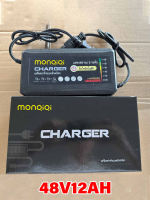
Intelligent Ebike Charger 48V 12AH 48V 20AH For Battery Battery Charger Universal Battery Charger Intelligent Charger Electric Bicycle COD
₱255.00₱599.00

【24hours delivery】Intelligent Ebike Charger 48V 12AH 48V 20AH For Battery Battery Charger Universal Battery Charger Intelligent Charger Electric Bicycle
₱260.71₱499.00
About SABUY
SABUY was the former brand and corporate name of a Thai technology and financial services group that evolved from a network of automated mobile top-up kiosks into a diversified ecosystem spanning FinTech, payments, consumer services, and business solutions. Founded in 2014, the company became publicly listed in Thailand in 2020 under the ticker SABUY.1
It is important to note that SABUY is no longer the official corporate name. On 23 May 2025, SABUY Technology Public Company Limited changed its name to WSOL Public Company Limited, and its stock ticker on the Stock Exchange of Thailand (SET) was updated from SABUY to WSOL.15 Consequently, “SABUY” now primarily refers to the company’s historical identity and the ecosystem it built, while the listed entity operates as WSOL.16
Basic Information
| Item | Information |
|---|---|
| Former Name | SABUY Technology Public Company Limited |
| Current Name | WSOL Public Company Limited |
| Former Stock Ticker | SABUY |
| Current Stock Ticker | WSOL |
| Founded | 18 July 2014 |
| Became Public Company | 26 February 2019 |
| First Listed | 11 November 2020 |
| Initial Market | mai |
| Transferred to SET | 16 March 2021 |
| Headquarters | Bang Khun Thian, Bangkok, Thailand |
| Original Core Business | Automated mobile top-up kiosks |
| Main Evolution | Top-up → vending → payments → business solutions → FinTech ecosystem |
| Current Corporate Identity | WSOL / Winning Solutions |
The company was originally established to provide electronic services through automated kiosks. Early products included mobile top-up machines and vending units before the group expanded into payments, point-of-sale (POS) systems, food court management, logistics, financial services, and other technology ventures.3
Concept and Ecosystem Strategy
SABUY was designed as a comprehensive “everyday-life technology ecosystem” rather than a single-product technology firm. The strategy involved connecting multiple consumer and business touchpoints to share customers, payment infrastructure, data, and distribution channels.4
Consumer Touchpoints
- Mobile top-ups and bill payments
- Vending machine purchases
- Self-service laundry
- Parcel sending and receiving
- Digital payments and financial services
Business Solutions
- POS and payment systems
- Food court management systems
- Customer relationship management (CRM)
- Card systems and cloud IT infrastructure
- Outsourcing and business financing
Historical corporate documents describe the group as operating through a comprehensive financial ecosystem where various services reinforced one another through shared technology and customer bases.4
Origins: Vending and Top-Up Machines
SABUY originated in the automated service machine sector. Established on 18 July 2014, its early history was linked to Vending Corporation, which later evolved into SABUY Technology.2 The initial major product category was automated mobile phone top-up kiosks, marketed under brands such as AJ Term Sabuy and later Term Sabuy Plus.
By 2016, the company reported approximately 30,000 kiosks. This network grew to over 40,000 top-up kiosks nationwide by 2017–2018.2 This physical distribution network provided the foundation for the company’s broader ecosystem strategy, offering direct access to consumers throughout Thailand beyond the utility of the machines themselves.
Expansion and Business Segments
The group gradually expanded beyond top-up machines by leveraging its existing merchant and customer networks. By 2021, the corporate description encompassed electronic payment services, vending machines, food court systems, POS systems, parcel drop-off points, credit services, and insurance brokerage.3
Ecosystem Layers
The business model can be categorized into four strategic layers:
- Physical Touchpoints: Top-up kiosks, vending machines, food courts, laundry machines, parcel drop-off locations, and retail outlets.
- Payment Infrastructure: Connecting physical points to wallets, merchant payment systems, and financial transactions.
- Business Technology: Providing POS, CRM, cloud infrastructure, call centers, and management systems.
- Financial Services: Consumer finance, lending, insurance brokerage, and financial inclusion services.
Principal Business Segments (2023)
The 2023 annual report outlined six primary segments illustrating the company’s diversification:5
- Connext: Connectivity and customer/business networks.
- Enterprise & Life: Business solutions and merchant services.
- Payments & Wallet: Payment infrastructure and electronic transactions.
- Financial Inclusion: Financial products for underserved populations.
- InnoTainment: Technology-integrated entertainment and engagement.
- Venture: Strategic investments and participation in other businesses.
Key Brands and Subsidiaries
During its expansion, the SABUY group accumulated numerous brands and subsidiaries, including:4
- Term Sabuy Plus: Automated mobile top-up kiosks.
- Vending Plus: Automated vending machine operations.
- SABUY Wash: Self-service laundry services.
- SABUY POS: POS and payment system solutions.
- SABUY Speed: Parcel delivery and logistics.
- iSoftel: Call center and communications technology.
- SABUY Solutions: Business and systems integration.
- SABUY Money: Financial services activities.
Corporate filings indicate investments across a broad spectrum of businesses, including fulfillment, HR outsourcing, cloud hosting, and call center operations.4
Transformation Timeline
The company’s evolution from a kiosk operator to a FinTech ecosystem followed a distinct trajectory:6
- 2014: Founded as a vending and top-up technology business.
- 2016–2018: Rapid expansion of top-up kiosks, vending machines, and food court systems.
- 2019: Reorganized as SABUY Technology Public Company Limited; expanded consumer services.
- 2020: Listed on the Market for Alternative Investment (mai).
- 2021: Transferred to the Stock Exchange of Thailand (SET); major ecosystem expansion across payments, financial services, logistics, and IT.
- 2024–2025: Business restructuring and disposal of non-core assets.
- 2025 onward: Rebranded as WSOL / Winning Solutions with a focused strategy on financial, consumer, and B2B solutions.15
Stock Market History and Restructuring
SABUY became a public company on 26 February 2019. It was initially listed on the Market for Alternative Investment (mai) on 11 November 2020 before transferring to the main board of the Stock Exchange of Thailand (SET) on 16 March 2021.6
Restructuring and Financial Challenges
Aggressive expansion eventually led to significant organizational complexity. By 2023–2024, the company shifted focus toward liquidity, cost reduction, and restructuring. The 2023 annual report highlighted the need for a more compact structure centered on core businesses.7 Further measures in 2024 included selling non-core assets, reducing losses, restructuring debt, and simplifying the business portfolio.8
According to the 2024 annual report, group revenue was approximately ฿5.38 billion, representing a 44% year-over-year decline.9 These challenges underscored the difficulties of managing a rapidly diversified conglomerate.
Rebranding to WSOL
On 23 May 2025, the company officially changed its name to WSOL Public Company Limited and its ticker to WSOL. The new name stands for “Winning Solutions,” reflecting a strategic repositioning post-restructuring.1516 The current corporate website describes WSOL as a platform focused on financial services and business/consumer solutions, retaining the technological philosophy developed during the SABUY era.10
Current Strategic Focus
Post-restructuring, the company has adopted a more concentrated strategy. The 2025 annual report identifies three core pillars:14
- Financial & Payment Solutions: Technology and infrastructure serving consumers and businesses, including those with limited access to traditional banking.
- B2C Solutions: Consumer-oriented services emphasizing convenience, including the SOL24 concept.
- B2B Solutions: Integrated technology solutions aimed at improving organizational efficiency.
This aligns with the current WSOL website presentation of Financial, Consumer, and Business Solutions.8
Philosophy and Market Position
A consistent theme throughout the company’s history has been financial inclusion. The original kiosk network was strategically utilized to convert physical touchpoints into payment channels and financial service access points for underserved communities. This approach distinguished SABUY from purely digital FinTech startups by combining physical distribution with digital layers.11
Key differentiators included:
* Mass-Market Orientation: Designed around everyday Thai consumer behavior.
* Phygital Model: Layering digital services over a physical machine and merchant network.
* Ecosystem Approach: Multiple reinforcing businesses rather than a single product.
* Diversification: Aggressive expansion into adjacent sectors.
Comparison: SABUY vs. WSOL
| Feature | SABUY | WSOL |
|---|---|---|
| Identity | Historical corporate/brand identity | Current corporate identity |
| Ticker | SABUY | WSOL |
| Strategic Association | Ecosystem expansion | Restructuring and focused solutions |
| Origins | Top-up and vending | Retains technology/financial roots |
| Scope | Diversified multi-business group | Focused on Financial, B2C, and B2B |
| Active Period | 2014–2025 | 23 May 2025–present |
The SET factsheet currently describes WSOL as a Thai technology company originating in top-up kiosks that subsequently diversified toward FinTech and integrated consumer touchpoints.11
Current Status
As of 2026, SABUY is best understood as the former identity of WSOL Public Company Limited. The listed entity continues a restructuring program aimed at improving capital structure, liquidity, and operational efficiency. The 2025 annual report stated this restructuring intends to establish a sustainable foundation prioritizing stable cash flow and profitability.12
Significant financial challenges persist. In March 2026, WSOL announced difficulties meeting interest payments on three bond series due to liquidity constraints, high debt levels, delays in asset sales, and economic conditions.13 From an investment and business history perspective, the SABUY narrative has transitioned from rapid expansion to a phase of financial stabilization and strategic consolidation.17
References
- บริษัท สบาย เทคโนโลยี จ ากัด (มหาชน)
- ABOUT US – WSOL PUBLIC COMPANY LIMITED
- ข้อมูล บริษัท สบาย เทคโนโลยี จำกัด
- เกี่ยวกับเรา – ตู้เติมสบายพลัส
- February 1, 2023
- ประวัติความเป็นมา – WSOL
- 1
- WSOL│ WSOL PUBLIC COMPANY LIMITED
- Investor – WSOL PUBLIC COMPANY LIMITED
- วิสัยทัศน์ และ พันธกิจ – WSOL
- Publication Document – WSOL PUBLIC COMPANY LIMITED : WSOL
- Publication Document – WSOL PUBLIC COMPANY LIMITED : WSOL
- Publication Document – WSOL PUBLIC COMPANY LIMITED : WSOL
- WSOL Public Company Limited Reports Earnings Results for the Full Year Ended December 31, 2025 | MarketScreener
- การเปลี่ยนแปลงชื่อบริษัทและชื่อย่อหลักทรัพย์ของ SABUY – ตลาดหลักทรัพย์แห่งประเทศไทย
- การเปลี่ยนแปลงชื่อบริษัทและชื่อย่อหลักทรัพย์ของ SABUY – SETTRADE.COM
- SET recommends the investors to study SABUY’s financial statements and monitor the company’s clarification – The Stock Exchange of Thailand