Shop on Lazada
Sanwood products

Sanwood Stainless Steel Vegetable Peeler with Wooden Handle 2-in-1 Fruit Potato Peeler with Bottle Opener Kitchen Quick Peeling Tool
₱155.49₱295.43
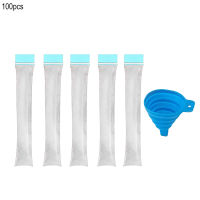
50/100Pcs Disposable Popsicle Bag BPA-Free Freezer Tubes with Zip Seals And Funnel Leak-Proof DIY Popsicle Mold for Ice Pops Yogurt Juice Smoothies
₱184.17₱216.32
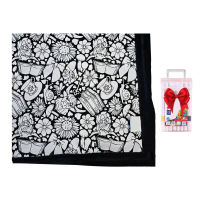
DIY Coloring Blanket Color Your Own Blanket Art Project with Markers Washable Color Art Craft Throw Blanket for Home Decor Holiday Party Activity
₱757.92₱895.93
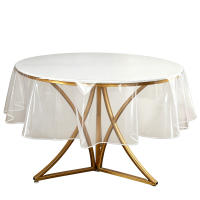
Clear Round Tablecloth Plastic Table Protector Waterproof Oil-Proof Table Cover PVC Table Cloth for Round Table Home Parties Use
₱462.34₱515.98
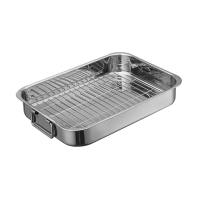
Stainless Steel Baking Tray Heavy Duty Turkey Roasting Pan Oven Flat Rack Induction Roast Tray for Chicken Vegetable Lasagna
₱1,409.18₱1,580.78
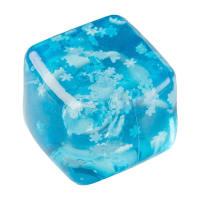
Clear Cube Squeeze Toy with Glitter Snowflake Anxiety Relief Stress Cube Sensory Toy Soft Stretchy Ice Cube Pinch Toy Party Favors
₱151.56₱176.80
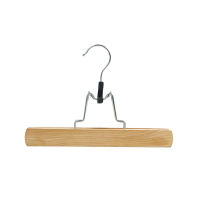
Clamp Hanger Wear-resistant Non-slip Load Bearing Natural Wooden Pants Skirt Hanger for Home
₱198.84₱226.46
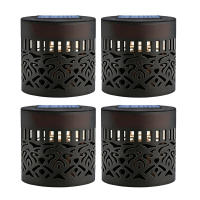
Solar Wall Lamp Seven Color Changing Projector Light with Hollow Pattern Design IP65 Waterproof Wall Light for Outdoor Patio Garden Fence Decor
₱1,241.41₱1,939.92
About Sanwood
Sanwood is a Chinese industrial technology company that specialises in environmental reliability testing equipment, particularly environmental test chambers and laboratory testing systems. Its products are engineered to reproduce extreme or controlled environmental conditions—including high and low temperatures, humidity, rapid temperature changes, altitude, thermal shock, dust, rain, and accelerated ageing—to enable manufacturers to evaluate product reliability, durability, safety, and performance prior to market release.1
The company operates under the legal entity Guangdong Sanwood Technology Co., Ltd. and uses the brand name SANWOOD / Sanwood Technology. According to its official corporate history, business operations date back to 1995, representing approximately three decades of experience in environmental testing technology.1
Overview
| Category | Information |
|---|---|
| Brand | SANWOOD / Sanwood |
| Company | Guangdong Sanwood Technology Co., Ltd. |
| Industry | Environmental testing & reliability testing equipment |
| Founded | 1995 |
| Headquarters | Dongguan, Guangdong, China |
| Main manufacturing base | Dongguan, Guangdong, China |
| Core products | Environmental test chambers, battery test chambers, thermal shock chambers, altitude chambers, ageing/weathering chambers |
| Main customers | Automotive, batteries, electronics, semiconductors, aerospace, defence, telecommunications, and research organisations |
| Global reach | 100+ countries and regions (company-reported) |
| Reported clients | 800+ organisations |
| Manufacturing area | 30,000+ m² |
| Certifications | ISO 9001, ISO 14001, ISO 45001, CE; UL-related certifications also cited |
| Main location | Dongguan, Guangdong, China |
The data presented above is derived primarily from Sanwood’s own corporate disclosures and should be regarded as company-reported figures rather than independently audited statistics.1
History
Sanwood traces its origins to 1995, when it began developing environmental and climatic testing equipment. Early corporate materials indicate that the company initially incorporated Taiwanese and Japanese technologies, focusing on secure and reliable climatic test chamber technology.2
Over subsequent decades, Sanwood expanded its scope from individual environmental chambers to a broader portfolio of reliability testing equipment and laboratory solutions. Significant investment was made around 2013, followed by the establishment of a proprietary manufacturing facility in 2017. This facility eventually exceeded 30,000 square metres, enabling the integration of research and development, sheet metal processing, assembly, testing, and other manufacturing activities under one roof.2
Today, Sanwood positions itself as a one-stop test solution provider rather than solely a manufacturer of individual test chambers, with a stated objective of becoming a globally recognised brand in environmental testing.2
Products and applications
Sanwood’s core business involves manufacturing equipment that simulates environmental conditions. For example, electric vehicle battery developers require verification that units operate safely across extreme temperatures, high humidity, or rapidly changing environments. Environmental chambers allow engineers to artificially create these conditions rather than awaiting natural occurrence, placing Sanwood within the broader product reliability, validation, and environmental simulation industry.
Temperature and humidity test chambers
These chambers expose products to controlled combinations of temperature and relative humidity. Typical applications include electronics, automotive components, batteries, semiconductor components, electrical equipment, consumer products, and materials research. Sanwood offers conventional configurations alongside compact, multi-layer, and walk-in models.2
Battery test chambers
Battery testing has become an increasingly significant market segment for Sanwood. The portfolio includes:
- Battery temperature test chambers
- Explosion-proof battery test chambers
- Battery charge/discharge test chambers
- Battery pack test chambers
- Dual-layer and triple-layer chambers
- Liquid-cooled battery testing systems
- Walk-in battery pack chambers
These systems serve applications involving lithium-ion batteries, energy storage systems, and electric vehicles.1
Thermal shock chambers
Thermal shock testing subjects products to rapid transitions between substantially different temperatures to reveal weaknesses caused by thermal expansion and contraction. Sanwood provides two-zone and three-zone thermal shock configurations in addition to other thermal testing systems.2
Rapid-rate temperature change chambers
Designed to change temperature rapidly rather than maintain static levels, these systems support accelerated reliability testing and environmental stress screening. They are marketed towards applications where products must withstand severe temperature cycling.2
Altitude test chambers
Altitude chambers simulate low atmospheric pressure and high-altitude environments. These are relevant to aerospace, aviation, defence, automotive, electronics, and biomedical research sectors. Sanwood describes its altitude systems as designed to reproduce demanding low-pressure and high-altitude conditions.2
Walk-in test chambers
For large products or assemblies where conventional chambers are insufficient, Sanwood produces walk-in environmental chambers allowing engineers to test larger systems, assemblies, and battery packs.2
Accelerated ageing and weathering equipment
The product portfolio includes equipment for xenon lamp weathering, UV ageing, ozone ageing, dust testing, rain testing, HAST/accelerated ageing, and drying. These systems study material and product deterioration under environmental stress.1
Industries served
Sanwood equipment is utilised across multiple technology and manufacturing sectors.
Automotive and electric vehicles
Automotive manufacturers require verification that components function under extreme environmental conditions. Sanwood identifies automobiles, electric vehicles, and EV-related testing as major application areas.1 Testing encompasses vehicle components, batteries, electric motors, electronics, power systems, materials, and charging systems.
Batteries and energy storage
With the expansion of electric vehicles and stationary energy storage, battery testing has become a critical business component. Equipment is used to investigate battery performance and reliability under temperature and other environmental stresses.1
Electronics and semiconductors
Electronic components are often sensitive to temperature, humidity, thermal cycling, corrosion, and other environmental stresses. Sanwood supplies environmental simulation equipment to electronics and semiconductor companies and has expanded into AI server reliability testing, including high-power computing hardware.1
Aerospace and aviation
Aircraft and aerospace components must operate reliably under extreme temperature and atmospheric conditions. Altitude and environmental chambers are used for aerospace qualification and reliability testing.2
Defence and military
Sanwood lists military testing among its target industries, offering environmental simulation equipment intended for demanding reliability applications.2
Solar and renewable energy
Solar panels and renewable energy equipment face years of weather and temperature variation. Environmental and accelerated ageing equipment reproduces these conditions in laboratory settings, with solar panels and energy storage identified as specific target markets.1
Technology and engineering
Sanwood emphasises the engineering required to accurately control environmental conditions beyond the physical chamber itself. Capabilities encompass mechanical design, refrigeration, heating, humidity control, electrical control, software programming, chamber construction, safety systems, and environmental simulation. The company states that its engineering staff includes specialists in these areas and provides installation, training, maintenance, repair, and customisation services.2
Environmental test chambers represent complex integrations of mechanical, electrical, thermal, refrigeration, and control engineering disciplines.
Manufacturing
Principal manufacturing operations are located in Dongguan, Guangdong, China, a major centre for manufacturing and electronics. The company reports a facility exceeding 30,000 square metres with two production lines and a stated capacity of more than 200 units per month (over 2,400 units annually).2
While the official website cites a workforce of 300+, personnel breakdowns vary across different sections of the site; consequently, current employee counts should be treated as approximate.1
International presence
Sanwood positions itself as an international supplier rather than a domestic-only manufacturer. The company states that its products and services cover more than 100 countries and regions with over 800 clients among global enterprises, laboratories, and universities.1
Official contact information lists operations or offices in:
- China
- Germany
- Singapore
- South Korea
- Italy
International sales and service networks are also described in Europe, the United States, and Northeast Asia.2 This international strategy addresses the need for installation, calibration, maintenance, and technical support following the purchase of large-scale laboratory equipment.
Certifications and quality management
Sanwood maintains several internationally recognised management and product certifications, including:
- ISO 9001:2015 (Quality management)
- ISO 14001:2015 (Environmental management)
- ISO 45001:2018 (Occupational health and safety)
- CE certification
- UL-related certifications/standards (dependent on equipment and application)
The company describes itself as an innovative high-tech enterprise holding 100+ patents/certificates, although the precise composition of this figure is not independently detailed on the website.1
Business model
Sanwood’s business comprises four primary areas:
- Standard equipment: Off-the-shelf environmental chambers for common testing requirements.
- Specialised testing equipment: Units designed for batteries, thermal shock, altitude, accelerated ageing, and other specialised applications.
- Customised systems: Large or technically specialised chambers designed around specific customer products, test requirements, and laboratory environments.
- After-sales services: Installation, maintenance, repair, refurbishment, equipment upgrades, spare parts, and technical training.2
This structure aligns Sanwood more closely with an industrial equipment and engineering solutions provider than a conventional consumer-facing brand.
Battery testing focus
Battery reliability testing represents a strategically vital area for Sanwood. The growth of electric vehicles, lithium-ion batteries, energy storage systems, portable batteries, and electric tools has increased demand for controlled environmental testing.
Battery test chambers must address additional safety risks associated with potential failures. Sanwood markets explosion-proof and safety-oriented battery chambers, including systems designed around various hazard classifications.2 This distinguishes modern battery testing equipment from ordinary climatic chambers, as abusive or extreme conditions can potentially generate heat, smoke, fire, or other hazardous events requiring specialised safety engineering.
Recent strategic direction
Current product strategy extends beyond traditional environmental chambers into specialised high-technology reliability testing. Recent corporate materials highlight battery testing, low-GWP refrigeration, semiconductor testing, AI chip reliability, AI server testing, and high-power computing systems.1
Notably, the website promotes AI server reliability testing addressing environmental stresses affecting GPUs, power systems, optical modules, liquid cooling, and other server hardware. This indicates an effort to align with emerging industries rather than remaining focused exclusively on conventional climatic chambers.
Corporate structure and brand identity
The company presents itself as Sanwood Group, with Sanwood Technology serving as the principal environmental testing business. Related entities such as SMS Intelligent Equipment are also listed.2
The stated brand ambition is “To Become A Globally Renowned Brand In The Environmental Testing Industry.”2 Market positioning rests on three concepts:
- Reliability: Helping manufacturers identify failures before market entry.
- Precision: Accurately reproducing environmental conditions.
- Customisation: Building equipment around specific products and testing requirements.
Competitive characteristics
Sanwood competes in a specialised B2B sector where technical performance, reliability, standards compliance, service, and customisation typically outweigh consumer brand recognition. Key competitive attributes include:
- Long industry history: Operations in environmental testing since 1995.2
- Broad product portfolio: Coverage of conventional temperature/humidity testing plus thermal shock, altitude, battery, ageing, weathering, and specialised systems.2
- Battery specialisation: A battery testing portfolio that has become a major component of its offering.2
- Large-scale manufacturing: A reported 30,000+ m² manufacturing base with substantial production capacity.2
- International support: Customers in 100+ countries/regions with overseas sales and service locations.1
- Custom engineering: Provision of customised chambers and laboratory solutions beyond standardised products.2
Headquarters and locations
Official contact pages list the following locations:
- China headquarters: Dongguan, Guangdong, China
- China factory: Changping, Dongguan, Guangdong, China
- Germany: Kissing, Germany
- Singapore: International Plaza, Singapore
- South Korea: Uiwang-si, Gyeonggi-do, South Korea
- Italy: Chivasso, Italy2
The Chinese factory is located at No. 1 Xiaoling Road, Songbaitang, Changping, Dongguan, Guangdong, China, while the current headquarters is situated at SSL High Tech Park in Dongguan.2
Assessment
Sanwood functions as a B2B industrial testing equipment manufacturer rather than a consumer brand. Its core purpose is helping manufacturers determine whether products will continue to operate safely and reliably under harsh real-world conditions by reproducing those conditions within controlled laboratory environments.
Historical strength lies in environmental test chambers, while newer growth areas include EV and battery testing, semiconductor reliability, energy storage, and AI server/high-power computing testing.1 The company is particularly relevant to manufacturers of EV batteries, automotive electronics, semiconductors, electronic components, aerospace equipment, military systems, solar products, and other technologies where environmental reliability is critical.