Shop on Lazada
Saucony products
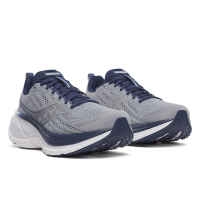
Mens Hurricane 25
₱6,996.50₱9,995.00
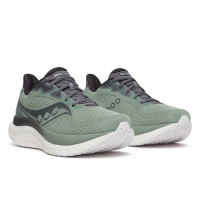
Mens Triumph 23
₱6,996.50₱9,995.00
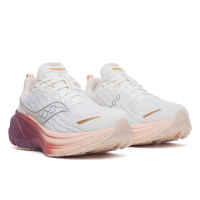
Womens Hurricane 25
₱6,996.50₱9,995.00
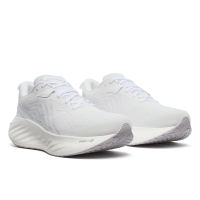
Mens Triumph 22
₱5,997.00₱9,995.00
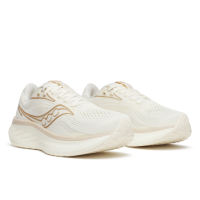
Womens Ride 18
₱6,296.50₱8,995.00
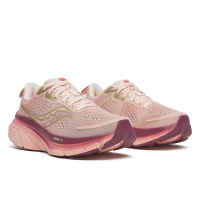
Womens Guide 18
₱6,296.50₱8,995.00
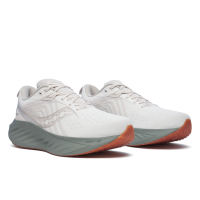
Mens Triumph 22
₱5,997.00₱9,995.00
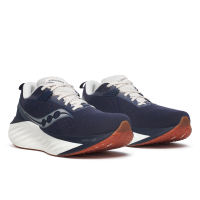
Mens Triumph 22
₱5,997.00₱9,995.00
About Saucony
Saucony is an American athletic footwear and apparel brand best known for its running shoes. Founded in 1898 in Kutztown, Pennsylvania, it stands as one of the oldest continuously operating running shoe brands in the United States. Today, Saucony operates as part of Wolverine Worldwide, a portfolio that also includes Merrell, Wolverine, Hush Puppies, and Sweaty Betty.1
Quick facts
| Category | Information |
|---|---|
| Brand | Saucony |
| Founded | 1898 |
| Origin | Kutztown, Pennsylvania, United States |
| Industry | Athletic footwear, apparel |
| Best known for | Running shoes |
| Parent company | Wolverine Worldwide |
| Main categories | Road running, trail running, racing, walking, lifestyle/retro |
| Major lifestyle line | Saucony Originals |
| Notable identity | Performance running + retro sneaker culture |
| Logo inspiration | Saucony Creek and three rocks |
| Brand philosophy | Performance, health, and community |
Saucony traces its history to 1898, charting its evolution from a local Pennsylvania factory into a globally recognised running brand.2
Brand identity and focus
At its core, Saucony is a running company. Unlike major sportswear conglomerates that split their identity across football, basketball, tennis, and training, Saucony has historically maintained a close association with running. Its product ecosystem covers everyday road running, long-distance running, racing, trail running, track and cross-country, walking, apparel, socks, accessories, and lifestyle sneakers.
The company currently describes itself as operating across sport, style, and the culture of running. This is divided into two distinct pillars: Saucony Performance, which focuses on technical products, and Saucony Originals, which focuses on heritage and lifestyle footwear.2 This distinction is central to understanding the brand:
Saucony Performance = modern running technology
Saucony Originals = heritage running style
Origins and naming
Saucony’s history dates to 1898 when a shoe factory was established in Kutztown, Pennsylvania. The company took its name from Saucony Creek, which runs through the area. The brand identifies this creek as the direct inspiration for both its name and visual identity.3
The name is pronounced roughly as “SOCK-uh-nee.” Historically, the pronunciation proved difficult for some consumers, leading the brand to use phonetic explanations such as “sock a knee.” The name is not an invented modern sportswear term but is derived directly from the geography surrounding the company’s birthplace.
Logo symbolism
One of Saucony’s most recognisable characteristics is its three-dot logo. The design is inspired by Saucony Creek, specifically depicting water flowing around three distinctive boulders. According to the brand, these three elements represent three guiding principles:4
- Good performance
- Good health
- Good community
This symbolism connects the logo directly to the company’s geographical origins rather than serving as a purely abstract athletic symbol.
Evolution into a running specialist
In its early decades, Saucony functioned primarily as a general shoe manufacturer. Development accelerated after it became associated with A.R. Hyde & Sons, a Massachusetts footwear company founded by Abraham Hyde in 1910. Hyde eventually acquired Saucony in 1968, providing a larger organisational base and expertise in athletic footwear.
By the 1970s, Saucony’s reputation as a dedicated running brand strengthened significantly. A pivotal moment occurred in 1977 when two Saucony running shoes received high ratings from Runner’s World, leading to a dramatic increase in demand. This era cemented the brand’s direction as “running first.”
Key product milestones
The 1980s: Lifestyle icons
The 1980s were transformative for Saucony, producing models that transitioned from performance gear to cultural staples.
- Saucony Jazz (Introduced 1981): Arguably the brand’s most recognisable lifestyle sneaker, the Jazz originated as a running shoe featuring a nylon/mesh upper, suede overlays, and a distinctive outsole. It is now a central product within Saucony Originals and is cited as an iconic silhouette that established the brand’s retro-running identity.
- Saucony Shadow (Introduced 1985): Originally a performance training shoe, the Shadow later became a major retro silhouette. The brand notes that the Shadow retains the comfort, stability, and visual character of its original design.5
The transition from technical running shoe to retro fashion sneaker remains fundamental to Saucony’s modern identity.
The Endorphin era
The Endorphin series represents Saucony’s modern high-performance identity. Introduced around 2020, the Endorphin Pro utilised the SPEEDROLL concept to encourage efficient stride transitions. Developed with elite athletes, the Endorphin Pro marked a significant milestone in racing technology.9 This platform helped shift perceptions of Saucony from a traditional running brand to a heritage brand with serious modern racing credentials.
Major shoe families
While specific models evolve, Saucony’s lineup is broadly categorised as follows:
| Family | General purpose |
|---|---|
| Ride | Neutral everyday road running |
| Guide | Stability-oriented daily running |
| Triumph | Premium cushioned daily/long-distance running |
| Kinvara | Lightweight, natural-feeling road running |
| Endorphin | Speed and racing |
| Peregrine | Trail running |
| Xodus | Trail / longer-distance trail |
| Jazz | Retro/lifestyle |
| Shadow | Retro/lifestyle |
| Grid models | Heritage/retro running-inspired footwear |
Saucony Originals and retro culture
Saucony Originals serves as the lifestyle division, reinterpreting archival performance designs for everyday wear. Similar to classic models from other major brands, these shoes follow a trajectory from performance technology to historical sneaker to fashion product. The Jazz and Shadow are particularly significant in this line, with the brand describing Originals as a method of preserving key moments in its history.10
The retro appeal stems from authenticity; models like the Jazz and Shadow were genuine running shoes of their era, not designs created retrospectively to look vintage. Their aesthetic—characterised by mesh, suede, nylon, layered panels, and slim profiles—is rooted in 1970s–1990s running culture. This allows Saucony to participate in the modern retro-running trend without manufacturing an artificial heritage story.
Corporate ownership
Saucony has undergone several ownership changes throughout its history:
- 1898: Founded in Pennsylvania
- 1968: Acquired by A.R. Hyde & Sons
- 1998: Hyde Athletic Industries officially changed its corporate name to Saucony, Inc.
- 2005: Acquired by Stride Rite Corporation
- 2007: Stride Rite became part of Collective Brands
- 2012: Became part of Wolverine Worldwide following the acquisition of Collective Brands’ Performance Lifestyle Group6
The 2012 transaction was valued at approximately $1.23 billion and included Saucony alongside Keds, Sperry, and Stride Rite.7 Consequently, modern Saucony is not an independent publicly traded company but a brand within Wolverine Worldwide.
Relationship with Wolverine Worldwide
Wolverine Worldwide is a major American footwear company whose portfolio includes Wolverine, Merrell, Saucony, Hush Puppies, Chaco, Sweaty Betty, and Stride Rite. The parent company describes Saucony as operating at the intersection of culture and performance, emphasising both its running heritage and its broader role in movement and lifestyle.8 This structure provides Saucony with access to extensive resources while allowing it to retain its distinct brand identity.
Market position and philosophy
Saucony occupies a unique space in the athletic footwear market. While competitors like Nike and Adidas operate as broad sports and lifestyle giants, and brands like Brooks focus exclusively on running, Saucony combines serious running heritage with classic retro aesthetics. ASICS leans heavily on Japanese engineering, HOKA on maximal cushioning, and New Balance on balancing performance with fashion. Saucony’s specific niche is defined by authentic history paired with continued technical relevance.
Technical philosophy
Saucony’s performance products address cushioning, stability, and speed. Rather than making every shoe maximally soft, different models balance responsiveness, weight, durability, and energy return. The brand also invests heavily in lightweight racing footwear and stability options for runners requiring additional guidance.
Brand philosophy: Run For Good
Today, Saucony operates under the concept of “Run For Good.” The stated purpose is to inspire better lives through running, self-expression, and community building.12 This philosophy revolves around three ideas that mirror the logo’s symbolism: Good Performance (innovation), Good Health (encouraging movement), and Good Community (expanding participation).13 The brand increasingly incorporates sustainability into this platform, focusing on environmental responsibility, inclusion, and accessibility.14
Athletes and trail running
Athlete partnerships have historically bolstered Saucony’s credibility among serious runners. Notably, New Zealand distance runner Rod Dixon won the 1983 New York City Marathon wearing Saucony shoes and was involved in footwear development.11
Beyond road running, Saucony maintains a substantial presence in trail running. Models like the Peregrine are engineered for grip, protection, traction, and stability on uneven terrain, placing the brand in competition with specialists like Salomon, HOKA, Brooks, and ASICS.
Target audience and visual identity
Saucony serves four overlapping groups: serious runners focused on biomechanics and race times; recreational runners prioritising fitness and health; sneaker enthusiasts attracted to vintage aesthetics and materials; and fashion consumers interested in retro athletic streetwear.
Visually, the brand tends to be less aggressive than Nike or Adidas, emphasising a technical, authentic, and understated aesthetic. Retro models often feature muted colours, cream midsoles, and traditional silhouettes, making them versatile for casual wear. The term “Originals” signals that these products are derived from the archive rather than being new fashion inventions. Saucony Performance asks what can be invented for today’s runner, while Saucony Originals asks what past inventions remain relevant today.
Strengths and challenges
Strengths
- Strong heritage: Over a century of history provides genuine credibility.
- Running expertise: Running is central to the brand, not just one category among many.
- Balanced portfolio: Successfully sells both high-performance racing shoes and retro sneakers.
- Distinctive design: Jazz and Shadow provide recognisable heritage products.
- Niche appeal: Feels more specialist compared to ubiquitous mass-market brands.
- Technical identity: Continued investment in modern racing technology.
Challenges
- Cultural visibility: Lacks the massive global cultural influence of Nike or Adidas.
- Competition: Faces intense competition in running from HOKA, On, ASICS, and Brooks.
- Variable recognition: Well-established in running circles but less familiar to casual consumers in some markets.
- Balancing act: Must simultaneously satisfy traditional runners, younger fashion consumers, and elite athletes.
Current identity
Saucony’s current identity is summarised as “One Saucony,” uniting its performance and lifestyle divisions. The company states its future is built around both sport and style, with Performance driving innovation and Originals preserving heritage.15 Wolverine Worldwide similarly describes the brand as rooted in running but encompassing movement in all forms. Modern Saucony is thus understood not merely as a shoe manufacturer, but as a heritage running brand, performance technology company, and global lifestyle brand combined.16
Summary
Saucony is one of America’s oldest running brands, founded in 1898 and now owned by Wolverine Worldwide. Its identity has evolved from a local shoe manufacturer to a specialist running brand, then to a performance innovator and heritage lifestyle label. What distinguishes Saucony is that its performance and fashion identities share the same historical source; models like the Jazz became fashionable because they were genuine running shoes, while lines like Endorphin demonstrate continued competitiveness in modern performance running.16 Ultimately, Saucony functions as a heritage specialist with authentic history that continues to compete through modern technology.
References
- About Saucony – Our Story & Heritage | Saucony
- Saucony History – Shoe Designer & Manufacturer | Saucony
- Saucony History Collection | Saucony
- Saucony
- Wolverine World Wide, Inc. – Wolverine Worldwide Advances Strategic Transformation With New Licensing Agreements
- Wolverine Worldwide To Acquire Collective Brands’ Performance + Lifestyle Group
- About Us | Saucony
- Shop Premium Men’s, Women’s & Kids Footwear and Apparel | Saucony
- About Us
- About | Saucony
- About Us
- L’histoire de Saucony – Concepteur et fabricant de chaussures | Saucony
- About Us – Saucony PH
- 써코니코리아 공식스토어
- A portfolio built for every step. | Wolverine Worldwide
- Sauconyについて – SAUCONY(サッカニー)公式オンラインストア