Shop on Lazada
Seafrogs products
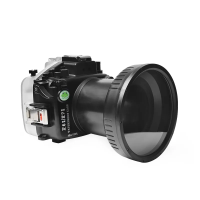
Seafrogs 40M/130Ft Underwater Camera Houisng Kit For Nikon Z6 II/ Z7 II Waterproof Photography Case Z6II 、Z7II
₱45,680.00₱50,000.00
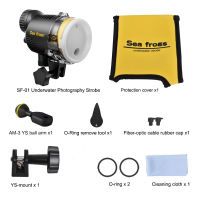
Seafrogs New Updated SF-01 High Power Underwater Strobe Flashlight with Soft Diffuser & Macro Tube 32GN Suitable for A7/A7II/A7III RX100 TG5 DSLR Camera Underwater Camera Flash Light
₱24,162.00₱35,143.00
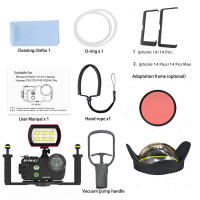
Seafrogs 40M Professional Depth Diving Waterproof Case For iPhone 15 14 13 12 11 Pro Max Swimming Surfing Photo Video Cover
₱24,584.69₱24,777.32
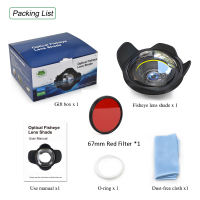
Seafrogs 67mm-02 Waterproof 40m/130Ft 6 Inch Wet Wide Angle Dome Port For 67mm Interface Seafrogs Meikon Camera Housing Underwater Diving Fisheye
₱9,821.64₱17,570.00
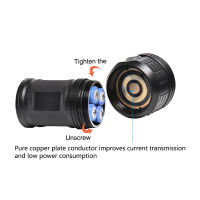
Seafrogs MK-17 Handheld Tactical Flashlight Waterproof 80 Meters 5000 Lumen Diving Scuba Torch with White Red Blue Light Color Video Lamp for Under Water Deep Sea Cave
₱5,027.43₱8,476.00
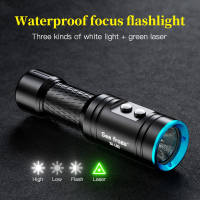
Seafrogs SF-L03 Aluminum Alloy Waterproof 100m/325ft Flashlight 4 Modes Zoomable 1000 Lumen Diving Torch with Long-Range Green Laser
₱3,580.89₱5,008.00
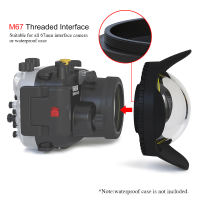
Seafrogs Waterproof 40 Meters/130 Ft Diving Scuba Camera Case for Canon PowerShot G7X-II Underwater camera Housing
₱16,718.00₱26,099.00
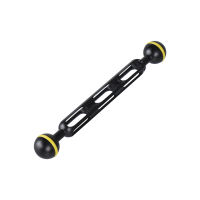
Seafrogs Diamond Double Ball Arm Essential Diving Photography Equipment Dual Ball Joint Arm Lighting System Combination Accessory Anlge Adjustable (4 Inch/5 Inch/6 Inch/7Inch/ 8 Inch)
₱1,133.31₱1,758.86
About Seafrogs
Overview
Seafrogs (also styled Sea Frogs or SEAFROGS) is a brand specialising in underwater photography and diving-camera equipment. It is best known for waterproof housings designed for interchangeable-lens cameras, compact cameras, action cameras, and smartphones. The product ecosystem also encompasses ports, lighting, monitoring equipment, vacuum and leak-detection systems, and other accessories for underwater imaging.1
The company positions itself around making underwater photography more accessible, particularly by offering relatively affordable housings for mainstream camera systems rather than limiting the activity to expensive specialised equipment.2
| Field | Information |
|---|---|
| Brand | Seafrogs / Sea Frogs |
| Industry | Underwater photography / diving equipment |
| Best known for | Underwater camera housings |
| Founded | 1998, according to Seafrogs’ current product documentation |
| Core users | Underwater photographers, divers, videographers, freedivers, surfers and aquatic-content creators |
| Camera compatibility | Sony, Canon, Nikon, Fujifilm, Olympus/OM System, Panasonic/LUMIX and others |
| Main housing materials | Polycarbonate/ABS and aluminium alloy |
| Typical depth ratings | Around 40–60 m for many polycarbonate housings; up to 100 m / 328 ft for newer aluminium systems |
| Product range | Camera housings, aluminium housings, ports, lights, monitors, vacuum systems and accessories |
| Market positioning | Value-oriented to professional underwater-imaging equipment |
Seafrogs states that it was founded in 1998 and has focused on designing, producing, and selling underwater-photography equipment for more than 20 years.3
Product categories
Although the brand name is strongly associated with camera housings, Seafrogs has evolved into a broader underwater-imaging ecosystem. Its current catalogue includes hundreds of products, comprising both housings and accessories.4
Polycarbonate camera housings
Polycarbonate housings are the products most commonly associated with Seafrogs. These moulded housings are generally constructed from combinations of polycarbonate, ABS plastic, optical glass, stainless steel, and metal reinforcement components. They are available for cameras from Sony, Canon, Nikon, Fujifilm, Olympus/OM System, and other manufacturers.5
Aluminium housings
Seafrogs has increasingly moved into machined aluminium underwater housings aimed at professional users. The newer aluminium range features 100 m / 328 ft depth ratings, aluminium-alloy construction, anodised finishes, vacuum leak detection, mechanical controls, expansion ports, interchangeable port systems, and dual-handle configurations.6
Ports
The brand sells both flat ports and dome ports, including optical-glass and acrylic options. The port system is critical as underwater photographers require different ports depending on whether they are shooting macro, wide-angle, split-level images, reef scenes, large marine animals, or video. The current catalogue includes 6-inch and 8-inch dome-port systems, among others.7
Underwater lighting
Seafrogs also manufactures diving and photo lights. The current catalogue includes models such as the SF-100 underwater video/photo light, which is rated at 10,000 lumens.8
Monitors and accessories
The ecosystem includes underwater monitors, mounting accessories, handles, extension adapters, O-rings, vacuum equipment, and related components.9
Smartphone and action-camera housings
Beyond the traditional interchangeable-lens-camera market, Seafrogs produces housings for devices such as smartphones and action cameras.10
Corporate philosophy
The underlying concept of Seafrogs is to make standard consumer or prosumer cameras usable underwater. Underwater photography has traditionally required an expensive combination of camera, specialised housing, ports, strobes or lights, arms, and accessories. Professional housings from specialist manufacturers can cost several thousand dollars.
Seafrogs has historically emphasised affordability and accessibility. Its Hong Kong operation explicitly describes its mission as promoting underwater, freediving, and surfing photography through affordable, functional housings for cameras from brands such as Sony, Canon, and Fujifilm.11 Rather than targeting only elite professional photographers, the brand has sought to make underwater photography attainable for individuals who already own mainstream cameras.
History
According to Seafrogs’ product pages, the company was founded in 1998.12 Publicly available information regarding the corporate history is less detailed than that available for its products. The brand’s online presence has developed through several regional and online storefronts, including Seafrogs.com, Seafrogs.com.hk, Seafrogs Japan, and Seafrogstore.
The Hong Kong operation describes itself as being established to promote aquatic photography and to manufacture and offer affordable underwater camera housings.13 Today, the brand is visible within the underwater photography and diving community, with products covering a broad range of camera bodies.
Camera compatibility
A primary selling point of Seafrogs is the breadth of its camera support.
Sony
Seafrogs manufactures housings for numerous Sony cameras, including models in the Alpha mirrorless, A7-series, A6xxx-series, A7C-series, FX-series cinema cameras, and ZV-series lines. The catalogue currently includes housings for the Sony FX30, A7C II/A7CR, a6700, A7R V, A7R IV, A7 IV, and A7 V, among others.14
Canon
The range covers both older DSLR and mirrorless cameras as well as newer EOS R cameras. Examples include housings for the EOS R5, EOS R5 II, EOS R6, EOS R6 II, EOS R6 III, and other EOS R-series cameras.15
Nikon
Seafrogs supports various Nikon DSLR and Z-series cameras, including models such as the D500, D800/D810, and Z6/Z7-series.16
Fujifilm
The catalogue includes housings for cameras such as the X-T5, X-T50, X-S20, X-H2, X-H2S, and X-T30.17
Olympus / OM System
Seafrogs has a long history of supporting Olympus compact and interchangeable-lens cameras. The catalogue includes housings for cameras such as the TG-series.18
Panasonic and others
The company lists Panasonic/LUMIX among supported camera platforms, alongside action cameras and other systems.19
Polycarbonate versus aluminium housings
The distinction between polycarbonate and aluminium lines is significant in the modern Seafrogs lineup.
Polycarbonate housings
These are traditional, value-oriented products. A representative Seafrogs housing for the Canon EOS R5 uses polycarbonate, ABS, optical glass, and stainless steel, and is rated to 40 m / 130 ft.20 Another housing, designed for the Sony a6500/a6300/a6000, is rated to 60 m / 195 ft.21
Advantages include lower cost, lighter weight, broad camera compatibility, suitability for recreational diving, and accessibility to newcomers. However, compared with high-end machined aluminium systems, polycarbonate housings are generally not positioned as the ultimate solution for extreme professional use.
Aluminium housings
Aluminium housings represent Seafrogs’ expansion into the professional market. Newer aluminium systems use aviation-grade or aerospace-grade aluminium alloy and are advertised with 100 m / 328 ft depth ratings.22 Features include machined aluminium construction, anodised surfaces, mechanical controls, vacuum leak detection, expansion ports, interchangeable ports, dual handles, accessory mounting, and professional port systems.23
For example, the Seafrogs aluminium housing for the Canon EOS R5 II is rated at 100 m / 328 ft and uses aluminium alloy and glass.24 This places these products in a different competitive category from the older entry-level polycarbonate models.
Vacuum leak detection
Newer Seafrogs products feature vacuum monitoring. Before entering the water, photographers can create a vacuum inside the housing and monitor whether the pressure remains stable. This allows users to identify potential sealing problems before the camera is submerged. Newer aluminium housings specifically advertise integrated vacuum leak detection.25
Seafrogs also sells the VPS-100 vacuum pump inspection device as a separate product.26 For underwater photographers, this feature helps mitigate the risk of housing leaks that could destroy expensive camera and lens equipment.
Port system
The port serves as the optical interface between the lens and the underwater environment. Seafrogs offers flat ports, dome ports, optical-glass ports, acrylic ports, extension rings, port adapters, and lens-specific accessories. The newer aluminium ecosystem advertises 115 mm and 125 mm port compatibility, with expansion possibilities for professional underwater accessories.27 This allows users to build systems around different lenses and shooting styles rather than treating the housing as a fixed case.
Typical users
The Seafrogs customer base comprises several distinct groups:
- Recreational divers: Individuals seeking to use existing mirrorless cameras underwater without investing in expensive professional housings.
- Underwater photographers: Those shooting coral reefs, fish, sharks, macro subjects, wrecks, and marine life.
- Underwater videographers: Video creators utilising supported cameras such as the Sony FX30 and FX3.28
- Freedivers: The Hong Kong operation specifically identifies freediving photography as a target application.29
- Surf photographers: Users engaged in surf and aquatic photography where cameras repeatedly enter and exit the water.
- Enthusiasts transitioning to professional equipment: Users moving beyond basic plastic or polycarbonate systems via the newer aluminium housings.
Product philosophy
The Seafrogs product philosophy centres on camera compatibility, affordability, and functional underwater controls. The company builds underwater interfaces around cameras that photographers already know, preserving access to shutter, aperture, focus, buttons, dials, and video controls. For example, a representative Sony FX30 housing lists aperture and focus adjustment, internal frame stability, leak detection, interchangeable ports, and a vacuum-system port among its features.
Market position
The underwater housing market consists of several tiers ranging from entry-level bags and basic cases to value-oriented dedicated housings, prosumer systems, and professional machined aluminium housings. Seafrogs historically occupied the value and prosumer segment with its polycarbonate products.
The newer aluminium line represents an upward shift. The company now markets 100 m aluminium housings with vacuum systems, professional controls, and modular port and accessory systems. Consequently, Seafrogs is no longer solely a budget brand but rather a value-oriented manufacturer that has expanded into professional-style aluminium underwater camera systems.
Recent developments
Seafrogs has been expanding its aluminium range. Its 2026 knowledge and news section lists new products including housings for the Canon EOS R5 Mark II, a 100 m aluminium housing for the Sony A6700, a 100 m aluminium housing for the Nikon ZR, an aluminium housing for the Canon EOS R6 III, and a 100 m aluminium housing for Olympus systems. This indicates active development of a higher-end aluminium product family alongside existing offerings.
Warranty and after-sales support
Seafrogs product pages indicate warranty coverage, though duration varies by product. Some polycarbonate products list a 1-year or 12-month warranty. The official store prominently advertises a lifetime warranty for aluminium housing bodies, although buyers should verify precise terms and exclusions for specific products.
Given that underwater equipment is sensitive to O-ring condition, correct assembly, vacuum seals, port installation, maintenance, and saltwater corrosion, after-sales support and the availability of replacement components are significant considerations alongside advertised depth ratings.
Distinctions from other categories
It is useful to distinguish Seafrogs from other equipment categories:
- Not a camera manufacturer: It does not compete directly with Sony, Canon, Nikon, or Fujifilm in manufacturing cameras.
- Not a general dive gear manufacturer: Its focus is imaging rather than regulators or buoyancy compensators.
- Not merely a waterproof-case company: Higher-end systems are complete photographic housings with mechanical controls, ports, vacuum monitoring, and accessory integration.
- No longer exclusively a budget brand: The 100 m aluminium systems and professional accessory ecosystem extend beyond the original affordable-housing identity.
Strengths
- Broad camera support: Housings are available for a vast number of camera bodies, including niche and newly released models.
- Price accessibility: The brand aims to make underwater photography less financially intimidating.
- Large ecosystem: Products span housings, ports, extensions, handles, lights, monitors, vacuum systems, and accessories.
- Rapid model coverage: The company produces housings for new camera releases relatively quickly.
- Increasing professional capability: The 100 m aluminium line and vacuum monitoring demonstrate a step upward from traditional products.
Considerations for buyers
- Housing-specific compatibility: Housings are designed around particular camera bodies and sometimes specific lens or port combinations. Compatibility cannot be assumed based solely on similar body appearance.
- Lens compatibility: The combination of housing, port, extension ring, and lens must be verified carefully, particularly for wide-angle and macro setups.
- Underwater maintenance: All underwater housings require attention to O-rings, sealing surfaces, lubrication, sand and salt contamination, port installation, and vacuum testing.
- Product differentiation: The catalogue ranges from inexpensive polycarbonate housings to expensive aluminium systems, so specifications vary significantly between models.
Brand identity
The name Sea Frogs references the aquatic environment. Visual and marketing identity revolves around the ocean, diving, photography, exploration, and marine life. The company emphasises taking conventional photographic equipment beneath the surface. Current official messaging is built around “Dive Deeper. Shoot Further” and professional underwater imaging.
Current status
As of 2026, the brand possesses two overlapping identities. The traditional Seafrogs identity comprises affordable polycarbonate underwater housings for photographers using Sony, Canon, Nikon, Fujifilm, Olympus, and similar cameras. The emerging identity consists of professional aluminium underwater imaging systems featuring 100 m depth ratings, vacuum monitoring, machined aluminium construction, modular ports, and professional accessory integration. This transition defines the brand’s current trajectory.
Summary assessment
Seafrogs is an underwater-photography equipment brand founded in 1998, best known for making relatively accessible waterproof camera housings, and which has expanded into a much broader ecosystem of ports, lights, and professional 100 m aluminium camera-housing systems for modern Sony, Canon, Nikon, Fujifilm, Olympus, and other cameras.
| Category | Assessment |
|---|---|
| Core identity | Underwater camera/housing manufacturer |
| Established | 1998, according to company materials |
| Historical niche | Affordable polycarbonate housings |
| Current direction | Professional aluminium systems |
| Camera coverage | ⭐⭐⭐⭐⭐ |
| Product breadth | ⭐⭐⭐⭐⭐ |
| Accessibility/value | ⭐⭐⭐⭐⭐ |
| Professional ambitions | ⭐⭐⭐⭐ |
| Best known for | Underwater housings |
| Best suited to | Divers, underwater photographers, videographers and aquatic creators |
| Most important product distinction | Polycarbonate vs. aluminium housing lines |
Prospective buyers may compare Seafrogs against brands such as Ikelite, Nauticam, Marelux, Isotta, and Sea & Sea, particularly regarding build quality, ergonomics, optical ports, leak protection, reliability, price, and after-sales support.
References
- Polycarbonate Underwater Camera Housing – Seafrogs
- All – Seafrogs
- Home page – seafrogs
- SEAFROGS Underwater Camera Housing For Canon EOS R5 – Seafrogs
- Sea Frogs Diving Camera Housing For Sony a6500/a6300/a6000 – Seafrogs
- Seafrogs Official– Underwater Housing Gear for Major Brands
- All – Page 8 – Seafrogs
- Sea Frogs Underwater Camera Housing For Sony FX30 – Seafrogs
- canon underwater housing-Seafrogs
- SEAFROGS Underwater Camera Housing For Olympus TG3/TG4 – Seafrogs
- Knowledge_Seafrogs
- SeaFrogs Underwater camera housings for most models of cameras – seafrogs
- SEA FROGS Trademark of SHENZHEN KAICHENGYI MOULD PRODUCT CO.,LTD – Registration Number 5128245 – Serial Number 87070180 :: Justia Trademarks
- Seafrogs Japan|水中撮影用防水ケース
- Home | Seafrogs Online Store – Buy Professional Underwater Photography Equipment
- SeaFrogs | Seafrogs Online Store – Buy Professional Underwater Photography Equipment
- SeaFrogs | Seafrogs Online Store – Buy Professional Underwater Photography Equipment
- Latest Arrival – seafrogs
- Collections – seafrogs
- seafrogs
- Seafrogs HK Customer Support – seafrogs
- Terms Of Service – seafrogs
- Policy – seafrogs
- Sea frogs 100M/328ft aluminum underwater housing with Macro Port for N – Seafrogs
- Sea frogs 100M/328ft aluminum underwater housing for Nikon ZR – Seafrogs
- Sea frogs 100M/328ft aluminum underwater housing with Macro Port for N – Seafrogs
- Sea frogs scuba underwater diving torch MK-01 – Seafrogs
- Contact information – Seafrogs
- ABOUT US – Aquacam