Shop on Lazada
Sega products
![PlayStation PS5 Persona 3 Reload [R1]](https://ph-live.slatic.net/p/aa33121a6b8f81074fab60fb3704e0c8.jpg_200x200q80.jpg)
PlayStation PS5 Persona 3 Reload [R1]
₱2,195.00₱3,795.00
Sonic Forces | PS4 / Nintendo Switch Game | BRANDNEW
₱1,895.00
Buy on Lazada![PlayStation Yakuza 0: Directors Cut [R1]](https://ph-live.slatic.net/p/721a752a735dc94b808fe1f68bb8585a.jpg_200x200q80.jpg)
PlayStation Yakuza 0: Directors Cut [R1]
₱3,295.00₱4,155.00
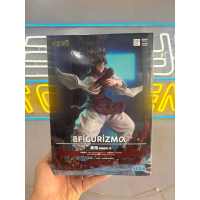
Sega Figurizmα Jujutsu Kaisen Choso Flowing Red Scale: Stack
₱1,400.00
Buy on Lazada
【100% original From Japan 】 Sega That Time I Got Reincarnated as a Slime Luminasta Kitagawa Marin
₱2,990.63₱5,912.00
![Nintendo Switch Sonic Racing CrossWorlds [US]](https://ph-live.slatic.net/p/b442456b56ba79c4979177f2f83cf41a.jpg_200x200q80.jpg)
Nintendo Switch Sonic Racing CrossWorlds [US]
₱2,399.00₱3,635.00

【100% original From Japan 】 Sega Demon Blade Nezuko Kamado Super Premium Figure SPM
₱2,346.30₱4,052.00
![Sonic CD Pentium Processor Edition [Japanese] - for PC / Personal Computer (preloved)](https://ph-live.slatic.net/p/bf6f9d6ffb8bd919f54352e210728ee7.jpg_200x200q80.jpg)
Sonic CD Pentium Processor Edition [Japanese] - for PC / Personal Computer (preloved)
₱1,000.00
Buy on LazadaAbout Sega
Overview
SEGA Corporation is a Japanese multinational video game developer, publisher, and entertainment company. It is one of the world’s most influential gaming brands, recognized for its arcade heritage, home video game consoles, and iconic franchises such as Sonic the Hedgehog, Yakuza / Like a Dragon, Persona, Total War, Football Manager, and Virtua Fighter. Today, SEGA focuses on developing and publishing games for consoles, PCs, mobile devices, and arcade systems as part of the SEGA Sammy Holdings group. [1]
-
Company Name: SEGA Corporation
-
Founded: June 3, 1960
-
Headquarters: Tokyo, Japan
-
Industry: Video games, entertainment, amusement machines
-
Parent Company: SEGA Sammy Holdings
-
President & COO: Shuji Utsumi
-
Employees: Approximately 2,900 (2026)
-
Products: Console games, PC games, mobile games, arcade machines, entertainment content [2]
History
Origins (1940s–1965)
SEGA’s roots trace back to companies that supplied amusement machines to American military bases in Japan after World War II.
The name SEGA comes from the phrase “Service Games.” The company evolved through several mergers, eventually becoming SEGA Enterprises, Ltd. in 1965 after joining with Rosen Enterprises, led by David Rosen. [3]
Arcade Revolution (1966–1980s)
SEGA became famous worldwide with innovative arcade machines.
Major milestones included:
-
Periscope (1966) – one of the first internationally successful arcade games.
-
Development of electromechanical amusement machines.
-
Introduction of motion simulator arcade cabinets.
-
Creation of the popular UFO Catcher claw machine.
During this period, SEGA established itself as one of the world’s leading arcade manufacturers. [4]
Home Console Era
SEGA entered the home gaming market with several influential systems.
SG-1000 (1983)
SEGA’s first home console, released in Japan.
Master System (1985)
Competed against Nintendo’s NES and became especially successful in Europe and Brazil.
Mega Drive / Genesis (1988)
Known as the Genesis in North America.
This became one of the best-selling 16-bit consoles and established SEGA as Nintendo’s biggest competitor during the early 1990s.
The famous marketing slogan:
“Genesis Does What Nintendon’t.”
helped define the “console wars.”
Game Gear (1990)
A color handheld system competing against Nintendo’s Game Boy.
Saturn (1994)
Technically advanced but struggled commercially due to complex hardware and strong competition from Sony’s PlayStation.
Dreamcast (1998)
Widely praised for innovation, online gaming features, and memorable titles such as Shenmue, Jet Set Radio, and Phantasy Star Online.
Despite critical acclaim, it sold below expectations, leading SEGA to discontinue console production in 2001. [5]
Transition to Software Publisher
After ending hardware production, SEGA shifted entirely toward software development and publishing.
Instead of manufacturing consoles, it began releasing games for:
-
PlayStation
-
Xbox
-
Nintendo systems
-
PC
-
Mobile platforms
This strategy allowed many classic SEGA franchises to reach wider audiences. [6]
Major Game Franchises
SEGA owns one of the largest collections of video game intellectual properties.
Notable series include:
-
Sonic the Hedgehog
-
Like a Dragon (formerly Yakuza)
-
Persona
-
Shin Megami Tensei
-
Total War
-
Football Manager
-
Virtua Fighter
-
Streets of Rage
-
Crazy Taxi
-
Jet Set Radio
-
Shenmue
-
Phantasy Star
-
Super Monkey Ball
-
Puyo Puyo
-
Space Channel 5
-
House of the Dead
-
Virtua Tennis
-
Sakura Wars
-
Valkyria Chronicles
-
Shinobi
-
Golden Axe
-
Altered Beast
-
Alex Kidd
Many of these series have influenced the evolution of modern gaming. [7]
Sonic the Hedgehog
Perhaps SEGA’s most recognizable mascot.
Created in 1991, Sonic was designed as a fast, energetic rival to Nintendo’s Mario.
The franchise has expanded into:
-
Video games
-
Animated television
-
Comics
-
Merchandise
-
Feature films
Sonic remains one of the highest-selling video game franchises worldwide. [8]
Arcade Legacy
SEGA revolutionized arcade gaming through innovations such as:
-
Motion simulator cabinets
-
Racing games
-
Fighting games
-
Light gun shooters
-
Rhythm games
-
Prize machines
Popular arcade titles include:
-
Out Run
-
Hang-On
-
Virtua Fighter
-
Daytona USA
-
House of the Dead
-
Initial D Arcade Stage
Its arcade technology helped define the golden age of coin-operated gaming. [9]
Acquisitions and Studios
Over the years, SEGA has expanded through acquisitions.
Notable subsidiaries and studios include:
-
Atlus
-
Creative Assembly
-
Sports Interactive
-
Ryu Ga Gotoku Studio
-
Sonic Team
-
Hardlight
-
Two Point Studios
These studios are responsible for globally successful franchises across multiple genres. [10]
Business Today
Modern SEGA operates across several entertainment sectors:
-
Console and PC games
-
Mobile games
-
Arcade games
-
Character licensing
-
Animation and multimedia projects
-
Merchandise
The company continues investing in both classic franchises and new intellectual properties while expanding into film, television, and other media. [11]
Cultural Impact
SEGA played a major role in shaping the video game industry by:
-
Popularizing arcade gaming worldwide.
-
Driving innovation in home consoles.
-
Creating iconic characters and franchises.
-
Advancing online console gaming with the Dreamcast.
-
Influencing generations of game developers.
Its rivalry with Nintendo during the 1990s is considered one of the defining periods in gaming history.
Famous Slogans
-
Welcome to the Next Level
-
Genesis Does What Nintendon’t
-
SEGA! (the iconic startup voice featured in many games)
Legacy
Although SEGA no longer manufactures home consoles, it remains one of the most respected and historically significant names in interactive entertainment. With more than six decades of innovation, the company continues to produce successful games, revive classic franchises, and expand its brands into new forms of media. [12]