Shop on Lazada
Seventh Generation products
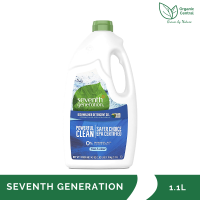
Seventh Generation Free & Clear Dishwasher Detergent Gel 1.1L
₱1,103.06₱1,125.00
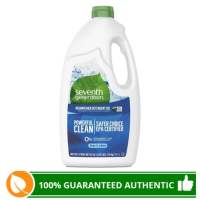
Seventh Generation Free & Clear Dishwasher Detergent Gel 1.1L
₱1,099.00₱1,599.00
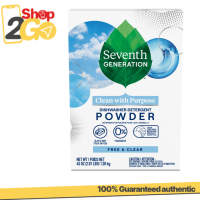
Seventh Generation Dishwasher Detergent Powder Free & Clear – 45 oz
₱1,149.00₱1,500.00
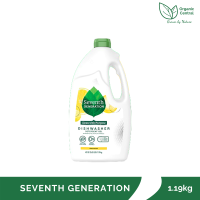
Seventh Generation Dishwasher Detergent Gel Lemon Scent 1.19 kg
₱1,136.39₱1,159.00
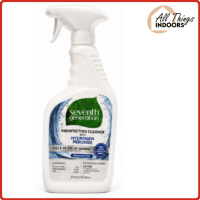
Seventh Generation Disinfecting Cleaner with Hydrogen Peroxide Fragrance-Free Spray 946mL (32 fl oz)
₱899.00₱1,000.00
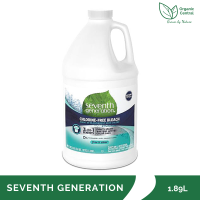
Seventh Generation Free & Clear Chlorine Free Bleach 1.89L
₱902.06₱920.00
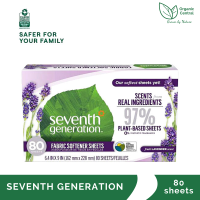
Seventh Generation Lavender Fabric Softener Sheets 80 Sheets
₱1,103.06₱1,125.00
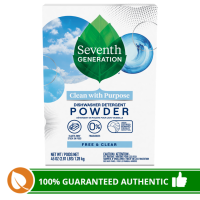
Seventh Generation Dishwasher Detergent Powder Free & Clear – 45 oz (1.28 kg)
₱1,149.00₱1,500.00
About Seventh Generation
Overview
Seventh Generation is an American consumer-products brand focused on environmental sustainability, best known for its household cleaning, laundry, paper, and personal-care lines. Founded in 1988 in Burlington, Vermont, the company established its identity around the principle that businesses must consider the long-term impact of their decisions on both people and the planet 1. Today, Seventh Generation operates as part of Unilever while maintaining its positioning centred on sustainability, ingredient transparency, environmental advocacy, and healthier household products 1.
| Category | Information |
|---|---|
| Brand name | Seventh Generation |
| Founded | 1988 |
| Origin | Burlington, Vermont, United States |
| Industry | Consumer packaged goods / household products |
| Main categories | Laundry, dishwashing, household cleaning, paper products, personal care |
| Parent company | Unilever |
| Brand positioning | Sustainable, plant-based/biobased, environmentally conscious household products |
| Core philosophy | Consider the effects of today’s decisions on future generations |
| Notable certifications/standards | EPA Safer Choice, USDA Certified Biobased, Leaping Bunny on certain products |
| Corporate identity | Mission-driven sustainability and social responsibility |
History
Founding
Seventh Generation emerged in 1988 as a small Vermont business dedicated to products designed to conserve energy, water, and other natural resources 1. The company was established during a period when environmentally conscious consumer goods were still considered a niche market 1.
The name “Seventh Generation” derives from a philosophy attributed to the Iroquois tradition, which holds that decisions should be weighed based on their effects on the next seven generations. The company adopted this concept as its central business philosophy rather than merely as a marketing slogan 1.
Early development
Throughout the 1990s and 2000s, Seventh Generation expanded beyond its original resource-conservation focus into mainstream household products. Notable milestones in this expansion include:
- 1990: Introduction of 100% recycled, unbleached toilet paper.
- 2001: Launch of a chlorine-free dish detergent.
- 2004: Development of an annual corporate-consciousness reporting approach.
- 2007: Certification as a B Corporation.
- 2008: Expansion of ingredient-disclosure practices.
- 2012: Introduction of products carrying USDA Certified Biobased certification.
- 2016: Recognition as an EPA Safer Choice Partner of the Year.
- 2017: Acquisition by Unilever.
- 2018: Launch of the EasyDose ultra-concentrated laundry detergent format.
Acquisition by Unilever
A significant turning point in the brand’s history occurred when it became part of Unilever. The company describes this transition as a major evolution, allowing it to continue emphasising its social and environmental mission while leveraging new capabilities.
This relationship provided Seventh Generation with access to the resources and distribution networks of a major multinational consumer-goods corporation, whilst enabling the brand to retain its distinct sustainability-oriented identity.
Products
Seventh Generation primarily operates within the home and personal-care market.
Laundry
Laundry remains one of the brand’s most recognisable categories. The product range includes:
- Liquid laundry detergents
- Ultra-concentrated detergents
- Laundry detergent packs
- Free & Clear products
- Baby laundry products
- Fabric softeners and related products
- Chlorine-free bleach
The brand emphasises plant-derived and biobased ingredients across many formulations. Certain products also carry USDA Certified Biobased and EPA Safer Choice certifications 1.
Dishwashing
The dishwashing portfolio comprises:
- Dish liquids
- Automatic dishwasher products
- Dish detergent packs
- Free & Clear options
Seventh Generation promotes several items in this category as EPA Safer Choice certified 1.
Household cleaners
The company manufactures a variety of cleaning products, including:
- All-purpose cleaners
- Glass cleaners
- Bathroom cleaners
- Tub and tile cleaners
- Floor cleaners
- Toilet-bowl cleaners
- Disinfecting products
The brand’s positioning relies on combining conventional cleaning performance with strict ingredient and environmental standards 1.
Paper and personal-care products
Historically, Seventh Generation has also been associated with recycled paper products and personal-care items. Its broader brand philosophy aims to reduce the environmental and health impacts associated with everyday consumer goods.
Brand philosophy
The central tenet behind Seventh Generation is that business decisions must account for their long-term consequences.
The company describes its current mission as transforming the world into a “healthy, sustainable, and equitable place” for the next seven generations and beyond 1. This philosophy manifests in several key areas:
Ingredient transparency
Seventh Generation has made full ingredient disclosure a core brand principle. The company maintains that consumers should be able to understand exactly what is contained in the household products they bring into their homes 1. This stance is particularly notable in an industry where ingredient transparency has historically been a significant consumer concern.
Plant-based and biobased ingredients
The brand frequently highlights plant-derived ingredients and renewable resources. However, it clarifies that “plant-based” does not necessarily imply that every ingredient is a raw plant substance. Seventh Generation explains that plant-derived ingredients may be chemically modified to achieve specific functional properties 1.
Some products receive USDA certification under the BioPreferred programme, which measures the percentage of a product’s ingredients derived from renewable biological sources.
Environmental impact
Seventh Generation’s sustainability strategy encompasses multiple areas, including:
- Climate action
- Sustainable sourcing
- Reduction of plastic packaging
- Use of recycled materials
- Renewable resources
- Supply-chain responsibility
- Circularity and waste reduction
The company has published impact reports assessing its progress toward these environmental and social goals 1.
Social responsibility
The brand views business as a potential force for social and environmental change. Historically, it has combined product development with advocacy, philanthropy, and public-policy engagement, rather than treating sustainability solely as a packaging or ingredient issue 1.
Certifications and standards
A distinguishing feature of Seventh Generation is its use of independent certification programmes.
EPA Safer Choice
Many Seventh Generation cleaning products carry the EPA Safer Choice label. Safer Choice is a US Environmental Protection Agency programme that evaluates products against criteria covering ingredients, human health, environmental effects, performance, and packaging. Crucially, this certification is not merely a claim made by the manufacturer; the EPA reviews ingredients and requires products to meet its specific standards.
This makes Safer Choice particularly relevant to Seventh Generation’s positioning regarding safer household chemistry.
USDA Certified Biobased
Certain Seventh Generation products are designated as USDA Certified Biobased Products. “Biobased” refers to materials derived from renewable biological sources such as plants, agricultural, forestry, or marine resources. It does not necessarily indicate that a product is entirely natural or exclusively plant-derived 1.
Leaping Bunny
Specific Seventh Generation products carry Leaping Bunny certification, which is associated with cruelty-free standards. As individual product certifications can vary, the marking on the specific package or product page serves as the definitive reference.
Sustainability strategy
Sustainability is arguably the defining characteristic of the Seventh Generation brand. The company’s stated areas of focus include climate action, sustainable sourcing, reducing plastic, creating a more equitable value chain, and reducing substances of concern 1.
Packaging has also been a major area of experimentation. Seventh Generation has utilised recycled plastics, concentrated formulas, and reduced-packaging formats to decrease material use. For example, its EasyDose laundry system concentrates detergent so that consumers can dispense smaller quantities per wash. This illustrates a broader strategy of altering the product format itself rather than relying exclusively on conventional packaging with a “green” label.
B Corporation status
Seventh Generation became a certified B Corporation in 2007 and has described itself as a founding B Corp 1. B Corporation certification evaluates companies across governance, workers, community, environment, and customers. For Seventh Generation, this certification reinforced its claim that sustainability and social responsibility should be integrated into operations rather than treated solely as marketing tools.
Marketing and brand identity
Seventh Generation’s marketing differs from that of many conventional household-product brands. Rather than focusing exclusively on concepts such as “powerful cleaning”, the brand typically combines product performance with environmental and social values.
Its identity is built around several recurring themes:
- 🌱 Nature and renewable resources
- 🧪 Ingredient transparency
- ♻️ Waste and packaging reduction
- 🌎 Climate and environmental advocacy
- 👨👩👧👦 Healthier homes and communities
- 🔭 Long-term thinking
- 🤝 Social responsibility
Consequently, the brand is positioned between mainstream household cleaning and the environmentally conscious consumer-products market.
Target consumers
Seventh Generation primarily appeals to consumers seeking everyday household products who also prioritise:
- Environmental sustainability
- Reduced plastic and waste
- Renewable or biobased ingredients
- Ingredient transparency
- Cruelty-free considerations
- Household chemical safety
- Ethical corporate behaviour
- Climate and social issues
The brand has helped move environmentally oriented household products from a niche segment toward the mainstream.
Competitive position
Seventh Generation competes in a large consumer-products market against both conventional brands and other environmentally positioned companies. Its differentiation stems from combining three propositions: performance, transparency, and sustainability.
This distinction is important because the brand does not market itself simply as an “eco” alternative; it also emphasises that products must perform effectively as laundry detergents, dish cleaners, and household cleaners. Its primary strategic challenge lies in balancing environmental ideals with mass-market performance, affordability, convenience, and scale.
Relationship with Unilever
Although Seventh Generation originated as an independent Vermont company, it is now part of Unilever, one of the world’s largest consumer-goods companies. This acquisition significantly expanded the brand’s corporate resources and distribution potential 1.
This creates a unique aspect of the brand’s identity: Seventh Generation presents itself as an environmentally and socially progressive company whilst operating within a massive multinational corporation. The brand has continued to publish its own sustainability and impact information and maintains a distinct mission-oriented identity 1.
Impact and advocacy
Seventh Generation’s activities extend beyond selling products. The company has historically engaged in environmental advocacy and public-policy campaigns, particularly regarding climate, chemicals, sustainability, and social equity. Its current impact strategy includes climate action, sustainable sourcing, packaging reduction, and an equitable value chain 1.
Impact reporting also highlights advocacy and philanthropy alongside product and supply-chain initiatives 1.
Criticism and limitations
As with other “green” consumer brands, claims made by Seventh Generation require careful interpretation. Terms such as “natural”, “plant-based”, “biobased”, “safer”, and “environmentally friendly” are not interchangeable. A product may contain plant-derived ingredients alongside synthetic ingredients. For instance, Seventh Generation’s own ingredient list for one liquid laundry detergent includes both plant-derived ingredients and synthetic preservatives 1.
Similarly, EPA Safer Choice certification indicates that a product meets specific safety and environmental criteria; it does not mean the product is completely chemical-free or risk-free. The EPA explicitly evaluates chemical ingredients and requires certified products to meet standards for health, environmental impact, performance, and packaging.
There is also an inherent tension in the brand’s model: a sustainability-focused consumer-products company still participates in mass production, packaging, transportation, and retail systems that generate environmental impacts. Seventh Generation therefore frames sustainability as a process of reducing and addressing those impacts rather than claiming its products have zero environmental footprint.
Significance
Seventh Generation is significant for helping to establish a model in which environmental responsibility became part of a household brand’s fundamental identity. Rather than adopting environmental initiatives after becoming a conventional consumer-goods company, it built its corporate philosophy around sustainability from its earliest years.
Its influence is evident in the growing number of mainstream household brands that now emphasise plant-based ingredients, recycled packaging, ingredient disclosure, cruelty-free testing, carbon reduction, and third-party environmental certifications. Its history also illustrates the evolution of the sustainable-consumer-products industry—from a small Vermont mail-order business in the late 1980s to a recognisable international brand operating within Unilever 1.