Shop on Lazada
Sheaffer products
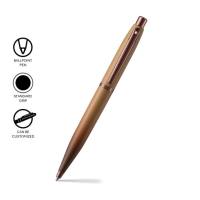
Sheaffer Vfm Ballpoint Pen SE2942851 COF
₱2,007.00₱3,345.00
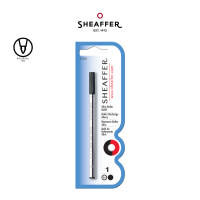
Sheaffer Slim Black Rollerball Pen Refill SE97535
₱445.00
Buy on Lazada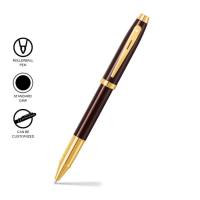
Sheaffer 100 Glossy Coffee Brown with PVD Gold Tone Trim Rollerball Pen SE1937051
₱3,057.00₱5,095.00
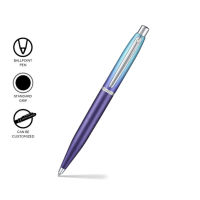
Sheaffer VFM Expressions Blue-Purple Pearlised Gradient with Chrome Trim Ballpoint Pen SE2943051
₱1,497.00₱2,495.00
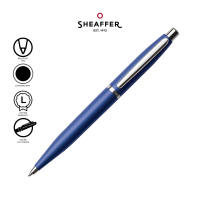
Sheaffer VFM Neon Blue New Technology Ballpoint Pen SE2940151
₱1,556.00₱1,945.00
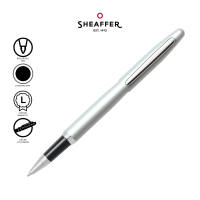
Sheaffer VFM Strobe Silver NT Rollerball Pen SE1940051
₱1,716.00₱2,145.00
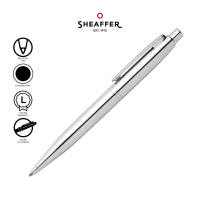
Sheaffer VFM Chrome Ballpoint Pen SE2942151
₱1,836.00₱2,295.00
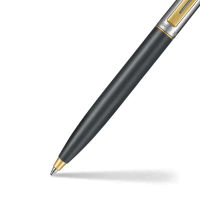
Sheaffer Sentinel Matte Black and Brushed Chrome with Gold Trim Ballpoint Pen SE233451
₱1,476.00₱1,845.00
About Sheaffer
Sheaffer is a historic American fine-writing-instrument brand best known for its fountain pens, though it also manufactures ballpoint pens, rollerballs, mechanical pencils, inks, refills, and writing accessories. Its history spans more than a century, beginning in Fort Madison, Iowa, in 1913 when jeweller and inventor Walter A. Sheaffer commercialised a fountain pen based on his lever-filling mechanism.1
Today, Sheaffer is owned by William Penn Private Limited, an India-based company specialising in premium and luxury writing instruments. William Penn acquired the Sheaffer brand in 2022, following periods of ownership by BIC and A.T. Cross.1
Quick facts
| Category | Information |
|---|---|
| Brand | Sheaffer |
| Industry | Fine writing instruments |
| Origin | Fort Madison, Iowa, United States |
| Founded | 1913 |
| Founder | Walter A. Sheaffer |
| Best known for | Fountain pens and distinctive nib designs |
| Major innovation | Lever-filling fountain pen |
| Signature symbol | White Dot |
| Other products | Ballpoints, rollerballs, pencils, inks, refills, gift sets |
| Current owner | William Penn Private Limited |
| Previous major owners | BIC; A.T. Cross |
| Heritage | American |
| Market position | Premium/fine writing instruments |
Origins
The story of Sheaffer begins with Walter A. Sheaffer, a jeweller working in Fort Madison, Iowa, who sought to improve the fountain pens of his era, which were often inconvenient and messy to refill.
Working in the back room of his jewellery store, Sheaffer developed a lever-filling mechanism. Rather than requiring the user to manipulate a complicated filling apparatus, a lever on the side of the pen compressed an internal ink sac, allowing the pen to draw in ink. He subsequently turned this invention into a commercial business.1
The company was incorporated in 1913, and early production began on a very small scale, with the original operation employing only a handful of people.2
This origin is central to Sheaffer’s identity: unlike many later pen brands that competed primarily through styling or marketing, Sheaffer established itself through mechanical innovation.
The lever-filling fountain pen
The lever filler became the foundation of the Sheaffer brand. A conventional fountain pen requires a method to transfer ink from a bottle into the pen. In a Sheaffer lever-filler, lifting the external lever operates a pressure bar against an ink sac. When the lever is released, the sac returns to its original shape and draws ink into the pen.
This mechanism was relatively simple, reliable, and convenient for its era. Consequently, Sheaffer positioned itself as an innovator in fountain-pen technology rather than merely another manufacturer of writing instruments. The company identifies the lever-filling fountain pen as one of the foundational innovations of its history.1
Expansion and early success
During the 1910s and 1920s, Sheaffer expanded beyond its original small workshop. The brand’s fountain pens became increasingly associated with mechanical reliability, attractive finishes, quality nibs, convenient filling systems, premium construction, and distinctive styling.
The introduction of Skrip ink in 1922 was another significant development. Sheaffer was not simply selling a pen; it was building an ecosystem around fountain-pen writing, including ink specifically designed for its instruments.1
The White Dot
One of Sheaffer’s most recognisable trademarks is the White Dot. Introduced in 1924, it became a visual indicator associated with Sheaffer quality. Originally placed towards the upper part of the cap, it later became closely associated with the area around the clip.1
For collectors, the White Dot is far more than decoration; it is one of the easiest ways to identify a Sheaffer and has become almost synonymous with the brand. Historically, the White Dot was associated with Sheaffer’s warranty and quality messaging. Today, according to Sheaffer, it no longer represents a lifetime warranty but remains a core brand symbol.1
The Balance
One of Sheaffer’s most influential designs was the Sheaffer Balance, introduced towards the end of the 1920s. The Balance represented a major shift in fountain-pen styling. Instead of the relatively straight, cylindrical forms common to many earlier pens, the Balance used a streamlined, tapered silhouette.
Its design emphasised smooth contours, better visual balance, comfortable handling, streamlined aesthetics, and modern industrial design. The Balance became one of the defining fountain pens of its period and is particularly important to vintage Sheaffer collectors. Sheaffer’s own historical material describes it as a milestone in pen design.1
Sheaffer in the 1930s and 1940s
The 1930s and 1940s were particularly important years for Sheaffer’s technical development. The company experimented with different filling systems, materials, and nib technologies. Among the innovations associated with this era was the Triumph nib, recognisable by its distinctive conical form.
Sheaffer also developed the Feathertouch nib and increasingly emphasised smoothness and writing comfort. Premium models frequently used gold nibs, reinforcing Sheaffer’s position in the higher end of the fountain-pen market.1
The company’s pens became associated with important professional and institutional users. Sheaffer today highlights stories of its pens being used for historic signatures, treaties, and government documents.1
Triumph and the inlaid/conical nib tradition
The nib is one of the areas where Sheaffer developed a distinctive identity. The Triumph nib is particularly famous among vintage collectors. Rather than simply extending a conventional flat nib from the section, Triumph designs incorporated a distinctive conical or wraparound form.
Later Sheaffer designs also became famous for inlaid nibs, where much of the nib is integrated into the section of the pen. This created a visual appearance markedly different from conventional fountain pens. Sheaffer’s combination of streamlined bodies, distinctive nib architecture, and proprietary filling mechanisms became one of the brand’s defining characteristics.
The post-war period
After World War II, Sheaffer continued to diversify. The company produced increasingly sophisticated fountain pens while also expanding into other writing technologies. As ballpoint pens gained popularity, Sheaffer developed ballpoint products alongside its traditional fountain pens.
This transition was significant because fountain pens were gradually moving from being an everyday necessity towards becoming a premium, professional, and personal writing instrument. Sheaffer therefore had to compete in two different markets: the traditional fountain-pen market and the emerging mass-market ballpoint market. It continued to serve both.
PFM — Pen For Men
One of Sheaffer’s most famous twentieth-century products is the PFM, generally understood as Pen For Men. Introduced in the early 1960s, the PFM was a substantial, modern fountain pen designed for a changing era.
Its design incorporated a large body, Sheaffer’s distinctive inlaid nib, a cartridge/converter-oriented filling system, strong 1960s styling, and a substantial writing feel. Today, vintage PFMs are highly regarded by Sheaffer collectors. The PFM is especially significant because it demonstrates how Sheaffer combined its traditional fountain-pen engineering with contemporary mid-century industrial design.
The Imperial era
Another major Sheaffer family is the Imperial. Imperial pens were particularly prominent from the 1960s onward and continued the brand’s emphasis on formal styling, inlaid nibs, gold-tone or gold-plated trim, professional appearance, and smooth fountain-pen performance.
The Imperial became one of the classic Sheaffer designs and remains an important reference point for vintage and modern Sheaffer enthusiasts.1
Corporate ownership changes
Sheaffer’s corporate history is complex, as the brand has passed through several owners.
1966 — Textron
In 1966, Sheaffer was sold to Textron, a large American industrial conglomerate. This marked the end of the company’s long period as a family-controlled independent business.3
1997 — BIC
In 1997, French company BIC acquired Sheaffer. BIC was already one of the world’s best-known mass-market writing-instrument companies.4 The acquisition placed the historic Sheaffer name within a much larger international writing-products company.
2014 — A.T. Cross
In 2014, BIC sold Sheaffer’s fine-writing business to A.T. Cross Company for approximately $15 million. The transaction was completed in November 2014.5 This was a notable pairing because Cross and Sheaffer were both historic American writing-instrument brands.
2022 — William Penn
In 2022, Sheaffer entered its current chapter when the brand was acquired by William Penn Private Limited, a Bangalore-based company involved in premium and luxury writing instruments and accessories.1 Thus, although Sheaffer’s historical identity is distinctly American, its current ownership is Indian.
Sheaffer today
Modern Sheaffer continues to operate primarily as a premium writing-instrument brand. Its current range includes fountain pens, ballpoint pens, rollerball pens, mechanical pencils, ink, refills, gift sets, and personalised writing products.
Current collections include names such as Legacy, Sheaffer 300, Sheaffer 100, Expressions, and Coffee, alongside newer and collaborative products.6 The company continues to emphasise the traditional Sheaffer values of innovation, craftsmanship, design, and writing comfort.1
Major Sheaffer pen families
Some of the most historically significant Sheaffer models and families include:
| Model / family | Period / significance |
|---|---|
| Early Lever Fillers | Foundation of the company |
| Balance | Iconic streamlined design of the late 1920s onward |
| Triumph | Famous conical/wraparound nib technology |
| Lifetime | Premium historical line associated with Sheaffer’s quality positioning |
| PFM | Famous 1960s oversized inlaid-nib fountain pen |
| Imperial | Classic professional inlaid-nib design |
| Prelude | Modern-era premium writing line |
| Legacy | Heritage-inspired premium family |
| 300 | Modern mid-range/premium line |
| 100 | Accessible modern Sheaffer fountain-pen family |
| Sagaris | Slim modern design combining traditional and contemporary styling |
Sheaffer describes the evolution from Balance and Triumph through Imperial, Prelude, Legacy, and later modern collections as a continuous progression of design and technology.1
Distinctive characteristics
Engineering
Sheaffer has historically been an engineering-driven pen company. Its heritage includes lever filling, proprietary filling mechanisms, Triumph nib technology, inlaid nibs, specialised nib designs, and proprietary inks. This technical heritage is a major reason vintage Sheaffers remain interesting to fountain-pen enthusiasts.
Design
Sheaffer also possesses a remarkably recognisable design language. Its historical designs tend to emphasise symmetry, streamlining, elegant proportions, practical ergonomics, and conservative luxury. This is particularly evident in the Balance, PFM, and Imperial families.
The White Dot
The White Dot is arguably Sheaffer’s equivalent of a visual signature. Even when the exact model is not immediately recognisable, the White Dot can identify a pen as a Sheaffer.
American heritage
Although ownership has changed several times, Sheaffer’s historical identity remains strongly connected to American industrial and design history. The original Fort Madison connection is still celebrated, including through the Sheaffer Museum in Fort Madison.1
Comparison with other brands
Sheaffer is often discussed alongside other historic fine-writing brands such as Parker, another major American fountain-pen manufacturer with a huge vintage following; Waterman, a pioneering fountain-pen name with strong French identity today; Pelikan, famous for German engineering and piston-fill fountain pens; Montblanc, positioned more strongly towards luxury and status; Cross, another historic American writing-instrument brand; and Lamy, known for German functionalist design and modern mass-premium products.
Sheaffer’s niche is somewhat unusual: it combines American heritage, fountain-pen engineering, distinctive nib technology, and relatively understated premium styling.
Collector appeal
For fountain-pen collectors, Sheaffer is considerably more important than its current mainstream visibility might suggest. Vintage Sheaffers are collected because of their historical importance, unusual filling systems, gold nibs, Triumph nibs, inlaid nibs, celluloid colours, Art Deco and streamlined designs, PFM and Balance models, interesting model variations, and the company’s long production history.
The vintage market is particularly diverse because Sheaffer produced pens across many decades and price levels. A collector might therefore encounter a relatively inexpensive vintage Sheaffer alongside a rare, highly desirable model.
Cultural significance
Sheaffer’s historical importance extends beyond simply selling pens. During the twentieth century, companies such as Sheaffer helped transform the fountain pen from a specialised writing device into a personal object. A fountain pen could communicate professional status, personal taste, wealth, education, corporate identity, and individuality.
Sheaffer’s designs were particularly successful at occupying the space between technical instrument and luxury object. That philosophy remains visible in the brand today.
Brand identity
If Sheaffer had to be summarised through a few concepts, they would be: Innovation → Craftsmanship → American heritage → Nib engineering → Elegant design → Premium writing. The company’s own current messaging similarly emphasises innovation, originality, craftsmanship, smooth writing, and design.1
Timeline
1912
Walter A. Sheaffer develops and begins commercialising his fountain-pen concept in Fort Madison, Iowa.3
1913
The W. A. Sheaffer Pen Company is incorporated.2
1922
Sheaffer introduces Skrip ink.1
1924
The White Dot is introduced as a Sheaffer quality symbol.1
Late 1920s
The Balance becomes an important streamlined Sheaffer design.1
1930s–1940s
Triumph and other advanced nib technologies strengthen Sheaffer’s technical reputation.1
1960s
Sheaffer introduces major designs including the PFM and expands its modern product lines.
1966
Sheaffer is sold to Textron.3
1997
BIC acquires Sheaffer.4
2014
BIC sells Sheaffer to A.T. Cross Company.5
2022
William Penn acquires Sheaffer, beginning the brand’s current ownership era.1
Today
Sheaffer continues as an international premium writing-instrument brand, offering fountain pens, ballpoints, rollerballs, pencils, inks, and accessories.6
Overall assessment
Sheaffer is one of the historically important names in fountain-pen history. Its significance lies not simply in its existence since 1913, but in its contribution of several genuinely influential ideas to pen design, most notably the lever-filling mechanism, streamlined Balance styling, Triumph nib technology, and inlaid nib designs.
Its corporate ownership has changed substantially—from the original Sheaffer family business to Textron, BIC, A.T. Cross, and ultimately William Penn—but the brand has retained its central identity as a maker of premium, elegant writing instruments.1
Sheaffer is an American-born, century-old pen brand whose reputation was built on fountain-pen innovation and distinctive design, and which today continues under Indian ownership as a premium international writing-instrument brand. For those interested in pens specifically, Sheaffer’s vintage history is arguably even more fascinating than its modern catalogue, especially the Balance, Triumph, PFM, Imperial, and Lifetime families.