Shop on Lazada
Shoei products
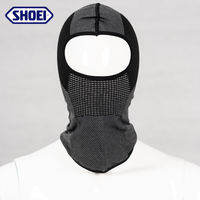
Shoei | All Seasons Breathable Warm Thermal Sweat Absorbing Helmet Liner Mask
₱1,883.69₱3,708.94
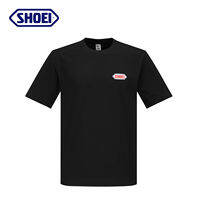
Shoei | Moisture Wicking Quick Dry Unisex Summer Riding Shirt
₱2,286.90₱4,453.00
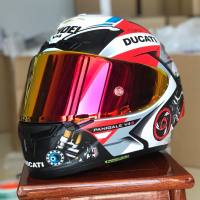
SHOEI Helmet SHOEI Full Face Motorcycle Helmet SHOEI X14 Duca-ti V4 Helmet Riding Motocross Racing Motobike Helmet
₱7,582.00₱27,599.00
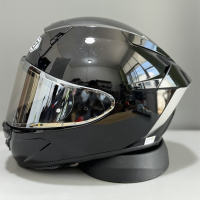
SHOEI X15 Bright Black Helmet SHOEI X15 Full Face Motorcycle Helmet Riding Motocross Racing Helmet
₱7,799.00₱8,094.00
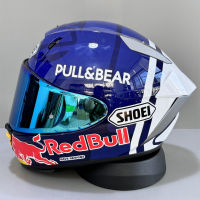
SHOEI X15 Red Bull 73 Helmet SHOEI X15 Motorcycle Full Face Helmet Riding Motocross Racing Helmet
₱7,799.00₱8,094.00
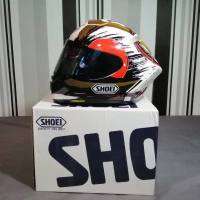
SHOEI X14 Lucky Cat Full Face Helmet Racing Motorcycle Helmet Men and Women Motorcycle Helmet Available In 7 Visor Colors
₱9,108.00₱14,759.00
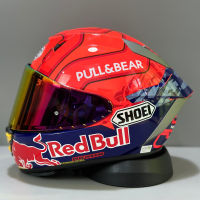
SHOEI X15 Helmet SHOEI X15 Full Face Red Bull Ant Motorcycle Helmet Riding Motocross Racing Helmet
₱7,799.00₱8,888.00
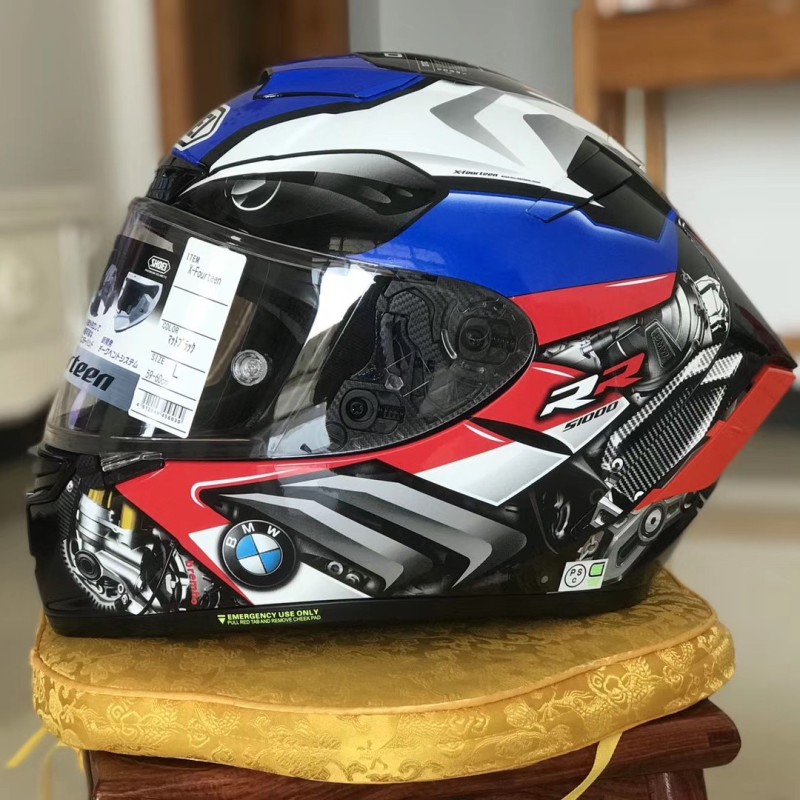
NEW SHOEI X14 BMW RR Full Face Motorcycle Helmets Black Helmet for Motocross
₱7,999.00
Buy on LazadaAbout Shoei
Overview
SHOEI CO., LTD. (株式会社SHOEI) is a Japanese manufacturer best known for premium motorcycle helmets. Founded in Tokyo in 1959, SHOEI has evolved from a small domestic safety-helmet maker into one of the world’s most recognized high-end motorcycle-helmet brands. Its identity is strongly associated with Japanese manufacturing, hand craftsmanship, safety engineering, aerodynamics, comfort, and professional motorcycle racing.1
Official website: SHOEI Worldwide shoei.com
Basic Information
| Item | Information |
|---|---|
| Brand | SHOEI |
| Japanese name | 株式会社SHOEI |
| Industry | Motorcycle safety equipment |
| Main product | Premium motorcycle helmets |
| Founded | March 17, 1959 |
| Country | Japan |
| Headquarters | Taito, Tokyo, Japan |
| Factories | Ibaraki and Iwate, Japan |
| President | Kenichiro Ishida |
| Employees | 771 as of September 30, 2025 |
| FY2025 group sales | ¥32.36 billion |
| Manufacturing philosophy | Made in Japan |
| Market position | Premium/high-end motorcycle helmets |
These corporate figures are derived from SHOEI’s latest published company profile available for FY2025.1
Origin of the Name
The name SHOEI originates from the company’s corporate history rather than being a generic English term. The company was established in 1959 as Shoei Kako Co., Ltd. (昭栄化工株式会社). It initially produced general-purpose safety helmets before transitioning to motorcycle-specific gear. Production of motorcycle helmets began in 1960, and by 1963, the company had developed its first racing helmet, the SR-1.1
Readers should distinguish this motorcycle-helmet manufacturer from other Japanese entities using the “SHOEI” name, such as SHOEI Chemical or RHYTHM SHOEI. The motorcycle-helmet company is specifically SHOEI CO., LTD.
History
1950s: Origins
SHOEI’s roots trace back to a polyester-processing business founded in 1954. The motorcycle-helmet entity was formally incorporated as Shoei Kako Co., Ltd. on March 17, 1959, in Tokyo. General safety helmet production commenced that same year, followed by entry into the motorcycle helmet market in 1960.1 This period coincided with rapid growth in motorcycle ownership across Japan, which drove demand for increasingly sophisticated protective equipment.
1960s: Entry into Racing
SHOEI recognized early that motorsport could serve as a practical research laboratory. In 1962, the company began supplying helmets to racing riders, utilizing their feedback to inform research and development. This led to the introduction of the SR-1, its first dedicated racing helmet, in 1963.1
The company subsequently developed the SR-Z, an early full-face helmet that entered production in 1967. International expansion also began during this decade; in 1968, SHOEI established SHOEI Safety Helmet Corporation in California, securing a foothold in the United States market.1
Manufacturing Philosophy
SHOEI does not primarily compete as a mass-market helmet manufacturer. Its business strategy centers on “Quality & Value,” concentrating resources on premium products rather than attempting to cover every price point. The product development cycle integrates market research, in-house design, engineering, and controlled production.
A defining characteristic of the brand is its commitment to Made-in-Japan production. SHOEI maintains that Japanese-made materials and proprietary production expertise are critical components of its competitive advantage.2 This philosophy forms a central pillar of the brand’s global identity.
Premium Positioning
SHOEI’s reputation as a premium brand stems from multiple integrated factors beyond pricing alone.
Japanese Manufacturing
Unlike manufacturers that outsource core production to overseas mass-production networks, SHOEI maintains manufacturing at its Japanese facilities. The company states that its helmets are handmade in Japan, with more than 50 people involved in the production of a single helmet.2 This does not imply that one craftsman builds each unit entirely by hand; rather, it reflects a highly controlled manufacturing process incorporating extensive manual operations and inspections.
Quality Control
Motorcycle helmets are exceptionally sensitive to manufacturing consistency. Variables such as shell thickness, composite-fiber layup, EPS liner geometry, visor mechanisms, ventilation systems, interior fit, aerodynamic shaping, and assembly tolerances all significantly influence the finished product. Consequently, SHOEI prioritizes controlled production and rigorous inspection over maximizing manufacturing volume.
Research and Development
SHOEI develops helmets internally, combining laboratory testing with real-world rider feedback. The company’s engineering philosophy is heavily influenced by motorcycle racing, where helmets face extreme conditions including high speeds, aerodynamic loads, vibration, temperature fluctuations, prolonged use, aggressive riding positions, and impact forces. SHOEI describes racing as a vital source of development feedback.2
Safety Philosophy
SHOEI frames helmet safety through two distinct concepts:
Passive Safety
Passive safety addresses traditional crash protection: what occurs when a rider actually crashes. This encompasses impact-energy management, shell construction, EPS energy absorption, structural integrity, and retention systems.
Active Safety
Active safety focuses on preventing or reducing the likelihood of a crash occurring. For helmets, this involves field of vision, aerodynamics, stability, ventilation, noise management, rider comfort, and fatigue reduction.
SHOEI explicitly identifies Passive Safety and Active Safety as the two pillars of its safety concept.2 This distinction explains why the company invests heavily in aerodynamics and ergonomics rather than treating the helmet solely as an impact-absorbing device.
Technological Milestones
SHOEI has introduced numerous technologies throughout its history. Notable milestones include:
| Year | Development |
|---|---|
| 1963 | SR-1, first SHOEI racing helmet |
| 1967 | SR-Z full-face helmet production |
| 1976 | GR-Z, an early carbon-fiber helmet |
| 1983 | Z-100 with innovative visor/chin-spoiler design |
| 1984 | Ventilation developments in RF-102V/TJ-201V |
| 1990 | X-8 with internal visor mechanism |
| 1991 | VF-X off-road helmet |
| 1993 | X-8SP with two-part EPS liner |
| 2004 | J-ACTER system helmet |
| 2020 | SHOEI Gallery Tokyo opens |
| 2021 | NEOTEC II / VFX-WR among modern-generation models |
Historical details are documented in SHOEI’s corporate and product history materials.13 The GR-Z, identified in historical materials as a carbon-fiber helmet introduced in 1976, represents a particularly significant milestone.3
Motorsport Heritage
Racing is integral to SHOEI’s identity. The company has supplied helmets to professional racers for decades, presenting motorsport not merely as advertising but as a development and testing environment. Historically, SHOEI helmets have been associated with riders including Wayne Gardner, Eddie Lawson, Wayne Rainey, Daijiro Kato, Marc Márquez, and numerous other professionals across road racing and off-road disciplines.
Corporate records document several major 500cc World Championship victories during the late 1980s and early 1990s.3 The modern brand continues to link its development work with professional racing, including MotoGP-level competition.2 This reflects a strategic philosophy similar to that of high-end motorsport manufacturers: developing technology at the extreme end of performance and transferring applicable innovations to consumer products.
Current Helmet Categories
SHOEI’s lineup spans several distinct categories tailored to specific riding requirements.
Racing / Sport Full-Face
These helmets prioritize high-speed performance, aerodynamics, and aggressive riding positions. The flagship model is the X-Fifteen, described by SHOEI as its “true racing helmet.”2 It occupies the extreme-performance end of the lineup and serves as the current top-level racing-oriented full-face helmet in markets such as Malaysia.
Sport-Touring Full-Face
The NXR2 is positioned as a lightweight, pure-sport full-face helmet for riders seeking sporting characteristics without a dedicated race helmet.2 This category appeals to those engaging in spirited road riding, mountain passes, occasional track days, and everyday commuting.
Touring Full-Face
The GT-Air family targets riders requiring a premium full-face helmet suitable for longer distances and daily road use. The current generation in Malaysia is the GT-Air 3, positioned as a touring-oriented premium helmet.2 Compared to pure racing helmets, this category emphasizes touring comfort, ventilation, practicality, long-distance ergonomics, and integrated features.
Modular / Flip-Up Helmets
The NEOTEC series is one of SHOEI’s most recognizable touring helmet families. The current generation, NEOTEC 3, is a premium modular/flip-up helmet.2 Modular designs allow the chin-bar assembly to move, providing flexibility when stopped or during specific touring scenarios. The NEOTEC targets riders prioritizing touring capability, comfort, practicality, and premium construction.
Open-Face / Jet Helmets
SHOEI also produces premium open-face helmets. The J-Cruise 3 is the current generation listed for Malaysia, positioned as a touring-oriented jet helmet emphasizing functionality and comfort.2 This demonstrates that the brand’s offerings extend well beyond racing helmets.
Off-Road Helmets
SHOEI has a long history in off-road helmets, beginning with products like the VF-X in the early 1990s.3 These products have historically been associated with motocross and other forms of dirt riding.
Model Differentiation
SHOEI does not attempt to create a single helmet that fulfills all purposes. Instead, it develops distinct models around specific riding requirements:
| Type | Main Priority |
|---|---|
| X-Fifteen | Racing / aerodynamics / high-speed performance |
| NXR2 | Sport riding |
| GT-Air 3 | Road sport-touring |
| NEOTEC 3 | Long-distance touring / modular convenience |
| J-Cruise 3 | Open-face touring |
Exact lineups vary by country and homologation requirements. SHOEI explicitly notes that helmet models and specifications differ between regions.1
Made in Japan Strategy
Made-in-Japan manufacturing is not merely a marketing slogan for SHOEI; it is fundamental to its production strategy. The company maintains Japanese production to ensure high-quality output and preserve manufacturing expertise, with factories located in Ibaraki and Iwate.1 Keeping critical manufacturing technology and know-how under direct control is a priority. This commitment contributes to SHOEI helmets commanding substantially higher prices than many mainstream alternatives.
Manufacturing Process
A simplified representation of SHOEI’s manufacturing workflow is:
Design → engineering → material selection → shell construction → molding/processing → EPS liner → components → painting → interior → assembly → inspection → final quality control
The actual process is considerably more complex. SHOEI states that producing a single helmet can involve more than 50 people, illustrating the extent of manual inspection and specialized work required.2 This approach distinguishes SHOEI’s manufacturing philosophy from high-volume helmet production.
Global Presence
Although SHOEI originated as a Japanese company, it has become a global brand with subsidiaries and distribution operations across major markets including Japan, Europe, the United States, Italy, Germany, France, Thailand, China, and others. Approximately 80% of sales are overseas, particularly in Europe and the United States.2
The global network includes subsidiaries such as:
- SHOEI DISTRIBUTION GmbH
- SHOEI EUROPE DISTRIBUTION SARL
- SHOEI ITALIA S.R.L.
- SHOEI ASIA CO., LTD.
- SHOEI SALES JAPAN CO., LTD.
- SHOEI (Shanghai) CO., LTD.2
Regional Specifications
SHOEI maintains region-specific product listings. For example, the current listed standard for Malaysia is ECE R22/06, with a lineup including the X-Fifteen, GT-Air 3, NXR2, NEOTEC 3, and J-Cruise 3.2 SHOEI emphasizes that specifications and available models vary by country. A SHOEI model sold in Japan, Europe, the United States, or Southeast Asia may not necessarily have identical certification, graphics, internal specifications, or available sizes.
Safety Standards
Motorcycle helmets must comply with relevant local regulations in each market. Depending on the region, SHOEI helmets may carry certifications such as ECE, JIS, Snell, or other regional standards. Historical records show that SHOEI obtained Japanese Industrial Standard certification early in its development, and its early S-12 helmet achieved Snell certification.2
Helmet certification is market-specific. Riders should verify the certification label on the actual helmet being purchased rather than assuming uniform certification across all SHOEI products.
Market Position
SHOEI occupies the premium/high-end segment of the motorcycle helmet market. The company estimates the global premium motorcycle-helmet market at approximately ¥120 billion and states that SHOEI accounts for more than 60% of that market by sales based on its own estimates.1 While this figure represents SHOEI’s internal assessment rather than an independently audited industry measurement, it illustrates the company’s strategic intent to dominate the premium segment rather than compete on price.
Competitors
SHOEI competes primarily in the premium motorcycle-helmet segment. Major international competitors include:
- Arai — Japan
- AGV — Italy
- Schuberth — Germany
- Bell — United States
- HJC — South Korea
- Nolan — Italy
- Scorpion — United States/France-associated global brand
The competitive landscape varies by helmet category and market. For premium Japanese full-face helmets, Arai is often considered SHOEI’s primary competitor, while touring and modular segments may see competition from Schuberth, AGV, and others.
Comparison with Arai
The comparison between SHOEI and Arai is prominent in the premium Japanese helmet market. Both companies share key characteristics: they are Japanese, premium, Made in Japan, possess strong racing heritage, maintain high manufacturing standards, conduct extensive internal development, command premium pricing, and enjoy strong global reputations.
The distinction lies less in safety—which both brands excel at—and more in design philosophy, fit, ergonomics, features, and personal preference. A helmet that fits one rider exceptionally well may fit another poorly, even if both are objectively high-quality products.
Pricing Factors
Several factors contribute to SHOEI’s premium pricing:
- Manufacturing location: Production is maintained in Japan.
- Labor: Significant manual work and inspection are employed.
- Research and development: Heavy investment in proprietary helmet engineering.
- Materials: Premium shell materials and specialized components increase costs.
- Quality control: Extensive inspection and consistency requirements.
- Product development: Each helmet is engineered for specific riding requirements rather than using generic shells.
- Brand positioning: Deliberate operation within the premium segment.
Value Proposition
Whether SHOEI represents good value depends heavily on the rider. For occasional riders at relatively low speeds, a less expensive helmet with proper fit and appropriate certification may offer better value. However, for riders who spend hours on highways, undertake long-distance touring, engage in frequent sport riding, attend track days, or ride extensively daily, differences in fit, ventilation, aerodynamics, noise, comfort, materials, finish, and long-term usability become significantly more meaningful.
SHOEI’s premium price delivers the most value when riders actually benefit from its premium characteristics. Importantly, a $1,000 helmet that fits poorly provides inferior protection compared to a properly fitting, correctly certified helmet costing substantially less. Fit remains fundamental.
Brand Image
SHOEI has cultivated a distinctive image defined by Japanese engineering, racing heritage, craftsmanship, and premium quality. The brand is generally associated with serious motorcyclists, sport riders, touring riders, professional racers, high-end motorcycles, Japanese engineering, understated design, and premium equipment. Unlike fashion-oriented brands, SHOEI’s branding tends to be restrained, with the helmet itself intended to communicate quality rather than relying on prominent logos.
Corporate Development
SHOEI eventually became a publicly traded Japanese company. Key corporate milestones include:
- 1959 — Shoei Kako Co., Ltd. established
- 1960 — Motorcycle helmet production begins
- 1968 — U.S. subsidiary established
- 1987 — French European operation established
- 1989 — Iwate Factory established
- 1994 — German subsidiary established
- 2007 — Listed on Tokyo Stock Exchange Second Section
- 2015 — Moved to Tokyo Stock Exchange First Section
- 2019 — SHOEI Asia established in Thailand
- 2022 — Moved to the Tokyo Stock Exchange Prime Market
- 2020 onward — SHOEI Gallery showrooms expanded in Japan
- 2021 — Shanghai subsidiary established2
Current Company Status
As of FY2025, SHOEI reported ¥32.36 billion in group sales and 771 employees, with headquarters in Taito, Tokyo, factories in Ibaraki and Iwate, subsidiaries across Japan, Europe, and Asia, and President Kenichiro Ishida.2 In 2025, SHOEI announced it was exploring new business activities outside its traditional premium motorcycle-helmet business to diversify and address demographic shifts, while affirming that motorcycle helmets remain its core and most important business.2
Contemporary Lineup
The modern SHOEI lineup covers the complete spectrum of serious motorcycle riding:
- Racing: X-Fifteen
- Sport: NXR2
- Sport touring: GT-Air 3
- Long-distance touring / modular: NEOTEC 3
- Open-face touring: J-Cruise 3
Alongside these are regional and specialized products, with availability varying by country.2 The company’s global strategy remains centered on maintaining its premium positioning and expanding its share of the premium helmet market.1
Summary
SHOEI is a Japanese premium motorcycle-helmet manufacturer founded in Tokyo in 1959. Starting with general safety helmets and entering motorcycle helmets in 1960, SHOEI built its reputation through racing, engineering, and Japanese manufacturing. Its products are developed around safety, aerodynamics, comfort, and rider feedback, and the company continues to manufacture its core helmet products in Japan. Today it is one of the world’s most recognized premium motorcycle-helmet brands, with major product families spanning racing, sport, touring, modular, and open-face helmets. Its brand philosophy can essentially be summarized as high-end Japanese engineering + racing-derived development + meticulous manufacturing + premium positioning.1