Shop on Lazada
SKIL products
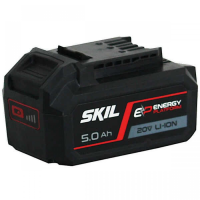
SKIL 20V Energy Platform Battery For All SKIL Cordless Tools 2.5AH / 4.0AH /5.0AH
₱6,929.00₱9,300.00
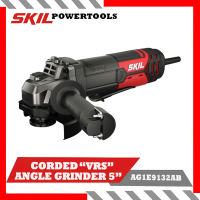
SKIL Angle Grinder 5″ with Vibration Reduction System AG1E9132AB
₱4,069.00₱6,000.00
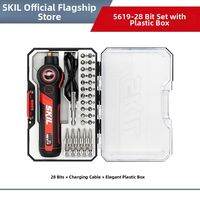
SKIL | Adjustable Angle Cordless Screwdriver Set
₱2,745.00₱4,647.00
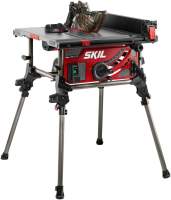
SKIL 2000W Heavy Duty Industrial Table Saw 10″ With Foldable Stand BT1E1340AA
₱22,000.00₱26,000.00
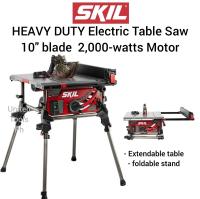
SKIL Heavy Duty Electric Table Saw Machine 10″ blade 2000-watts Motor
₱22,599.00₱40,000.00
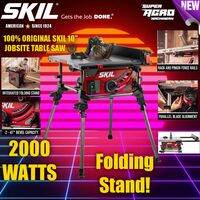
Skil table saw 10″ 2000watts 100% original
₱21,899.00
Buy on Lazada![Skil 1340 AA Professional Table Saw Machine 10″ 254mm (2000W) [GIGATOOLS]](https://ph-live.slatic.net/p/74c0f8f3c513d0c5f38a7c7aa0f14cf4.jpg_200x200q80.jpg)
Skil 1340 AA Professional Table Saw Machine 10″ 254mm (2000W) [GIGATOOLS]
₱26,705.00
Buy on Lazada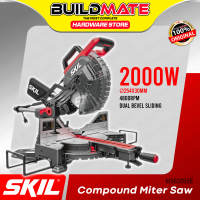
BUILDMATE Skil 2000W 10″ Inch Miter Saw Dual Bevel Sliding Compound Wood Cutting Machine MS6305SE00
₱26,949.00₱54,998.00
About SKIL
SKIL is an American-origin power tool brand with a history spanning more than a century. Best known for pioneering the portable electric circular saw, SKIL evolved from an early industrial tool manufacturer into a comprehensive power tool brand serving both DIY enthusiasts and professionals. The brand is currently owned by Chervon (HK) Ltd., a major global power tool manufacturer.1
Overview
| Details | |
|---|---|
| Brand | SKIL |
| Industry | Power tools and outdoor power equipment |
| Origin | United States |
| Heritage | Founded in the 1920s |
| Key inventor | Edmond Michel |
| Famous invention | Portable electric circular saw |
| Iconic product | SKILSAW Model 77 |
| Current owner | Chervon (HK) Ltd. |
| Major markets | North America, Europe, Australia and other international markets |
| Primary users | DIYers, homeowners and professionals |
| Product categories | Saws, drills, drivers, impact tools, outdoor equipment, benchtop tools, batteries and accessories |
History
Origins: 1921–1924
The origins of SKIL trace back to Edmond Michel, an inventor who observed sugar cane workers in Louisiana struggling to cut thick stalks manually with machetes. Seeking a less labor-intensive solution, Michel experimented with mechanizing the cutting process. His efforts eventually yielded an electric-powered handheld saw. In 1924, Michel and businessman Joseph W. Sullivan established the Michel Electric Handsaw Company in Chicago. This invention laid the foundation for what would become SKIL.2
While development work began several years earlier, SKIL officially traces its corporate heritage to 1924.
The SKILSAW
The company’s early electric handsaw became known as the SKILSAW, establishing the firm’s identity around portable power cutting. By the end of 1926, reports indicate that more than 2,000 circular saws had been produced, making powered cutting significantly more practical for construction and woodworking.3
One of the most significant products in the company’s history was the SKILSAW Model 77, introduced in the 1930s. It became an influential professional circular saw and helped cement SKIL as a major name in the power tool industry.4 The legacy of the Model 77 is so enduring that SKIL’s saw heritage is frequently associated with the phrase “the saw that built America.”5
Expansion into Power Tools
Although saws were central to its identity, SKIL eventually expanded into a much broader range of power tools. Historical catalogs demonstrate this growth beyond saws into drilling, sanding, cutting, grinding, and other categories.6 The product portfolio grew to include:
- Circular saws
- Reciprocating saws
- Jigsaws
- Drills
- Screwdrivers
- Sanders
- Grinders
- Routers
- Planers
- Heat guns
- Staple guns
- Work lights
- Outdoor power equipment
- Batteries and chargers
- Accessories
The brand also expanded internationally, becoming particularly well-known in European consumer and DIY markets. According to historical accounts, SKIL has sold more than 130 million products worldwide.7
Ownership History
SKIL has undergone several ownership and corporate transitions throughout its existence.
Bosch Era
In the 1990s, SKIL became part of Robert Bosch’s power tool business. During this period, Bosch operated SKIL as part of its worldwide portfolio, and the brand continued developing tools for consumers and professionals while maintaining its reputation in saws and power equipment.8
Acquisition by Chervon
A significant shift occurred between 2016 and 2017 when Chervon agreed to acquire the SKIL business from Bosch. The North American transaction closed at the end of 2016, while the European portion was completed on March 31, 2017.9
Today, SKIL operates within Chervon’s branded power tool portfolio, with distribution primarily across North America, Europe, and Australia.10
SKIL Today
Modern SKIL positions itself around accessible innovation, bringing features and technologies traditionally associated with high-end power tools to products aimed at homeowners, DIY users, and value-conscious professionals.11 The current product range includes:
Power Tools
- Circular saws
- Reciprocating saws
- Jigsaws
- Drills
- Impact drivers
- Impact wrenches
- Sanders
- Grinders
- Multi-tools
- Specialty tools
Outdoor Equipment
- Lawn mowers
- Leaf blowers
- String trimmers
- Chainsaws
- Other cordless yard equipment
Benchtop and Workshop Tools
SKIL produces various tools intended for workshop and stationary applications.
Batteries and Cordless Systems
Cordless technology is a central component of SKIL’s modern product strategy. Its PWRCORE battery platforms are designed to allow compatible batteries to operate across multiple SKIL tools.12
Technology and Product Philosophy
SKIL’s modern identity revolves around three core concepts:
Innovation
Innovation has been integral to SKIL since the invention of its early electric handsaw. The company continues to emphasize patented technologies and new cordless tool designs.13
Ease of Use
Modern SKIL products are designed with DIY users specifically in mind. The brand describes its approach as creating tools that are powerful yet straightforward to operate.14
Value
Historically occupying a position between inexpensive consumer tools and premium professional equipment, SKIL’s modern branding emphasizes providing useful technology and performance without necessarily requiring premium pricing.15
Major SKIL Technologies
PWRCORE 20
PWRCORE 20 is SKIL’s 20-volt cordless platform. Compatible tools share the same battery ecosystem, allowing users to purchase additional tools without needing separate battery systems. SKIL has developed a wide array of drills, saws, outdoor tools, and other equipment around this platform.16
Brushless Motors
Like many contemporary power tool manufacturers, SKIL increasingly incorporates brushless motors into its cordless product lines. These motors provide greater efficiency, power, and durability compared to conventional brushed designs.
SKIL vs. SKILSAW
It is important to distinguish that SKIL and SKILSAW are related but not interchangeable names. SKIL is the broader consumer and DIY-oriented power tool brand, offering everything from drills to outdoor equipment. SKILSAW retains a strong emphasis on professional cutting tools, particularly circular saws and construction-oriented equipment. Both brands are associated with Chervon.17
Reputation and Market Position
SKIL’s greatest historical strength lies in its circular saw heritage. The company built its identity around the invention and development of portable electric saw technology rather than simply adding saws to an existing catalog. Today, SKIL competes across a broader market spectrum ranging from DIY and homeowner segments to prosumer and professional categories.
While SKIL generally emphasizes the DIY and homeowner markets, its historical and SKILSAW products maintain a substantial professional construction heritage. This places SKIL in the same competitive landscape as brands such as Ryobi, Craftsman, DeWalt, Makita, Bosch, and Milwaukee, although individual market positioning and portfolios differ.
100-Year Milestone
In 2024, SKIL celebrated its 100th anniversary. The centennial marked a century since the founding of the Michel Electric Handsaw Company and the beginning of SKIL’s history in portable electric cutting tools. Chervon highlighted the brand’s evolution from a solution for sugar cane cutting into an international power tool brand with over 130 million products sold.18 Current branding similarly emphasizes more than 100 years of innovation.
SKIL in the Philippines
SKIL maintains an official presence in the Philippines. The local site describes the brand as offering professional power tools including saws, drills, and screwdrivers, while emphasizing innovation and DIY applications.1 This aligns with SKIL’s international strategy of making cordless and power tool technology accessible to home improvement and DIY users in the Philippine market.
Brand Identity
SKIL’s identity is defined by four key characteristics:
- American Heritage: The brand originated from an American invention and became closely associated with American construction and woodworking.
- Cutting-Tool Heritage: The circular saw remains the defining product in SKIL’s history.
- Innovation: From the original electric handsaw to modern cordless platforms, technological development remains central to the brand.
- Accessible Performance: Modern SKIL focuses heavily on useful technology, ease of use, and value for DIY consumers.17
Timeline
| Year | Event |
|---|---|
| 1921 | Edmond Michel begins experimenting with mechanized cutting after observing sugar cane workers in Louisiana. |
| 1924 | Michel and Joseph W. Sullivan establish the Michel Electric Handsaw Company. |
| 1920s | The portable electric handsaw develops into the SKILSAW. |
| 1930s | The legendary SKILSAW Model 77 becomes an important professional circular saw. |
| Post-WWII | SKIL expands internationally and broadens its tool portfolio. |
| 1950s–60s | SKIL grows strongly in the consumer/DIY market and expands internationally. |
| 1990s | SKIL becomes part of Bosch’s power tool operations. |
| 2016 | Chervon agrees to acquire SKIL from Bosch. |
| 2017 | Chervon’s acquisition of the SKIL business is completed. |
| 2018 | SKIL introduces a refreshed brand identity and new cordless products under Chervon. |
| 2024 | SKIL celebrates its 100th anniversary. |
| 2026 | SKIL continues as a Chervon-owned global power tool brand with cordless, workshop, and outdoor equipment. |
References
- SKIL – Offers a wide range of professional power tools such as saw, drills and screwdrivers perfect for DIY task.
- Chervon | SKIL
- Chervon | SKIL: 100 hundred years of DIY-innovation
- Chervon | CHERVON plans to buy SKIL
- SKIL®
- Skil
- Chervon | Chervon Acquires SKil from Bosch Power Tools
- Innovative Tools with Tech You Can Use | SKIL
- Innovation Powers Everything we Do—Learn More | SKIL
- Find a Manual or Parts List for your Tool | SKIL
- About Us | SKIL
- Chervon | 百年SKIL,开启非凡新征程
- SKILSAW Power Tools Builds On Heritage With New Brand Identity And Expanded Product Line
- 走进SKIL
- Sobre nosotros | SKIL
- ความเป็นมาของ SKIL – SKIL THAILAND เครื่องมือช่างคุณภาพ ไร้สาย เครื่องมือช่างไฟฟ้า ตอบโจทย์ทุกการใช้งาน
- SKIL – Offers a wide range of professional power tools such as saw, drills and screwdrivers perfect for DIY task.
- Innovative Power Tools Let you DIY with Confidence| SKIL