Shop on Lazada
SMITH & NEPHEW products
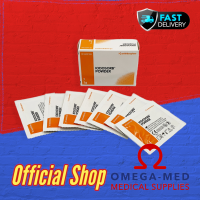
IODOSORB POWDER 3g (Sold per sachet)
₱4,125.00
Buy on Lazada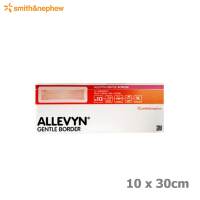
Smith & Nephew Allevyn Gentle Border All Size(10pcs) ● Freegift
₱5,890.00₱6,392.00
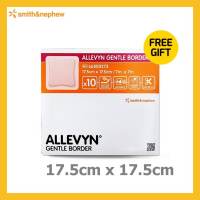
Smith & Nephew Allevyn Gentle Border 66800273 Adhesive Foam Dressings 17.5cm x 17.5cm 10Pcs ● Freegift(Dressing)
₱5,840.00₱7,100.00
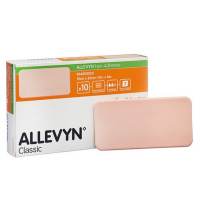
Smith & Nephew Allevyn Non-Adhesive Dressing All Size (10 pcs / Box) ● Recent manufacturing
₱6,540.00₱8,000.00
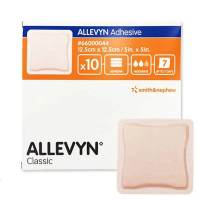
Smith & Nephew Allevyn Adhesive Foam Dressing 7.5cm x 7.5cm - 12.5cm x 12.5cm Box of 10 ● Recent manufacturing ● Best Price
₱3,250.00₱4,700.00
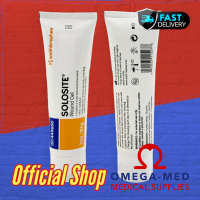
Smith & Nephew Solosite Wound Gel 85g (Sold per Tube)
₱939.00₱1,050.00
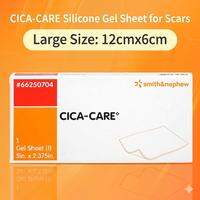
Smith & Nephew Cica-Care Silicone Gel Sheet 12 x 3cm effective treatment for scars Scar Treatment with FREEBIES
₱2,059.00₱4,683.00
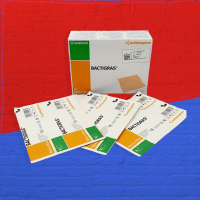
BACTIGRAS DRESSING Medicated Paraffin Gauze Dressing (sold per pc)
₱89.00
Buy on LazadaAbout SMITH & NEPHEW
SMITH & NEPHEW (officially Smith & Nephew plc) is a British multinational medical technology company headquartered in Watford, England. Established in Hull in 1856, the organization has evolved from a pharmacy and wound-dressing business into a global manufacturer of surgical technologies, orthopaedic implants, sports medicine devices, and advanced wound care products 1. The company defines its portfolio as focused on the repair, regeneration, and replacement of soft and hard tissue, operating under the corporate purpose of “Life Unlimited” to restore health, mobility, and quality of life through medical technology 3.
As of 2026, SMITH & NEPHEW employs approximately 17,000 people and operates in around 100 countries 3. In 2025, its products were used to treat more than 15 million patients, and the company reported revenue of US$6.164 billion 3. It is listed on both the London Stock Exchange (LSE: SN) and the New York Stock Exchange (NYSE: SNN), and is a constituent of the FTSE 100 Index 3.
Company Profile
| Field | Information |
|---|---|
| Full legal name | Smith & Nephew plc |
| Brand name | SMITH & NEPHEW |
| Industry | Medical technology / Medical devices |
| Founded | 1856 |
| Founder | Thomas James Smith |
| Co-founder / later partner | Horatio Nelson Smith |
| Founded in | Hull, East Yorkshire, England |
| Headquarters | Watford, Hertfordshire, England |
| CEO | Dr Deepak Nath |
| Employees | ~17,000 |
| Countries served | ~100 |
| 2025 revenue | US$6.164 billion |
| Stock exchanges | London Stock Exchange; New York Stock Exchange |
| LSE ticker | SN |
| NYSE ticker | SNN |
| FTSE 100 | Yes |
| Corporate type | Public limited company |
| Main businesses | Orthopaedics; Sports Medicine & ENT; Advanced Wound Management |
| Purpose | “Life Unlimited” |
The principal executive offices are located at Building 5, Croxley Park, Hatters Lane, Watford, Hertfordshire WD18 8YE, England 3.
Business Overview
SMITH & NEPHEW develops technologies used by healthcare professionals to repair damaged tissue, replace damaged joints, and manage complex wounds. Unlike pharmaceutical companies that focus on drugs, SMITH & NEPHEW is primarily a medical device and surgical technology firm 2. Its products are utilized in orthopaedic operating rooms, joint replacement surgeries, trauma treatment, arthroscopy, shoulder and rotator cuff repairs, ear, nose, and throat (ENT) procedures, chronic wound management, and negative-pressure wound therapy 2.
The company organizes its operations into three global business units:
- Orthopaedics
- Sports Medicine & ENT
- Advanced Wound Management
This structure provides exposure to both hard and soft tissue medicine, distinguishing the modern enterprise from its historical reputation as a bandage manufacturer 12.
History
Origins and Early Years
The company was founded in Hull, England, during the Victorian era. In 1856, Thomas James Smith opened a chemist shop where he initially developed methods for refining cod-liver oil 45. At this stage, the business operated essentially as a pharmacy. The transformation began when Smith’s nephew, Horatio Nelson Smith, entered into partnership with his uncle in 1896, creating the entity known as T. J. Smith & Nephew 4.
In 1906, anticipating a decline in the cod-liver oil trade, Horatio Nelson Smith purchased a bandage cutting and rolling machine, shifting the business toward wound dressings and bandages 6. He subsequently secured contracts to supply Canadian hospitals after traveling to North America. In 1907, Smith & Nephew became a limited company, establishing a long-term focus on developing technology for the treatment and healing of human tissue 6.
World War I and Expansion
The wound care business expanded significantly during the First World War. Shortly after Britain entered the conflict in 1914, the company received a contract worth approximately £350,000 to supply surgical and field dressings within five months 7. The workforce grew from about 50 employees to 1,200 during the war 7. International expansion followed, with the first independent overseas branch opening in Canada in 1921 8.
In 1928, the company produced an experimental bandage called Elastoplast. This innovation marked a transition from conventional wound dressing manufacturing toward materials science, fixation, and protection, although the brand’s ownership later diverged from the core medical device business 10.
Public Listing and Diversification
Smith & Nephew was listed on the London Stock Exchange in 1937 9. Following World War II, it established businesses in Australia and New Zealand. During the 1950s, the company diversified into pharmaceuticals and skincare, acquiring Herts Pharmaceuticals in 1951 10. However, over subsequent decades, it increasingly focused on medical technology and surgical products, particularly in orthopaedics and instrumentation 11.
Transition to Orthopaedics
A pivotal transformation occurred through acquisitions in orthopaedics and arthroscopy. In 1986, the company acquired Richards Medical, a Memphis-based orthopaedic firm, and DYONICS, an American arthroscopy specialist 12. These acquisitions built capabilities in joint reconstruction, implants, and sports medicine. In 1995, SMITH & NEPHEW acquired Acufex Microsurgical, strengthening its position in arthroscopic devices, and listed on the New York Stock Exchange 11. It became a constituent of the FTSE 100 in 2001 3.
Modern Acquisitions
Growth in the 21st century has been driven by acquiring innovative medical device companies:
- 2014: Acquired ArthroCare, expanding the sports medicine portfolio in arthroscopic surgery and soft tissue treatment.
- 2015: Acquired Blue Belt Technologies, establishing a position in robotics-assisted orthopaedic surgery which contributed to the CORI Surgical System platform.
- 2017: Acquired Rotation Medical, developer of the REGENETEN Bioinductive Implant for rotator cuff and tendon repair.
- 2019: Acquired Osiris Therapeutics, Ceterix Orthopaedics, the LEAF Patient Monitoring System, and Brainlab’s Orthopaedic Joint Reconstruction business.
- 2020: Acquired Tusker Medical to expand the ENT portfolio and launched the CORI Surgical System.
- 2021: Acquired Integra’s orthopaedic extremity business.
- 2024: Acquired CartiHeal, developer of the AGILI-C Cartilage Repair Implant.
- 2026: Completed the acquisition of Integrity Orthopaedics on January 21, 2026, adding Tendon Seam rotator cuff repair technology. The transaction included an initial US$225 million cash payment plus up to US$225 million in performance-based payments.
Products and Technologies
Orthopaedics
The orthopaedics portfolio addresses the musculoskeletal system, including hip, knee, and shoulder replacement, trauma, and extremities. Key technologies include:
- CORI Surgical System: A handheld robotic and digital surgery platform assisting surgeons in joint replacement procedures.
- JOURNEY II and LEGION: Knee reconstruction and replacement systems.
- AETOS: Shoulder replacement system.
- OXINIUM: Proprietary implant material technology.
- LANDMARK Knee System: A newer product in the growth pipeline.
Sports Medicine & ENT
Sports medicine technologies are used for minimally invasive arthroscopic surgery involving shoulders, knees, hips, tendons, ligaments, menisci, and cartilage. Notable products include:
- REGENETEN Bioinductive Implant: A collagen-based implant supporting tendon healing.
- Q-FIX: All-suture anchor technology for soft tissue repair.
- Tendon Seam: Rotator cuff repair technology acquired via Integrity Orthopaedics.
- CARTIHEAL AGILI-C: Implant designed for cartilage and osteochondral defects of the knee.
The ENT business includes the Tula Tympanostomy System and COBLATION technology for controlled tissue removal and airway applications.
Advanced Wound Management
This division connects the company to its historical roots, offering products for complex wounds:
- ALLEVYN: Advanced foam wound dressings.
- PICO: Single-use negative-pressure wound therapy (sNPWT) system introduced in 2011.
- RENASYS and RENASYS EDGE: Negative-pressure wound therapy platforms focusing on usability and portability.
- LEAF Patient Monitoring System: Technology for pressure injury prevention.
Major Product Families Summary
| Product / Technology | Main Area | Purpose |
|---|---|---|
| CORI | Orthopaedics | Robotic/digital joint surgery |
| JOURNEY II | Orthopaedics | Knee reconstruction |
| LEGION | Orthopaedics | Knee replacement |
| AETOS | Orthopaedics | Shoulder replacement |
| OXINIUM | Orthopaedics | Implant material technology |
| REGENETEN | Sports Medicine | Tendon/rotator-cuff biological augmentation |
| Q-FIX | Sports Medicine | Soft-tissue fixation |
| Tendon Seam | Sports Medicine | Rotator-cuff repair |
| AGILI-C | Sports Medicine | Cartilage repair/regeneration |
| COBLATION | ENT | Tissue removal/airway applications |
| Tula | ENT | Tympanostomy |
| ALLEVYN | Wound Care | Advanced wound dressings |
| PICO | Wound Care | Single-use negative-pressure therapy |
| RENASYS | Wound Care | Negative-pressure wound therapy |
| LEAF | Wound Care | Pressure-injury prevention |
Financial Performance and Strategy
Financial Scale
For the fiscal year 2025, SMITH & NEPHEW reported revenue of US$6.164 billion, representing reported revenue growth of 6.1% and underlying revenue growth of 5.3%. Trading profit was US$1.211 billion with a margin of 19.7%, while operating profit reached US$794 million. Free cash flow stood at US$840 million. More than 60% of underlying revenue growth in 2025 came from products launched in the preceding five years.
Strategic Plans
Under CEO Dr Deepak Nath, who succeeded Roland Diggelmann in April 2022, the company implemented a 12-Point Plan to improve orthopaedics, accelerate sports medicine and wound management, increase productivity, and enhance cash generation. By the end of 2025, this transformation was considered complete, delivering a 5.7% reported revenue CAGR, a 240-basis-point improvement in trading margin, and a 15-fold increase in free cash flow between 2022 and 2025.
At the end of 2025, the company introduced the RISE strategy (Reach more patients, Innovate, Scale through strategic investment, Execute efficiently). Targets for 2028 include 6–7% organic revenue CAGR, 9–10% trading-profit CAGR, over US$1 billion in free cash flow, 12–13% adjusted ROIC, and reaching five million additional patients.
Innovation Philosophy
Innovation spans robotics (CORI), digital surgery, biological regeneration (REGENETEN, AGILI-C), and advanced wound healing (PICO, ALLEVYN). This creates a technological spectrum ranging from mechanical replacement and surgical repair to biological augmentation and tissue regeneration.
Competitive Position and Market Trends
SMITH & NEPHEW operates in competitive global markets. In orthopaedics, competitors include Stryker, Zimmer Biomet, Johnson & Johnson / DePuy Synthes, and Medtronic. In wound care, it competes with Mölnlycke, Coloplast, ConvaTec, and Solventum; the global Advanced Wound Management market was estimated at approximately US$13.1 billion in 2025. Competitive advantage is derived from combining global distribution, surgical expertise, R&D, clinical evidence, and established brands.
The company’s strategy aligns with major healthcare trends, including aging populations driving demand for joint replacement and chronic wound care; the shift toward minimally invasive surgery; the adoption of robotics and digital surgery; the movement toward regenerative medicine; and healthcare economics requiring technologies that reduce complications, reoperations, and hospital stays.
Corporate Identity and Operations
Purpose and Values
The corporate purpose, “Life Unlimited,” reflects the goal of using technology to remove limits on living. Corporate culture is built on three values: Care (empathy), Courage (innovation and accountability), and Collaboration (trust and respect). Branding emphasizes movement, recovery, independence, and restoring confidence.
Professional Sports
While fundamentally a healthcare company, sports medicine is strategically important. Products treat ACL, rotator cuff, tendon, meniscal, and cartilage injuries. Partnerships with organizations such as Wimbledon and the UFC reflect this positioning, though technologies serve all patients with musculoskeletal injuries, not just elite athletes.
Global Footprint and R&D
SMITH & NEPHEW operates in approximately 100 countries, with key markets in the United States, United Kingdom, Europe, China, Japan, Australia, and Latin America. The United States is particularly significant due to the size of its medical device market. Manufacturing and R&D activities span multiple countries, maintaining a historical connection to Hull for wound care. In 2025, the company invested approximately US$296 million in new innovation.
Sustainability
The company has committed to achieving net-zero emissions across global operations by 2045. Environmental strategies are balanced against strict requirements for patient safety, sterility, and specialized manufacturing inherent to medical devices.
Current Status (2026)
As of August 2026, SMITH & NEPHEW is implementing the RISE strategy following the completion of the 12-Point Plan. Significant developments include the January 2026 acquisition of Integrity Orthopaedics and the continued expansion of CORI, REGENETEN, AGILI-C, and PICO platforms. In the first quarter of 2026, Sports Medicine surpassed Orthopaedic Reconstruction and Robotics in size for the first time, indicating a shift toward higher-growth areas. For 2026, the company targets approximately 6% underlying revenue growth, US$800 million in free cash flow, and trading profit of around US$1.3 billion including the Integrity acquisition.
References
- Smith & Nephew – Wikipedia
- Smith & Nephew Plc Company Profile – GlobalData
- Smith & Nephew – Wikipedia
- Smith & Nephew – Wikipedia
- Smith & Nephew Plc | Encyclopedia.com
- Smith & Nephew – Wikipedia
- Smith & Nephew – Wikipedia
- Smith & Nephew – Wikipedia
- Smith & Nephew – Wikipedia
- Smith & Nephew – Wikipedia
- Smith & Nephew – Wikipedia
- Smith & Nephew – Wikipedia