Shop on Lazada
Solo products
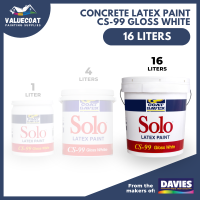
Coat Saver Solo Latex Paints 16Liters
₱2,596.00
Buy on Lazada
Solo Orange Swits Jelly Candy 35pcs | Sweet Orange Gummies | Sugar-Coated Chewy Candy | Individually Wrapped |
₱47.00
Buy on Lazada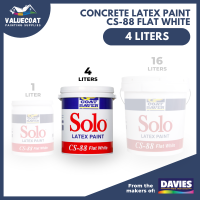
Coat Saver Solo Latex Paints 4liters
₱457.00
Buy on Lazada
Coat Saver Quick Dry Enamel (Alkyd Based) 4L
₱1,066.00
Buy on Lazada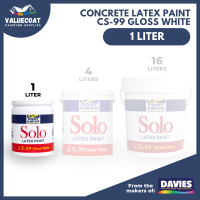
Coat Saver Solo Latex Paints 1Liter
₱180.00
Buy on Lazada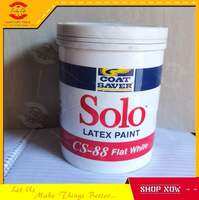
Coat saver CS-88 Latex paint Flat white 1Liter
₱245.00₱265.00
About Solo
Solo is an American consumer and foodservice brand best known for its iconic red plastic party cups, as well as disposable cups, plates, bowls, and other food-serving products. The brand originated with the Solo Cup Company, founded by Leo Hulseman in 1936, and is now a brand line of Dart Container Corporation following Dart’s acquisition of Solo Cup Company in 2012.13
The brand is particularly associated with informal social occasions—barbecues, parties, tailgates, picnics, college gatherings, and other celebrations—and uses the positioning “The Original Sign of Good Times.”1
Note: “Solo” can refer to several unrelated companies and brands, including Solo Brands (the outdoor-lifestyle company behind Solo Stove) and Solo Foods. This article describes SOLO®, the cups and disposable tableware brand.
Quick facts
| Category | Information |
|---|---|
| Brand | SOLO® |
| Former company | Solo Cup Company |
| Founded | 1936 |
| Founder | Leo J. Hulseman |
| Origin | United States |
| Original product | Disposable paper cone cups |
| Best known for | Red plastic party cups |
| Iconic product introduced | 1970s |
| Plastic cup patent | 1976 |
| Current parent company | Dart Container Corporation |
| Industry | Foodservice / disposable tableware |
| Main products | Cups, plates, bowls, foodservice packaging |
| Brand positioning | “The Original Sign of Good Times” |
| Official site | solocup.com |
History
Origins: 1936
The history of Solo begins in 1936, when Leo Hulseman founded the Solo Cup Company. The company’s earliest products were small, disposable paper cone cups, originally intended for use with public water coolers. Disposable cups offered a more hygienic alternative to shared drinking vessels and fit the growing demand for convenient single-use products.1
Hulseman’s business subsequently expanded beyond paper cones into different types of disposable food and beverage products. The company remained closely associated with the Hulseman family for decades.
Expansion into plastic cups
During the 1970s, the Hulseman family expanded Solo’s product range into plastic cups. The original plastic cups were produced in several colors, including red, blue, yellow and peach.1
The move into plastic proved particularly important because it allowed Solo to participate in the rapidly growing market for inexpensive, convenient disposable drinkware. In 1976, the company patented its plastic SOLO Cup design.1
The red version eventually became the company’s defining product and one of the most recognizable disposable cups in the United States.
The iconic red Solo cup
The red Solo cup is by far the product most strongly associated with the brand. Originally introduced in the 1970s, the red plastic cup became popular among households, restaurants and businesses. Its distinctive color, shape and size made it easy to recognize, while its association with informal gatherings helped transform an ordinary disposable cup into a cultural symbol.1
The cup became particularly associated with:
- House parties
- Barbecues
- Tailgating
- Picnics
- College gatherings
- Sporting events
- Outdoor celebrations
- Casual family gatherings
Solo itself describes the red cup as an “iconic” product and positions the brand around food, fun, friendship and social gatherings.1
The famous cup lines
Older versions of the 18-ounce red Solo cup famously contained horizontal lines around the cup. According to Solo, the lines roughly corresponded to 1, 5 and 12 ounces. Over time, popular culture developed various explanations and jokes about the markings, helping turn them into part of the product’s mythology.1
Modern versions of the party cup no longer necessarily feature those lines.
Expansion during the late 20th century
From approximately 1980 to 2000, Solo expanded its presence across American households, restaurants and grocery stores. The company developed a much broader portfolio rather than relying solely on its famous party cup.1
Historically, Solo’s product portfolio included products such as:
- Plastic cups
- Paper cups
- Foam cups
- Plates
- Bowls
- Food containers
- Portion cups
- Lids
- Cutlery
- Straws
The company’s products served both consumer/retail customers and the foodservice industry.3
Acquisition of Sweetheart and other brands
Solo continued expanding through acquisitions. In 2009, Solo Cup Company acquired SF Holdings, bringing the Sweetheart brand and the well-known Jazz design into its portfolio.1
This helped Solo broaden its position in foodservice packaging beyond its consumer-famous red cup.
Sustainability and Bare by Solo
Solo also began developing products intended to address environmental concerns surrounding disposable tableware. In 2008, the company introduced Bare® by Solo, described by Solo as an eco-oriented line using combinations of recyclable, recycled, compostable and renewable materials.1
The initiative reflected a broader change in the disposable-foodservice industry: manufacturers increasingly had to respond to concerns about plastic waste, recycling, renewable materials and compostability.
Today, Solo offers paper and fiber products alongside conventional plastic products. For example, its current paper dinnerware includes products made with plant-based renewable resources, with some products designed for commercial composting.1
Importantly, “compostable” or “recyclable” does not necessarily mean that a product can be processed everywhere. Solo explicitly advises consumers to check the capabilities of their local recycling or commercial composting facilities.1
Acquisition by Dart Container
One of the most important events in Solo’s corporate history occurred in 2012. On March 21, 2012, Dart Container Corporation announced an agreement to acquire Solo Cup Company in a transaction valued at approximately $1 billion.3
The acquisition was subsequently completed, making Solo part of privately held Dart Container. Dart’s own corporate history describes the acquisition as a major expansion of its food and beverage packaging business, particularly through the addition of Solo’s iconic red cup, paper cups and dinnerware.2
What changed?
Solo did not disappear as a consumer-facing brand. Instead, SOLO continued as a brand under Dart Container. Dart continues to market Solo-branded products today.2
The distinction is therefore:
Solo Cup Company → acquired by Dart Container → SOLO continues as a brand
rather than:
Solo → independent company today
Solo today
Today, SOLO is primarily a brand within Dart Container, rather than an independent publicly traded company. The consumer-facing SOLO portfolio includes three major categories:
Cups
Solo sells a wide range of cups, including:
- Red plastic party cups
- Clear plastic cups
- Paper cold cups
- Paper hot cups
- Specialty cups
- Foodservice cups
- Recycled-content plastic cups
Current Solo products include PET clear cups and recycled-content plastic cups, among other formats.12
Plates
Solo produces both plastic and paper plates for household and foodservice use. Current consumer products include different sizes of paper and plastic plates, including heavyweight paper products.1
Bowls
The brand also sells disposable bowls in plastic and paper formats, ranging from everyday household products to foodservice applications.1
Product positioning
Solo occupies an interesting position in the market because it operates simultaneously as a functional packaging brand and a cultural lifestyle brand. A generic disposable cup is primarily sold on attributes such as price, durability, convenience, size, stackability, and compatibility with lids.
Solo adds something else: recognition and emotional association. The red cup has become associated with the idea of a party itself. Consequently, the brand’s marketing focuses heavily on food, fun, friendship and memorable social occasions.1
Solo’s current slogan and positioning—“The Original Sign of Good Times”—explicitly builds on this cultural association.1
Brand identity
Visual identity
The most recognizable element of the Solo brand is the combination of red + plastic cup + distinctive shape + SOLO logo. The red cup is sufficiently recognizable that people can often identify the product even without seeing the complete logo.
This gives Solo an unusual advantage for a disposable-product company: the physical product itself functions as a brand symbol.
Brand personality
Solo generally presents itself as fun, casual, social, approachable, American, youthful, celebratory, and convenient. Rather than positioning disposable tableware as a luxury or premium lifestyle product, Solo emphasizes shared experiences.
Its current website describes the brand as helping people enjoy food and drinks with the people they care about and repeatedly uses the idea of “good times” and “SOLObrations.”1
Marketing and popular culture
The red Solo cup has achieved a cultural significance far beyond its original purpose as disposable drinkware. It became a recurring visual element of American party culture, college culture, tailgating, backyard entertaining, barbecues, music and entertainment imagery, and sports gatherings.
This cultural visibility has helped Solo become one of the rare packaging brands whose product shape and color are immediately recognizable to consumers. The company says that its fans post more than 400,000 photos a year featuring their experiences with Solo products, illustrating how closely the brand associates itself with social occasions.1
Manufacturing and materials
Solo products have historically been made from a variety of materials, including polystyrene, PET plastic, paper, fiber, recycled-content materials, and other renewable-material formats. The company’s current portfolio reflects the industry’s shift toward different material choices.
For example, Solo’s current clear plastic cups include PET products, while some products incorporate post-consumer recycled content.12 Its paper dinnerware is described as using largely plant-based renewable resources, while certain products are intended for commercial composting.1
Environmental issues
Like other major disposable-tableware brands, Solo operates in an industry that faces criticism and scrutiny over single-use plastics and waste. The company’s response has included developing products using recycled materials, recyclable materials, renewable resources, and compostable materials.
However, Solo’s own documentation emphasizes that recyclability and compostability depend on local infrastructure. A product being technically recyclable does not mean every municipal recycling system accepts it.1 This is an important distinction when evaluating Solo’s environmental claims.
Consumer vs. foodservice business
Solo serves two overlapping markets.
Consumer market
This is the market most people associate with the brand: supermarkets → households → parties and everyday meals. Typical products include red party cups, disposable plates and bowls.
Foodservice market
Dart also sells Solo-branded products directly into professional foodservice. These products include hot beverage cups, cold beverage cups, portion containers, food containers, lids, specialty packaging, and paper and plastic products.
Dart currently describes its website as offering the combined Dart and Solo foodservice product lines.2 Thus, the modern Solo brand is much larger than the red party cup visible to consumers.
Major timeline
| Year | Event |
|---|---|
| 1936 | Leo Hulseman founds Solo Cup Company and produces paper cone cups |
| 1970s | Solo expands into plastic cups |
| 1970s | The iconic red Solo party cup is introduced |
| 1976 | Solo patents its plastic cup |
| 1980–2000 | Solo expands across households, restaurants and grocery stores |
| 2008 | Bare by Solo launches with environmentally oriented products |
| 2009 | Solo acquires SF Holdings, including Sweetheart |
| 2012 | Dart Container acquires Solo Cup Company |
| 2010s–2020s | Solo continues as a Dart brand and expands its paper, plastic and foodservice portfolio |
| Today | SOLO remains one of Dart’s best-known food and beverage packaging brands |
The dates above are based primarily on Solo’s own corporate history and Dart’s corporate records.12
Why Solo became famous
The success of Solo is an interesting branding case because the company took a low-involvement commodity product—a disposable cup—and turned it into a recognizable cultural object. Several factors contributed:
1. Distinctive design
The red cup is visually different from ordinary transparent or white disposable cups.
2. Consistency
The basic product has remained recognizable for decades.
3. Social context
The product is used at gatherings rather than primarily in solitary consumption.
4. Strong associations
Over time, the red cup became shorthand for parties, outdoor gatherings and informal celebration.
5. Brand visibility
Because consumers physically carry the product around at social events, the product itself creates advertising.
6. Cultural repetition
The cup’s appearance in American popular culture reinforced the association between Solo = party.
That combination makes Solo considerably more culturally recognizable than many other disposable-tableware manufacturers.
Corporate structure today
The simplest way to understand the modern company structure is:
Dart Container Corporation
↓
SOLO®
↓
Cups • Plates • Bowls • Foodservice Packaging
Dart is a privately held foodservice and packaging company. It acquired Solo Cup Company in 2012 and continues to offer Solo products alongside its own Dart-branded products.23 So, if you see a Solo cup today, the brand ultimately belongs within the Dart Container corporate family.
Legacy
Solo’s significance goes beyond its sales of disposable cups. The company’s original contribution was making disposable drinking vessels more practical and hygienic in the early 20th century. Its later innovation transformed the humble disposable cup into a recognizable consumer product.1
The red Solo cup, in particular, has become an enduring American cultural icon. It represents a broader shift in consumer culture toward convenience, disposable products and casual social entertaining. At the same time, the modern brand is attempting to adapt to a market increasingly concerned with sustainability by offering paper, fiber, recycled-content and other alternative-material products.1