Shop on Lazada
Starwars products

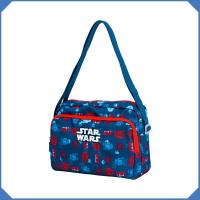
About Starwars
Starwars is an American epic space-opera media franchise created by filmmaker George Lucas. It began with the theatrical film Star Wars in 1977, which was later retitled Star Wars: Episode IV – A New Hope. The franchise grew from a single film into a vast fictional universe encompassing movies, television series, animation, novels, comic books, video games, toys, music, theme-park attractions, and other forms of entertainment.1
Today, Star Wars is owned by Lucasfilm, which has been a subsidiary of The Walt Disney Company since Disney acquired Lucasfilm in 2012.
Overview
| Field | Information |
|---|---|
| Name | Starwars |
| Created by | George Lucas |
| First appearance | Star Wars (1977) |
| Genre | Space opera, science fiction, fantasy, adventure |
| Original creator’s company | Lucasfilm |
| Current owner | The Walt Disney Company |
| Primary studio | Lucasfilm |
| Original language | English |
| First film | Star Wars: Episode IV – A New Hope |
| Main film saga | The Skywalker Saga |
| Main film episodes | I–IX |
| Other media | TV, animation, games, books, comics, merchandise, attractions |
| Setting | A fictional galaxy “a long time ago” |
Origins
Star Wars originated with George Lucas, who wanted to create a modern space adventure inspired by the science-fiction serials, westerns, mythology, and adventure films he enjoyed.
Lucas established Lucasfilm in 1971. When he began preparing Star Wars, the project required technologies and production techniques that were unusual for the period. Lucasfilm established Industrial Light & Magic (ILM) for visual effects and developed its sound-production capabilities, helping create the visual and audio language that became characteristic of Star Wars.
The original movie was released on May 25, 1977. It became a worldwide phenomenon and dramatically expanded the commercial possibilities of filmmaking, particularly through merchandising, licensing, special effects, sound design, and franchise storytelling.
The Starwars Galaxy
The fictional universe of Star Wars takes place in a distant galaxy populated by humans, aliens, droids and numerous other forms of life.
Unlike conventional science-fiction stories that focus primarily on technological speculation, Star Wars combines science-fiction technology with elements of mythology and fantasy.
Its universe contains:
- Interstellar travel
- Spaceships and starfighters
- Blaster weapons
- Robots and droids
- Alien civilizations
- Galactic governments
- Jedi Knights
- Sith Lords
- Lightsabers
- The Force
- Bounty hunters
- Criminal organizations
- Massive military fleets
- Ancient civilizations and religions
The famous opening premise describes the stories as occurring “a long time ago in a galaxy far, far away.”
The Force
One of the defining concepts of Star Wars is the Force, a mystical energy field connecting living beings and the universe.
Individuals capable of interacting strongly with the Force can develop extraordinary abilities. Two major traditions associated with it are the Jedi and the Sith.
The Jedi
The Jedi Order is traditionally associated with the light side of the Force. Jedi Knights serve as peacekeepers and defenders of the Galactic Republic during much of the saga.
Famous Jedi include:
- Yoda
- Obi-Wan Kenobi
- Anakin Skywalker
- Luke Skywalker
- Mace Windu
- Qui-Gon Jinn
- Ahsoka Tano
The Sith
The Sith are traditionally associated with the dark side of the Force. They seek power and frequently manipulate governments, wars and political institutions.
Major Sith characters include:
- Darth Sidious / Emperor Palpatine
- Darth Vader
- Darth Maul
- Count Dooku / Darth Tyranus
- Darth Bane
The conflict between the light and dark sides of the Force is one of the central themes running throughout the franchise.
The Skywalker Saga
The nine principal episodic films are collectively known as the Skywalker Saga. They are divided into three trilogies.1
Prequel trilogy
The prequel trilogy tells the story leading up to the original movies.
- Episode I – The Phantom Menace (1999)
- Episode II – Attack of the Clones (2002)
- Episode III – Revenge of the Sith (2005)
The trilogy focuses heavily on Anakin Skywalker, his relationship with Obi-Wan Kenobi and Padmé Amidala, the Clone Wars, the decline of the Galactic Republic, and Anakin’s eventual transformation into Darth Vader.1
Original trilogy
The original trilogy was the foundation of the franchise.
- Episode IV – A New Hope (1977)
- Episode V – The Empire Strikes Back (1980)
- Episode VI – Return of the Jedi (1983)
The story follows Luke Skywalker, Princess Leia Organa, Han Solo, Chewbacca, R2-D2 and C-3PO as they become involved in the struggle between the Galactic Empire and the Rebel Alliance.
The trilogy also reveals the connection between Luke, Darth Vader and the wider Skywalker family.1
Sequel trilogy
The sequel trilogy continues the story several decades after the original trilogy.
- Episode VII – The Force Awakens (2015)
- Episode VIII – The Last Jedi (2017)
- Episode IX – The Rise of Skywalker (2019)
The central characters include Rey, Finn, Poe Dameron and Kylo Ren. The trilogy explores the rise of the First Order, the Resistance and the legacy of the Skywalker family.1
Major Characters
Luke Skywalker
Luke is one of the central protagonists of the original trilogy. Beginning as a young man living on Tatooine, he eventually becomes a Jedi and one of the most important figures in the struggle against the Empire.
Leia Organa
Leia is a princess, political leader, military commander and member of the Rebel Alliance. She is also Luke’s twin sister and the daughter of Anakin Skywalker and Padmé Amidala.
Han Solo
Han Solo is a smuggler and pilot who becomes one of the principal heroes of the original trilogy. He pilots the Millennium Falcon with his Wookiee companion, Chewbacca.
Darth Vader
Darth Vader is one of the most recognizable characters in popular culture. He is eventually revealed to be Anakin Skywalker, a former Jedi who falls to the dark side and becomes an enforcer of the Galactic Empire.
Obi-Wan Kenobi
Obi-Wan is a Jedi Master who serves as Anakin Skywalker’s mentor and later becomes an important mentor to Luke.
Yoda
Yoda is an ancient and highly respected Jedi Master known for his wisdom and mastery of the Force.
Emperor Palpatine
Palpatine, secretly Darth Sidious, is one of the franchise’s principal antagonists. He manipulates the Galactic Republic’s political system and eventually transforms it into the Galactic Empire.
R2-D2 and C-3PO
R2-D2 is an astromech droid, while C-3PO is a protocol droid. The pair appear throughout multiple generations of the saga and provide an important connection between different eras.
Major Locations
The Star Wars universe contains hundreds of planets and locations. Some of the most important include:
- Tatooine — Desert planet associated with Luke Skywalker, Anakin Skywalker, Jabba the Hutt and numerous other characters.
- Coruscant — Major galactic capital and political center.
- Naboo — Homeworld of Padmé Amidala and important to the rise of Palpatine.
- Alderaan — Leia Organa’s homeworld, destroyed by the Death Star.
- Hoth — Icy planet containing a major Rebel base in The Empire Strikes Back.
- Endor — Forested moon where the Rebel Alliance confronts the Empire in Return of the Jedi.
- Mustafar — Volcanic world associated with Anakin Skywalker’s transformation into Darth Vader.
- Kashyyyk — Homeworld of the Wookiees.
- Dagobah — Remote swamp planet where Luke trains with Yoda.
- Bespin — Gas giant containing Cloud City.
Galactic Republic and Galactic Empire
Politics and the rise and fall of governments are major components of Star Wars.
The Galactic Republic is the democratic government that dominates much of the prequel-era galaxy. Political corruption, war and manipulation eventually allow Chancellor Palpatine to transform the Republic into the Galactic Empire.
The Empire is an authoritarian regime ruled by Palpatine, with Darth Vader serving as one of its most powerful agents.
The Rebel Alliance subsequently fights to overthrow the Empire.
This political cycle—Republic → Empire → Rebellion → New Republic → First Order/Resistance conflict—forms a major historical framework for the saga.
Lightsabers
The lightsaber is one of the most iconic objects in Star Wars.
It is an energy weapon traditionally associated with Jedi and Sith. Different characters use different-colored lightsabers, although the meaning of colors varies across the franchise and its different eras.
Some famous lightsabers include those belonging to:
- Anakin Skywalker
- Luke Skywalker
- Obi-Wan Kenobi
- Yoda
- Mace Windu
- Darth Vader
- Darth Maul
- Rey
Droids
Droids are artificial beings used throughout the galaxy for transportation, combat, translation, maintenance, entertainment and other purposes.
Important examples include:
- R2-D2
- C-3PO
- BB-8
- K-2SO
- D-O
- Battle droids
- Astromech droids
- Protocol droids
Droids often have distinct personalities and play major roles rather than functioning merely as background technology.
Films Beyond the Skywalker Saga
The franchise also contains theatrical films outside the nine numbered episodes.
Rogue One
Rogue One: A Star Wars Story (2016) is set shortly before A New Hope and follows a group of characters attempting to obtain the plans for the Death Star.
Solo
Solo: A Star Wars Story (2018) explores the early adventures of Han Solo, including his relationship with Chewbacca and the Millennium Falcon.
These films expanded Star Wars beyond the traditional episodic family saga.1
Television
Star Wars has developed into a major television franchise.
Important animated series include:
- Star Wars: The Clone Wars
- Star Wars Rebels
- Star Wars Resistance
- The Bad Batch
- Tales of the Jedi
- Tales of the Empire
- Tales of the Underworld
- Star Wars Visions
- Young Jedi Adventures
Lucasfilm describes The Clone Wars as a major milestone for its animation division. The series ultimately ran for seven seasons and more than 100 episodes.
Live-action television
The launch of Disney+ created a major new era of live-action Star Wars storytelling.
Notable series include:
- The Mandalorian
- The Book of Boba Fett
- Obi-Wan Kenobi
- Andor
- Ahsoka
- The Acolyte
- Skeleton Crew
The Mandalorian, which premiered in 2019, was the franchise’s first major live-action television series and became one of the defining productions of the Disney+ era.1
Books and Comics
Star Wars has an enormous publishing history.
Novels, short stories and comics have expanded the fictional universe far beyond what can be shown in the films and television programs.
Before 2014, much of this material was collectively known as the Expanded Universe (EU). In 2014, Lucasfilm reorganized its continuity: much of the previous Expanded Universe was reclassified as Legends, while a new unified canon was established for subsequent storytelling.2
The Legends continuity remains an enormous body of Star Wars fiction, containing characters, civilizations and historical periods that are separate from the current official canon.
Video Games
Video games have been an important part of the franchise since the early days of Star Wars.
Notable titles and series include:
- Star Wars: Knights of the Old Republic
- Star Wars: The Old Republic
- Star Wars: Battlefront
- Star Wars Jedi
- Star Wars: Republic Commando
- Star Wars: The Force Unleashed
- LEGO Star Wars
- Star Wars: Galaxy of Heroes
The franchise has covered many genres, including role-playing games, action games, flight simulators, strategy games, massively multiplayer online games and LEGO games. Lucasfilm’s official history highlights Knights of the Old Republic, Battlefront and The Old Republic among its major gaming properties.1
Music
Music is an especially important part of the Star Wars identity.
Composer John Williams created the famous main theme as well as much of the musical language associated with the saga. The opening fanfare, character themes and orchestral scores became recognizable far beyond the films themselves.
The combination of Williams’s music, the opening text crawl, the distinctive visual design and the sound effects of Ben Burtt helped establish Star Wars as a unique cinematic experience.
Visual Effects and Technology
One of Star Wars‘s most significant contributions was its influence on film technology.
Lucas created Industrial Light & Magic (ILM) specifically to help produce the visual effects needed for the original film. ILM subsequently became one of the most influential visual-effects companies in cinema.
The franchise has repeatedly experimented with new filmmaking technologies, including digital cinematography, computer-generated imagery, motion capture and real-time virtual production.
Merchandise and Branding
Star Wars became one of the defining examples of modern entertainment merchandising.
Beginning with the original film, Lucasfilm developed extensive licensing programs involving:
- Action figures
- Toys
- Clothing
- Books
- Comics
- Video games
- Collectibles
- LEGO sets
- Home-video releases
- Board games
- Theme-park experiences
Lucasfilm notes that the original film’s consumer-products and publishing campaigns helped redefine the scope of movie licensing, including the famous Kenner action figures.
Disney Acquisition
In 2012, George Lucas sold Lucasfilm to The Walt Disney Company.
The acquisition transferred control of Star Wars to Disney and led to a new period of production. Kathleen Kennedy became president of Lucasfilm, and the franchise expanded into new theatrical films, Disney+ series, animation, publishing, games and immersive experiences.
The acquisition ultimately resulted in the sequel trilogy, beginning with The Force Awakens in 2015, as well as productions such as Rogue One, Solo and The Mandalorian.1
Theme Parks
The Star Wars universe has also been incorporated into Disney theme parks.
One of the largest projects is Star Wars: Galaxy’s Edge, an immersive themed land designed around the fictional planet Batuu. It opened at Disney parks in 2019.
Visitors can interact with characters, explore locations inspired by the films and experience attractions such as Millennium Falcon: Smugglers Run and Star Wars: Rise of the Resistance.
Cultural Impact
Star Wars has had an enormous influence on popular culture.
Characters such as Darth Vader, Luke Skywalker, Leia Organa, Han Solo, Chewbacca, R2-D2 and C-3PO have become internationally recognizable cultural icons. Concepts such as the Jedi, Sith, lightsabers and the Force have also entered mainstream popular culture.1
The franchise influenced:
- Modern science-fiction cinema
- Special-effects filmmaking
- Film merchandising
- Movie sound design
- Franchise-based storytelling
- Video games
- Comic books
- Animation
- Theme-park design
- Fan communities and conventions
Its influence extends well beyond the film industry.
Major Themes
Although Star Wars is presented as an action-oriented space adventure, its stories repeatedly explore deeper themes.
Good versus evil
The conflict between the light and dark sides of the Force provides the franchise’s most recognizable moral framework.
Temptation and redemption
Characters such as Anakin Skywalker/Darth Vader demonstrate how individuals can fall into darkness and potentially seek redemption.
Family
Family relationships are central to the Skywalker story, particularly the relationships between Anakin, Luke, Leia, Ben Solo and Rey.
Freedom versus authoritarianism
The Republic, Empire, Rebel Alliance, New Republic, First Order and Resistance provide different perspectives on political power and authoritarian rule.
Hope
Hope is a recurring theme, particularly in stories involving rebellion against seemingly overwhelming forces.
Canon and Legends
One of the most important distinctions for modern Star Wars fans is between Canon and Legends.
Canon refers to the current official continuity overseen by Lucasfilm. It includes the films and television stories that form the current unified Star Wars narrative, along with canon books, comics and other works.
Legends refers largely to the former Expanded Universe material that was reclassified in 2014. It includes decades of novels, comics and games that tell alternative histories of the galaxy.2
This distinction allows modern Star Wars stories to develop a new continuity while preserving the enormous body of older material.
Franchise Timeline
A simplified chronological structure of the major eras is:
- Dawn of the Jedi / ancient eras
- The High Republic
- Fall of the Jedi / late Republic
- Rise of the Empire
- Age of the Empire
- Age of Rebellion
- New Republic
- Rise of the First Order
- Resistance era
- Post–Skywalker Saga era
The universe therefore spans thousands of years, although the principal films concentrate heavily on the history of the Skywalker family.
Legacy
Star Wars is more than a film series: it is a multimedia fictional universe and entertainment franchise that has continued to evolve for nearly five decades.
Its defining combination of space adventure, mythology, memorable characters, visual effects, orchestral music, world-building and merchandising transformed the way modern entertainment franchises are created and marketed.
From the release of the original Star Wars in 1977 to its expansion into television, animation, games, publishing and immersive experiences, the franchise has remained one of the most recognizable properties in global popular culture. Lucasfilm itself describes Star Wars as a central part of its more than 50-year history of storytelling and technological innovation.
In one sentence
Star Wars is George Lucas’s epic space-fantasy saga about the struggle between the light and dark sides of the Force, centered originally on the Skywalker family, which evolved from a 1977 film into one of the world’s largest multimedia entertainment franchises.1