Shop on Lazada
Suave products
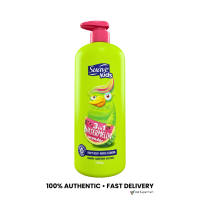
Suave Kids 3-in-1 Shampoo Conditioner & Body Wash 700mL– Silly Apple or Watermelon
₱739.00
Buy on Lazada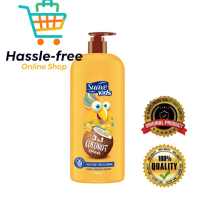
SUAVE KIDS 3 IN 1 SHAMPOO CONDITIONER BODY WASH (700ML) MADE IN THAILAND
₱748.00₱763.00
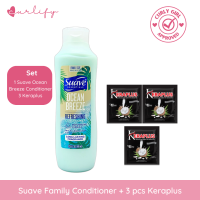
CGM Suave Conditioner 665 ml - Family Size Sulfate-free Silicone-free for all hair types
₱499.00
Buy on Lazada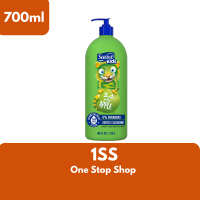
Suave Kids 3-in-1 Apple Shampoo 700ml
₱765.00
Buy on Lazada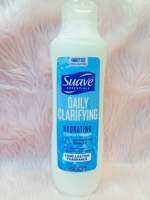
Suave Daily Clarifying Conditioner 665ml
₱490.00
Buy on Lazada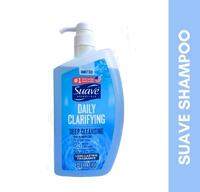
SUAVE DAILY CLARIFYING SHAMPOO 1LITER (SALE)
₱970.00₱1,150.00
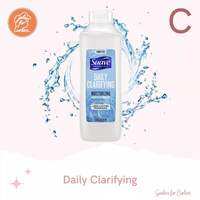
Suave Daily Clarifying Conditioner Family Size (665ml) CGM Approved SUA01 Goodies for Curlies CGM Shop
₱499.00
Buy on Lazada
Suave Kids 3 in 1 Shampoo Conditioner Body Wash Silly Apple/ Watermelon 700ml Gentle & Mild Tear-Free Fruity Scent Family Size
₱575.00₱585.00
About Suave
Suave is an American personal-care brand best known for affordable hair-care, skin-care, body-care, and deodorant products. Founded in the United States in 1937, the brand began as a hair tonic and gradually developed into a mass-market, multi-category beauty brand.1 Its central positioning has historically been to provide good-quality personal care at an accessible price, rather than compete primarily as a prestige or salon-exclusive brand.1
Today, Suave is part of Evermark, LLC, a personal-care company created in January 2026 through the merger of Suave Brands Company and Elida Beauty.2 The Suave brand’s North American business is therefore no longer owned by Unilever, although Unilever retains Suave rights in international markets outside the territories transferred in the 2023 transaction.26
History
Origins: 1930s
Suave was introduced in 1937 in the United States as a hair tonic.1 The brand’s early identity was centered on hair grooming rather than the much broader personal-care portfolio it has today.1 The name subsequently became associated with affordable grooming products, helping establish the basic proposition that would remain important to the brand: consumers did not necessarily need expensive salon or prestige products to obtain effective personal-care results.
Expansion under Helene Curtis
Suave later became part of Helene Curtis Industries, a major American personal-care company. Under Helene Curtis, the brand expanded beyond its original hair-tonic roots, particularly from the 1970s onward, into a broader range of hair and personal-care products.3 This expansion was important because it transformed Suave from a relatively focused hair product into a recognizable mass-market beauty brand.
Acquisition by Unilever
In 1996, Unilever acquired Helene Curtis Industries, bringing Suave into the Unilever portfolio.3 During the Unilever era, Suave became one of the company’s important North American personal-care brands. Unilever’s historical reporting listed Suave among its major Home & Personal Care brands, while later reporting described the brand as a contributor to North American hair-care growth.
Under Unilever, Suave developed a particularly broad mass-market presence, with products spanning shampoo, conditioner, hair styling, body wash, bar soap, lotions, deodorant and antiperspirant, men’s grooming, and children’s products. This helped make Suave a family-oriented personal-care brand rather than exclusively a women’s hair-care label.
The Suave brand proposition
Suave’s most distinctive characteristic is its value positioning. The brand has traditionally attempted to occupy a space between very inexpensive basic personal care and premium or salon brands. Its message is essentially that consumers can obtain attractive, functional, and enjoyable personal-care products without paying premium prices.
Suave’s current brand philosophy describes this as making quality self-care “accessible for all.”1 The company says its products are designed to be reliable, high-quality, and within consumers’ reach.1 This makes Suave fundamentally different from prestige brands that emphasize exclusivity, luxury, professional endorsement, or high price.
Product portfolio
Suave has developed into a multi-category personal-care brand.
Hair care
Hair care remains one of Suave’s most important categories. Its portfolio includes shampoos, conditioners, 2-in-1 products, hair treatments, hair styling products, hairsprays, and products targeting specific hair concerns. The brand’s current range includes products such as Bonding Infusion, Natural Infusion, and various moisturizing, strengthening, and styling lines.1
Body care
Suave also has an extensive body-care business, including body washes, bar soaps, body lotions, moisturizers, and fragranced body products. Fragrance is particularly important to Suave’s consumer proposition because many products combine functional personal care with recognizable scents.
Deodorants and antiperspirants
The brand sells both deodorants and antiperspirants, including aerosol and solid formats. Its current portfolio includes products marketed around fragrance, odor protection, and sweat protection.1
Men’s grooming
Suave has also developed products specifically for men, allowing the brand to operate across multiple demographic groups rather than being perceived solely as a women’s beauty brand.
Family and children’s products
Historically, Suave has marketed products toward families and children as well, reinforcing its mass-market identity.
Target consumers
Suave’s traditional target audience is mass-market consumers looking for affordable everyday personal care. Rather than defining itself around a narrow demographic, Suave has increasingly presented itself as a brand for women, men, families, children, budget-conscious consumers, and consumers seeking alternatives to premium brands. Its current corporate messaging explicitly emphasizes accessibility and says it develops products for people’s different needs and budgets.1 This broad positioning is one reason Suave has historically achieved substantial household penetration in the United States.
Suave and the “affordable beauty” concept
One of Suave’s most important contributions to the personal-care market is its role in democratizing beauty. The basic idea is that beauty and personal care should not require a luxury-level budget. This philosophy allowed Suave to compete against more expensive brands by emphasizing performance relative to price. The company itself describes its legacy as an effort to make trusted beauty products accessible to everyone.1
Consequently, Suave’s competitive advantage has historically depended less on exclusivity and more on price, accessibility, broad distribution, recognizable products, and acceptable or premium-looking performance.
Marketing and brand image
Suave has historically used a friendly, approachable, and practical brand personality. Its advertising generally emphasizes ideas such as looking good without spending too much, everyday beauty, family use, attractive hair, pleasant fragrance, reliable performance, and value for money. This is different from the advertising language commonly used by luxury beauty brands, which may focus on celebrity, exclusivity, fashion, or aspirational lifestyles. Suave instead has traditionally communicated something closer to the idea that one does not have to spend a lot to look and feel good. That proposition has been central to its identity for decades.
The 2023 Unilever divestment
A major turning point occurred in 2023. Unilever announced the sale of its North American Suave business to Yellow Wood Partners, a U.S. private-equity firm specializing in consumer products.4 The transaction covered Suave’s North American beauty and personal-care business, including hair care, skin care, skin cleansing, and deodorant products.4 The transaction was completed in May 2023, and Yellow Wood established Suave Brands Company as a standalone business to operate the brand.
This was significant because Suave had spent almost three decades under Unilever. Instead of being one brand inside a huge multinational consumer-goods portfolio, Suave became the centerpiece of a more focused personal-care company.
The Evermark era
Another major corporate change happened in January 2026. Suave Brands Company and Elida Beauty—both Yellow Wood Partners portfolio companies—completed a merger and created a new company called Evermark, LLC.2 Evermark’s portfolio includes a large collection of established personal-care brands, including Suave, Q-tips, ChapStick, Pond’s, Caress, St. Ives, Noxzema, TIGI, V05, Brut, Impulse, Alberto Balsam, Timotei, and Monsavon.2 The combined business was reported as representing approximately $1.9 billion in annual retail sales.2
As of 2026, the corporate structure places Suave under Evermark, LLC, which is ultimately owned by Yellow Wood Partners. Suave continues to operate as a major brand within this platform, covering hair care, body care, skin care, deodorant, and other personal-care products.
Ownership today
There is an important distinction between Suave the brand and Suave’s ownership in different countries.
North America
The North American Suave business was sold by Unilever to Yellow Wood Partners in 2023. In January 2026, Suave Brands Company merged with Elida Beauty to form Evermark.2 Canadian trademark records now identify Evermark, LLC as the owner of Suave trademarks previously assigned to Suave Brands Company.5
International markets
Unilever continues to hold Suave rights in international markets outside the territories transferred in the North American transaction.6 It is therefore not completely accurate to say “Suave is owned by Unilever” today. That was historically true in North America, but the ownership structure changed substantially in 2023 and again in 2026.
Distribution
Suave has traditionally been a mass retail and drugstore-oriented brand. Its products are designed for broad availability through channels such as supermarkets, drugstores, mass merchants, discount retailers, online retailers, and e-commerce platforms. This distribution strategy is closely connected to the brand’s affordability proposition. Suave’s goal is not merely to make products inexpensive; they need to be easy to find and purchase as well.
Competitive landscape
Suave competes primarily in the mass-market personal-care sector. Depending on the category, its competitors can include brands such as Pantene, Herbal Essences, Dove, TRESemmé, and VO5 in hair care; Dove, Olay, Caress, Softsoap, and St. Ives in body care; and Degree, Dove, Old Spice, Secret, and Arm & Hammer in deodorant. Suave’s competitive distinction is generally its combination of low-to-moderate pricing, broad assortment, and recognizable beauty positioning.
Brand evolution
Suave’s evolution can be summarized in four major stages:
- 1937–1960s: Suave begins primarily as a hair-care brand.
- 1970s–1995: The brand expands into multiple personal-care categories under Helene Curtis.
- 1996–2023: Suave becomes part of one of the world’s largest consumer-goods companies and develops extensive North American distribution.
- 2023–present: Yellow Wood Partners acquires the North American business, establishes Suave Brands Company, and later combines it with Elida Beauty to create Evermark in 2026.42
Recent repositioning
After leaving Unilever, Suave has been attempting to present itself as more than simply an inexpensive drugstore brand. The company has emphasized product innovation, ingredient-focused formulations, performance testing, more contemporary packaging and marketing, new product launches, younger consumers, social and digital marketing, and the idea of affordable products delivering premium-like results. In 2025, reporting on the brand’s post-Unilever strategy described Suave as pursuing over 30 new product launches, reflecting an effort to make the nearly century-old brand more innovative and culturally relevant.7
This represents a strategic shift from positioning solely as affordable everyday personal care to affordable personal care that can deliver surprisingly sophisticated performance. That distinction is important to understanding the brand’s current direction.
Brand philosophy
Suave’s current stated philosophy revolves around several ideas:1
- Accessibility: Personal care should be available to everyone rather than functioning as a luxury.
- Performance: Products should provide results that justify their purchase.
- Quality: Affordable pricing does not necessarily have to mean low-quality formulas.
- Inclusivity: The brand serves women, men, and families rather than focusing on one narrow consumer.
- Everyday self-care: Suave positions beauty and grooming as ordinary parts of daily life rather than occasional luxury experiences.1
Significance of the brand
Suave is notable from a branding perspective because it has survived nearly nine decades of changes in the beauty industry. It has moved through stages as a hair tonic, mass-market hair care, multi-category personal care, multinational Unilever brand, independent consumer brand, and Evermark portfolio brand. Its longevity comes largely from a proposition that is relatively easy for consumers to understand: personal care that delivers value without requiring a premium price. That proposition has allowed Suave to remain relevant even as consumer preferences have shifted toward premium beauty, specialty products, natural ingredients, and digitally native brands.
Key milestones
| Year | Milestone |
|---|---|
| 1937 | Suave introduced in the U.S. as a hair tonic |
| 1970s | Brand expands beyond its original hair-care focus |
| 1996 | Helene Curtis acquired by Unilever; Suave enters Unilever portfolio |
| 1990s–2000s | Suave expands strongly across mass-market personal care |
| 2023 | Unilever sells Suave’s North American business to Yellow Wood Partners |
| 2023 | Suave Brands Company established |
| 2025 | Brand emphasizes renewed innovation and product launches |
| Jan. 2026 | Suave Brands Company merges with Elida Beauty |
| 2026 | New combined company becomes Evermark, LLC |
| Present | Suave operates as a major brand within Evermark, while Unilever retains certain international rights |
References
- About Us – Suave Brands Co.
- Yellow Wood Partners Portfolio Companies Suave Brands and Elida Beauty Complete Merger to Create Evermark, A Leading Global Platform of Personal Care Brands
- Suave (brand)
- Unilever announces the sale of Suave in North America to Yellow Wood Partners LLC
- Canadian Trademarks Details: SUAVE — 1192950 — Canadian Trademarks Database – Intellectual property and copyright – Canadian Intellectual Property Office – Innovation, Science and Economic Development Canada
- Who Owns Suave? Ownership History From Unilever to Evermark – LegalClarity
- Inside Suave’s next act post Unilever