Shop on Lazada
Superga products
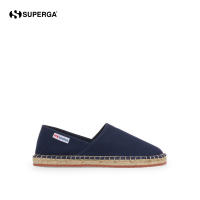
Superga 3009 Canvas Espadrilles
₱1,855.00₱2,650.00
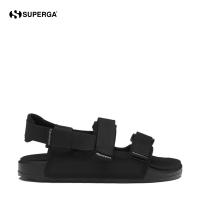
Superga 1905 Cross Binding Slide
₱1,125.00₱2,250.00
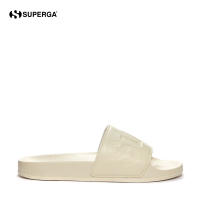
Superga 1908 Slides Polysoft
₱625.00₱1,250.00
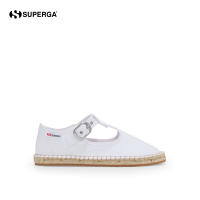
Superga 3010 Mary Jane Espadrilles
₱2,065.00₱2,950.00
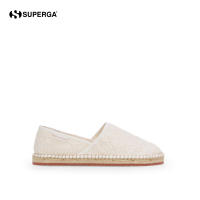
Superga 3009 Crochet Rope
₱2,275.00₱3,250.00
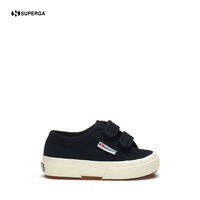
Superga 2750-Cotjstrap Classic Kids Unisex Sneakers Blue Navy
₱1,125.00₱2,250.00
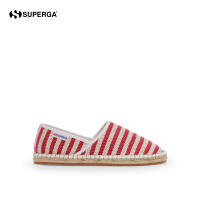
Superga 3009 Cotton Stripes
₱2,275.00₱3,250.00
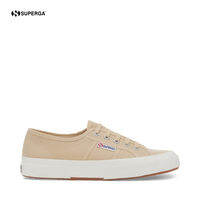
Superga 2750-Cotu Classic Beige Lt-F Avorio
₱1,325.00₱2,650.00
About Superga
Overview
Superga is an Italian footwear brand best known for its minimalist canvas sneakers, particularly the 2750 Cotu Classic. Founded in Turin in 1911, Superga has evolved from a manufacturer of vulcanized-rubber footwear into an internationally recognized lifestyle and fashion brand. Its identity is closely associated with Italian design, tennis heritage, everyday wear, and understated styling.1
Quick Facts
| Feature | Details |
|---|---|
| Founded | 1911 |
| Origin | Turin, Italy |
| Founder | Walter Martiny |
| Industry | Footwear / fashion / lifestyle |
| Best Known For | 2750 Cotu Classic |
| Signature Technology | Vulcanized natural-rubber soles |
| Original Sporting Association | Tennis |
| Current Owner | BasicNet |
| Key Aesthetic | Italian, minimalist, casual, timeless |
| Major Heritage Model | 2750 |
| Current Product Range | Sneakers, platform shoes, boots, and other footwear |
| Notable Positioning | Everyday Italian lifestyle footwear |
Origins: Turin, 1911
The story of Superga begins in 1911 in Turin, northern Italy. Swiss-born engineer Walter Martiny, who later became an Italian citizen, founded the company that would become associated with the Superga name. The original business specialized in rubber and vulcanized-rubber products, including waterproof footwear.1
The name Superga is connected to Turin’s famous Basilica of Superga, located on the Superga hill overlooking the city. The company’s factory was situated at the foot of this hill, which helped give the footwear its distinctive name and Turin identity.1
This connection to Turin remains important to the brand today. Superga does not simply market itself as an old shoe company; it presents its heritage as part of the broader story of Italian industrial design and lifestyle.
Vulcanized Rubber Technology
A crucial aspect of Superga’s early history is rubber vulcanization. This process makes natural rubber considerably more durable and stable. Superga used this technology to create footwear with rubber soles that were more practical and long-lasting than traditional alternatives. The company traces its technological heritage to the vulcanization process patented by Charles Goodyear in 1844.1
Initially, Superga’s proposition was not primarily about fashion. It focused on functional footwear made using innovative rubber technology. That combination of practicality and relatively simple design eventually became the foundation of the brand’s fashion identity.
The Birth of the 2750 (1925)
The pivotal moment in Superga’s history came in 1925, when Walter Martiny developed the shoe that would become the 2750. Created with tennis in mind, the shoe was inspired by Martiny’s wife, who was passionate about the sport. Tennis footwear of the period often used rope-based soles that provided grip but wore down quickly. Martiny experimented with vulcanized rubber as an alternative.1
The result was a canvas tennis shoe with a vulcanized rubber sole, which eventually became the 2750, arguably the single most important product in Superga’s history.
Why the 2750 Matters
The 2750 combined several key features:
- Cotton canvas
- Vulcanized natural rubber
- A relatively simple silhouette
- A low-profile tennis-shoe shape
- Durable construction
- A distinctive rubber outsole
- Minimal branding
Its outsole developed the characteristic texture often described as an “orange peel” pattern, derived from the structure of earlier rope soles.1 The design proved remarkably adaptable, transitioning from tennis equipment to an everyday fashion sneaker.
Expansion into Mass-Market Footwear
During the 1930s, Superga expanded beyond a single tennis product. The company produced footwear associated with sports including tennis, basketball, yachting, and fitness.2
This stage established a pattern that persists today: sport → practicality → lifestyle → fashion. Superga’s shoes were no longer limited to athletes; their relatively simple construction made them suitable for ordinary daily wear.
The Pirelli Era
A major corporate turning point occurred in 1951, when Superga became part of the Pirelli group.1 Pirelli brought greater industrial resources and production capacity. According to historical accounts, annual production increased dramatically from approximately 2 million pairs in 1952 to 12 million pairs by 1975.2
This period helped transform Superga from a Turin-based footwear manufacturer into a much larger Italian footwear operation. As Italy underwent rapid industrialization and economic development post-war, Superga became increasingly associated with accessible, practical footwear for ordinary Italians. This era solidified the idea of Superga as “the people’s shoes of Italy.”2
Design and Visual Identity (1960s)
The 1960s marked another important period for the brand. Superga’s Turin factory became a substantial industrial operation, employing around 1,380 people during the early 1960s.3
In 1962, Italian graphic designer Albe Steiner created a new Superga logo. Its clean, geometric character helped establish a visual identity that remains recognizable today.3 Consequently, the brand’s visual language became closely associated with simplicity, geometric forms, Italian modernism, functional design, and strong but restrained branding.
Sportswear Expansion (1970s)
During the 1970s, Superga strengthened its sporting identity. The company developed specialized footwear for different sports and introduced the recognizable “swallow tail” logo on its sports footwear.3 The brand also began experimenting with footwear beyond the classic canvas tennis sneaker.
This period established an important distinction: Superga was both a heritage casual shoe brand and a sports footwear company. This dual identity allowed it to transition naturally into the lifestyle-fashion market.
Transition to Fashion
In the 1980s, Superga expanded into clothing as well as footwear.4 However, the brand’s greatest long-term asset remained the 2750. Rather than constantly replacing its original design, Superga repeatedly reinterpreted it. The 2750 could be recolored, reprinted, made with different fabrics, given platform soles, made into higher-top versions, adapted for different weather conditions, or used as a canvas for designers and collaborations. This strategy is one reason the shoe has survived for more than a century.
Separation from Pirelli and Acquisition by BasicNet
In 1993, Superga separated from Pirelli and became part of the So.PA.F. group.2 The following decade was a transitional period for the brand.
In 2004, BasicNet became Superga’s worldwide licensee, and in 2007, BasicNet acquired the Superga trademark.2 Today, Superga is part of the portfolio of the Italian company BasicNet S.p.A., the Turin-based group that also operates brands including Kappa and K-Way. BasicNet acquired the Superga brand in 2007 for approximately €23 million.3
BasicNet operates through a worldwide network involving licensing, distribution, marketing, and supply-chain partners, rather than functioning as a traditional vertically integrated fashion company.2 Under BasicNet, Superga was repositioned and internationalized with a strategy emphasizing Italian heritage + recognizable product + fashion collaborations + global distribution.
The 2750 Cotu Classic
For many, the 2750 Cotu Classic represents the essence of Superga. The modern version retains many design characteristics that made the original famous:
- Cotton canvas upper
- Vulcanized natural-rubber sole
- Metal/aluminum eyelets
- Cotton laces
- Superga branding
- Low-profile tennis-shoe construction
Superga describes the 2750 as an Italian style staple and an “authentic design piece.” The current version is also marketed as vegan-friendly and cruelty-free.1 While the white version is perhaps the most recognizable, the shoe is produced in a huge variety of colors. Superga itself describes the 2750 as a “blank canvas” for artists and designers.1
Design Philosophy and Versatility
At first glance, the 2750 can look almost deliberately ordinary, which is actually its strength. Unlike performance sneakers that emphasize cushioning, technical fabrics, oversized soles, visible technology, and complex construction, the 2750 emphasizes simplicity. Its visual formula is essentially canvas + rubber + simple shape + small logo.
This makes it highly versatile, suitable for pairing with jeans, shorts, chinos, dresses, skirts, tailoring, casual office clothing, and summer attire. The result is a sneaker that functions almost like a basic wardrobe item rather than a technical sports product.
Superga’s design philosophy can be summarized by five pillars:
- Italian Minimalism: Avoidance of excessive visual complexity.
- Heritage: Building new products around established silhouettes rather than abandoning old designs.
- Versatility: Shoes intended to work in multiple environments rather than being restricted to one sport.
- Accessibility: Positioned as everyday footwear rather than ultra-luxury fashion.
- Customizability: Simple canvas construction suitable for colors, prints, collaborations, and artistic reinterpretations.
Celebrity Culture and Collaborations
Superga’s transition into contemporary fashion was aided by celebrity exposure. Notable projects and ambassadors have included Alexa Chung, Rita Ora, Suki Waterhouse, Binx Walton, Abbey Lee Kershaw, Pyper America Smith, Emily Ratajkowski, Iris Law, and Leni Klum, among others.4
The brand’s celebrity strategy positions its shoes as effortless wardrobe staples, reinforcing the idea that the product is fashionable precisely because it does not look overly fashion-conscious.
Collaborations have become a major part of Superga’s modern identity. The brand has collaborated with or created special projects involving names such as Alaïa, Missoni, Viktor&Rolf, MAX&Co., Napapijri, Barbie, Pacha, Armor-Lux, Lisa Corti, Mrs. Francoise, and anGostura.1 These collaborations range from fashion houses to lifestyle brands and cultural properties. Strategically, the basic 2750 silhouette provides a recognizable foundation while collaborators provide novelty.
Market Positioning
Tennis is fundamental to Superga’s DNA, though today the brand is better understood as a lifestyle brand with sporting heritage rather than a specialist performance-tennis company.
Superga occupies an interesting position within the classic canvas sneaker market compared to competitors:
| Brand | Heritage | Typical Identity |
|---|---|---|
| Superga | Italian tennis / rubber footwear | Italian minimalism |
| Converse | American basketball | Youth culture / streetwear |
| Vans | American skateboarding | Skate / street culture |
| Keds | American casual/tennis | Classic American lifestyle |
| Tretorn | Swedish sports/outdoor | Scandinavian casual |
While Converse communicates American basketball and counterculture, and Vans communicates skateboarding and California street culture, Superga communicates something closer to Italian casual elegance.
Generally, Superga occupies the accessible-to-premium contemporary section of the footwear market rather than luxury footwear. Its appeal comes from the balance between heritage + recognizable design + relatively approachable pricing. Its selling proposition is effectively a genuine piece of Italian design history that can be worn every day.
Italian Identity
Italian identity is central to Superga’s current branding. The company emphasizes its origins in Turin, its more-than-century-long history, and the connection between sport, industrial production, and Italian lifestyle.1 This differs from the stereotypical image of Italian luxury focused on expensive materials or haute couture. Instead, Superga represents industrial Italian design: a mass-produced object that became culturally valuable because its design remained useful and recognizable.
Timeline
| Year | Event |
|---|---|
| 1911 | Walter Martiny establishes the company in Turin, producing vulcanized-rubber products and footwear.1 |
| 1925 | The prototype of the iconic 2750 tennis shoe is developed.1 |
| 1930s | Superga expands into footwear for multiple sports.2 |
| 1951 | Superga becomes part of Pirelli.2 |
| 1952–1975 | Annual production grows from roughly 2 million to 12 million pairs.2 |
| 1962 | Albe Steiner designs a new Superga logo.3 |
| 1970s | Superga expands its specialist sports footwear.3 |
| 1980s | Clothing is added to the product range.4 |
| 1993 | Superga separates from Pirelli and joins So.PA.F.2 |
| 2004 | BasicNet becomes worldwide licensee.2 |
| 2007 | BasicNet acquires the Superga trademark.2 |
| 2010s | International fashion collaborations and celebrity campaigns accelerate. |
| 2020s | Superga continues combining its 2750 heritage with fashion collaborations and new silhouettes.1 |
| 2025 | The brand continues highlighting the 2750’s century-long heritage and its Italian identity.1 |
Cultural Significance
Superga’s biggest achievement is turning a simple functional object into a long-lasting cultural icon. The 2750 has existed through enormous changes in sportswear, fashion, youth culture, manufacturing, celebrity culture, streetwear, social media, and luxury collaborations, yet the fundamental design has remained recognizable.
Reasons for its continued relevance include:
- Extremely recognizable silhouette: Identifiable without a huge logo.
- Timeless construction: Canvas and rubber do not depend heavily on fashion trends.
- Strong historical story: Roots trace back to 1911, with the 2750 dating to 1925.1
- Italian cultural association: Turin and Italian design give the brand a distinct identity.
- Collaboration potential: Simple design facilitates reinterpretation by designers.
- Gender and age flexibility: Works across men’s, women’s, and children’s footwear.
- Everyday practicality: Functions as a daily sneaker rather than an occasional statement shoe.
Essence of Superga
Stripped to its fundamental components, Superga is essentially:
🇮🇹 Italian heritage
🎾 Tennis origins
🛞 Vulcanized rubber
👟 2750 canvas sneaker
🎨 Minimalist design
☀️ Mediterranean/everyday lifestyle
🤝 Fashion collaborations
🏛️ More than 100 years of history
Its unusual strength is that the product itself is simple, while the story behind it is rich. In brief, Superga = Turin + 1911 heritage + tennis + vulcanized rubber + the 2750 + Italian minimalism + accessible fashion. Among all these elements, the 2750 Cotu Classic is the center of gravity of the brand: a shoe originally designed for tennis in 1925 that evolved into one of Italy’s best-known casual sneaker designs.1