Shop on Lazada
Suunto products
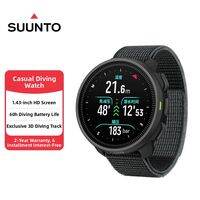
Suunto | Waterproof Smart Diving Watch
₱46,325.66
Buy on Lazada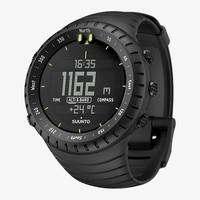
Suunto | Altitude Compass Positioning Outdoor Sports Watch
₱13,065.57
Buy on Lazada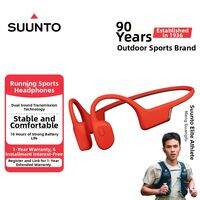
Suunto | Bluetooth Bone Conduction Sports Headphones
₱7,841.05
Buy on Lazada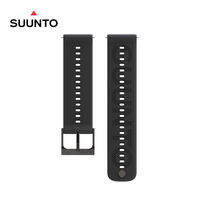
Suunto | Silicone/ Fabric Sport Watch Strap 22MM
₱4,581.61
Buy on Lazada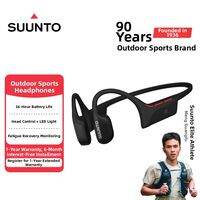
Suunto | Bone Conduction Bluetooth Headphones Multi-sport
₱15,848.10
Buy on Lazada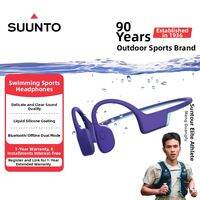
Suunto | Multi-Sport Bone Conduction Bluetooth Headphones
₱11,341.19
Buy on Lazada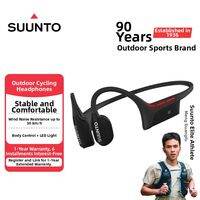
Suunto | Bluetooth Bone Conduction Sport Headphones for Running and Cycling Windproof
₱10,244.63
Buy on Lazada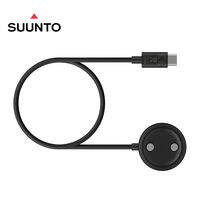
Suunto | Charging Cable for NAUTIC S VERTICAL RACE Series
₱2,304.59
Buy on LazadaAbout Suunto
Overview
Suunto is a Finnish brand specialising in outdoor sports and adventure equipment, widely recognised for its precision compasses, sports watches, dive computers, and navigation instruments. Established in 1936 by the Finnish inventor and orienteer Tuomas Vohlonen, the company has grown from a niche compass manufacturer into a global name in outdoor navigation, endurance sports, diving, and adventure technology.1
As of 2026, Suunto marks its 90th anniversary. Although currently owned by the Chinese consumer electronics firm Liesheng, the brand retains its Finnish identity, with both its headquarters and manufacturing facilities remaining in Finland.2
Suunto defines its corporate identity through accuracy, robustness, reliability, Finnish design, and a commitment to adventure.3
Quick facts
| Category | Information |
|---|---|
| Brand | Suunto |
| Founded | 1936 |
| Founder | Tuomas Vohlonen |
| Country of origin | Finland 🇫🇮 |
| Headquarters / operations | Vantaa, Finland |
| Original specialty | Liquid-filled precision compasses |
| Major product categories | Sports watches, dive computers, compasses, outdoor instruments |
| Current owner | Liesheng |
| Previous major owner | Amer Sports, 1999–2022 |
| Industry | Outdoor recreation, sports technology, wearables, diving |
| Brand positioning | Premium outdoor/adventure equipment |
| 2026 milestone | 90th anniversary |
Origins and early history
The history of Suunto dates to 1936, an era when outdoor navigation relied heavily on mechanical instruments. The founder, Tuomas Vohlonen, was a Finnish engineer and keen orienteer who found conventional dry compasses unsatisfactory due to their unstable needles and difficulty in obtaining accurate readings.
Vohlonen developed and patented a method for manufacturing liquid-filled compasses. By suspending the needle in liquid, he achieved significantly greater stability and readability. This invention formed the technological foundation of Suunto.4 Consequently, the company began not as a smartwatch manufacturer but as a maker of precision instruments. This distinction remains relevant, as modern attributes such as navigation capability, ruggedness, accuracy, and outdoor reliability trace directly back to the original compass design.
Reputation for durability
Suunto’s reputation for toughness was established early in its history. A notable account from 1939, during the Winter War, describes how Finnish Lieutenant Norrback was struck by a Soviet sniper’s bullet that hit the Suunto M-311 compass in his pocket, effectively saving his life.5 Regardless of whether this is viewed as a survival miracle or a historical anecdote, it reinforced a core brand philosophy: outdoor equipment must be capable of surviving the environment in which it is used.
Expansion into marine and diving equipment
Suunto expanded beyond land-based navigation relatively early in its development.
Marine navigation
In the 1950s, the company began producing compasses for both orienteering and marine use. The K-12 marine compass was introduced in 1953, and by that decade, Suunto was exporting compasses to over 50 countries.6
Diving instruments
A significant pivot occurred in 1965 with the introduction of the SK-4, described by the company as its first dedicated diving compass. This development reportedly followed encouragement from a British sports diver who discovered that a standard Suunto compass could function underwater.7 This innovation eventually established diving as one of Suunto’s primary technological fields.
Dive computers
Suunto became highly influential in the recreational diving sector. In 1987, it launched the Suunto SME-ML, its first dive computer. Prior to this, divers typically depended on printed tables and manual calculations. The new device automated critical aspects of dive planning and monitoring, making recreational diving more accessible and technologically advanced.8
The company subsequently developed an extensive range of diving equipment. Historically significant models include:
- Suunto SME-ML: The first Suunto dive computer, released in 1987.
- Suunto Spyder: Introduced in 1997 as a watch-sized dive computer.
- Suunto D9: Launched in 2004, combining dive computer functions with a digital compass and wireless air integration.
- D-Series and EON-Series: Later generations of dive computers.
The D9 was particularly notable as the world’s first wrist-sized all-in-one dive computer featuring a digital compass and wireless air integration.9 Today, diving remains a core product category alongside sports watches and navigation instruments.10
Outdoor watches and the ABC concept
The launch of the Suunto Vector in 1998 marked another milestone. This device integrated multiple outdoor instruments into a wrist-worn unit, including an altimeter, barometer, compass, and thermometer. This combination became known as the ABC concept (Altimeter, Barometer, Compass).11
The Vector became closely associated with mountaineering, hiking, climbing, skiing, expedition use, and high-altitude environments. It established the concept of an outdoor instrument worn like a watch, serving as a direct predecessor to modern Suunto sports watches.
Transition to sports technology
During the late 1990s and 2000s, Suunto increasingly focused on digital sports and training technology. Watches were designed not just to tell time but to measure and analyse physical performance. A key example was the Suunto t6, introduced in 2004 and positioned as an advanced training watch providing sophisticated physiological feedback.12
This shift placed Suunto in competition with other specialised sports watch manufacturers. Over time, the product philosophy evolved from compasses to outdoor computers, then to training computers, GPS sports watches, and finally multisport smartwatches, all while maintaining a focus on outdoor performance.
Current product portfolio
Suunto’s current offerings are broadly divided into three main categories.
Sports and outdoor watches
This is the category most commonly associated with the brand today. Modern Suunto watches are designed for trail running, road running, hiking, mountaineering, cycling, skiing, swimming, multisport events, adventure racing, and general fitness. They combine contemporary wearable technology with the brand’s traditional emphasis on navigation and durability. The current lineup includes the Suunto Vertical family and newer generations of outdoor sports watches.13
Dive computers
Suunto continues to develop dedicated dive computers and accessories. The current ecosystem encompasses recreational and advanced dive computers, tank-pressure accessories, diving sensors, and related gear. The EON and D-series families exemplify the brand’s continued presence in the diving market.14
Compasses and navigation instruments
This category represents the most visible link to Suunto’s history. The company continues to manufacture precision compasses, maintaining the product line that originally established the brand in 1936.
Design philosophy
Suunto is distinguished by its Finnish and Nordic design identity, characterised by several recurring principles:
- Precision: The company was founded on the pursuit of a more accurate compass.
- Durability: Products are engineered for demanding outdoor environments rather than casual use.
- Simplicity: Interfaces and controls tend to be straightforward and functional rather than visually complex.
- Nordic aesthetics: Industrial design is typically restrained and functional rather than fashion-led.
- Adventure: Products are designed to enable exploration rather than merely track daily activity.
The brand summarises this philosophy as a commitment to accuracy, robustness, reliability, and Finnish identity.
Market positioning and comparisons
Suunto occupies a distinct niche in the smartwatch market. Unlike general-purpose consumer electronics brands, Suunto treats the watch primarily as an outdoor instrument. This philosophy stems from its history as a maker of compasses, altimeters, barometers, and dive instruments, granting it credibility among users prioritising navigation, endurance sports, expedition use, battery life, and environmental durability.
Comparison with Garmin
Suunto is frequently compared to Garmin, as both produce high-end GPS sports and outdoor watches. However, their identities differ significantly.
| Feature | Suunto | Garmin |
|---|---|---|
| Heritage | Finnish navigation & outdoor instruments | GPS, aviation & electronics |
| Founded | 1936 | 1989 |
| Core Identity | Outdoor/adventure | Sports + GPS + broader ecosystem |
| Compasses | Major historical category | Less central |
| Dive computers | Major category | Yes, but less central historically |
| Sports watches | Major category | Major category |
| Design philosophy | Nordic, minimalist, rugged | Highly functional, data-rich |
| Brand character | Adventure/outdoor | Performance/technology |
Suunto’s historical DNA is uniquely connected to navigation and physical exploration.15
Comparison with COROS and Polar
Suunto is also often grouped with COROS and Polar. Polar has deep roots in heart-rate monitoring and sports science, while COROS is a younger brand focused on endurance sports and GPS performance. In contrast, Suunto possesses one of the oldest histories in outdoor instrumentation, dating back to 1936. Its heritage follows a path from compasses to diving, mountaineering, outdoor computers, and GPS watches, rather than originating in modern consumer electronics.
Corporate ownership
Amer Sports era
Suunto became part of Amer Sports in 1999, complementing a portfolio of sports and outdoor brands covering skiing, cycling, tennis, and other disciplines.16 During this period, which lasted over two decades, Suunto expanded internationally and solidified its status as a premium outdoor technology brand. Eventually, however, Amer Sports determined that Suunto was no longer central to its strategic focus.
Acquisition by Liesheng
In January 2022, Amer Sports announced the sale of Suunto to Liesheng, a Chinese consumer electronics company specialising in smart wearables and sports technology.17 The transaction was completed on 6 May 2022.18
This transfer marked a shift from a Finnish-rooted sporting goods group to a Chinese technology firm with expertise in consumer electronics, wireless audio, IoT, and R&D. The strategic rationale was that Suunto provided premium outdoor expertise while Liesheng offered consumer electronics and wearable technology capabilities.19 Crucially, Suunto confirmed that its operations, brand, products, and services would continue to be based in Vantaa, Finland.20
Current status
Suunto is best described as a Finnish-founded and Finnish-rooted brand that is currently Chinese-owned. While corporate ownership has changed, the heritage, design identity, and core operations remain strongly tied to Finland, where the headquarters and factory are still located.21 A simplified ownership timeline is as follows:
- 1936: Suunto founded in Finland 🇫🇮
- 1999: Acquired by Amer Sports
- 2022: Sold by Amer Sports
- 2022–present: Owned by Liesheng
90th Anniversary
February 2026 marked 90 years since the company’s foundation. To commemorate this milestone, Suunto highlighted its evolution from the original liquid-filled compass to modern outdoor and sports technology. The company also released a special Suunto Vertical 2 Titanium Limited Edition, limited to 1,936 pieces in reference to its founding year.22
This anniversary underscores the continuity of the brand’s development: from 1936 compass technology to 1990s outdoor computers, dive computers, GPS sports watches, and modern adventure wearables.
Brand identity and industry standing
Suunto’s brand DNA can be distilled into several key concepts: navigation (rooted in the compass), adventure (designed for exploration), diving (a historical technological specialty), endurance (running and multisport), Finnish engineering, ruggedness, and precision.
While not the largest wearable company globally, Suunto maintains a distinctive niche. Its reputation is particularly strong among mountaineers, hikers, trail runners, ultrarunners, divers, skiers, climbers, and expedition users who view a watch as essential equipment rather than a mere electronic accessory. The brand’s competitive advantage lies in its 90-year history of making instruments for outdoor exploration.
Ultimately, Suunto is a Finnish-born precision instrument brand that evolved from the invention of the liquid-filled compass into a global specialist in outdoor watches, navigation, and dive technology. Its defining strength is the continuity of its heritage; the fundamental goal of providing reliable information in demanding environments, established by Tuomas Vohlonen in 1936, continues to define its products today.23
References
- Suunto | About Us | We stand for adventure
- Suunto 90th Anniversary | 90 Years of Exploration Since 1936
- Amer Sports develops its brand portfolio – divests Suunto to Liesheng | Amer Sports
- Amer Sports completes Suunto transaction | Amer Sports
- Suunto Heritage
- Suunto Heritage
- Suunto Official Site – Sports Watches, Dive Products, and Compasses
- New ownership broadens Suunto’s shoulders in developing fit-for-purpose outdoor products
- Suunto 90
- Who Owns Suunto? Liesheng, Amer Sports, and What Changed – LegalClarity
- as-20251231
- Suunto: 90 years of adventure
- Company:Suunto – HandWiki
- as-20241231
- Suunto — Wikipedia Republished // WIKI 2
- Amer Sports Upgraded To ‘B’ On Faster-Than-Expect | S&P Global Ratings
- Amer Sports divests Suunto to Liesheng – Avance Attorneys
- Amer sells Suunto to Chinese tech company | Bicycle Retailer and Industry News
- Amer Sports Divests Suunto To Liesheng | SGB Media Online
- Suunto Sold to Dongguan Liesheng
- Dongguan Liesheng Electronic Technology Co., Ltd. agreed to acquire Suunto Oy from Amer Sports Corporation. | MarketScreener
- Suunto Heritage
- Suunto | About Us | We stand for adventure