Shop on Lazada
Tajima products
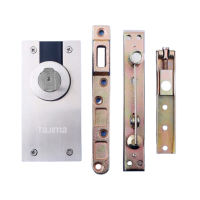
Tajima Stainless 304 Pivot Hinge 250kg
₱2,449.00₱2,999.00
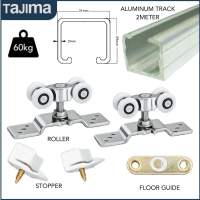
Tajima Heavy Duty Nylon Hanger Roller and 2-meter Door Track for Sliding Wooden Door
₱1,617.00₱2,099.00

Double Runner Wardrobe Sliding Roller with Door Track for Cabinet Door (3 meter)
₱3,759.00₱4,999.00

Aluminum C Type Handle for Cabinet Doors (Black or Silver or Gold)
₱1,609.00₱1,799.00
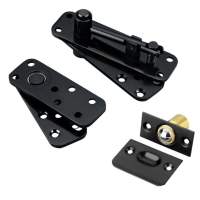
Pivot Hinge For Hidden Door 360 Degree
₱12,099.00
Buy on Lazada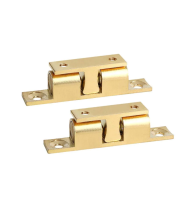
1PC Double Ball Catches for Cabinet Doors
₱130.00
Buy on Lazada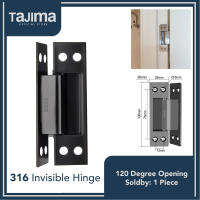
Invisible Hinge for Door Concealed Hidden 120 Degree Opening
₱609.00
Buy on Lazada
Tajima Passage Lever Type with Keyed for Exit Panic Device
₱1,809.00₱2,049.00
About Tajima
Tajima is a Japanese industrial technology brand best known for its commercial and industrial embroidery machines. Operated by the Tajima Group, the company traces its origins to 1944 in Aichi, Japan. Since developing its first multi-head automatic embroidery machine in 1964, Tajima has evolved from a domestic sewing-machine business into a global provider of embroidery technology, supplying machines, software, and related solutions to customers in more than 160 countries and regions.1
Overview
| Category | Information |
|---|---|
| Brand | Tajima |
| Origin | Japan |
| Founded | 1944 |
| Founder | Ryo Tajima |
| Headquarters | Kasugai, Aichi, Japan |
| Industry | Industrial machinery / Textile technology |
| Core Business | Embroidery machines, software, and related equipment |
| Main Markets | Apparel, fashion, sportswear, personalization, retail, automotive, interiors, and industrial applications |
| Global Reach | More than 160 countries and regions |
| Manufacturing Company | TISM Co., Ltd. |
| Sales Company | Tajima Industries Ltd. |
| Key Technology | Computer-controlled embroidery and sewing |
| Notable Development | Multi-head automatic embroidery machine (1964) |
| Corporate Vision | To be the world’s leading embroidery company |
The current corporate structure separates major functions within the group: Tajima Industries Ltd. handles sales, while TISM Co., Ltd. serves as the principal development and manufacturing base for Tajima-brand machines.2
Business Profile
Tajima operates primarily as a B2B industrial machinery brand rather than a consumer fashion label. Its core products are computerized embroidery machines designed to automatically reproduce digital artwork onto textiles with greater consistency and speed than manual methods. These systems are capable of embroidering logos, lettering, patterns, badges, decorative graphics, and complex multi-color designs.
The company describes its operations as providing “total embroidery solutions,” which encompass:
- Embroidery machinery
- Sewing technology
- Embroidery software
- Personalization systems
- Production services
- Industrial sewing applications
- Technical support
These machines serve a diverse client base including embroidery businesses, apparel manufacturers, global brands, retailers, and industrial users.3
History
1944–1964: Foundation and Transformation
The origins of Tajima date to 1944, when founder Ryo Tajima established an industrial sewing-machine sales company in Aichi Prefecture. Initially, the firm functioned primarily as a distributor and seller of industrial sewing equipment rather than a manufacturer.4 This enterprise eventually became the foundation of the modern Tajima Group.
A pivotal transformation occurred in 1964 when Ryo Tajima’s successor, Ikuo Tajima, completed four years of development on a multi-head automatic embroidery machine. The company began manufacturing and selling these units, shifting its identity from a sewing-machine distributor to an embroidery-machine manufacturer.5 This event established the technological direction that defines the brand today.
1970–1986: Innovation and Expansion
In 1970, Tajima developed what it describes as the world’s first jump mechanism for embroidery machines. That same year, Tajima Industries Ltd. was established to strengthen sales and develop a global distribution structure, marking the beginning of its transition into an international brand.6
Subsequent decades saw significant technical advancements:
- 1978: Introduction of a 6-needle/6-color automatic thread-changing electronic embroidery machine, which reduced labor for multi-color designs and made colorful logos more commercially viable.7
- 1982: Launch of the world’s first multi-head electronic chenille embroidery machine, automating techniques previously performed manually and expanding visual possibilities beyond flat stitching.
- 1986: Introduction of sequin embroidery technology, allowing sequins to be combined with conventional flat embroidery for fashion and decorative textiles.
1990–Present: Globalization and Modernization
Tajima strengthened its presence in the Americas by establishing Tajima America Corporation in the United States in 1990. In 1997, the release of a 15-needle electronic embroidery machine set a new standard for commercial production, allowing operators to use multiple thread colors without manual changes.
More recently, the company has integrated artificial intelligence into its production lines. In 2019, Tajima introduced the TMEZ AI embroidery machine, which uses AI-based automation to adjust upper-thread conditions, aiming to reduce dependence on highly experienced operators and improve consistency.
Industrial Applications
Modern Tajima technology extends beyond garment decoration. The company applies its expertise in stitch formation, frame control, and computerized sewing to various industrial sectors:
Automotive
Specialized sewing technologies have been developed for automotive seats, steering wheels, interior components, and heating wires. Notably, TLMX technology was created for sewing heater wires into products such as car seats and electric blankets.
Aerospace and Composite Materials
Tajima manufactures specialized machinery for composite-fiber preforms, including the sewing of reinforcing fibers like carbon fiber. This technology controls fiber orientation to produce lightweight, high-strength structures used in aerospace and automotive industries.
Interior and Housing
The company’s equipment is also utilized for quilting, perforation, decorative sewing, interior fabrics, and other textile-based products.
Product Portfolio
Tajima’s product range is broadly categorized into commercial embroidery machines and specialized industrial systems.
Commercial Embroidery Machines
These machines serve businesses ranging from small personalization shops to large-scale industrial producers. Applications include hats, T-shirts, jackets, uniforms, sportswear, patches, logos, corporate apparel, and promotional merchandise. Tajima offers both single-head and multi-head configurations, including cylinder-type and flat-type models.
- Multi-head machines: Designed for high-volume commercial production, these allow multiple garments or positions to be processed simultaneously. This capability stems directly from the 1964 multi-head innovation.
- Single-head machines: Suited for personalized products, small batches, samples, and on-demand production. The compact SAI machine exemplifies efforts to enable professional-quality embroidery in smaller spaces.
Software Solutions
Recognizing that modern embroidery requires an integrated workflow, Tajima operates in the software ecosystem alongside hardware. In 2022, the group established Tajima Software Solutions Inc. in Canada to strengthen software development, sales, and support for personalization and embroidery applications. This reflects a strategic shift toward providing integrated hardware, software, and service solutions.
Global Organization
The Tajima Group comprises several entities serving distinct functions:
- Tajima Industries Ltd.: Based in Kasugai, Aichi, Japan, this entity handles domestic and international sales. Established in 1970.
- TISM Co., Ltd.: A principal manufacturing and development organization with roots tracing back to the original 1944 company.
- Tajima America Corporation: Established in 1990 to provide sales and after-sales service across North and South America.
- Tajima Europe S.A.S.: Established in France in 2011 to support European customers.
- Shanghai Tajima Embroidery Machinery Co., Ltd.: Established in 2004 as part of the manufacturing network in China.
- Tajima Software Solutions Inc.: Established in Canada in 2022, focusing on software for personalization and embroidery.
Presence in Southeast Asia
Tajima maintains an established presence in the Southeast Asian market. In Indonesia, PT. Tajima Gunung Mas serves as the authorized sole distributor for Tajima Japan products, covering automatic embroidery machines, software, genuine spare parts, and accessories. The distributor states it has operated since 1987, providing sales, service, and spare-parts support.8
Corporate Philosophy and Positioning
Tajima’s corporate philosophy centers on combining quality and innovation. The company views embroidery simultaneously as artistic expression and engineered manufacturing, summarized by the concept “ART + SCIENCE.” Its stated vision is to deliver “surprise and excitement” as a world leader in the embroidery industry.9
In terms of market positioning, Tajima occupies the premium and professional segment of the industry. Unlike household sewing machine brands, Tajima targets professional embroidery businesses, apparel manufacturers, and industrial users. Key value propositions include reliability, precision, productivity, automation, durability, and technical support.10
Significance and Milestones
Tajima’s historical significance lies in transforming embroidery from a labor-intensive craft into an automated industrial process. The 1964 multi-head automatic embroidery machine was the foundational milestone, followed by innovations in automatic thread changing, computerized control, and AI integration.11
| Year | Milestone |
|---|---|
| 1944 | Ryo Tajima establishes an industrial sewing-machine sales company in Aichi |
| 1964 | Manufacturing and sales of multi-head automatic embroidery machines begin |
| 1970 | Jump mechanism developed; Tajima Industries established |
| 1978 | 6-needle/6-color automatic thread-changing machine introduced |
| 1982 | Multi-head electronic chenille embroidery technology introduced |
| 1986 | Sequin embroidery technology introduced |
| 1990 | Tajima America established |
| 1997 | 15-needle electronic embroidery machine introduced |
| 2004 | Shanghai Tajima Embroidery Machinery established |
| 2008 | TLMX heater-wire sewing machine introduced |
| 2009 | TCWM composite-fiber sewing technology introduced |
| 2011 | Tajima Europe established |
| 2014 | PAX multi-color/perforation automatic sewing machine introduced |
| 2017 | SAI compact embroidery machine introduced |
| 2019 | TISM name adopted; TMEZ AI embroidery machine introduced |
| 2022 | Tajima Software Solutions established in Canada |
| 2026 | Continued expansion of machine, software, and industrial embroidery solutions |
References
- History | Tajima Group
- FAQ | Tajima Group
- Company Profile | Tajima Group
- Commercial Embroidery Machines for Business | Tajima Group
- Service | Tajima Group
- Tajima Group|The World’s Favorite Embroidery machines
- REASON WHY TAJIMA | Tajima Group
- Tentang Kami – Tajima Gunung Mas
- Message/Corporate philosophy | Tajima Group
- PEOPLE Sales&Planning Division | TAJIMAG – Tajima Group’s Web Magazine
- 沿革 | Tajima Group(タジマグループ)
- REASON WHY Tajima | Tajima Group(タジマグループ)
- 会社概要・グループ会社一覧 | Tajima Group(タジマグループ)
- よくあるご質問(FAQ) | Tajima Group(タジマグループ)
- タジマの歴史|株式会社タジマ
- Products – Tajima Gunung Mas
- Tajima’s embroidery machines international presence in the world