Shop on Lazada
Tenda products
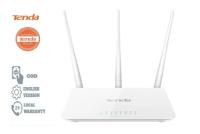
Tenda F3 300Mbps Wireless Router (White)
₱698.00₱999.00
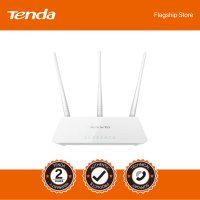
Tenda F3 300Mbps Easy Setup WiFi Router (English Firmware)
₱750.00₱949.00
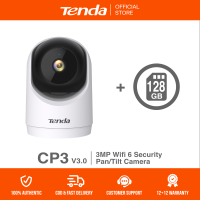
Tenda Official Store | CP3 | 2K 3MP CCTV Wifi Camera | Indoor | Mic & Speaker | microSD | Tenda App
₱3,699.00₱4,999.00
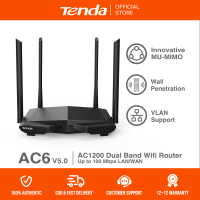
Tenda Official Store | AC6 | Wi-Fi 5 | Piso Wifi | Dual Band | Wifi Range Extender | Wifi Repeater
₱1,699.00₱3,199.00
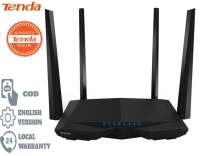
Tenda AC6 Smart AC1200 4x5db Dual Band WiFi Router
₱1,188.00₱1,999.00
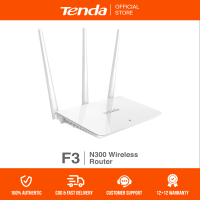
Tenda Official Store | F3 | N300 Single Band | Wifi Router | Access Point | Wifi Extender | Repeater
₱899.00₱1,299.00
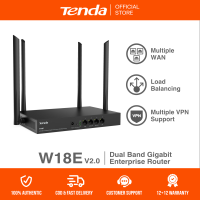
Tenda Official Store | W18E | Dual Band Gigabit | Enterprise Router | Load Balancing | Multiple WAN
₱3,199.00₱4,199.00
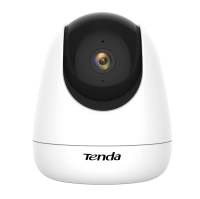
Tenda CP3 Security Pan/Tilt Smart Camera 360° All-Round Vision 1080P HD Motion Detection Two-Way Audio Night Vision Voice Customization Micro SD Card and Cloud Storage (Wireless)
₱900.00₱1,695.00
About Tenda
Overview
| Attribute | Information |
|---|---|
| Company Name | Shenzhen Tenda Technology Co., Ltd. |
| Brand Name | Tenda |
| Founded | 1999 |
| Headquarters | Shenzhen, Guangdong, China |
| Industry | Computer Networking & Telecommunications |
| Products | Wi-Fi Routers, Mesh Wi-Fi, Switches, Access Points, IP Cameras, CPEs, Gateways |
| Market | Global (100+ countries) |
| Target Customers | Home users, SMEs, Internet Service Providers (ISPs) |
Tenda is a Chinese networking equipment brand owned by Shenzhen Tenda Technology Co., Ltd., a global manufacturer specializing in consumer and small-business networking products. Founded in 1999 and headquartered in Shenzhen, Guangdong, China, the company designs, manufactures, and sells a wide range of wired and wireless networking devices, including Wi-Fi routers, mesh Wi-Fi systems, Ethernet switches, access points, broadband customer-premises equipment (CPE), IP cameras, and smart networking solutions. Tenda is known for offering affordable networking products with a focus on ease of installation and value for home users and small businesses. [1]
History
Tenda was established in 1999 during the rapid expansion of broadband internet in China. The company began by manufacturing Ethernet networking equipment before expanding into wireless networking as Wi-Fi became mainstream.
Throughout the 2000s, Tenda grew rapidly in domestic and international markets by focusing on low-cost, plug-and-play networking products. Today, the company operates multiple research and development centers across China and exports products to more than 100 countries and regions. [1]
Mission
According to the company:
“Achieve a smarter life for everyone.”
Its mission is to enable any smart device to connect to the internet securely, conveniently, and at high speed, helping people enjoy connected, intelligent living. [1]
Business Philosophy
Tenda emphasizes:
-
Affordable networking
-
Easy installation
-
Stable wireless performance
-
Smart home connectivity
-
Continuous R&D investment
The company reports investing more than 10% of annual sales revenue into research and development and operates six R&D centers with hundreds of engineers.
Product Categories
Home Networking
-
Wi-Fi Routers
-
Wi-Fi 6 Routers
-
Wi-Fi 7 Routers
-
Mesh Wi-Fi Systems
-
Wi-Fi Range Extenders
-
USB Wi-Fi Adapters
Popular product series include:
-
AC Series
-
AX Series
-
RX Series
-
Nova Mesh Series
Business Networking
For offices and enterprises, Tenda offers:
-
Managed Switches
-
Unmanaged Switches
-
Business Access Points
-
VPN Routers
-
PoE Switches
-
Cloud-managed Networking
Broadband Equipment
Products include:
-
xDSL Routers
-
GPON/EPON ONTs
-
4G/5G Routers
-
LTE CPE
-
Fiber Access Equipment
Security
Tenda also manufactures:
-
Indoor IP Cameras
-
Outdoor Cameras
-
Pan-Tilt Cameras
-
AI Motion Detection Cameras
-
Cloud-enabled Surveillance
Technology
Recent Tenda devices support technologies such as:
-
Wi-Fi 6 (802.11ax)
-
Wi-Fi 7 (selected models)
-
MU-MIMO
-
OFDMA
-
Beamforming
-
Mesh Networking
-
WPA3 Security
-
IPv6
-
Quality of Service (QoS)
-
Cloud Management
Manufacturing
Tenda is a vertically integrated company that combines:
-
Research
-
Industrial design
-
Manufacturing
-
Testing
-
Sales
-
Customer support
Its manufacturing facilities include a large production base in Dongguan, China, with automated production lines and substantial daily manufacturing capacity.
Research & Development
The company states it has:
-
6 R&D centers
-
600+ R&D engineers
-
1,300+ patents and intellectual property filings
Research focuses on wireless communications, embedded software, networking protocols, cloud platforms, and smart-home technologies.
Global Presence
Tenda products are sold in:
-
Asia
-
Europe
-
Africa
-
North America
-
South America
-
Middle East
The company reports having offices or representatives in dozens of countries and products available in more than 100 markets. [1]
Market Position
Tenda is generally positioned as a value-oriented networking brand, competing primarily in the budget and mid-range segments.
Its principal competitors include:
-
TP-Link
-
D-Link
-
Mercusys
-
Netgear
-
ASUS
-
Xiaomi
-
Huawei
Compared with premium brands, Tenda generally emphasizes affordability and straightforward setup rather than extensive advanced features.
Strengths
-
Competitive pricing
-
Easy setup
-
Good Wi-Fi coverage for typical homes
-
Wide availability
-
Broad product lineup
-
Suitable for home users and small businesses
Limitations
Some users and reviewers note areas where Tenda products may be less competitive than higher-end alternatives:
-
Fewer advanced networking features on entry-level models
-
Firmware updates may be less frequent for older devices
-
Smaller software ecosystem compared with premium vendors
-
Limited enterprise-focused management features on consumer products
The experience varies by product model and firmware version.
Security
Like many networking vendors, Tenda has experienced security vulnerabilities affecting some products over the years. Users are generally advised to:
-
Keep firmware updated.
-
Use strong administrator passwords.
-
Disable remote management unless needed.
-
Enable WPA3 (if supported).
-
Monitor vendor security advisories.
Cybersecurity researchers disclosed a critical authentication-backdoor vulnerability affecting several older router firmware versions, and users of impacted models were advised to update firmware when fixes become available or apply recommended mitigations. [3]
Recognition
Over its history, Tenda has expanded from a domestic Chinese networking manufacturer into an international supplier of consumer networking equipment, introducing Wi-Fi 6 and Wi-Fi 7 products while continuing to invest in manufacturing and R&D. [1]
Summary
Tenda has established itself as a major global manufacturer of affordable networking hardware. Its strengths lie in delivering accessible, easy-to-deploy networking products for homes and small businesses, with offerings spanning routers, mesh systems, switches, access points, broadband equipment, and security cameras. While it competes effectively on price and simplicity, buyers should evaluate individual models for software support and security update history, as with any networking brand.