Shop on Lazada
tern products
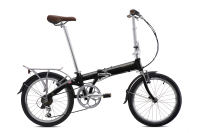
Bickerton Junction 1307 Country
₱20,455.00
Buy on Lazada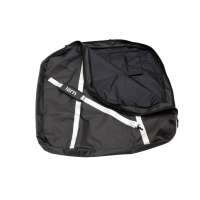
Tern Stow Bag
₱4,750.00
Buy on Lazada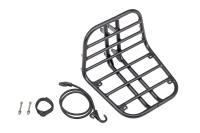
Tern Hauler Rack HAUL IT ALL
₱6,900.00
Buy on Lazada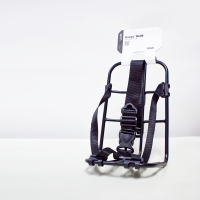
Tern Kanga Rack FRONT-MOUNTED RACK
₱2,750.00
Buy on Lazada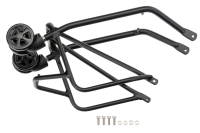
Tern Metro Transit Rack for BYB
₱4,160.00
Buy on Lazada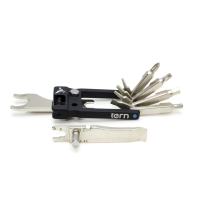
Tern Bicycle Tool Kit 2.0 (Black)
₱1,650.00
Buy on Lazada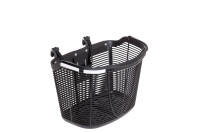
Kontti Basket THE 21ST CENTURY PANNIER BASKET
₱2,650.00
Buy on Lazada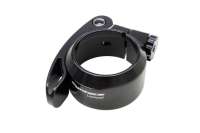
Tern Syntace OverLock Seatpost Clamp
₱1,250.00
Buy on LazadaAbout tern
Tern Bicycles (commonly referred to as Tern) is a bicycle manufacturer founded in 2011 and headquartered in Taipei, Taiwan. The brand specialises in urban mobility bicycles, folding bicycles, electric bicycles, and compact electric cargo bikes.1 From its inception, the company has focused on designing practical transport solutions for dense urban environments where storage space, multimodal connectivity, and carrying capacity are critical considerations.
Tern is currently best known for its compact e-cargo platforms, including the GSD, HSD, Quick Haul, and Orox, as well as folding and compact models such as the Vektron and NBD. Its product development is driven by the premise that bicycles should serve as practical everyday transportation rather than solely recreational equipment.
Overview
| Field | Information |
|---|---|
| Brand | Tern Bicycles |
| Founded | 2011 |
| Launch location | Taipei, Taiwan |
| Industry | Bicycle / electric bicycle / urban mobility |
| Main products | Folding bikes, e-bikes, e-cargo bikes, accessories |
| Notable models | GSD, HSD, Quick Haul, Quick Haul Long, Vektron, NBD, Orox |
| Primary market | Urban transportation and utility cycling |
| Key technologies | Folding/compact frames, Bosch e-bike systems, cargo-bike platforms, modular accessories |
| Brand philosophy | Practicality, durability, versatility, safety, and sustainable transportation |
History
Foundation
Tern officially launched on 18 June 2011 in Taipei, Taiwan.1 Unlike traditional manufacturers focused on recreational cycling, the company positioned itself from the outset as an urban-transportation bicycle brand.2
The founding team included Joshua Hon, who became one of the company’s prominent leaders, and Florence Shen. Tern’s early technical expertise was rooted in folding bicycles, addressing challenges common in crowded cities such as limited living space, commuting logistics, multimodal transport integration, and portability.3
At launch, Tern introduced 21 models across five distinct platforms, signalling an intention to establish a comprehensive product family rather than relying on a single flagship model.4
Early international expansion
Tern expanded its global footprint rapidly. By March 2012, less than a year after launching, the company reported distribution through 40 distributors in 34 countries across Asia, Europe, North America, and South America. During this period, it also developed numerous patented technologies and established service operations in the United States, Germany, and Taiwan.5
This rapid expansion established Tern as a globally oriented brand rather than one focused exclusively on the Taiwanese domestic market.
The Meaning of “Tern”
The brand name is derived from the Arctic tern, a seabird renowned for its exceptionally long migratory journeys. The company selected this symbol to represent endurance, connection, and the ability to travel vast distances, aligning with its goal of creating durable bicycles and fostering long-term relationships with riders.6
Brand Philosophy
Tern’s philosophy has evolved from a focus on folding bicycles to a broader concept of urban mobility. The company posits that bicycles can help mitigate issues associated with car-dependent cities. Key tenets of its design ethos include practicality, safety, durability, versatility, compactness, sustainable transportation, family mobility, and cargo carrying capacity.
Tern describes its mission as helping to create livable, inclusive, and sustainable communities by making cycling accessible to a wider demographic.7 Consequently, its bicycles are typically designed around real-world transportation needs rather than competitive racing performance.
From Folding Bikes to E-Cargo Bikes
A significant evolution in Tern’s history was its transition from being primarily associated with folding bicycles to becoming a specialist in electric cargo bikes. Experience with compact folding designs provided foundational expertise in maximising utility within a small footprint, facilitating easy storage and transport in cars, trains, buses, and elevators, and engineering stable frames capable of carrying substantial loads.
Tern subsequently applied these principles to electric and cargo bicycles,8 creating a distinctive category of small-footprint utility e-bikes designed to replace certain everyday car trips.
Product Categories
Folding bicycles
Tern’s original identity remains closely linked to folding bicycles. The Vektron, an electric folding bicycle, exemplifies this category. Designed for commuting and multimodal transport, it combines an electric-assist system with a folding frame, allowing riders to use public transportation or store the bike in compact spaces.9 It targets users who require both electric assistance and portability.
Compact e-bikes
Tern produces compact electric bicycles intended for everyday transportation. The NBD, for instance, features an accessible riding position and compact proportions designed to make daily cycling easier for a broad range of riders.10 These models bridge the gap between traditional city bicycles and dedicated cargo platforms.
E-Cargo Bikes
Electric cargo bikes have become the category most strongly associated with the modern Tern brand. Unlike conventional bicycles, these are engineered to transport people, groceries, children, luggage, work equipment, and other substantial loads.
GSD
The GSD (Get Stuff Done) is Tern’s most recognised cargo-bike platform, designed primarily for family transportation and heavy-duty hauling. The current GSD Gen 3 has a maximum gross vehicle weight of 210 kg (463 lb) and supports configurations with racks, panniers, bags, decks, child seats, and other accessories.11 It offers substantial cargo capacity while remaining significantly more compact than many traditional long-tail cargo bicycles, with configurations capable of accommodating two children or an adult passenger.12
HSD
The HSD is a smaller cargo platform positioned below the GSD. Conceptually, it is a compact bicycle with serious cargo capability, intended for grocery shopping, commuting, family transport, and general utility. Depending on the configuration, it can carry a child or adult passenger alongside substantial cargo. Newer generations incorporate the Bosch Smart System on applicable models, combining electric assistance with a compact frame.13
Quick Haul
The Quick Haul is positioned as a simpler, more accessible compact cargo e-bike. Tern describes it as a “multitool” of e-bikes: relatively small and easy to store, yet capable of transporting cargo and passengers.14 On applicable models, the rear rack can carry up to 50 kg (110 lb), offering significantly greater hauling utility than a standard city bicycle.15
Quick Haul Long
The Quick Haul Long extends the Quick Haul concept into a longer family-cargo format. It can carry two children or an adult passenger and has a maximum gross vehicle weight of 190 kg (419 lb), with a rear-rack capacity of up to 90 kg (198 lb).16 This model sits between the compact utility of the Quick Haul and the higher-capacity GSD.
Orox
The Orox represents a larger, adventure-oriented cargo e-bike. While the GSD is associated with urban family transport, the Orox extends the cargo-bike concept to longer-distance and more demanding riding conditions, featuring large cargo capacity and a broad accessory ecosystem.17
Accessory Ecosystem
A central component of Tern’s business model is the extensive ecosystem of accessories designed for its bicycles. Rather than selling bare frames, Tern offers child seats, passenger seating, panniers, front and rear racks, baskets, bags, cargo decks, footrests, handlebars, protective equipment, lighting, kickstands, and transport accessories.
This approach transforms a Tern bicycle into a modular transportation platform. For example, a single GSD can be reconfigured for school runs, grocery shopping, commuting, family outings, or commercial cargo delivery. This modularity is emphasised across the entire e-bike lineup.
Bosch Partnership
Modern Tern electric bicycles extensively utilise Bosch e-bike systems. The company’s buyer’s guide confirms that its e-bikes are equipped with Bosch drive units, with different models featuring various motor generations and configurations.18 The combination of Tern frames, Bosch motors, and proprietary cargo accessories has become a defining characteristic of the brand’s identity.
Engineering and Safety
Tern places considerable emphasis on structural testing, as its cargo bikes are frequently expected to carry loads far exceeding those of ordinary bicycles. Frames and forks for cargo models, including the GSD and Quick Haul Long, have undergone testing by EFBE against stringent protocols related to the German cargo-bike standard DIN 79010.19 This reflects the engineering requirement that frames must safely support not only the rider but also children, adults, groceries, luggage, and other cargo.
Market Positioning
Tern occupies a distinct niche in the bicycle market. While road bikes prioritise speed and mountain bikes focus on off-road terrain, Tern focuses on compact everyday transportation combined with cargo capacity and portability. Its design philosophy asks how much everyday utility can be integrated into a bicycle that remains practical in an urban setting.
Unlike conventional brands organised around sporting categories (road, gravel, mountain), Tern organises its range around transportation tasks such as carrying children, hauling groceries, commuting, replacing short car trips, and integrating with public transit. This makes the brand particularly relevant to car-light or car-free urban living.
Target Customers
- Urban commuters: Individuals requiring daily transport that integrates with trains, buses, elevators, or small apartments.
- Families: Parents seeking to transport children without exclusive reliance on cars.
- Practical cyclists: Riders viewing bicycles as functional transportation.
- Cargo users: Individuals regularly transporting groceries, equipment, or packages.
- Small-space residents: Those unable to store full-size conventional cargo bicycles.
- Car-replacement users: People aiming to substitute short automobile journeys with cycling.
Design Language
Tern bicycles share a recognisable visual identity characterised by compact frames, relatively small wheels, upright riding positions, low step-over heights, long rear racks, and integrated cargo solutions. The geometry is utilitarian rather than racing-oriented, with clean, functional industrial design. These proportions deliberately communicate the bikes’ intended purpose: efficient transport of people and goods.
Sustainability
Sustainability is integral to Tern’s philosophy. The company argues that bicycles contribute to sustainable transport by replacing automobile trips, thereby reducing fuel consumption, congestion, parking demand, and emissions.20 Cycling is positioned as part of a broader solution to urban transportation challenges.
Evolution in the Bicycle Industry
Tern’s development can be categorised into three stages:
- 2011–mid-2010s: Established as a folding-bike specialist with a rapidly expanding international distribution network.21
- Mid/late 2010s: Expanded focus toward practical urban bicycles and electric-assist transportation.
- 2020s: Evolved into a compact e-cargo and family transportation specialist. Models like the GSD, HSD, Quick Haul, NBD, Vektron, and Orox represent a broad ecosystem centred on everyday utility, making the current lineup more closely associated with e-cargo bikes and urban mobility than with folding bikes alone.22
Major Models at a Glance
| Model | Type | Main idea |
|---|---|---|
| GSD | E-cargo bike | Maximum family/cargo utility in a compact format |
| HSD | Compact e-cargo bike | Smaller everyday cargo platform |
| Quick Haul | Compact e-cargo bike | Simple, versatile everyday hauler |
| Quick Haul Long | Long-tail e-cargo bike | Two-passenger family transportation |
| NBD | Compact e-bike | Easy-access urban transportation |
| Vektron | Folding e-bike | Electric commuting + folding portability |
| Orox | Adventure e-cargo bike | High-capacity cargo and adventure use |
This lineup illustrates Tern’s strategy of creating specialised versions of practical human-powered and electric urban transportation rather than a single universal bicycle.23
Brand Identity
While conventional bicycle brands often focus on the act of riding, Tern’s philosophy centres on bicycles as tools for daily living. Starting with the challenge of making bicycles portable enough for city life, the company applied this expertise to electric assistance, cargo carrying, and family transport. Today, Tern is defined primarily as a specialist in compact, highly configurable urban and electric cargo bicycles rather than merely a folding-bike manufacturer.24
References
- Tern Bicycles Spreads Its Wings | Tern Bicycles
- About Tern | Tern Bicycles
- About Tern | Tern Bicycles
- Tern Growing Steadily into First Full Year | Tern Bicycles
- Tern E-Bike Buyer’s Guide for Beginners | Tern Bicycles
- Cargo Guide for Tern Cargo Bikes | Tern Bicycles
- Quick Haul: Our Most Affordable E-Cargo Bike | Tern
- 2025 Tern E-Bike Buyer’s Guide for Beginners | Tern
- Choosing Between the Tern GSD and Quick Haul Long | Tern
- 2025 Tern eBike Buyer’s Guide for Beginners | Tern Bicycles
- 2025 Tern eBike Buyer’s Guide for Beginners | Tern Bicycles
- Choosing Between the Quick Haul Long & GSD Gen 3 | Tern
- Cargo Guide for Tern Cargo Bikes | Tern Bicycles
- E-Cargo Bike Comparison: Quick Haul vs. HSD Gen 1 | Tern
- E-Cargo Bike Comparison: Quick Haul vs. HSD Gen 1 | Tern
- Tern Bicycles celebrates 5th birthday | Tern Bicycles
- Tern Turns 1 | Tern Bicycles
- About Tern | Tern Bicycles
- About Us | Tern Store USA
- Best Electric Cargo Bikes, eBikes & Folding Bikes | Tern
- 關於 Tern:我們的故事、使命與價值 | Tern Bicycles
- Tern Surge | Tern Bicycles
- About Tern|私たちのストーリーとミッション
- 關於 Tern:我們的故事、使命與價值觀 | Tern Bicycles