Shop on Lazada
Tesla products
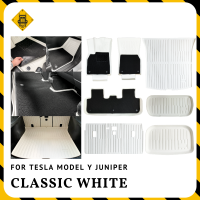
TESLA 2025/2026 Model Y Juniper Waterproof TPE Odorless Cargo Liners Floor Mats - 1 SET (9PCS)
₱12,000.00
Buy on Lazada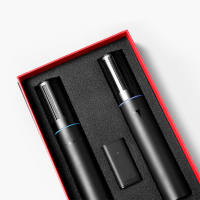
CaraokeMic Tesla Microphone Tesla Branded microphone High-End Storege Box Fcatory direct sell works for model3/y/s/x
₱11,999.00₱13,999.00
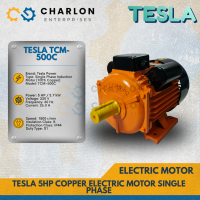
Tesla TCM-500C 5HP Copper Electric Motor Single Phase
₱20,999.00
Buy on Lazada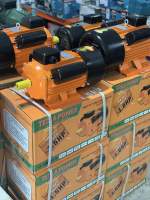
TESLA Single Phase Induction Electric Motor 1 HP to 5 HP Japan Quality (100% Copper)
₱9,580.00
Buy on Lazada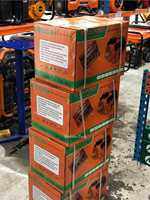
ORIGINAL TESLA ELECTRIC INDUCTION MOTOR FOR CONTRUCTORS 1HP 1.5HP 2.0hp 3HP 100% COPPER JAPAN QUALITY SINGLE PHASE
₱9,580.00
Buy on Lazada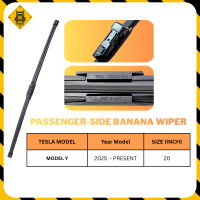
TESLA Passenger-Side 20″ Windshield Banana Wiper For Tesla Model Y Juniper 2025 - Present (Black)
₱1,225.00₱1,750.00
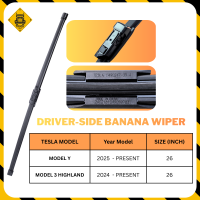
TESLA Driver-Side 26″ Windshield Banana Wiper For Tesla Model Y Juniper 2025 - Present and Model 3 Highland 2024 - Present (Black)
₱1,225.00₱1,750.00
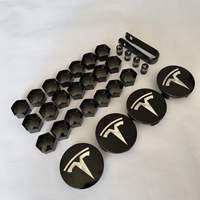
TESLA | 25PCS 29pcs 56mm 57MM For Tesla Model 3 ModelY New Juniper Car Wheel Center Caps Rims Hub Cover Logo Hubcaps Auto Accessories
₱733.27₱1,099.90
About Tesla
Tesla, Inc. is an American multinational corporation best known for its electric vehicles, battery energy-storage systems, charging infrastructure, solar-energy products, and automotive software. Founded in 2003, Tesla has played a pivotal role in accelerating the global adoption of electric vehicles and has increasingly positioned itself as an energy and artificial-intelligence company alongside its identity as an automaker.1
Quick facts
| Category | Information |
|---|---|
| Company | Tesla, Inc. |
| Former name | Tesla Motors, Inc. |
| Founded | July 1, 2003 |
| Founders | Martin Eberhard and Marc Tarpenning |
| Headquarters | Austin, Texas, United States |
| Industry | Automotive, energy, software, artificial intelligence |
| CEO | Elon Musk |
| Board Chair | Robyn Denholm |
| Mission | Accelerate the world’s transition to sustainable energy |
| Main products | Model 3, Model Y, Model S, Model X, Cybertruck, Semi, Powerwall, Megapack, Solar Roof |
| Stock ticker | TSLA |
| Employees | 100,000+ according to Tesla’s current company overview |
| 2025 vehicle deliveries | 1,636,129 |
| 2025 energy-storage deployments | 46.7 GWh |
Tesla states it was incorporated on July 1, 2003, with headquarters located at 1 Tesla Road in Austin, Texas.2 Its 2025 results reported more than 1.63 million vehicle deliveries and 46.7 GWh of energy-storage deployments.2
History
Foundation
Tesla was established in 2003 in California by engineers Martin Eberhard and Marc Tarpenning. The company was originally named Tesla Motors.
The name honours Nikola Tesla, the Serbian-American inventor and electrical engineer whose work on alternating-current electricity, motors, and electromagnetism influenced modern electrical engineering.
The original concept behind Tesla was not merely to build another electric car. Its founders believed electric vehicles could be desirable, high-performance products rather than compromises designed solely for environmental reasons.
Elon Musk became an early major investor and joined the board in 2004, subsequently becoming one of the company’s most influential leaders. He has served as CEO since October 2008.2
The Roadster
Tesla’s first production vehicle was the Tesla Roadster, introduced in 2008. Based on the Lotus Elise sports-car platform, it utilised a Tesla-developed electric powertrain and lithium-ion battery system.
Its significance was largely symbolic and technological, demonstrating that an electric vehicle could deliver sports-car performance and substantial driving range. Tesla’s own historical account identifies the Roadster as its first product, debuting in 2008.
Model S
In 2012, Tesla introduced the Model S, a premium electric sedan. This model was considerably more important to Tesla’s long-term strategy than the Roadster because it demonstrated that an electric vehicle could compete with established luxury automobiles while offering long range, rapid acceleration, and a software-centred user experience.
It also helped establish several characteristics now associated with Tesla:
- Large central touchscreen
- Over-the-air software updates
- Long-range battery packs
- High-performance electric motors
- Minimalist interior design
- Integrated charging network
- Software-controlled vehicle features
Model X
Tesla launched the Model X SUV in 2015. It introduced distinctive features such as upward-opening falcon-wing rear doors and combined SUV practicality with Tesla’s electric drivetrain.
Model 3
The Model 3, introduced in 2016 with deliveries beginning in 2017, represented Tesla’s attempt to enter a substantially larger market. Unlike the expensive Roadster and premium Model S/X, the Model 3 was designed as a comparatively affordable mass-market electric car.
Its success was particularly significant because Tesla’s broader strategy required increasing production volume and reducing the cost of electric vehicles.
Model Y
The Model Y is a compact/midsize crossover based substantially on the Model 3 platform. It became one of Tesla’s most important products due to the enormous global demand for crossover SUVs.
Tesla’s 2025 production and delivery figures illustrate the dominance of the Model 3/Model Y platform within the company’s lineup: 1,585,279 Model 3/Y vehicles were delivered during 2025, compared with 50,850 deliveries of other models.2
Mission
Tesla’s stated mission is “to accelerate the world’s transition to sustainable energy.”1
The company says its broader objective is to create a world powered by renewable energy, using solar generation, batteries, and electric transportation as interconnected components.1 Consequently, Tesla is not officially structured simply as a car manufacturer. Its business can broadly be divided into several areas:
- Electric vehicles
- Energy generation
- Energy storage
- Charging infrastructure
- Automotive software
- Autonomous-driving technology
- Artificial intelligence and robotics
Products
Electric vehicles
Tesla’s major vehicle families include:
Model 3
A relatively affordable electric sedan and one of Tesla’s highest-volume products.
Model Y
An electric crossover/SUV derived from the Model 3 platform. It has become a central product in Tesla’s global vehicle business.
Model S
Tesla’s premium electric sedan, known for long range and high performance.
Model X
Tesla’s premium electric SUV, distinguished by its falcon-wing doors.
Cybertruck
A stainless-steel electric pickup truck introduced as a highly unconventional alternative to traditional pickup trucks.
Tesla Semi
An electric heavy-duty truck designed for commercial transportation.
Tesla has also been developing newer products and autonomous-transportation concepts, including its Cybercab/Robotaxi programme. Recent corporate filings describe Cybercab as a purpose-built vehicle for autonomous ride-hailing.3
Energy business
One of Tesla’s most important developments has been its expansion beyond automobiles.
Powerwall
Powerwall is a home battery system designed to store electricity. A typical application involves storing energy generated by solar panels for later use, rather than consuming it immediately. Powerwall can also provide backup power during grid outages.
Megapack
Megapack is a much larger battery-storage system designed primarily for commercial and utility-scale applications. It allows electricity generated at one time, such as from solar or wind, to be stored and supplied to the electrical grid when needed.
Tesla reported 46.7 GWh of energy-storage deployments during 2025, demonstrating the significance of this business segment.2
Solar
Tesla also sells solar-energy products, including conventional solar panels and Solar Roof, which integrates photovoltaic technology into roofing materials. The company describes its energy strategy as an integrated system in which solar generation, battery storage, and electric vehicles work together.
Supercharger Network
Tesla has built one of the world’s most recognisable electric-vehicle charging networks. The Supercharger network allows compatible vehicles to recharge at high-power stations. This infrastructure is strategically important because EV adoption depends not only on the vehicle itself but also on the availability of convenient charging.
Tesla has also moved towards making its charging technology available to vehicles from other manufacturers through the adoption of the North American Charging Standard (NACS) in North America. This has made Tesla’s charging technology an integral part of the wider EV ecosystem.
Software and technology
A major differentiator between Tesla and traditional automakers is the importance of software. Tesla vehicles are effectively software-controlled computers on wheels.
Over-the-air updates
Tesla can remotely update vehicle software without requiring customers to visit a dealership. Updates can change or add vehicle functionality, improve performance, modify interfaces, and introduce new features. Tesla specifically highlights over-the-air updates as a vital part of the vehicle experience.
Full Self-Driving
Tesla develops Full Self-Driving (Supervised), its advanced driver-assistance system. Despite its name, the current system requires an attentive human driver and should not be confused with a universally available fully autonomous driving system. Tesla continues to pursue autonomous-vehicle technology and purpose-built robotaxis.
Artificial intelligence and robotics
Tesla increasingly describes itself as more than an automotive company, with artificial intelligence forming a major part of its future strategy. Its AI efforts include computer vision, neural networks, autonomous-driving systems, vehicle data processing, AI training infrastructure, and robotics.
Optimus
Optimus is Tesla’s humanoid-robot project. The concept aims to develop a general-purpose robot capable of performing tasks that might otherwise require human labour. This represents a significant expansion of Tesla’s technological ambitions beyond transportation.
Manufacturing
Tesla pursues a highly vertically integrated manufacturing strategy. The company designs and manufactures many critical components itself while maintaining extensive supplier relationships. Tesla states it operates six large, vertically integrated factories across three continents and employs more than 100,000 people.
Key manufacturing locations include:
- Gigafactory Texas — Austin, Texas
- Gigafactory Nevada — Nevada, United States
- Gigafactory New York — New York, United States
- Gigafactory Shanghai — China
- Gigafactory Berlin-Brandenburg — Germany
- Other production and manufacturing facilities
Tesla’s manufacturing philosophy emphasises automation, scale, battery technology, and reducing production costs.
Business model
Tesla’s business model differs from that of many traditional automakers.
Direct sales
Tesla has historically emphasised selling vehicles directly to customers rather than relying entirely on independent franchised dealerships. This approach allows greater control over pricing, customer experience, vehicle configuration, software, sales channels, and service relationships.
Software as part of the vehicle
Tesla generates revenue from software-related features and services. Filings indicate that automotive revenue can include connectivity, certain Supercharging arrangements, software features, and Full Self-Driving-related access.3
Ecosystem approach
Tesla increasingly resembles an ecosystem rather than a conventional automaker, integrating cars, software, charging, batteries, solar, home energy, and the grid. This integration is one of the company’s central strategic ideas.
Leadership
Elon Musk
Elon Musk is Tesla’s CEO and one of its most prominent public figures. He joined the board in 2004 and became CEO in 2008.12 Musk has had a major influence on Tesla’s product strategy, engineering priorities, manufacturing strategy, brand identity, AI initiatives, autonomous-driving strategy, and long-term corporate vision.
Robyn Denholm
Robyn Denholm serves as Board Chair. Corporate governance information lists her among the company’s directors and identifies the board’s governance responsibilities.2
Brand identity
Tesla’s brand is strongly associated with several core concepts:
- Innovation: Positions itself as a technology-driven company rather than a conventional carmaker.
- Electric mobility: Helped make premium, high-performance electric cars commercially desirable.
- Minimalism: Vehicles feature relatively simple interior designs dominated by large displays.
- Performance: Many models emphasise rapid acceleration and instant electric torque.
- Software: Treats software as a fundamental component of the vehicle.
- Sustainability: Connects electric transportation with renewable generation and battery storage.
- Futurism: Products such as Cybertruck, Optimus, and Robotaxi reinforce a futuristic image.
Industry significance
Tesla’s significance extends beyond sales volume. Before Tesla’s rise, many automakers treated electric cars primarily as environmental or regulatory compliance products. Tesla helped popularise the idea that an EV could be fast, attractive, high-tech, long-range, fun to drive, updatable via software, and supported by a dedicated charging network.
This pressured established automakers to accelerate their own EV programmes. The company’s influence therefore extends across the automotive, battery, charging, and renewable-energy industries.
Controversies and criticism
Like any major corporation, Tesla has attracted substantial criticism. Major areas of controversy include:
- Elon Musk’s management style and public statements
- Workplace and labour disputes
- Autopilot and Full Self-Driving safety claims
- Regulatory scrutiny
- Product-quality and manufacturing issues
- Environmental and supply-chain concerns
- Customer-service complaints
- Corporate governance
- Musk’s other companies and political/public activities
Supporters generally argue that the company’s aggressive approach has accelerated technological development and EV adoption. Critics argue that some claims and business practices have sometimes moved faster than the underlying technology or regulatory framework.
Environmental impact
Tesla’s fundamental environmental proposition is that replacing gasoline-powered transportation with electric transportation can reduce dependence on fossil fuels, particularly when electricity comes from low-carbon sources. The company also argues that battery storage and solar generation can help make renewable electricity more useful by storing energy when production is high and supplying it when demand peaks.
According to its company overview, Tesla products avoided 20.4 million metric tons of CO₂e in 2023.
However, electric vehicles are not impact-free. Their production requires substantial quantities of materials and energy, including battery minerals. Overall environmental benefit depends partly on factors such as electricity generation, vehicle lifetime, manufacturing processes, and battery recycling.
Competitors
Tesla competes with different companies depending on the market segment.
Electric vehicles
- BYD
- Volkswagen Group
- Toyota
- Ford Motor Company
- General Motors
- Hyundai Motor Company
- Rivian
- Lucid Motors
Energy storage
Tesla competes with battery manufacturers, energy-storage companies, and renewable-energy providers globally.
Autonomous driving and AI
Tesla competes technologically with companies developing autonomous-driving and AI systems, including major automotive and technology firms.
Current status
As of 2026, Tesla operates at the intersection of several industries: automobiles, batteries, energy, software, AI, robotics, and autonomous transportation.
Its traditional automotive business remains its largest and most visible operation, with the Model 3 and Model Y accounting for the overwhelming majority of 2025 vehicle deliveries.2 Simultaneously, energy storage has become an increasingly important part of the business, while Tesla invests heavily in autonomous driving, robotaxis, and humanoid robotics.
Tesla aims to build sustainable systems involving solar energy, batteries, and electric vehicles, rather than treating each product as an isolated business.
Summary
Tesla is an American technology and energy company founded in 2003 that became famous for making electric cars desirable, fast, and technologically advanced. Led by Elon Musk since 2008, the company now manufactures electric vehicles, batteries, solar products, and charging systems while developing autonomous-driving software, robotaxis, and humanoid robots. Its overarching goal is to accelerate the transition away from fossil fuels by connecting electric transportation with renewable energy and energy storage.12
Official resources
- Tesla — About Us
- Tesla Investor Relations
- Tesla Corporate Governance
- Tesla SEC filings