Shop on Lazada
The Body Shop products
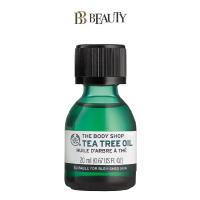
The Body Shop Tea Tree Oil 20ml
₱1,080.00₱1,418.00
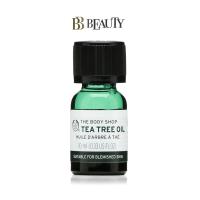
The Body Shop Tea Tree Oil 10ml
₱679.00₱900.00
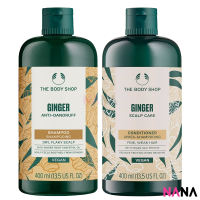
The Body Shop Ginger Anti-Dandruff Care - Shampoo & Conditioner 400ml
₱2,390.00₱2,940.00
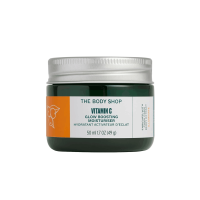
The Body Shop Vitamin C Glow Boosting Moisturiser 50ml Body Skin Care
₱989.09₱1,500.00
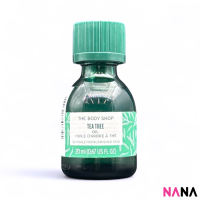
THE BODY SHOP Tea Tree Oil 20ml
₱1,090.00₱1,440.00
![[The Body Shop] White Musk Deodorant 50ml | Shipped Directly from Korea](https://filebroker-cdn.lazada.com.my/kf/S5651665d995f4e6680685b3b8a7f687d2.png_200x200q80.jpg)
[The Body Shop] White Musk Deodorant 50ml | Shipped Directly from Korea
₱781.00₱1,146.00
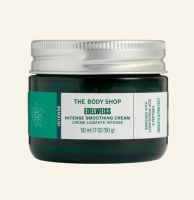
The Body Shop®Edelweiss Smoothing Day Cream (50ml)
₱1,535.05₱1,932.00
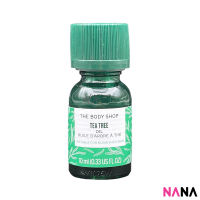
THE BODY SHOP Tea Tree Oil 10ml
₱690.00₱1,040.00
About The Body Shop
The Body Shop is a British-founded beauty and cosmetics retailer recognised for integrating skincare and personal-care products with ethical sourcing, environmental activism, animal-rights campaigning, and social advocacy. Established in 1976 in Brighton, England, by Dame Anita Roddick, the company was built on the principle that business could serve as a force for good.1
Today, The Body Shop operates as an international beauty retailer with a brand identity closely associated with naturally inspired beauty, Community Fair Trade, opposition to animal testing, the empowerment of women and girls, and the challenging of conventional beauty standards.2
Basic information
| Category | Information |
|---|---|
| Brand name | The Body Shop |
| Founded | 1976 |
| Founder | Dame Anita Roddick |
| Origin | Brighton, England, United Kingdom |
| Industry | Cosmetics, skincare, beauty and personal care |
| Original concept | Naturally inspired beauty products combined with ethical business |
| Core philosophy | Business as a force for good |
| Major product categories | Skincare, body care, haircare, fragrance, makeup and accessories |
| Key causes | Animal rights, human rights, environmental protection, women’s empowerment |
| Notable programme | Community Fair Trade |
| Current stated purpose | “To fight for a fairer, more beautiful world” |
| Ownership history | L’Oréal → Natura &Co → Aurelius → consortium led by Auréa Group |
The ownership timeline is significant as The Body Shop has undergone several major corporate transitions. The brand states it was acquired by L’Oréal in 2006, became part of Natura &Co in 2017, was sold to Aurelius Private Equity in 2023, and was subsequently acquired by a consortium led by Auréa Group in 2024.3
History
1976: Foundation
The Body Shop began when Anita Roddick opened the first store in Brighton, England, in 1976. At the time, the cosmetics industry focused heavily on conventional notions of femininity, glamour, and physical appearance. Roddick approached beauty differently; rather than presenting cosmetics as a means to transform individuals into an idealised image, she promoted products as tools for self-care and self-esteem.
The original shop was small and distinguishable by its green exterior. Products were presented in relatively simple packaging, and the business emphasised naturally inspired ingredients alongside refillable containers.4 The fundamental premise was that a cosmetics company could simultaneously generate profit, sell high-quality products, treat suppliers fairly, minimise environmental harm, oppose animal testing, and campaign for social change. This philosophy became a defining characteristic of the brand.
1980s: From cosmetics retailer to activist brand
During the 1980s, The Body Shop became increasingly associated with activism and campaigning rather than solely retailing cosmetics. One of its early high-profile initiatives was the “Save the Whale” campaign, launched with Greenpeace in 1986. This campaign addressed whaling and promoted jojoba oil as an alternative to sperm-whale oil, which had historically been used in cosmetics.5
This established a pattern that continued throughout the company’s history: The Body Shop utilised its retail stores, products, employees, and customers as platforms for social campaigns. This approach was unusual for a beauty company and helped distinguish The Body Shop from conventional cosmetics brands.
1984: Public listing
The Body Shop was publicly listed on the London Stock Exchange in 1984.6 Its growth demonstrated that ethical positioning could coexist with commercial success.
Community Fair Trade
One of The Body Shop’s most significant innovations was its approach to fair trade. The company’s Community Fair Trade programme commenced in 1987. Rather than treating farmers and producers merely as suppliers, The Body Shop developed longer-term trading relationships with communities worldwide.7
The programme involves sourcing ingredients, accessories, and other materials from farmers, artisans, and community-based producers. The underlying principle differs from traditional charity:
- Charity: Providing financial aid to communities.
- Community Fair Trade: Building commercial relationships that enable communities to earn income through their products and skills.
The Body Shop describes the programme as a method of trading fairly rather than simply providing aid.8 This initiative became integral to the brand’s identity and helped popularise the concept of ethical sourcing within mainstream beauty retail.
Animal testing
Opposition to animal testing is among the most recognisable elements of The Body Shop’s brand identity. The company states that it has never tested its cosmetic products on animals and has campaigned against the practice for decades.9
In the 1990s, The Body Shop became particularly prominent in campaigns against cosmetics-related animal testing. Its activism eventually connected with wider political efforts to change legislation in the United Kingdom and Europe. The Body Shop describes its 1990s campaigning as contributing to the movement that facilitated legal restrictions on cosmetics animal testing in the UK.10 From a branding perspective, The Body Shop did not merely position “cruelty-free” status as a product attribute but integrated animal welfare into its corporate personality and activism.
Redefining beauty
A central component of The Body Shop’s philosophy is the rejection of narrow beauty standards. Anita Roddick argued that beauty products should not imply that consumers’ bodies were flawed before offering a solution. Instead, The Body Shop promoted concepts such as self-esteem, individuality, body acceptance, natural beauty, confidence, inclusivity, and self-care.
The company’s current brand philosophy continues to emphasise the belief that “everyone is beautiful.”11 This positioned The Body Shop distinctly from beauty companies whose advertising traditionally focused on transforming consumers to match an idealised appearance.
Women’s empowerment
Women’s rights and empowerment are central to The Body Shop’s identity. Anita Roddick was an outspoken feminist and human-rights activist who incorporated these beliefs into the company. The brand states that it campaigns for women’s equality, self-esteem, female leadership, economic opportunities, equal pay, and the challenging of harmful beauty stereotypes.12
This focus connects to Community Fair Trade, as relationships with women producers and artisans form part of the company’s social-impact approach. Consequently, The Body Shop’s brand positioning combines beauty, commerce, feminism, and activism.
Major campaigns
The Body Shop has conducted campaigns covering a broad range of issues. Notable examples include:
Save the Whale
An environmental campaign developed with Greenpeace in the 1980s addressing whaling and the use of sperm-whale oil in cosmetics.13
Against Animal Testing
A long-running campaign opposing the use of animals in cosmetics testing. The Body Shop considers this one of the defining causes in its history.14
Human rights
The company has utilised advertising and campaigns to address various human-rights issues.
Domestic violence
The Body Shop campaigned against domestic violence, bringing an issue often treated as private into mainstream advertising and public discussion.15
HIV/AIDS
The company supported campaigns addressing HIV and the marginalisation of affected communities.16
Women’s empowerment
Women’s rights and equality have remained recurring themes throughout the brand’s history.
Products
Although activism is central to the brand, The Body Shop remains fundamentally a beauty and personal-care company. Its product portfolio includes:
Skincare
- Facial cleansers
- Moisturisers
- Serums
- Masks
- Toners
- Facial oils
Body care
- Body butters
- Body lotions
- Shower gels
- Body scrubs
- Hand creams
Haircare
- Shampoos
- Conditioners
- Hair treatments
Fragrance
- Eau de toilette
- Body mists
- Fragrance-related products
Makeup
- Foundation
- Concealer
- Lip products
- Eye makeup
- Other cosmetics
Bath and accessories
- Bath products
- Brushes
- Beauty tools
- Reusable and refill-oriented products
The company describes its products as naturally inspired, featuring ingredients sourced globally with an emphasis on ethical procurement.17
Iconic product philosophy
The Body Shop became renowned for products built around recognisable natural ingredients. Examples historically associated with the brand include Tea Tree, Shea, Coconut, Aloe, Moringa, Hemp, British Rose, and Vitamin E. The ingredient itself often formed part of the product’s identity.
This strategy allowed consumers to easily understand the product narrative: ingredient → sensory experience → beauty benefit → ethical story. For instance, a moisturiser communicated not only its function but also the origin of its ingredients and how purchasing it supported specific communities.
Packaging and refill culture
Packaging has historically played a vital role in The Body Shop’s identity. The company experimented with refillable bottles from its early years, an approach that was unconventional for mainstream cosmetics at the time. Today, the company continues to promote refill schemes and efforts to reduce packaging waste, connecting the physical retail experience with the brand’s environmental positioning.17
Corporate ownership
The Body Shop’s corporate history is notable due to multiple changes in ownership.
L’Oréal (2006)
In 2006, The Body Shop was acquired by French cosmetics giant L’Oréal.18 The acquisition generated controversy due to the perceived contradiction between The Body Shop’s ethical reputation and ownership by a larger conventional cosmetics corporation. Nevertheless, the brand continued operating with its distinct identity.
Natura &Co (2017)
In 2017, The Body Shop was sold to Natura &Co, the Brazilian beauty group associated with Natura and later Avon.19 This combination was strategically relevant as Natura also emphasised sustainability, ethical sourcing, and social responsibility.
Aurelius (2023)
Natura &Co subsequently sold The Body Shop to Aurelius, a European private-equity group, in 2023.20
Auréa-led consortium (2024)
In 2024, the brand was acquired by a consortium led by Auréa Group. The Body Shop identifies this as its latest major ownership transition.21
Global expansion
From a single shop in Brighton, The Body Shop evolved into a global beauty retailer. Company information indicates it has served more than 30 million customers worldwide, with approximately 3,000 stores across more than 70 countries.22 Its internationalisation transformed Anita Roddick’s original philosophy into a global retail model combining British origin, natural beauty, ethical sourcing, and activism.
Presence in Indonesia
While The Body Shop maintains a presence in the Philippines as part of its global network, detailed operational data in the source text specifically highlights its market in Indonesia. The Indonesian operation presents the brand around core global themes including Community Fair Trade, opposition to animal testing, women’s empowerment, sustainable ingredients, packaging reduction, refill schemes, vegan and vegetarian beauty, and environmental responsibility.23
The Indonesian website maintains dedicated information regarding the company’s history and brand purpose, indicating that global ethical positioning remains central to local marketing in Southeast Asian markets.24
Brand purpose
The Body Shop’s current stated purpose is: “We exist to fight for a fairer, more beautiful world.”25 This encompasses three major beliefs:
Business as a force for good
The company believes commercial activity can create positive social and environmental change rather than simply generating profit.26
Everyone is beautiful
The brand rejects the notion of a single universal physical standard to which people should conform.27
Empowerment of women and girls
Women’s equality, self-esteem, and independence remain fundamental to the company’s stated values.
Brand personality
From a marketing perspective, The Body Shop is characterised as follows:
| Dimension | Brand character |
|---|---|
| Personality | Activist, rebellious, compassionate |
| Tone | Direct, energetic, socially conscious |
| Heritage | British |
| Beauty philosophy | Inclusive and self-affirming |
| Product philosophy | Naturally inspired |
| Social positioning | Ethical / purpose-driven |
| Environmental positioning | Sustainability-oriented |
| Political/social identity | Human rights and equality focused |
| Target emotional response | “I can look after myself while doing something good.” |
The brand describes its identity using concepts such as “rebellious,” “ethical,” “change-making,” and “force for good.”
Distinctive brand model
Historically, The Body Shop did not treat ethics as merely an additional marketing feature. While many brands follow a hierarchy of Product → Beauty benefit → Marketing → Corporate social responsibility, The Body Shop’s original model integrated Product + Ethics + Activism + Community + Commercial business.
This distinction is fundamental to understanding the brand. Its stores became venues where consumers could simultaneously purchase cosmetics and engage with social campaigns, making The Body Shop an early example of purpose-driven branding.
Influence on the beauty industry
The Body Shop is widely regarded as a pioneer of ethical beauty. Practices that were unusual at the company’s founding have since become mainstream, including cruelty-free cosmetics, ethical ingredient sourcing, fair-trade relationships, sustainable packaging, refill systems, natural-origin ingredients, body-positive marketing, corporate activism, and purpose-driven branding.
The Body Shop describes its position as being a “pioneer of ethical beauty,” demonstrating that consumers could incorporate ethical considerations into purchasing decisions.
Criticism and controversies
The Body Shop’s history involves tensions between its activist identity and corporate ownership. The 2006 acquisition by L’Oréal attracted criticism regarding the perceived contradiction between the brand’s ethical reputation and its ownership structure. Later ownership changes raised questions about long-term commercial sustainability.
Financial difficulties became visible during the 2023–2024 ownership transition, illustrating that a strong ethical identity does not automatically guarantee commercial success. The brand occupies a complex position as both a pioneering ethical-business case study and a conventional global retailer navigating changing ownership and competitive pressures.
The Anita Roddick legacy
Understanding The Body Shop requires understanding Anita Roddick. She effectively turned herself and the company into activist figures within the beauty industry. Her central proposition was that a business could utilise its money, customers, employees, stores, advertising, products, and political influence to encourage social change. This philosophy remains embedded in The Body Shop’s contemporary brand messaging.21
Timeline
| Year | Event |
|---|---|
| 1976 | Anita Roddick opens the first The Body Shop in Brighton |
| 1984 | The Body Shop becomes publicly listed on the London Stock Exchange |
| 1986 | Save the Whale campaign with Greenpeace |
| 1987 | Community Fair Trade programme begins |
| 1990s | Major campaigns against animal testing and other social issues |
| 1995 | Campaigning around environmental and human-rights issues continues |
| 1996 | Major Against Animal Testing campaign |
| 2006 | Acquired by L’Oréal |
| 2017 | Acquired by Natura &Co |
| 2023 | Sold to Aurelius |
| 2024 | Acquired by a consortium led by Auréa Group |
| 2026 | Brand celebrates its 50th year and continues its ethical-beauty positioning |
The company’s current website explicitly marks 2026 as its 50th year, marking a significant anniversary for the brand.
Brand framework
The Body Shop’s brand model can be summarised as follows:
- Core category: Beauty & personal care
- Functional benefit: Skincare, body care, haircare, fragrance and makeup
- Emotional benefit: Self-care, confidence and feeling good about oneself
- Social benefit: Supporting ethical sourcing, communities and social causes
- Brand belief: Everyone is beautiful
- Business philosophy: Business can be a force for good
- Brand purpose: Fight for a fairer, more beautiful world27
The Body Shop is historically significant not merely for selling cosmetics, but for redefining what a cosmetics company could represent. Anita Roddick’s original concept connected beauty, ethics, activism, and commerce at a time when these concepts were rarely presented together. Its enduring legacy is the proposition that a beauty brand can sell a product while simultaneously promoting an idea about how business and society should function.
References
- About us Blog – The Body Shop
- About Us-The Body Shop
- About The Body Shop
- Our Brand Purpose – The Body Shop
- About Us – The Body Shop
- The Body Shop® Indonesia
- About us Blog – The Body Shop
- Rebellious through the years – The Body Shop
- The Body Shop® Indonesia
- Activism is in our DNA | About us | The Body Shop
- About Us-The Body Shop
- The Body Shop® Indonesia
- The Body Shop® Indonesia
- About Us | The Body Shop
- THE BODY SHOP INTERNATIONAL LIMITED persons with significant control – Find and update company information – GOV.UK
- THE BODY SHOP HOLDINGS LIMITED overview – Find and update company information – GOV.UK
- Privacy policy – The Body Shop
- Corporate governance statement | The Body Shop
- About Us | The Body Shop History | The Body Shop®
- Our brand story
- Anita Roddick
- about-us-page
- THE BODY SHOP HOLDINGS LIMITED persons with significant control – Find and update company information – GOV.UK
- THE BODY SHOP BRAND LIMITED filing history – Find and update company information – GOV.UK
- THE BODY SHOP INTERNATIONAL LIMITED filing history – Find and update company information – GOV.UK
- THE BODY SHOP WORLDWIDE LIMITED filing history – Find and update company information – GOV.UK
- About Us – The Body Shop