Shop on Lazada
TheraBand products
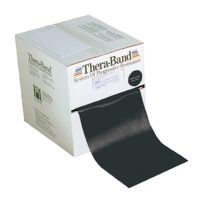
Theraband Resistance Bands Per YARD
₱385.00
Buy on Lazada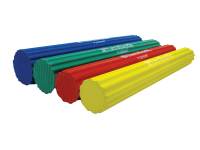
Theraband Flex Bars
₱1,680.00
Buy on Lazada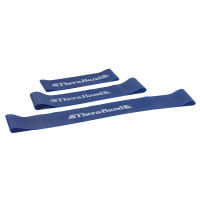
TheraBand™ Resistance Loop 18
₱780.00
Buy on Lazada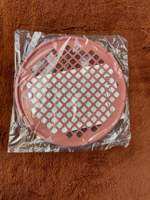
Power Web Exerciser
₱4,600.00
Buy on Lazada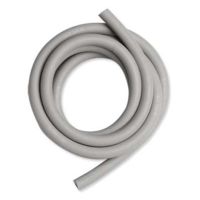
TheraBand Resistance Tubes Professional Latex Elastic Tubing Upper & Lower Body Core Exercise Physical Therapy Lower Pilates at-Home Workouts & Rehab 2m (Option Select)
₱1,313.00₱1,502.00
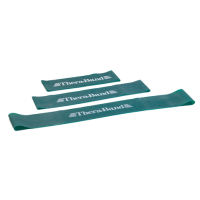
TheraBand™ Resistance Loop 12
₱545.00
Buy on Lazada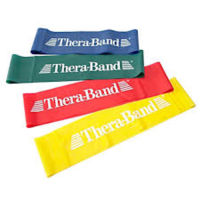
TheraBand™ Resistance Loop 8
₱560.00
Buy on Lazada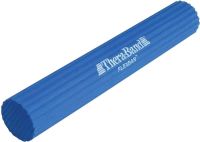
TheraBand FlexBar Resistance Bar For Improving Grip Strength Tennis Elbow Golfers Elbow Tendonitis (Option Select)
₱2,887.00₱3,303.00
About TheraBand
TheraBand is an American rehabilitation, exercise, and fitness brand best known for its elastic resistance bands and tubing. The brand is particularly associated with physical therapy, sports rehabilitation, strength training, mobility work, and progressive resistance exercise. It is part of the Performance Health family of brands and traces its origins to The Hygenic Corporation in Akron, Ohio.1
The brand is historically significant because it helped establish progressive elastic resistance as a mainstream rehabilitation and exercise modality. Its characteristic color-coded resistance system became one of the most recognizable features of resistance-band training.2
Quick facts
| Category | Information |
|---|---|
| Brand | THERABAND / TheraBand |
| Origin | United States |
| Introduced | 1978 |
| Original company | The Hygenic Corporation |
| Original location | Akron, Ohio |
| Parent/family | Performance Health |
| Core category | Elastic resistance and rehabilitation |
| Best known for | Resistance bands and resistance tubing |
| Primary users | Physical therapists, clinicians, athletes, trainers, fitness users, consumers |
| Major innovation | Progressive, color-coded resistance system |
| Current positioning | Rehabilitation, recovery, strength, mobility, fitness and wellness |
The 1978 introduction date is documented in company and SEC materials as the launch of the first progressive-resistance TheraBand offering. Some historical accounts trace development work back to the mid-1970s, so 1978 is best treated as the commercial introduction of the TheraBand product rather than necessarily the beginning of every stage of its development.1
Origins
TheraBand’s story is closely connected to The Hygenic Corporation, a rubber-products manufacturer based in Akron, Ohio.
Hygenic had originally operated in rubber and dental-related products. In the 1970s, the company became involved in adapting elastic material for therapeutic exercise. According to historical accounts, clinicians approached Hygenic with the idea of using material derived from its dental-dam products for physical therapy. This eventually resulted in the flat elastic resistance band that became TheraBand.3
In 1978, Hygenic introduced TheraBand as a progressive resistance band system. Rather than simply being an elastic strip, the concept incorporated different resistance levels, allowing exercises to become progressively more difficult as a patient recovered or became stronger.1
That concept became central to the brand’s identity.
Design purpose and advantages
Traditional strength training often relies on weights, machines, or other equipment that can be impractical for patients recovering from injury.
Elastic resistance offered several advantages:
- Lightweight and portable
- Relatively inexpensive
- Usable in clinics or at home
- Capable of providing resistance through a range of movement
- Suitable for both upper- and lower-body exercises
- Easy to incorporate into rehabilitation programs
- Available in multiple resistance levels
TheraBand therefore positioned elastic resistance as a bridge between clinical rehabilitation and conventional fitness training.
Its products could be used by a therapist with a patient and then incorporated into the patient’s home-exercise program.
Color-coded resistance system
Perhaps the most recognizable feature of TheraBand is its color-coded resistance progression.
The system associates different colors with progressively greater resistance. Importantly, TheraBand describes this as more than simply a convenient color scheme: its Trusted Progression™ System is based on defined resistance levels and pull-force testing.2
The current system contains eight levels, progressing from very light resistance to maximum resistance. Performance Health currently describes the range as approximately 2.4 lb (1.3 kg) to 14.2 lb (6.5 kg) for the specified progression system.2
A simplified representation is:
Extra Thin → Thin → Medium → Heavy → Extra Heavy → Special Heavy → Super Heavy → Max
The exact resistance experienced during an exercise depends on factors such as the amount of stretch and how the band is being used, so the colors should not be interpreted as equivalent to a fixed-weight dumbbell.
This progression is one of the reasons TheraBand became particularly useful in physical therapy: a clinician could select an appropriate resistance and subsequently move a patient to a higher level as strength and function improved.
Expansion from therapy to global brand
Initially, TheraBand was strongly associated with physical and occupational therapy.
Its customer base expanded over time to include:
- Physical therapists
- Occupational therapists
- Athletic trainers
- Sports medicine professionals
- Chiropractors
- Rehabilitation clinics
- Hospitals
- Professional and amateur athletes
- Personal trainers
- Fitness enthusiasts
- Home users
Performance Health describes TheraBand as a worldwide leader in progressive elastic resistance products and says the brand was created by clinicians for clinicians.2
The brand’s international expansion also began relatively early. Company materials document sales of TheraBand products in Europe beginning through international distributors, with international operations subsequently becoming a more deliberate growth channel.1
TheraBand Academy and evidence-based approach
An important part of the brand’s identity has been its relationship with clinical research and professional education.
In 1999, the organization launched the Performance Health Academy and a scientific advisory structure to strengthen research, education, and evidence-based practice.1
The philosophy was essentially:
Don’t just sell resistance equipment; provide clinicians with a system for using it.
This helped distinguish TheraBand from generic elastic exercise bands.
The brand has consequently produced exercise programs, clinician resources, resistance guides, educational materials, and research-oriented resources alongside its physical products.2
Product evolution
Although resistance bands remain the product most strongly associated with TheraBand, the brand has expanded substantially.
Its portfolio has included:
Resistance bands
The classic flat elastic bands are the product that made the brand famous.
They are used for exercises involving:
- Shoulders
- Arms
- Chest
- Back
- Hips
- Knees
- Ankles
- Core
- General strength and conditioning
Resistance tubing
Tubing provides a somewhat different form factor from flat bands and can be combined with handles, anchors, cuffs, and other accessories.
CLX bands
THERABAND CLX is a multi-loop resistance band design. Instead of one continuous flat strip, it incorporates consecutive loops that can provide different grip and exercise configurations. The company describes it as a next-generation resistance product designed to make transitions and exercise variations easier.4
Non-latex resistance products
TheraBand also offers non-latex alternatives, allowing people who cannot or do not want to use natural-rubber latex products to participate in elastic-resistance exercise.2
High-resistance products
The brand expanded beyond traditional rehabilitation-level resistance into products intended for more demanding strength training.
FlexBar
The THERABAND FlexBar is a flexible resistance bar used for strengthening and rehabilitation exercises, particularly involving the upper extremities.
Kinesiology tape
TheraBand has also entered the kinesiology-tape category, including products incorporating application guidance technologies.4
Hand and rehabilitation products
The broader portfolio has included hand exercisers, foot rollers, massage products, and other rehabilitation accessories.4
Major milestones
A simplified timeline looks like this:
1925 — Hygenic Corporation founded
The company behind the eventual TheraBand brand traces its history to Hygenic Corporation, founded in Akron, Ohio.5
Mid-1970s — Development of therapeutic elastic resistance
Hygenic began working with clinicians on adapting elastic material for therapeutic exercise. Historical accounts identify this period as the development phase preceding the commercial TheraBand launch.3
1978 — TheraBand introduced
The first progressive-resistance TheraBand offering was introduced, establishing the modern brand.1
1980s — Expansion
TheraBand became increasingly established within physical therapy and rehabilitation, while international distribution began expanding.
1990s — Education and professional adoption
The brand strengthened its relationship with clinicians and professional education. In 1999, the Performance Health Academy and scientific advisory activities were established.1
2000s — Product diversification
The portfolio expanded beyond the original flat band into tubing, accessories, and additional rehabilitation and exercise products.
2006 — Broader Performance Health platform
The merger and acquisition activity involving Hygenic, TheraBand, Biofreeze and related businesses helped create the broader Performance Health platform.1
2010s — Consumer expansion
TheraBand increasingly moved beyond professional clinics and became more accessible to ordinary consumers through retail channels. In 2016, for example, the brand announced a major retail expansion through Rite Aid stores in the United States.4
Today
TheraBand operates as a global rehabilitation and exercise brand within the Performance Health portfolio, with products spanning elastic resistance, rehabilitation, mobility, fitness, and related categories.2
Ownership and corporate structure
One potentially confusing aspect of TheraBand’s history is that TheraBand is a brand, not simply the name of the corporation that manufactures everything bearing the name.
The brand originated with The Hygenic Corporation.
Over the years, corporate ownership and organizational structures changed. Hygenic’s acquisition of Performance Health and subsequent corporate developments eventually brought TheraBand into the broader Performance Health organization.1
Current Performance Health materials identify THERABAND as one of its brands and provide the brand’s product and educational resources.2
Differentiation from generic resistance bands
Understanding the distinction between TheraBand and generic alternatives is central to understanding the brand.
A generic resistance band is essentially an elastic exercise product.
TheraBand built a brand around a standardized progression system and clinical application of elastic resistance.
Its differentiation historically comes from several factors:
- Clinical heritage — developed for rehabilitation rather than purely recreational exercise.
- Progressive resistance — designed around different levels of resistance.
- Color coding — makes progression easier to communicate.
- Testing and validation — the company emphasizes pull-force testing and product validation.
- Professional education — extensive clinician-oriented resources accompany the products.
- Product ecosystem — bands, tubing, loops, bars, tape, accessories, and rehabilitation tools.
- Brand recognition — decades of use in physical therapy and sports medicine.
Performance Health specifically describes its resistance system as the Trusted Progression™ System, emphasizing controlled resistance levels and manufacturing validation.2
Role in physical therapy
TheraBand has become particularly influential in physical rehabilitation.
A typical rehabilitation program might use progressively stronger elastic resistance as a patient’s capacity improves.
For example:
Very light band
↓
Early movement / activation
↓
Light resistance
↓
Basic strengthening
↓
Medium resistance
↓
Functional strengthening
↓
Heavy resistance
↓
Advanced strengthening
↓
Higher resistance
↓
Return to sport / higher-level conditioning
This makes the product useful not only as exercise equipment but also as a progression tool.
Research has examined elastic resistance exercise for outcomes including strength, balance, mobility, and functional performance; however, the effectiveness of any particular exercise depends on the program, patient, condition, and execution rather than simply on the brand of band.
Role in sports and fitness
TheraBand eventually expanded well beyond traditional clinical rehabilitation.
Athletes use elastic resistance for:
- Warm-ups
- Activation exercises
- Shoulder conditioning
- Hip and glute strengthening
- Mobility work
- Injury-prevention programs
- Strength training
- Rehabilitation following injury
- Sport-specific conditioning
For general fitness users, bands are attractive because they are portable and require little space.
A person can perform a substantial number of exercises with a band without having a conventional home gym.
Brand philosophy
TheraBand’s current brand messaging centers on:
“Proven Science. Trusted Performance.”2
Its broader philosophy can be summarized as:
Clinical knowledge + measurable resistance progression + practical exercise equipment.
This is why the brand tends to market itself differently from lifestyle-oriented fitness brands.
A typical fitness brand might focus primarily on:
performance, physique, workouts, or athletic achievement.
TheraBand historically emphasizes:
rehabilitation, recovery, progression, clinical confidence, and functional movement.
It now addresses both sides of the spectrum.
Brand identity
TheraBand has several visual and conceptual associations that have become strongly connected to the brand.
The colors
The resistance-band colors are perhaps the most famous.
Rather than treating color purely as branding, TheraBand uses it as part of its resistance-level communication system.2
The THERABAND name
The name combines “thera-”, suggesting therapy, with “band,” directly describing its original product category.
Clinical appearance
The brand’s visual identity historically leans toward a medical/rehabilitation aesthetic rather than the aggressive aesthetic often associated with bodybuilding.
Professional credibility
TheraBand’s association with physical therapists, rehabilitation professionals, and athletic trainers is a central component of its brand equity.
Competition
TheraBand operates in a large resistance-training market containing:
- Generic resistance bands
- Other physical-therapy equipment manufacturers
- Sports-training brands
- Home-fitness companies
- Specialty rehabilitation brands
- Low-cost online resistance-band manufacturers
Its strongest competitive advantage is therefore not simply that it sells elastic bands.
Elastic bands themselves are relatively simple products.
TheraBand’s historical advantage is its combination of:
brand recognition + clinical heritage + resistance progression + professional adoption + educational ecosystem.
That is also why its products can command a premium over completely generic resistance bands.
Patents and intellectual property
TheraBand’s product history also intersects with exercise-equipment patents.
For example, patents and patent applications from the broader elastic-resistance industry explicitly reference TheraBand products and technologies, including tubing and band configurations.
However, it is important not to equate “TheraBand” with every resistance-band invention. Elastic resistance predates the brand by many decades. Historical research identifies elastic resistance devices going back to the late 19th and early 20th centuries.
TheraBand’s historical contribution was particularly important in commercializing and systematizing progressive elastic resistance for rehabilitation and exercise.
Historical significance
From a business and sports-medicine perspective, TheraBand is interesting because it helped transform a relatively simple material—elastic rubber—into a structured rehabilitation system.
Before the widespread adoption of elastic resistance products, rehabilitation exercise frequently relied on weights, springs, pulleys, and other equipment.
TheraBand demonstrated that a lightweight elastic material could provide a practical progression of resistance suitable for clinical environments and home exercise.
The result was a product that could effectively travel through the rehabilitation process:
clinic → home → fitness → sport
That versatility became a major part of the brand’s success.
TheraBand today
As of 2026, THERABAND remains positioned by Performance Health as a major global brand in elastic resistance and rehabilitation products. Its current portfolio includes latex and non-latex resistance bands, high-resistance products, CLX bands, resistance tubing, kinesiology tape, FlexBar, and related products.2
The company continues to emphasize its Trusted Progression™ System, clinician-oriented development, testing, and evidence-based exercise resources.2
So, although many people now encounter TheraBand simply as an exercise-band brand, its historical identity is considerably broader:
TheraBand is essentially a rehabilitation brand that helped turn elastic resistance into a standardized, progressive exercise methodology—and subsequently expanded that methodology into mainstream fitness and wellness.
Summary
TheraBand is a U.S.-origin rehabilitation and fitness brand founded around the commercialization of progressive elastic resistance, best known for its color-coded resistance bands and tubing, and historically influential in bringing elastic resistance from physical-therapy clinics into mainstream exercise and sports training.1