Shop on Lazada
ThinkRider products
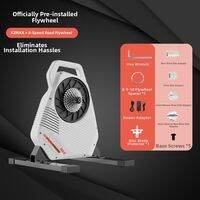
ThinkRider | Smart Direct Drive Indoor Cycling Trainer for Road and Mountain Bikes with Self-developed DER Dynamic Electromagnetic Power Meter for Realistic Power Training
₱34,486.89₱51,981.04
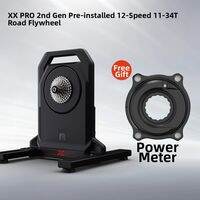
ThinkRider XX PRO II Smart Direct Drive Indoor Cycling Trainer Power Self-Generation Cycling Performance Tracker for Bike GPS Speedometer Compatibility User-Friendly Design High-Quality Material
₱44,979.29₱126,392.77
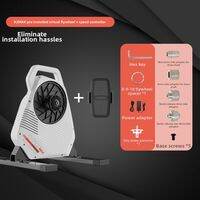
ThinkRider X2 MAX Smart Direct Drive Bike Trainer Indoor Cycling Training System for Road and Mountain Bikes Power Training Compatible with Apps Realistic Riding Experience Easy to Use
₱34,994.91₱51,113.14
ThinkRider | Indoor Folding Sweat-Resistant Cycling Mat
₱2,887.33
Buy on Lazada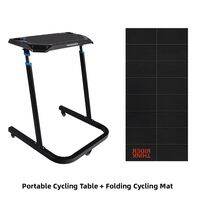
ThinkRider | Smart Adjustable Bike Trainer Stand
₱11,208.61
Buy on Lazada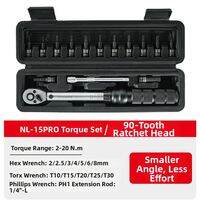
ThinkRider | Precision Torque Wrench Set Preset Hex Ratchet
₱3,133.59₱4,031.81
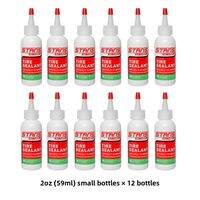
ThinkRider | Self-Sealing Tubeless Tire Sealant
₱4,100.60₱5,714.62
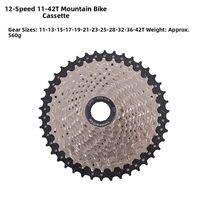
ThinkRider | 12-Speed Radiant Cassette Freewheel 11-34T
₱2,941.87
Buy on LazadaAbout ThinkRider
ThinkRider is a Chinese cycling-technology brand that manufactures smart indoor bike trainers, cycling power meters, bike computers, smart bikes, and connected training software. Established in 2015 and headquartered in Wuxi, Jiangsu, China, the company focuses on making data-driven cycling training accessible to everyday riders rather than restricting advanced technology to professional athletes.1 Its current brand positioning is encapsulated by the slogan “For A Better Ride.”2 The official website is thinkrider.com.
Overview
| Category | Information |
|---|---|
| Brand | ThinkRider |
| Industry | Cycling technology / sports technology |
| Founded | 2015 |
| Headquarters | Wuxi, Jiangsu, China |
| Core market | Indoor cycling and cycling training |
| Main products | Smart trainers, power meters, bike computers, smart bikes, training software |
| Connectivity | Bluetooth, ANT+ and related cycling protocols |
| Training ecosystem | ThinkRider app, THINKRIDER TOOLS, WORKOUTS, POWERFUN |
| Major competitors | Wahoo, Garmin, Elite, Tacx, Zwift ecosystem, Magene and other smart-training brands |
| Official positioning | “For A Better Ride” |
ThinkRider identifies primarily as a supplier of bike trainers and emphasizes durability, precision, customer-focused innovation, and after-sales support in its product development.3
History
The development of ThinkRider parallels the growth of the indoor cycling and smart training market in China.
2015: Foundation
ThinkRider was established in 2015 with an initial focus on professional smart sports-training equipment. The company’s stated original objective was to broaden access to professional, data-driven cycling training for a wider demographic of riders.4
2016: X3 smart trainer
In 2016, ThinkRider introduced the X3, described by the company as China’s first smart bike trainer. This launch marked the beginning of its specialization in electronically controlled indoor cycling equipment.5
2017: Virtual cycling
The company launched ThinkRider Alliance in 2017, an online virtual riding platform. This initiative signalled a strategic shift from pure hardware sales toward developing a connected software ecosystem integrated with its trainers.6
2019: International expansion
By 2019, ThinkRider had expanded into international markets, increasing its brand visibility and market presence across multiple regions.7
2022: Expansion beyond cycling
ThinkRider diversified beyond cycling trainers in 2022 by entering the rowing technology sector, developing what it describes as China’s first digital rowing ergometer.8
2023: Smart bikes and rowing software
In 2023, the company introduced a smart fitting power bike alongside POWERFUN, its professional rowing software platform.9
2025: Power-meter expansion
ThinkRider expanded its cycling measurement technology portfolio with the launch of a dedicated Power Meter. The stated goal was to make accurate power measurement accessible across various levels of cycling participation, from recreational riders to competitive athletes.10
2025–2026: Global brand development
The company increased its international profile through appearances at major industry events. ThinkRider made its debut at Eurobike in 2025, followed by an exhibition at the Shanghai International Bike Expo in 2026 where it introduced the XXBIKE Smart Power Bike.11
Product categories
While best known for smart bike trainers, ThinkRider maintains a broader product ecosystem.
Smart bike trainers
Smart trainers represent ThinkRider’s core product category. These devices replace or interface with a bicycle’s rear wheel to electronically control resistance and transmit cycling data, including power, speed, cadence, resistance levels, training metrics, and virtual riding information. ThinkRider states that its trainers support Bluetooth and ANT+ protocols and are compatible with mainstream cycling applications such as Zwift and other third-party platforms.12
The current lineup includes models such as:
- XX PRO
- XX PRO H
- X2 MAX
- X7
- X7 PRO
- Other X-series trainers
Specifications vary significantly between models. For instance, the X7/X7 PRO family features electromagnetic resistance and a maximum power output of up to 2,500 W according to listings on ThinkRider’s European site.13
Power meters
ThinkRider entered the standalone cycling power meter market in 2025 with a philosophy centred on democratizing power data. Unlike smart trainers that measure power exclusively during indoor sessions, bicycle power meters allow riders to collect performance data while riding outdoors. This expansion enables ThinkRider to address both indoor training and outdoor performance monitoring segments.20
Smart bikes
Moving beyond traditional trainers, ThinkRider has developed complete indoor cycling machines. The XXBIKE Smart Power Bike was unveiled at the Shanghai International Bike Expo in 2026 as the product’s first public introduction.21 Smart bikes differ from conventional trainers because they integrate the drivetrain, resistance system, and electronic measurement equipment into a single unit, eliminating the need for users to mount their own bicycles. This places ThinkRider in direct competition with smart bike manufacturers such as Wahoo, Tacx/Garmin, and Elite.
Product naming system
ThinkRider has historically employed a model-number-based naming convention.
X-series
The X-series encompasses many of the company’s traditional smart trainer products, including the X2, X2 MAX, X3, X5, X7, and X7 PRO. While higher-numbered models generally indicate more advanced specifications, model numbers alone do not determine superiority, as different generations and variants carry distinct technical profiles.
XX-series
More recent products fall under the XX family. The official store currently highlights the XX PRO Foldable Smart Trainer and XX PRO H Model Smart Trainer. The XX series represents ThinkRider’s newer generation of smart training hardware, emphasizing enhanced performance and usability.
Smart trainer technology
ThinkRider’s core value proposition involves converting a standard bicycle into a connected indoor training system. A compatible bicycle is mounted on the trainer, which measures rider output and adjusts resistance based on software commands. This creates a signal chain from the bicycle through the trainer via Bluetooth or ANT+ to a computer, tablet, or phone running cycling software.
ThinkRider states that its trainers support both ANT+ and Bluetooth connectivity. According to the company’s FAQ, the trainer range is compatible with a wide proportion of road and mountain bikes, supporting common quick-release and thru-axle standards.14
Software ecosystem
ThinkRider operates as both a hardware manufacturer and a software developer, maintaining several proprietary applications.
ThinkRider App
The free ThinkRider cycling application is designed around virtual riding experiences. According to the company, the application offers more than 30,000 routes, 3D route visualization, online multiplayer racing, training courses, and global route exploration. It supports smart trainers using standard ANT+ FEC and Bluetooth protocols. The application is available for Windows, Android, and iOS, though ThinkRider notes it is not compatible with macOS.15 The legacy platform offered three principal riding modes: Routes, Race, and Training.16
THINKRIDER TOOLS
THINKRIDER TOOLS serves as a technical utility rather than a virtual cycling platform. It is intended for firmware updates, trainer configuration, calibration, device management, and data backup. ThinkRider states the software supports products including the XX Pro, XX, X2, X2 MAX, X5, and X7, as well as certain bike computers.17
WORKOUTS
The WORKOUTS platform provides structured training content. ThinkRider states it contains more than 3,000 training courses, comprising both pre-built plans and customizable workouts.18
POWERFUN
POWERFUN is positioned as professional training software associated with structured workouts and rowing-related training technology. It provides thousands of predefined training courses and plans while allowing users to create custom programmes.19 This software illustrates ThinkRider’s strategy of building an integrated ecosystem where hardware, software, and training data function cohesively.
Target customers
ThinkRider products address multiple segments of the cycling market:
- Casual cyclists: Riders seeking indoor alternatives when weather or schedule constraints prevent outdoor riding.
- Fitness riders: Users primarily focused on exercise and structured indoor workouts.
- Enthusiasts: Cyclists engaged with FTP, power metrics, cadence, training zones, performance improvement, and data analysis.
- Competitive cyclists: Serious riders utilizing high-powered direct-drive trainers and structured training software for race preparation.
- Cycling studios and businesses: ThinkRider promotes B2B collaboration, indicating its products are not exclusively aimed at individual consumers.22
Compatibility and interoperability
Interoperability is a significant consideration for smart trainer purchasers. ThinkRider states that its trainers work with mainstream cycling software and support common communication standards including Bluetooth and ANT+.23 This means ThinkRider equipment is not locked to proprietary software; users may pair a ThinkRider trainer with third-party platforms such as Zwift, leveraging those ecosystems’ communities and training experiences.
Competitive landscape
ThinkRider operates in a competitive global market. Its positioning relative to major competitors is outlined below:
| Brand | Main strength | General positioning |
|---|---|---|
| ThinkRider | Smart trainers + value + growing ecosystem | Value-oriented smart cycling technology |
| Wahoo | Smart trainers, ecosystem, established global brand | Premium enthusiast |
| Garmin/Tacx | Training ecosystem + electronics | Premium |
| Elite | Long-established cycling equipment | Broad cycling/training market |
| Magene | Sensors, power meters, trainers | Value/performance |
| Zwift | Virtual cycling software | Software/platform |
| Saris | Indoor trainers and cycling equipment | Established trainer manufacturer |
ThinkRider’s product strategy has broadened beyond simple price competition to encompass trainers, power measurement, smart bikes, and integrated software.
Brand philosophy
ThinkRider’s messaging centres on three primary concepts:
Accessibility
The company consistently emphasizes making professional-level data and training available to a broader cyclist demographic. Its 2025 power meter announcement explicitly framed accurate power measurement as a capability that should not be restricted to professional cyclists.24
Data
ThinkRider products are oriented around measurable performance metrics spanning power, cadence, speed, training, and analysis. This positions the company as a cycling technology firm rather than a traditional bicycle accessory brand.
Connected training
ThinkRider pursues integration between hardware and software. Its ecosystem connects bicycles through trainers, power meters, or smart bikes via Bluetooth and ANT+ to either ThinkRider or third-party software, generating comprehensive training data.
Manufacturing and location
ThinkRider is based in Wuxi, Jiangsu Province, China, with a listed address on Zhujiang Road in Wuxi’s Xinwu District.25 Wuxi forms part of China’s major manufacturing and technology hub. The company’s Chinese origin is relevant to its market positioning, as it competes internationally while maintaining product development and manufacturing operations in China.
International presence
ThinkRider has progressively built its international footprint since beginning expansion around 2019. A notable milestone was its Eurobike 2025 debut, followed by continued international marketing and product promotion. The existence of international websites and localized online store versions reflects ongoing efforts to operate beyond China’s domestic market.
Reputation and recognition
Within the cycling community, ThinkRider is most strongly associated with smart indoor bike trainers. The brand has built its reputation on providing direct-drive smart trainers featuring electronic resistance, power measurement, ANT+ and Bluetooth connectivity, virtual cycling compatibility, relatively high power capabilities, and multiple price tiers. Current catalog offerings range from the X2 MAX through newer XX PRO models and higher-performance X-series trainers.
Strengths
- Hardware and value: ThinkRider’s primary appeal lies in combining smart trainer functionality with relatively competitive pricing.
- Broad compatibility: Support for common bicycle standards and Bluetooth/ANT+ protocols enables use within a wider ecosystem.
- Product range: The company now covers substantially more than a single trainer category.
- Software integration: Proprietary virtual riding and workout software provides greater control over the overall user experience.
- Increasing international visibility: Participation in Eurobike and other cycling events demonstrates effort to establish ThinkRider as a global brand.
Considerations for buyers
- Brand maturity: Compared with companies such as Garmin, Wahoo, and Elite, ThinkRider is a younger international brand, having been founded in 2015.
- Software ecosystem: While ThinkRider maintains proprietary software, platforms such as Zwift possess larger global communities and more mature ecosystems.
- Model complexity: The numerous X-series variants and generations can make comparisons difficult. Buyers should verify exact model specifications rather than assuming higher numbers indicate newer or superior products.
- Regional support: Warranty coverage, replacement parts availability, firmware support, and customer service may vary depending on the country and seller. For premium-priced trainers, these factors can be as important as headline specifications.
Brand evolution
ThinkRider has evolved from a smart bike trainer manufacturer into a connected indoor cycling ecosystem and, more recently, a broader cycling performance technology company. This progression can be summarized as follows:
- 2015: Smart sports equipment
- 2016: Smart trainers
- 2017: Virtual cycling software
- 2019: International expansion
- 2022–23: Rowing and smart bike technology
- 2025: Power meters and international events
- 2026: XXBIKE and broader smart cycling ecosystem
Summary
ThinkRider is a Wuxi, China-based cycling technology brand founded in 2015 that specializes in smart indoor bike trainers and connected cycling equipment. The company has developed from a trainer manufacturer into a broader ecosystem encompassing smart trainers, virtual cycling software, structured workouts, bike computers, power meters, and smart power bikes. Its core philosophy centres on making data-driven cycling training more accessible by combining measurable performance with connected indoor riding. Products support technologies such as Bluetooth and ANT+ and function with both third-party cycling platforms and ThinkRider’s proprietary software.
References
- About us – Thinkrider Bike Trainer
- 关于我们 – Thinkrider Bike Trainer
- Thinkrider Bike Trainer
- THINKRIDER Power Meter: Launching Oct 8, 2025(For Domestic Market) – Thinkrider Bike Trainer
- News – Thinkrider Bike Trainer
- ThinkRider at Shanghai Bike Expo 2026: The XXBIKE Debut and a Celebrat – Thinkrider Bike Trainer
- FAQs – Thinkrider Bike Trainer
- Home –
- Introduction to THINKRIDER-Related Software – Thinkrider Bike Trainer
- RIDER AROUND THE WORLD-ThinkRider
- ThinkRider X7 PRO Review: Responsive but… – Cyclists Hub
- thinkrider智騎訓練台A1 ,X5 neo ,X7 -pro究竟有什麼不同? – Mobile01
- Über uns – Thinkrider Bike Trainer
- RIDER AROUND THE WORLD-ThinkRider
- Thinkrider Bike Trainer
- Thinkrider Bike Trainer
- RIDER AROUND THE WORLD-ThinkRider
- RIDER AROUND THE WORLD-ThinkRider
- Thinkrider Bike Trainer
- ThinkRider X7 PRO SMART TRAINER –
- ThinkRider Global | 领英
- Thinkrider X7 Pro Smart Trainer – Supreme Bikes PH
- Thinkrider A1 Smart Trainer – Supreme Bikes PH
- Thinkrider A1 Smart Trainer – Supreme Bikes Verdana
- ThinkRider Global – Products, Competitors, Financials, Employees, Headquarters Locations