Shop on Lazada
Thomas & Friends products
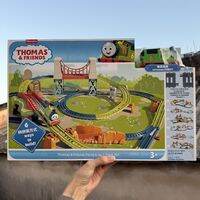
Electric Toy Train
₱3,649.00₱7,213.00
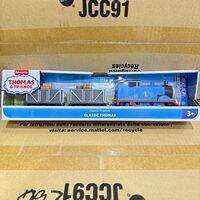
Thomas & Friends Electric Train Diecast Nia
₱1,047.00
Buy on Lazada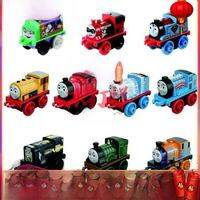
Thomas Inertia Mini Train Model Pocket Toy
₱1,424.00
Buy on Lazada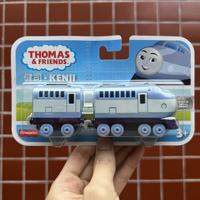
Alloy Thomas and Friends Handcart
₱1,693.00₱3,277.00
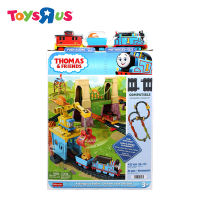
Thomas and Friends A Bridge to Sodor Playset
₱3,500.00₱4,499.00
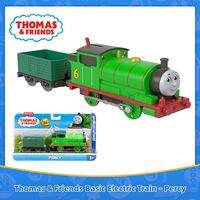
Thomas & Friends | Thomas & Friends Themed Electric Train Toy Educational
₱1,335.00
Buy on Lazada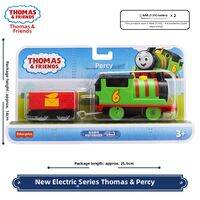
Thomas & Friends | Electric Toy Train Set for Boys
₱708.00₱1,810.00
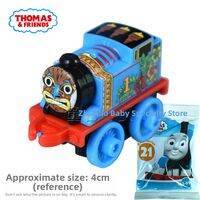
Mini Thomas Train Manual Pocket Toy Blind Bag
₱568.00₱665.00
About Thomas & Friends
Overview
Thomas & Friends is a British children’s media franchise centred on Thomas the Tank Engine, an anthropomorphic blue steam locomotive, and his colleagues on the fictional Island of Sodor. The property originated from The Railway Series books written by the Reverend Wilbert Awdry and later continued by his son Christopher Awdry. Producer Britt Allcroft adapted the stories for television, with the first series premiering in 1984.1
Thomas & Friends has since developed into one of the world’s most recognised children’s entertainment brands, encompassing television, books, toys, films, video games, live events, theme-park attractions and other merchandise. Mattel has owned the franchise since 2012.1
| Category | Information |
|---|---|
| Brand | Thomas & Friends |
| Original name | Thomas the Tank Engine & Friends |
| Created by | Wilbert Awdry; adapted for television by Britt Allcroft |
| Based on | The Railway Series |
| Original author | Rev. Wilbert Awdry |
| Later author | Christopher Awdry |
| Country of origin | United Kingdom |
| Original setting | Island of Sodor |
| Main character | Thomas the Tank Engine |
| Original television debut | 9 October 1984 |
| Original television series | 24 series, 584 episodes |
| Original television run | 1984–2021 |
| Current owner | Mattel |
| Major reboot | Thomas & Friends: All Engines Go |
| Major live attraction | Day Out with Thomas |
| First theatrical film | Thomas and the Magic Railroad (2000) |
The original television series comprised 24 series and 584 episodes, running from 9 October 1984 until 20 January 2021.
History
The Railway Series
The origins of Thomas & Friends date to the early 1940s, when Wilbert Awdry created railway stories for his young son Christopher. These stories were eventually developed into The Railway Series, with the first volume published in 1945.
Thomas himself did not appear in the first book; he made his debut in the second volume, Thomas the Tank Engine, published in 1946.1
The books presented railways as a miniature society populated by engines with distinct personalities. Although the engines could speak and express emotions, the narratives generally treated railway operations, engineering and rules with considerable realism.
The fictional Island of Sodor became the principal setting for the stories. Its railways, towns, harbours, industries and landscapes formed the foundation for the world later depicted in the television series.
Wilbert Awdry wrote the first 26 volumes of The Railway Series, after which his son Christopher continued the series.
Development of the television series
Producer Britt Allcroft discovered The Railway Series in the late 1970s and became interested in adapting the stories for television.
The resulting programme, originally titled Thomas the Tank Engine & Friends, premiered in the United Kingdom on 9 October 1984.
The early series was particularly notable for its use of live-action model animation. Physical scale models of locomotives, coaches, buildings and landscapes were filmed on elaborate miniature sets.
The combination of realistic railway models, expressive faces and narration became one of the defining characteristics of the franchise.
The Television Series
Thomas the Tank Engine & Friends
The original series initially adapted stories from The Railway Series. Over time, however, the television production increasingly introduced original stories and characters.
The programme achieved international success and was eventually broadcast in numerous countries and languages. The first episode was narrated by Ringo Starr, who helped establish the distinctive storytelling style of the early series.
Other well-known narrators and voice performers included:
- Ringo Starr
- George Carlin
- Alec Baldwin
- Michael Angelis
- Michael Brandon
- Pierce Brosnan
- Mark Moraghan
The original series eventually transitioned from traditional physical models towards computer-generated animation. It concluded in January 2021 after 24 series.
The World of Sodor
The fictional Island of Sodor is the central setting of Thomas & Friends.
Sodor is portrayed as an island located between England and the Isle of Man, although its geography and railway system are entirely fictional.
The island contains:
- Railways
- Villages and towns
- Farms
- Harbours
- Quarries
- Mines
- Factories
- Docks
- Bridges
- Stations
- Mountains and forests
- Beaches and coastal areas
The primary railway is the North Western Railway, whose engines perform passenger, freight, construction and other railway duties.
The railway system allows the stories to combine everyday work with adventure. A seemingly simple job—such as delivering coaches, transporting freight or repairing a line—can become the basis for an entire story.
Thomas the Tank Engine
Thomas is the central character and namesake of the franchise.
He is a small blue tank locomotive with the number 1 painted on his side. Thomas is characterised as energetic, enthusiastic, ambitious and sometimes impatient.
His railway duties have changed throughout the franchise, but he is especially associated with branch-line passenger service and his two coaches, Annie and Clarabel.
Thomas’s personality is one of the franchise’s most important storytelling elements. He wants to prove that he is a useful and important engine, which sometimes leads him to make mistakes.
The character originally appeared in The Railway Series in 1946. His design was inspired by real railway locomotives, particularly the LB&SCR E2 class.
Major Characters
Thomas is surrounded by a large ensemble of locomotives and vehicles.
Steam Team
Some of the most recognisable engines include:
- Thomas — the blue No. 1 tank engine and principal protagonist.
- Edward — an older, kind and knowledgeable blue engine.
- Henry — a green mixed-traffic engine.
- Gordon — a large blue express locomotive known for his speed and strength.
- James — a red mixed-traffic engine who takes pride in his appearance.
- Percy — a small green saddle-tank engine and one of Thomas’s closest friends.
- Emily — a dark-green Stirling Single-inspired engine.
- Nia — an orange Kenyan tank engine introduced as part of the later Steam Team.
- Rebecca — a yellow express engine introduced during the later era.
Other important railway characters
Other notable characters include:
- Toby — a brown tram engine.
- Duck — a green Great Western engine.
- Donald and Douglas — Scottish twin engines.
- Oliver — a small Great Western tank engine.
- Rosie — a small red tank engine.
- Bill and Ben — mischievous twin engines working around the China Clay works.
- Diesel — one of the franchise’s best-known diesel characters.
- Salty — a diesel engine associated with the docks.
- Spencer — a streamlined private engine and frequent rival of Thomas.
Sir Topham Hatt
One of the most important human characters is Sir Topham Hatt, commonly known as the Fat Controller.
He is the senior authority responsible for the North Western Railway and frequently supervises the engines.
Sir Topham Hatt represents railway management and discipline within the stories. The engines are expected to perform their jobs properly, follow instructions and avoid causing unnecessary delays.
His famous emphasis on being a “Really Useful Engine” became one of the franchise’s defining concepts.
Themes and Educational Elements
Although Thomas & Friends is primarily entertainment for children, its stories traditionally contain recurring lessons.
Common themes include:
- Friendship
- Cooperation
- Responsibility
- Honesty
- Patience
- Hard work
- Respect
- Consequences of mistakes
- Helping others
- Overcoming jealousy
- Accepting differences
- Learning from experience
A typical story involves an engine receiving a task, encountering a problem, making a decision and ultimately learning something from the consequences.
The railway setting also introduces young viewers to concepts such as:
- Steam locomotives
- Diesel locomotives
- Passenger trains
- Freight trains
- Railway stations
- Signals
- Switches and points
- Bridges
- Tunnels
- Railway maintenance
- Industrial transportation
Ownership and Corporate History
The franchise has passed through several corporate owners.
Britt Allcroft era
Britt Allcroft was responsible for bringing The Railway Series to television and establishing Thomas as a major international children’s property.
Gullane Entertainment
The franchise subsequently became associated with Gullane Entertainment, which expanded Thomas & Friends internationally and developed its merchandising and licensing business.
HIT Entertainment
Gullane was acquired by HIT Entertainment in 2002. Thomas became one of HIT’s flagship children’s properties.
Mattel
In 2012, Mattel acquired HIT Entertainment, bringing Thomas & Friends into Mattel’s portfolio of children’s entertainment brands.
Thomas & Friends remains a Mattel-owned property. Mattel currently markets Thomas products including trains, track sets, wooden railway products and other children’s toys.3
Thomas & Friends: All Engines Go
After the conclusion of the original series in 2021, Mattel launched a major reboot called Thomas & Friends: All Engines Go.
Unlike the original series, All Engines Go uses a modern 2D/3D hybrid animation style and significantly changes the visual presentation, character designs and storytelling format.
The reboot focuses on Thomas and his friends as younger characters and places greater emphasis on energetic adventures, friendship and comedy.
It represents a substantial departure from the traditional model-animation style that defined the original television series.
The reboot began in 2021 following the conclusion of the original series.
Films and Specials
Thomas & Friends has produced numerous feature-length television specials and films.
The most prominent theatrical film is:
Thomas and the Magic Railroad — 2000
The film was written and directed by Britt Allcroft and combines the Thomas & Friends universe with the character Mr. Conductor and a separate human-world storyline.
Although it received a theatrical release, it was not a major box-office success.
Other major feature-length Thomas productions include:
- Calling All Engines! (2005)
- The Great Discovery (2008)
- Hero of the Rails (2009)
- Misty Island Rescue (2010)
- Day of the Diesels (2011)
- Blue Mountain Mystery (2012)
- King of the Railway (2013)
- Tale of the Brave (2014)
- The Adventure Begins (2015)
- Sodor’s Legend of the Lost Treasure (2015)
- The Great Race (2016)
- Journey Beyond Sodor (2017)
- Big World! Big Adventures! (2018)
- Race for the Sodor Cup (2021)
The franchise has also produced numerous shorter specials and streaming productions.
Books
Books remain a fundamental part of Thomas & Friends.
The original Railway Series established the characters, locations and railway world upon which the franchise was built.
The original books were particularly notable for treating the fictional railway as if it were a real railway system. Locomotives had specific mechanical characteristics, railway companies had histories, and locations were connected through an extensive fictional geography.
Thomas & Friends subsequently expanded into hundreds of children’s books, storybooks, activity books and tie-in publications.
Toys and Merchandise
Thomas & Friends has become a major toy brand.
Mattel’s current Thomas & Friends product range includes categories such as:
- Motorised trains
- Talking trains
- Train sets
- Track systems
- Wooden railway products
- Battery-powered trains
- Push-along toys
- Preschool products
- Character vehicles3
Thomas’s recognisable blue locomotive design makes the character particularly suitable for toy trains and railway playsets.
Different generations of Thomas toys have included systems such as Thomas Wooden Railway, TrackMaster, Take-n-Play, Adventures and other Mattel product lines.
Theme Parks and Attractions
The franchise has also expanded beyond television and toys.
One of its best-known experiences is Day Out with Thomas, a family railway event in which visitors can ride on real heritage railways featuring Thomas-themed locomotives and activities.
Thomas-themed attractions have also appeared at dedicated amusement areas, including:
- Thomas Land at Drayton Manor in the United Kingdom
- Thomas Land at Fuji-Q Highland in Japan
- Various temporary and permanent Thomas-themed attractions around the world
The Japanese Thomas & Friends official history records the opening of Thomas Land at Fuji-Q Highland in 1998, describing it as the world’s first Thomas-themed amusement park.2
International Popularity
Thomas & Friends has become an international children’s brand rather than simply a British television programme.
The original series has been distributed across more than 180 territories, with localised versions, dubbing, narration and merchandise developed for different markets.3
Thomas has been particularly successful in markets including:
- United Kingdom
- United States
- Canada
- Japan
- Australia
- New Zealand
- China
- South Korea
- Southeast Asia
- Europe
Japan has developed a particularly strong Thomas & Friends culture, including television broadcasts, toys, railway events and theme-park attractions.2
Visual Style
Thomas & Friends has gone through several major visual eras.
1984–2008: Model era
The classic version used physical scale models filmed on miniature railway sets.
This era is especially famous for its detailed models, practical scenery, realistic railway movements and expressive locomotive faces.
2009–2021: CGI era
The production transitioned to computer-generated imagery while retaining many of the visual conventions of the original series.
The CGI era allowed greater freedom in camera movement, locations, special effects and character animation.
2021 onward: All Engines Go
All Engines Go introduced a radically different animated appearance, with brighter colours, simplified designs and more exaggerated character movement.
Cultural Legacy
Thomas & Friends has had an unusually long cultural life for a children’s television property.
Its influence comes from the combination of several elements:
- A strong literary foundation — the franchise began with detailed railway stories rather than being created solely as a television property.
- Distinctive characters — each engine has a recognisable appearance and personality.
- Real railway inspiration — many engines and railway details are based on real locomotives and railway practices.
- Memorable narration — the narrator traditionally functions almost like the storyteller of a picture book.
- Toy compatibility — the characters naturally translate into physical railway toys.
- A large fictional world — Sodor provides almost unlimited possibilities for new stories.
- Generational appeal — parents who grew up with the classic series can introduce Thomas to their own children.
Franchise Timeline
| Year | Event |
|---|---|
| 1943–1944 | Wilbert Awdry develops railway stories for his son Christopher |
| 1945 | First Railway Series book published |
| 1946 | Thomas first appears in Thomas the Tank Engine |
| 1970s | Britt Allcroft becomes interested in adapting the books |
| 1984 | Thomas the Tank Engine & Friends premieres in Britain |
| 1989 | Shining Time Station helps introduce Thomas to American audiences |
| 1990s | International popularity and merchandising expand |
| 1998 | Thomas Land opens at Fuji-Q Highland in Japan |
| 2000 | Thomas and the Magic Railroad released |
| 2002 | Gullane Entertainment acquired by HIT Entertainment |
| 2008–09 | Production transitions toward CGI |
| 2012 | Mattel acquires HIT Entertainment and becomes Thomas’s owner |
| 2014 | Day Out with Thomas steam railway events expand internationally |
| 2018 | Big World! Big Adventures! era begins |
| 2021 | Original television series ends; All Engines Go begins |
| 2025 | All Engines Go concludes |
| 2026 | A new Thomas & Friends television era is scheduled to continue the brand |
The franchise’s long history therefore spans books, traditional model animation, CGI television, modern animation, cinema, toys, live railway experiences and theme parks.1
Summary
Thomas & Friends is essentially a fictional railway universe built around talking locomotives. It began as Wilbert Awdry’s Railway Series books in the 1940s, became a landmark children’s television programme in 1984 through Britt Allcroft, grew into a global toy and entertainment franchise, and eventually became part of Mattel’s portfolio.1
At the heart of the brand is a simple idea: trains have personalities, jobs and relationships, and their railway adventures teach children about friendship, responsibility and working together.
That combination of real railway culture + anthropomorphic characters + children’s storytelling + toys is what has allowed Thomas & Friends to remain recognisable across generations.1