Shop on Lazada
Tiffany products

Style By Tiffany Noelle Dress
₱1,989.00
Buy on Lazada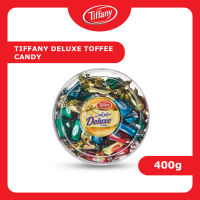
Tiffany Soft Chewy Candy | Soft & Chewy Sweets | Halal UAE Imported
₱220.00₱230.00

Stype By Tiffany Icon Twiggy Dress
₱1,989.00
Buy on Lazada
Style By Tiffany Claus Top and Pants
₱1,289.00
Buy on Lazada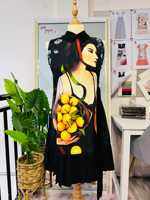
Style By Tiffany Adelyn Dress
₱1,989.00
Buy on Lazada
Style By Tiffany Claus Dress
₱1,989.00
Buy on Lazada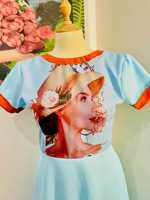
Style By Tiffany Victoria Dress
₱1,889.00
Buy on Lazada
Style By Tiffany Eiffel Dress
₱1,989.00
Buy on LazadaAbout Tiffany
Tiffany & Co., commonly referred to as Tiffany, is an American luxury jewellery and specialty retailer established in New York City in 1837 by Charles Lewis Tiffany and John B. Young. Recognised globally as one of the most prominent jewellery houses, the brand is synonymous with diamonds, engagement rings, high jewellery, sterling silver, and its signature Tiffany Blue® packaging. Today, Tiffany & Co. operates as part of the French luxury conglomerate LVMH Moët Hennessy Louis Vuitton.1
Basic information
| Category | Information |
|---|---|
| Full name | Tiffany & Co. |
| Common name | Tiffany |
| Founded | September 14, 1837 |
| Founder | Charles Lewis Tiffany, John B. Young |
| Founded in | New York City, United States |
| Industry | Luxury goods / Fine jewellery |
| Main products | Jewellery, high jewellery, engagement rings, watches, accessories, home objects |
| Parent company | LVMH |
| Current CEO | Anthony Ledru |
| Current Chief Artistic Officer | Nathalie Verdeille |
| Signature colour | Tiffany Blue® / “1837 Blue” |
| Famous symbol | Tiffany Blue Box® |
| Famous creation | Tiffany® Setting engagement ring |
| Major historical location | 5th Avenue, New York City |
LVMH currently describes Tiffany as one of the world’s most prestigious jewellery houses, maintaining a network of 345 stores worldwide supported by approximately 4,000 dedicated artisans.2
Origins: New York, 1837
The history of Tiffany began in New York City in 1837. At the age of 25, Charles Lewis Tiffany partnered with John B. Young to open a small shop specialising in stationery and “fancy goods” at 259 Broadway on September 14, 1837. The venture had humble beginnings; recorded sales for the first three days totalled only $4.98.3
Initially, the business was not exclusively a jeweller. It retailed imported luxury objects, decorative items, porcelain, silver, and accessories. Early success stemmed from Charles Tiffany’s ability to source unusual luxury products directly, eventually shifting the company’s focus towards jewellery and precious metals. By the mid-19th century, Tiffany had emerged as a significant force in American luxury.
Charles Lewis Tiffany: The man behind the brand
Charles Lewis Tiffany (1812–1902) was instrumental in transforming the business from a local shop into an international luxury institution. With a keen interest in rare gemstones, craftsmanship, and innovation, he acquired important gems from European aristocrats in the 1840s and introduced them to the American market. This initiative helped establish the United States as a key luxury jewellery market and earned him the moniker “the King of Diamonds” from the American press.4
Charles Tiffany understood that luxury encompassed not just the product but the entire experience, presentation, and narrative surrounding it. This philosophy laid the groundwork for the Tiffany Blue Box, elaborate catalogues, and the brand’s distinct identity.
Tiffany and American luxury
A significant historical achievement of the house was the creation of an American tradition of luxury. In 1845, Tiffany published its first Blue Book, a catalogue showcasing jewellery and luxury merchandise, which the company cites as the first direct-mail catalogue in the United States. The term ‘Blue Book’ later became the title for Tiffany’s prestigious high-jewellery collection.5
In 1851, Tiffany became the first American company to adopt the .925 sterling silver standard, a benchmark subsequently adopted nationally.6 Historically, the company positioned itself not merely as a retailer but as a designer, manufacturer, innovator, and standard-setter.
The Tiffany Blue Box®
Few packaging designs in the luxury sector are as instantly recognisable as the Tiffany Blue Box®. The distinctive colour dates to 1845, when Charles Lewis Tiffany selected it for the cover of the Blue Book catalogue before it became associated with the brand’s packaging.7
Traditionally, Tiffany maintained a strict policy that the boxes could not be purchased separately; they were intended solely to signify an authentic purchase from the house.8
Tiffany Blue®
Tiffany Blue® is a specific shade of robin’s-egg blue that has become a proprietary brand asset:
- Trademarked by Tiffany in 1998
- Standardised with Pantone in 2001
- Named “1837 Blue” in reference to the founding year9
This standardisation effectively transformed a colour into intellectual and emotional property of the brand.
The Tiffany Setting: Changing the engagement ring
In 1886, Tiffany introduced the Tiffany® Setting, a pivotal development in jewellery history. Unlike traditional designs that set diamonds close to the metal band, this design elevated the stone using six prongs to maximise light entry. This innovation made the diamond the visual centrepiece and helped establish the modern diamond engagement ring as a symbol of love and commitment.10 Over a century later, it remains one of the company’s most significant products, cementing a cultural association between diamonds, romance, and the Tiffany brand.
The Tiffany Diamond
The Tiffany Diamond is among the world’s most famous yellow diamonds. Discovered in South Africa in 1877 and acquired by Charles Lewis Tiffany in 1878, the rough stone originally weighed 287.42 carats. It was cut to 128.54 carats to enhance its brilliance.11
The gem has been worn by only a select few women and featured in various settings. Its most notable appearance in popular culture occurred in promotional imagery for the 1961 film Breakfast at Tiffany’s, featuring Audrey Hepburn. The stone exemplifies the brand’s strategy of combining extraordinary gemstones with exceptional craftsmanship and storytelling to create cultural icons.
Fifth Avenue and the Tiffany flagship
Tiffany’s identity is intrinsically linked to New York City through its flagship store on Fifth Avenue in Manhattan. Beyond serving as a retail location, the building symbolises New York luxury, American high society, fashion, and romance. The iconic Atlas clock outside the entrance has also become integral to the brand’s visual identity.12 The store’s cultural significance has rendered it inseparable from the mythology of the house.
Tiffany and popular culture
The brand’s influence extends well beyond jewellery, most notably through Truman Capote’s 1958 novella Breakfast at Tiffany’s and the subsequent 1961 film starring Audrey Hepburn. Hepburn’s character, Holly Golightly, became permanently linked with the Fifth Avenue store and a specific vision of New York sophistication. The film elevated Tiffany from a luxury retailer to a cultural symbol representing elegance, independence, and glamour.
Tiffany’s designers
Collaborations with influential designers have been central to Tiffany’s longevity.
Louis Comfort Tiffany
Louis Comfort Tiffany, son of Charles Lewis Tiffany, was a renowned artist and designer known for stained glass, lamps, ceramics, enamel, metalwork, and jewellery. His work connected the Tiffany name with the broader American Art Nouveau and decorative-arts movement.13
Jean Schlumberger
Jean Schlumberger began his collaboration with Tiffany in 1956, creating some of the most recognisable designs in the company’s history.14 Characterised by natural forms, animals, flowers, vivid gemstones, and sculptural gold, his work includes the famous Bird on a Rock, introduced in 1965. This design places a colourful gemstone beneath a stylised bird and continues to be reinterpreted in contemporary high jewellery collections.15
Elsa Peretti
Joining in 1974, Elsa Peretti revolutionised the company’s approach to modern jewellery with organic forms, sensual curves, and minimalism. Her Bone cuff and Diamonds by the Yard® remain influential, and she is credited with transforming sterling silver into a glamorous material.16
Paloma Picasso
Paloma Picasso joined as a designer in the 1980s, drawing inspiration from graffiti, urban culture, and bold lines. Her Paloma’s Graffiti collection became a distinct design signature for the house.17
Iconic Tiffany collections
While the product portfolio is extensive, several collections hold particular significance:
- Tiffany Setting: The classic six-prong engagement ring introduced in 1886.
- Return to Tiffany®: Inspired by a 1966 key tag bearing the inscription “Please Return to Tiffany & Co. New York,” this line expanded into necklaces, bracelets, rings, and earrings.18
- Tiffany T: Launched in 2014, this collection offers a contemporary interpretation using the letter T as a central motif.19
- Tiffany HardWear: An industrial, urban expression inspired by New York City, featuring bold chains and hardware-like forms.
- Elsa Peretti: Includes iconic minimalist designs such as Bone and Diamonds by the Yard.
- Jean Schlumberger: Features artistic designs like Bird on a Rock, Sixteen Stone, and Rope.
- Blue Book: The premier high-jewellery collection continuing the tradition of the original catalogue.
Product categories
Although primarily associated with jewellery, Tiffany operates as a luxury lifestyle brand with a diverse range of offerings.
Jewellery
The core category includes engagement rings, wedding bands, and diamond, gold, platinum, silver, and gemstone jewellery, alongside high jewellery.
Watches
The company has historically produced and sold luxury watches, though jewellery remains its primary identity.
Accessories
Offerings include eyewear, leather goods, scarves, key rings, and small accessories.
Home & Lifestyle
Tiffany produces tableware, decorative objects, crystal, silverware, baby gifts, and home accessories.
Design philosophy
Tiffany’s design identity is defined by several recurring principles:
- American Luxury: Heritage rooted in New York rather than European aristocracy.
- Innovation: Continuous introduction of new techniques, settings, and materials.
- Extraordinary Gemstones: Use of spectacular diamonds and coloured stones as brand assets.
- Craftsmanship: Emphasis on cutting, setting, polishing, and finishing skills.
- Romance: Strong positioning in the category of love and commitment via the Tiffany Setting and Blue Box.
- Recognition: Distinct visual codes including Tiffany Blue, the Blue Box, and specific typography that ensure identifiability even without the logo.
Relationship with diamonds
Diamonds are central to Tiffany’s business and mythology. According to the 2025 sustainability report, the company achieved 99.99% traceability for newly sourced, individually registered diamonds to their mine of origin or approved suppliers. Tiffany accepts approximately 0.04% of the world’s gem-grade diamonds.20
The Diamond Source Initiative, introduced in 2019, provides provenance for diamonds of 0.18 carats and larger. In 2020, this was expanded via the Diamond Craft Journey, disclosing sourcing, cutting, polishing, grading, and setting locations.21 Traceability has become a key component of the modern luxury proposition.
Sustainability
Tiffany emphasises sustainable luxury through programmes focusing on diamond traceability, responsible sourcing, climate action, conservation, ocean protection, craftsmanship, and diversity. The Tiffany & Co. Foundation, established in 2000, supports seascape and landscape conservation.22
The company maintains a vertically integrated production network with disclosed facilities in Belgium, Mauritius, Botswana, Thailand, Vietnam, and Cambodia.23 The 2025 sustainability report identifies traceability, craft, climate, conservation, and diversity, equity, inclusion, and belonging as major pillars.
Acquisition by LVMH
A defining moment in recent history was the acquisition of Tiffany & Co. by LVMH. Announced in 2019 with a value of approximately $16.2 billion, the transaction was completed in 2021.24 This placed Tiffany alongside maisons such as Louis Vuitton, Dior, Bulgari, Chaumet, TAG Heuer, and Hublot, providing access to global resources while retaining its American identity.
Tiffany under LVMH
Under LVMH ownership, Tiffany has undergone significant modernisation. The strategy combines heritage, high jewellery, contemporary design, celebrity culture, and global expansion, emphasising the uniqueness of its New York heritage rather than adopting a European model. Heavy investment in flagship retail, craftsmanship, and cultural collaborations has positioned the brand as both Old New York luxury and modern global luxury.
Current leadership
Brand positioning
Tiffany occupies a distinctive space in the global luxury market. While competitors include Cartier, Van Cleef & Arpels, Bulgari, Harry Winston, Graff, Chaumet, and David Yurman, Tiffany differentiates itself through mass cultural recognition combined with extreme luxury.
| Brand | Strongest association |
|---|---|
| Tiffany & Co. | New York, diamonds, romance, Blue Box |
| Cartier | Paris, heritage, icons, royalty |
| Van Cleef & Arpels | Poetry, nature, French elegance |
| Bulgari | Rome, colour, boldness |
| Harry Winston | Exceptional diamonds |
| Graff | Ultra-high-end diamonds |
The immediate recognition of the Tiffany Blue Box by consumers regardless of their jewellery expertise represents significant brand equity.
Factors contributing to fame
Tiffany’s prominence stems from a combination of elements:
- Heritage: Nearly two centuries of history.
- New York: Strong connection to a globally recognised city.
- Diamonds: Authority on exceptional gemstones.
- Tiffany Setting: Defined the modern engagement ring.
- Tiffany Blue: One of the world’s most recognisable brand colours.
- Blue Box: Instantly identifiable packaging.
- Designers: Legacy of Louis Comfort Tiffany, Jean Schlumberger, Elsa Peretti, and Paloma Picasso.
- Popular Culture: Association with Breakfast at Tiffany’s and Audrey Hepburn.
- Craftsmanship: Vertically integrated production and skilled artisans.
- Emotional Positioning: Jewellery presented as an expression of love, celebration, and life moments.
Brand codes
From a branding perspective, key identifiers include:
- Colour: Tiffany Blue®
- Packaging: Tiffany Blue Box®
- Typography: Distinctive wordmark
- Place: New York City / Fifth Avenue
- Product: Diamond jewellery
- Signature Silhouette: Tiffany Setting
- Emotion: Love and celebration
- Material: Diamond, platinum, gold, sterling silver
- Cultural Image: Sophisticated New York woman / modern luxury
- Personality: Elegant, optimistic, romantic, confident, innovative
- Core Tension: Traditional heritage × contemporary culture
The Tiffany Blue Box as a branding masterpiece
The Blue Box is arguably Tiffany’s greatest branding achievement. By turning packaging into a desirable object, the brand creates a psychological association where the box precedes the jewellery, triggering anticipation and signalling luxury and romance. Its recognisability allows it to function almost as a logo, making Tiffany Blue a complete brand asset.
Cultural meaning
Over nearly 190 years, Tiffany has evolved into a cultural symbol evoking engagement, marriage, wealth, sophistication, and femininity. Crucially, the brand offers a luxury ladder ranging from accessible silver jewellery to exclusive high jewellery. This allows customers to enter the Tiffany universe at various price points and potentially trade up over time.
Tiffany today
In the 2020s, Tiffany positions itself as a global high-jewellery and luxury lifestyle house that honours its American heritage. Current strategies emphasise high jewellery, exceptional diamonds, iconic collections, contemporary artistry, flagship stores, celebrity visibility, and sustainability. The company continues to reinterpret historical vocabulary; for example, 2026 Bird on a Rock designs reimagine Jean Schlumberger’s 1965 icon under Nathalie Verdeille’s direction.27
History timeline
| Year | Event |
|---|---|
| 1837 | Charles Lewis Tiffany and John B. Young open their New York store |
| 1845 | First Blue Book published; Tiffany Blue begins its history |
| 1848 | Tiffany becomes a major destination for diamonds |
| 1851 | Tiffany adopts the.925 sterling silver standard |
| 1886 | Tiffany Setting engagement ring introduced |
| 1877–78 | Tiffany Diamond discovered and acquired |
| 1902 | Charles Lewis Tiffany dies; Louis Comfort Tiffany becomes design director |
| 1956 | Jean Schlumberger begins his famous Tiffany collaboration |
| 1961 | Tiffany Diamond appears in Schlumberger’s Ribbon Rosette setting |
| 1965 | Bird on a Rock introduced |
| 1966 | Original Return to Tiffany key tags introduced |
| 1974 | Elsa Peretti joins Tiffany |
| 1980 | Paloma Picasso collection launches |
| 1998 | Tiffany Blue® trademarked |
| 2000 | Tiffany & Co. Foundation established |
| 2001 | Pantone creates standardised “1837 Blue” |
| 2014 | Tiffany T launches |
| 2019 | LVMH agrees to acquire Tiffany |
| 2020 | Tiffany expands Diamond Craft Journey transparency |
| 2021 | LVMH completes acquisition of Tiffany |
| 2025 | Tiffany reports 99.99% traceability for newly sourced, individually registered diamonds |
| 2026 | Tiffany continues expanding contemporary high jewellery, including new Bird on a Rock creations |
Historical milestones are based primarily on Tiffany’s official heritage timeline and LVMH’s corporate history.28
Summary
Tiffany & Co. is an American luxury jewellery house founded in New York City in 1837 by Charles Lewis Tiffany and John B. Young. Originally a stationery and fancy-goods store, it evolved into one of the world’s most influential jewellery houses through pioneering work with diamonds, silver, and innovative design. Key innovations include the 1886 Tiffany Setting, while primary brand assets are the Tiffany Blue® colour and Tiffany Blue Box®. Designers such as Louis Comfort Tiffany, Jean Schlumberger, Elsa Peretti, and Paloma Picasso shaped its aesthetic, which was further amplified by Breakfast at Tiffany’s. Today owned by LVMH, Tiffany operates as a global luxury house centred on fine jewellery, craftsmanship, and the emotional concepts of love and celebration.29
References
- Tiffany & Co. Heritage | Tiffany & Co.
- Tiffany & Co. – LVMH
- Tiffany’s Legacy – Tiffany
- Charles Lewis Tiffany
- Charles Lewis Tiffany – Tiffany
- Charles Lewis Tiffany | Tiffany & Co. US
- The Tiffany & Co. Timeline | Tiffany & Co. US
- The Tiffany & Co. Timeline | Tiffany & Co.
- The Tiffany Blue Box® | Tiffany & Co. US
- Tiffany Blue – Tiffany
- We invented the
- Louis Comfort Tiffany
- About Jean Schlumberger | Tiffany & Co. US
- Jean Schlumberger – Tiffany
- New Bird on a Rock Designs | Tiffany & Co. International
- Bird on a Rock Designs | Tiffany & Co.
- Return to Tiffany® – Tiffany
- Traceability & Craft – Tiffany
- Diamond Sourcing Traceability | Tiffany & Co. US
- Diamond Provenance & Source Initiative | Tiffany & Co. US
- Ethical Diamond Sourcing & Sustainability | Tiffany & Co.
- 2025 Sustainability Report – Tiffany
- LVMH Reaches Agreement with Tiffany & Co. – LVMH
- Tiffany & Co. celebrates grand opening of new Taik… – LVMH
- Senior Client Advisor, Solaire – Tiffany & Co. – 6… – LVMH
- Distribution Planning Lead – Tiffany & Co. – 63266 – LVMH
- Tiffany & Co. unveils high jewelry collection Hidd… – LVMH
- Tiffany & Co. dévoile sa collection de haute joail… – LVMH
- Tiffany & Co. presenta la collezione di alta gioie… – LVMH