Shop on Lazada
TIMKEN products
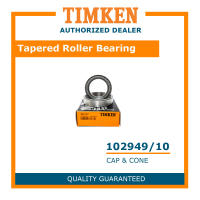
TIMKEN 102949/10 TAPERED ROLLER - INCH
₱431.00
Buy on Lazada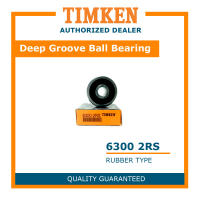
TIMKEN 6300 2RS BALL BEARING
₱145.00
Buy on Lazada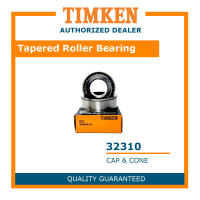
TIMKEN 32310 TAPERED ROLLER - MM
₱1,367.00
Buy on Lazada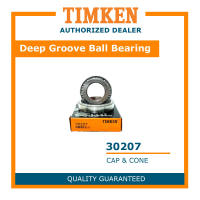
TIMKEN 30207 TAPERED ROLLER - MM
₱382.00
Buy on Lazada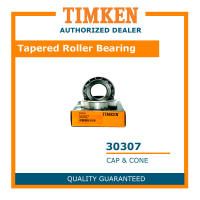
TIMKEN 30307 TAPERED ROLLER - MM
₱522.00
Buy on Lazada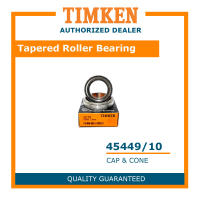
TIMKEN 45449/10 TAPERED ROLLER - INCH
₱229.00
Buy on Lazada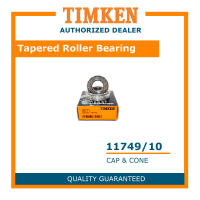
TIMKEN 11749/10 TAPERED ROLLER - INCH
₱196.00
Buy on Lazada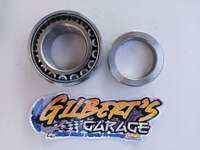
Rear Wheel Axle Bearing | Timken USA U497/U460L | Chevrolet Trailblazer Colorado Nissan Titan Ford
₱5,500.00
Buy on LazadaAbout TIMKEN
Timken is the primary brand of The Timken Company, a United States-based multinational industrial technology manufacturer historically renowned for its engineered bearings, particularly tapered roller bearings. Over a history spanning more than 125 years, the organisation has evolved from a specialised bearing maker into a comprehensive provider of advanced motion technology. Its current portfolio encompasses bearings, industrial gearing, lubrication systems, linear motion products, couplings, belts, chains, seals, brakes, clutches, and associated repair services 1.
Timken is a publicly listed entity on the New York Stock Exchange under the ticker TKR. Headquartered in North Canton, Ohio, USA, the company reported sales of approximately $4.58 billion for 2025, employs roughly 19,000 people, and maintains operations in 45 countries 2.
Quick facts
| Item | Information |
|---|---|
| Company | The Timken Company |
| Major brand | Timken® |
| Founded | 1899 |
| Founder | Henry Timken, with sons H.H. and William Timken |
| Original location | St. Louis, Missouri, USA |
| Current headquarters | North Canton, Ohio, USA |
| Industry | Industrial manufacturing / advanced motion technology |
| Best known for | Bearings, particularly tapered roller bearings |
| Stock exchange | NYSE |
| Ticker | TKR |
| 2025 sales | Approximately US$4.58 billion |
| Employees | Approximately 19,000 |
| Global presence | 45 countries |
| Current CEO | Lucian Boldea |
| Core business areas | Engineered Bearings and Industrial Motion |
| Corporate website | timken.com |
The corporate structure and 2025 financial figures are derived from Timken’s disclosures and SEC filings 3.
Corporate overview
Fundamentally, Timken is an engineering and manufacturing enterprise specialising in motion control. The company initially gained prominence by addressing a specific mechanical challenge: enabling heavy loads to rotate with reduced friction and enhanced reliability. This objective led to the development and commercialisation of the tapered roller bearing.
A bearing is a machine component that facilitates relative rotation between parts while supporting loads and minimising friction. The tapered roller bearing is distinct because its geometry allows it to manage both:
- Radial loads — forces perpendicular to the shaft
- Axial/thrust loads — forces parallel to the shaft
This dual capability makes tapered roller bearings critical in applications including automobiles, trucks, railways, industrial gearboxes, mining equipment, construction machinery, aerospace systems, wind turbines, and agricultural machinery. Timken’s historical mastery of this technology established the foundation for its modern operations 4.
History
Henry Timken and early patents
The company’s origins lie with Henry Timken, a German-born American inventor and businessman active in the carriage industry during the late 19th century. Carriages faced a fundamental engineering limitation: wheels and axles were required to support substantial loads while maintaining smooth rotation. Timken developed an improved bearing concept that reduced friction and enhanced axle durability, receiving patents related to the tapered roller bearing in the late 1890s 5. The invention was significant because it could accommodate both radial and axial forces, making it uniquely suitable for heavily loaded rotating machinery.
Foundation and relocation
In 1899, Henry Timken founded the company in St. Louis, Missouri, alongside his sons H.H. Timken and William Timken. Originally named the Timken Roller Bearing Axle Company, the firm initially focused on the bearing and axle technology developed by Henry Timken 6.
In 1901, the company relocated to Canton, Ohio. This move was pivotal as the region was emerging as a major centre for American manufacturing and the automotive industry. Canton became the company’s long-term home and remains closely associated with the Timken name today 7.
Automotive expansion
The rise of the automobile industry dramatically increased demand for reliable bearings. Timken’s tapered roller bearing technology proved exceptionally well-suited to automotive wheel and drivetrain applications. As vehicle sophistication increased, bearings became essential components in wheels, transmissions, axles, differentials, engines, and drivetrains. This demand facilitated Timken’s evolution from a specialised bearing manufacturer into a major industrial supplier.
Automotive applications remain central to Timken’s historical identity. A tapered roller bearing is particularly effective in vehicle wheel hubs because it must withstand multidirectional forces. For instance, a vehicle cornering at speed generates forces combining vehicle weight, cornering load, braking force, and acceleration. However, while automotive heritage is significant, modern Timken operates far beyond the automotive sector, serving numerous diverse industrial markets.
Advanced motion technology portfolio
A defining characteristic of Timken’s modern era is its transformation from a bearing-centric manufacturer into a broader advanced motion technology company. The firm describes its current portfolio as providing integrated systems and components that enhance performance, reliability, and efficiency across machinery and equipment 8.
The technology portfolio includes:
Bearings
- Tapered roller bearings
- Spherical roller bearings
- Cylindrical roller bearings
- Ball bearings
- Thrust bearings
- Precision bearings
- Plain bearings
- Metal-polymer bearings
- Rod-end bearings
- Housed/mounted bearings
Power transmission
- Industrial gear drives
- Precision gearing
- Couplings
- Universal joints
- Belts
- Chains
- Industrial clutches
- Industrial brakes
Motion systems
- Linear motion products
- Linear guides
- Actuators
- Motion systems
Lubrication
- Automatic lubrication systems
- Lubrication management technologies
Sealing and filtration
- Industrial seals
- Filtration products
Services
- Drivetrain repair
- Bearing repair
- Powertrain rebuilding
- Industrial equipment services
This expanded scope explains why Timken increasingly identifies as an advanced motion technology company rather than solely a bearing manufacturer 9.
Business segments
Under its current corporate structure, Timken reports two principal business segments.
Engineered Bearings
This segment aligns most closely with the traditional Timken identity. It manufactures a wide range of engineered bearings for both OEM and aftermarket customers, including tapered roller, spherical roller, cylindrical roller, ball, thrust, specialty, plain, metal-polymer, rod-end, and mounted/housed bearings. Timken remains particularly associated with tapered roller bearing technology within this segment 10.
Typical applications include automobiles, heavy trucks, rail vehicles, aircraft, helicopters, wind turbines, mining machinery, agricultural equipment, construction equipment, steel mills, industrial machinery, and food-processing equipment.
Industrial Motion
The second major segment, Industrial Motion, reflects Timken’s expansion beyond bearings. It encompasses industrial gear drives, automatic lubrication, linear motion, chains, belts, couplings, seals, industrial brakes, industrial clutches, filtration, and powertrain services. The strategic intent is to provide complete motion-related solutions for industrial machinery rather than individual components 11. For example, where an industrial machine requires a motor, coupling, gearbox, shaft, bearing, lubrication, and seal, Timken increasingly offers technologies covering multiple elements of this system.
Brand portfolio
A key feature of modern Timken is that The Timken Company owns a portfolio of industrial brands rather than operating exclusively under the Timken name. This portfolio includes:
- Timken®
- GGB®
- Fafnir®
- Philadelphia Gear®
- Cone Drive®
- Rollon®
- Nadella®
- Rosa Sistemi®
- Spinea®
- Groeneveld®
- BEKA®
- Des-Case®
- Diamond®
- Drives®
- Lovejoy®
- PT Tech®
- Torsion Control Products®
- Lagersmit®
- CGI
The portfolio evolves as Timken acquires businesses or divests brands 12. This multi-brand strategy enables coverage of a broader portion of the industrial motion market.
Acquisitions and growth strategy
Acquisitions have been instrumental in Timken’s transformation. Rather than merely expanding its traditional bearing range, Timken has acquired companies with complementary technologies in industrial gearing, linear motion, lubrication, plain bearings, specialty bearings, couplings, and industrial drives.
Notable acquisitions highlighted by the company include GGB, Nadella Group, American Roller Bearing, and iMECH, which expanded bearing capabilities, while Rollon, Groeneveld-BEKA, Cone Drive, and Philadelphia Gear extended the company’s reach into adjacent industrial-motion markets 13. The overarching strategy can be summarised as a progression from bearings to motion components, then to motion systems, and finally to integrated industrial solutions.
Industries served
Timken products serve a diverse array of industries. The company currently identifies several strategic end markets.
Aerospace & Defense
Timken possesses a long history in aerospace, supplying bearings and components for aircraft engines, landing systems, aircraft structures, helicopters, aerospace systems, and space-related applications. Aerospace demands extreme reliability under high loads, temperatures, and speeds; Timken states its aerospace heritage dates to the earliest days of powered flight 14.
Power & Electrification
The company supplies technology for wind energy, electric power infrastructure, generators, renewable energy, and industrial power systems. Wind turbines, for instance, require large bearings and drivetrain components capable of continuous operation under substantial loads.
Automation & Industrial Solutions
This growing area includes factory automation, robotics, linear motion, precision gearing, industrial machinery, packaging, logistics, and manufacturing systems. Automation requires highly precise and reliable motion-control components.
Infrastructure
Timken technologies are utilised in construction machinery, mining, metals production, agriculture, heavy industrial equipment, and infrastructure-related machinery.
Transportation & Mobility
Applications span automotive, heavy trucks, rail, passenger transportation, marine, and off-highway equipment.
Timken summarises its strategic markets as Aerospace & Defense, Power & Electrification, Automation & Industrial Solutions, Infrastructure, and Industrial Transportation & Mobility 15.
Engineering philosophy and competitive advantage
Timken’s competitive identity is rooted in engineering rather than commodity manufacturing. While a bearing may appear simple, its performance depends on metallurgy, heat treatment, geometry, surface finish, lubrication, material selection, dimensional tolerances, load distribution, fatigue resistance, sealing, operating temperature, and manufacturing precision. Timken has built decades of expertise around these variables, emphasising knowledge in materials science, friction management, and power transmission 16.
The company’s value proposition is essentially to make machinery move more reliably and efficiently. In many applications, Timken works with customers to determine specific operational parameters—including loads, speeds, temperatures, lubrication availability, contamination levels, required service life, maintenance tolerance, and failure costs—and engineers the bearing or motion system accordingly. This approach positions Timken as an engineering partner rather than merely a component supplier 17.
OEM and Aftermarket channels
Timken serves two critical customer channels:
- OEM (Original Equipment Manufacturer): Timken supplies components to manufacturers building machines and vehicles. Once designed into a platform, Timken components often remain specified for many years.
- Aftermarket: As machinery ages, components require replacement. Because industrial equipment can remain in service for decades, this creates a sustained aftermarket business.
Timken explicitly identifies the combination of OEM relationships and aftermarket sales as a cornerstone of its business model 18.
Reputation and values
The Timken name is traditionally associated with engineering quality, bearing reliability, durability, precision manufacturing, metallurgy, technical expertise, and industrial applications. The company emphasises four core values:
- Ethics & Integrity
- Quality
- Excellence
- Teamwork 19
Timken has received repeated recognition from Ethisphere’s World’s Most Ethical Companies program, achieving this distinction for the 14th time in 2025.
Global footprint
Although originating in the United States, Timken is now a global industrial manufacturer. As of recent disclosures, the company operates in approximately 45 countries with around 19,000 employees 20. Its global network comprises manufacturing facilities, engineering and technology centres, sales offices, distribution facilities, and aftermarket service operations. This international presence supports multinational customers in the automotive, aerospace, industrial, and energy sectors.
Research and development
R&D is central to Timken’s business model. Research focuses on materials science, friction management, power transmission, bearing technology, advanced motion systems, and application-specific engineering. The goal is to solve practical engineering problems rather than develop products in isolation. This focus is particularly relevant to renewable energy, automation, electrification, aerospace, robotics, high-speed machinery, and heavy industrial equipment. Timken describes its R&D approach as driven by real-world customer challenges and emerging market needs 21.
Renewable energy and aerospace
Renewable energy
Renewable energy is an increasingly vital application area. Wind turbines require sophisticated bearing and drivetrain systems capable of continuous operation in difficult environmental conditions. Bearing failure in this context can result in expensive maintenance, downtime, lost generation, and complex offshore repairs. Consequently, reliability is economically critical. Timken’s expansion into industrial motion technologies allows it to supply comprehensive systems to energy customers beyond individual bearings.
Aerospace and space technology
Aerospace represents one of Timken’s most technically demanding markets. The company has supplied bearing technology for aircraft and aerospace applications for over a century, including aircraft engines, landing gear, wheels, flight-control systems, helicopter systems, and aerospace equipment. This sector illustrates a key competitive advantage: components that appear small can be mission-critical. Unlike ordinary industrial machinery where failure is costly, bearing failure in an aircraft can have severe consequences. Therefore, aerospace customers demand exceptional quality, traceability, materials precision, testing, and reliability. Timken explicitly identifies aerospace and defense as a strategic end market 22.
Furthermore, Timken’s history extends to space-related applications. The company notes that its products have supported technological developments ranging from early aviation through modern space exploration, demonstrating the applicability of bearing technology far beyond terrestrial transport 23.
Corporate structure and financial scale
It is important to distinguish between Timken®, the brand visible on products, and The Timken Company, the publicly traded corporation managing the broader portfolio. A precise description of the latter is: The Timken Company is a global advanced-motion technology company whose portfolio includes engineered bearings, industrial motion systems, and related services.
For fiscal year 2025, Timken reported:
- Net sales: approximately $4.582 billion
- Net income: approximately $289 million
- Diluted EPS: $4.11
- Adjusted EPS: $5.33
- Operating cash flow: approximately $554 million
- Free cash flow: approximately $406 million
Sales were approximately 0.2% higher than in 2024 24. These figures place Timken among major global industrial-component manufacturers.
Stock market history and leadership
Timken is publicly traded under NYSE: TKR and has been listed on the New York Stock Exchange since 1922 25. Notably, the company states it has paid a dividend every quarter since its original 1922 listing, representing an unusually long record for a publicly traded industrial firm 26.
As of 2026, Lucian Boldea serves as President and Chief Executive Officer of The Timken Company 27. He succeeded Richard G. Kyle. Current management strategy emphasises expanding the advanced-motion portfolio, improving profitability, and focusing on strategic growth markets.
Modern strategy and competitors
Timken’s modern strategy rests on five pillars:
- Protect the bearing core: Bearings remain fundamental to the company’s identity.
- Expand into adjacent technologies: Selling bearings alongside gearing, lubrication, linear motion, couplings, seals, brakes, and clutches.
- Focus on engineered applications: Prioritising technically demanding applications where reliability matters.
- Grow in attractive markets: Specifically aerospace, defense, renewable energy, electrification, automation, industrial machinery, infrastructure, and transportation.
- Provide integrated solutions: Solving entire motion and power-transmission problems rather than selling single components 28.
Competitive landscape
In bearings, Timken competes with companies such as SKF, Schaeffler, NSK, NTN, JTEKT, NACHI, and MinebeaMitsumi. In industrial motion, gearing, and power transmission, competitors include Regal Rexnord, ABB, SEW-Eurodrive, Bonfiglioli, and various specialised manufacturers. Timken differentiates itself by combining a historically strong bearing business with an increasingly broad industrial-motion portfolio.
Unlike generic bearing manufacturers that compete primarily on price and availability, Timken’s traditional model competes on engineering, reliability, materials, application expertise, quality, and lifecycle cost. This distinction is valuable when component failure causes significant downtime; a premium engineered bearing preventing costly machine stoppage offers superior economics despite a higher initial price.
Brand evolution and positioning
The meaning of the Timken name has evolved significantly:
- Around 1900: Innovative tapered roller bearings
- Mid-20th century: Major bearing and automotive/industrial supplier
- Late 20th century: Global engineered bearing manufacturer
- 21st century: Diversified advanced motion technology company
Today, Timken is not simply a bearing company. Its brand positioning encompasses reliability, engineering expertise, precision, durability, innovation, and over 125 years of industrial heritage.
Distinction from Timken India
For researchers in Asia, it is important to distinguish the global parent from Timken India Limited. Timken India Limited is a publicly listed Indian company associated with the Timken group. Historically, its business has focused heavily on bearings and allied products and services, whereas the global parent, The Timken Company, operates the broader two-segment structure of Engineered Bearings and Industrial Motion. Timken India’s 2025 annual report identifies its primary reportable segment as bearings and allied goods and services 29. These entities should not be treated as identical.
Industrial significance
Timken exemplifies a company whose products are often invisible to consumers but critical to modern infrastructure. Bearings are present in cars, trucks, trains, aircraft, wind turbines, factory robots, mining equipment, construction machinery, agricultural machinery, and industrial gearboxes. Every rotating machine must manage friction and loads. Timken operates in this fundamental layer of industrial technology: making machines move reliably.
Conceptually, if industrial machinery were analogous to a human body, motors would be muscles, gearboxes joints, shafts bones, bearings the articulating surfaces, lubrication the synovial fluid, seals protective barriers, and control systems the nervous system. Timken historically specialised in the “joints” of machines but now provides multiple motion-related components, validating its description as an advanced motion technology company.
Timeline
| Year | Event |
|---|---|
| 1890s | Henry Timken develops improvements to bearing technology |
| 1898 | Timken receives patents related to tapered roller bearing design |
| 1899 | The Timken Roller Bearing Axle Company is established in St. Louis |
| 1901 | Company relocates to Canton, Ohio |
| Early 1900s | Rapid expansion alongside the automotive industry |
| 1922 | Timken listed on the NYSE |
| 20th century | Expansion into global bearing and industrial markets |
| Late 20th century | Broadening beyond traditional bearing products |
| 21st century | Major expansion into industrial motion technologies |
| 2010s–2020s | Acquisitions expand gearing, lubrication, linear motion, couplings and other technologies |
| 2024 | Timken celebrates 125 years |
| 2025 | Company records approximately $4.6 billion in sales |
| 2026 | Timken operates as a diversified advanced-motion technology company |
Historical milestones are documented by Timken and independent historical sources 30.
Current position
As of 2026, Timken is best characterised as a global industrial technology company centred on engineered motion. While its traditional strength remains bearings, particularly tapered roller bearings, the company is deliberately building a broader platform spanning bearings, gearing, linear motion, couplings, lubrication, belts, chains, brakes, clutches, seals, and industrial services.
With roughly $4.6 billion in 2025 sales, approximately 19,000 employees, and operations in 45 countries, Timken continues to evolve 31. In 2026, the company announced longer-term financial targets and a strategy focused on margin improvement, accelerated growth in selected verticals, and expansion of its advanced-motion portfolio 32.
Summary
The Timken Company is a U.S.-based global industrial technology company founded in 1899 by Henry Timken and his sons. Originally established around patented tapered roller bearing technology, it became one of the world’s best-known bearing manufacturers with deep expertise in metallurgy, friction management, and mechanical power transmission. Through organic development and acquisitions, Timken has expanded to encompass engineered bearings, industrial gearing, linear motion, couplings, lubrication systems, belts, chains, seals, brakes, clutches, and repair services. Headquartered in North Canton, Ohio, and listed on the NYSE as TKR, Timken operates in 45 countries with approximately 19,000 employees and $4.6 billion in 2025 sales. Its strategic focus is increasingly on advanced motion technology for aerospace and defense, power and electrification, automation, infrastructure, transportation, and other demanding industrial markets 33.
Ultimately, Timken’s historical identity as a world-leading tapered roller bearing company has evolved into a modern identity as a diversified advanced-motion technology company. Its core competitive advantage remains over 125 years of engineering expertise in friction, materials, bearings, and mechanical motion, driving a strategic shift from being primarily a bearing supplier toward becoming a broader, integrated industrial-motion technology partner 34.
References
- tkr-20250331
- About Us, An Overview of a Strong Brand – The Timken Company
- Timken Reports Fourth-Quarter and Full-Year 2025 Results – Feb 4, 2026
- Timken to Participate in the Evercore ISI Industrial Conference – Feb 25, 2026
- 2025 ANNUAL REPORT
- Frequently Asked Questions – The Timken Company
- สำนักงาน ก.ล.ต.
- » Henry Timken | Automotive Hall of Fame
- 使命我们凭借知识助力世界工业进步。We use our knowledge to make th
- Portfolio – The Timken Company
- tkr-20251231
- 125 Years of Bearing Leadership – The Timken Company
- Aerospace & Defense – The Timken Company
- Timken Recognized by Ethisphere as One of World’s Most Ethical Companies® for 14th Time – Mar 11, 2025
- _
- Timken: Keeping the world in motion beyond 125 years – The Timken Company
- Timken Declares Quarterly Dividend of 35 Cents Per Share – Aug 8, 2025
- Timken Details Strategy and Announces 2028 Financial Targets at Investor Day | The Timken Company
- Timken-Annual report25- print file
- Timken 2025 results show flat sales, lower profit | TKR Annual Report (10-K)
- Timken (TKR) Revenue by Segment (2015-2025 10-K) | edgar.tools
- Timken to Participate in Upcoming Investor Conferences – Nov 18, 2025
- TIMKEN CO (Form: 10-Q, Received: 10/29/2025 16:46:35)
- Timken to Participate in Upcoming Investor Conferences – Aug 22, 2025
- tkr-20250630
- Timken Names Timothy A. Graham President of Industrial Motion – Jun 2, 2025
- Timken to Participate in the KeyBanc Industrials & Basic Materials Conference – May 14, 2025
- The Timken Company Announces CEO Transition | The Timken Company
- Timken to Participate in the BofA Global Research Global Industrials Conference – Mar 10, 2025
- Timken : Investor Presentation – March 2025 | MarketScreener
- EDGAR Filing Documents for 0000098362-25-000055
- The Timken Company – 10K – Annual Report – February 20, 2025
- Timken to Participate in Upcoming Investor Conferences – Feb 18, 2025
- Timken Teams Up with LeBron James Family Foundation, Expands on Its CSR Commitment to Develop Future Engineers and Scientists – Mar 25, 2021