Shop on Lazada
Tomica Takara Tomy products
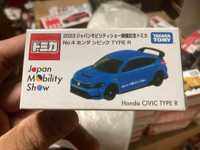
(Sold per piece/1pc) Tomica Event Model Honda CRV Civic Jazz FIT StepWGN Brio NSX
₱1,999.00
Buy on Lazada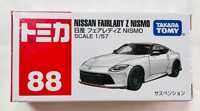
Takara Tomy Assorted Cars
₱499.00
Buy on Lazada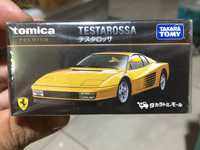
(Sold per piece/1pc) Tomica Premium Enzo Ferrari 06 13 17 31 33 36 Testarossa Dino 246GT 512BB F40 F50 FXX K 365GTS4 F355 Diecast Cars
₱1,999.00₱2,209.00
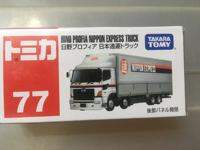
(Sold per piece/1pc) Tomica 48 77 90 37 Isuzu Elf Giga UD Quon Hino Dutro Profia Eneos Tank Lorry Art Moving Truck Trucks
₱799.00
Buy on Lazada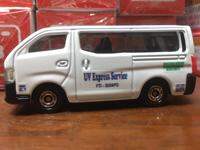
(Sold per piece/1pc) Tomica Nissan Datsun Cars NV350 Urvan Caravan UV Express Leaf Kicks GTR Skyline X Trail Fairlady Z
₱1,449.00
Buy on Lazada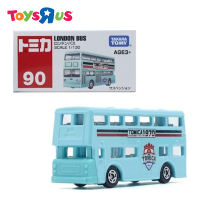
Tomica No. 90 London Bus
₱349.00
Buy on Lazada
Takara Tomy Hot Wheels Ford Mustang GT Detective Conan Edition
₱289.00
Buy on Lazada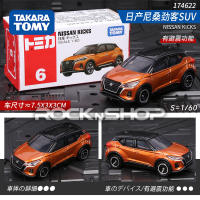
Tomica Takara Tomy No.1-120 Model Car Diecast Gift Toy Collect Lot Choose
₱339.00
Buy on LazadaAbout Tomica Takara Tomy
Tomica (トミカ, Tomika) is a Japanese brand of die-cast miniature vehicles produced by TOMY Company, Ltd., commonly known as Takara Tomy (株式会社タカラトミー). Launched in 1970, Tomica has evolved from a children’s toy line into one of Japan’s most recognised miniature-car brands and a significant collecting hobby.1 The range encompasses ordinary cars, commercial vehicles, emergency services transport, construction machinery, aircraft, trains, fictional vehicles, and premium collector models.1
Note: While “Tomica Takara Tomy” is often used informally, Tomica is the brand, while Takara Tomy is the company that owns and produces it.
Overview
| Category | Information |
|---|---|
| Brand | Tomica |
| Japanese name | トミカ |
| Type | Die-cast miniature vehicles / toy vehicles |
| Origin | Japan |
| Founded | 1970 |
| Original company | Tomy |
| Current owner | TOMY Company, Ltd. / Takara Tomy |
| Headquarters of parent company | Katsushika, Tokyo, Japan |
| Main products | Die-cast cars, trucks, buses, emergency vehicles, construction vehicles, aircraft and related playsets |
| Major series | Tomica, Dream Tomica, Tomica Premium, Tomica Premium Unlimited |
| Target audience | Children, families and adult collectors |
The parent company is officially TOMY Company, Ltd. Its corporate profile states that the company was founded in 1924, formally established in 1953, and operates across toys, general merchandise, card games, baby-care products, and related businesses.3
History
Origins of Tomy
The roots of Tomica trace back to Eiichiro Tomiyama, who established the Tomiyama Toy Manufacturing Works in 1924.1 The company built a reputation for metal toys and later became known as Tomy. During Japan’s postwar economic development, Tomy expanded significantly, experimenting with new materials, manufacturing techniques, and toy concepts. Its history includes products such as Microman, with Tomica eventually becoming one of its most important long-running brands.1
1970: Birth of Tomica
The first Tomica vehicles were introduced in 1970.1 This launch marked a deliberate effort by Tomy to create a miniature-car product appealing not only to children but also to enthusiasts who appreciated realistic automobiles. Official histories describe the original Tomica as the result of extensive research into die-cast manufacturing, with particular attention paid to styling, quality, detailed parts, and working features such as opening doors and bonnets.1
Rather than simply scaling down real automobiles, Tomy designed proportions so that the miniature would visually resemble a convincing automobile when held in the hand. This distinctive proportional design approach became fundamental to the brand’s philosophy: small size + recognizable vehicles + realistic detailing + playability + durability.1
Market Appeal and Design Philosophy
Connection to Everyday Life
Tomica entered the Japanese market when automobiles were becoming increasingly central to daily life. Instead of focusing exclusively on exotic sports cars, the brand developed a broad selection of vehicles recognisable from everyday surroundings, including passenger cars, taxis, police cars, fire engines, ambulances, buses, trucks, delivery vehicles, construction machinery, agricultural vehicles, and other specialised working vehicles.1 This focus created a strong connection to ordinary transportation and working life, allowing children to play with miniature representations of vehicles they encountered regularly.
Variable Scale System
A defining characteristic of Tomica is its variable scale. Unlike brands that maintain a single exact scale across all models, standard Tomica scales different vehicles differently to ensure finished models maintain practical dimensions and visual proportions.4 Because a full-size bus and a small sports car cannot be represented at the same scale while remaining similarly sized toys, Tomica prioritises playability and appearance over strict scale-modeling conventions.4 This distinction separates standard Tomica from dedicated die-cast model brands aimed primarily at adult scale-model collectors.
Balance of Accuracy and Playability
Tomica’s design philosophy balances accuracy with playability. Typical features include die-cast metal bodies, plastic components, detailed paint, printed graphics, opening doors or bonnets on selected models, rolling wheels, vehicle-specific interior details, and movable components.1 The brand was explicitly designed with attention to realistic appearance and mechanisms, making it distinct from purely static scale models. A Tomica car is intended to be played with while remaining detailed enough for enthusiasts to appreciate as a faithful miniature representation.
Product Lineup
Standard Tomica
The standard line remains the core of the brand, featuring a continually changing selection of Japanese and foreign automobiles, trucks, buses, emergency vehicles, construction equipment, commercial vehicles, motorcycles, and other real-world vehicles.1 Current international brand information indicates that Tomica maintains a lineup of approximately 150 passenger and working vehicles, although the precise selection changes over time.
Tomica World
Tomica World extends individual vehicles into a larger play environment. Using roads, garages, stations, service facilities, buildings, vehicle playsets, and interactive accessories, children can create miniature cities and transportation networks. This concept allows individual cars to become part of an expandable imaginary world driven by creativity.
Dream Tomica
Dream Tomica is a collaboration-oriented branch that reproduces vehicles and characters associated with popular entertainment properties rather than real-world automobiles. Examples include collaborations involving anime, manga, movies, television, games, and character franchises. Described as Tomica’s dream collaboration series, it has helped the brand reach collectors interested in pop culture rather than conventional automotive models.
Tomica Premium
Introduced in 2015, Tomica Premium targets enthusiasts seeking higher detail and sophistication. Positioned explicitly as a series for adults, it emphasises accurate reproductions of body shape, paint, printing, wheels, and overall styling. Occupying a middle ground between traditional toy philosophy and high-end collector detailing, it includes famous sports cars, performance cars, historic automobiles, and other vehicles with strong enthusiast appeal.
Tomica Premium Unlimited
Tomica Premium Unlimited focuses on vehicles appearing in movies, television dramas, comics, and other fictional settings. Emphasising detailed modelling and painting to recreate vehicles as they appear in their respective works, this series appeals particularly to collectors of characters, films, or fictional worlds.
Licensing and Automotive Culture
Relationships with Manufacturers
Throughout its history, Tomica has produced miniature representations of vehicles from numerous major manufacturers. Depending on the era and market, licensed brands have included Toyota, Nissan, Honda, Mazda, Mitsubishi, Subaru, Suzuki, Daihatsu, Isuzu, Hino, Mitsubishi Fuso, Mercedes-Benz, BMW, Volkswagen, Porsche, Ferrari, Lamborghini, and other international manufacturers.1 This licensing model enables collectors to build miniature versions of real automotive history.
Japanese Automotive Archive
Tomica maintains a close relationship with Japan’s automotive culture, offering versions of vehicles ranging from kei cars to sports cars, supercars, emergency vehicles, taxis, delivery trucks, buses, construction vehicles, government vehicles, and railway-related transport. Consequently, the brand functions as a miniature record of Japanese automotive culture. Takara Tomy’s historical archive documents successive releases from the first vehicle in 1970 onward, reflecting changing automotive tastes and technology across decades.1
Collecting Community
Organisation and Focus
Tomica has developed a substantial collector community. Collections may be organised by manufacturer (e.g., Toyota, Nissan), vehicle type (e.g., emergency, construction), era (1970s to modern), series (Standard, Limited, Premium, Dream), colour variations, packaging, or promotional editions. Special releases made for events, companies, dealerships, or organisations are often significantly harder to find than retail versions.
Vintage Tomica
Because the brand has existed continuously since 1970, vintage Tomica spans more than five decades of production. Serious collectors study casting design, wheel types, paint schemes, manufacturing changes, packaging, base markings, Japanese model numbers, opening mechanisms, colour variations, and licensing history. For these enthusiasts, the box, condition, production era, and variation are often as important as the model itself.1
Limited Editions and Exclusives
Special versions are frequently produced for events, department stores, toy shops, automotive companies, museums, amusement facilities, airports, railway companies, anniversary campaigns, and regional promotions. Due to limited quantities or distribution periods, these exclusives are highly desirable among collectors.
Events
Tomica events combine vehicle displays, exclusive models, play areas, demonstrations, large-scale layouts, merchandise, and collector activities. These gatherings reinforce the brand’s identity as both a toy and a hobby.
Corporate Structure and International Expansion
Relationship with Takara Tomy
Tomica predates the current corporate structure, originating as a Tomy product. Takara was a separate Japanese toy company with its own brands. In 2006, Takara and Tomy merged to form TOMY Company, Ltd., known as Takara Tomy in Japan.3 The merger combined product-development and marketing strengths, but Tomica continued as an established core brand rather than being rebranded. International histories specifically identify Tomica as one of Tomy’s major products originating in 1970.1
Global Reach
Although primarily a Japanese product initially, Tomica eventually expanded internationally. Overseas versions were introduced in Europe and North America as part of global expansion efforts, exposing the brand to collectors outside Japan.2 International collecting has grown alongside broader global interest in Japanese toys, automobiles, and die-cast models.
Comparison with Other Brands
Tomica occupies a distinctive position among miniature vehicle brands:
| Brand | General character |
|---|---|
| Tomica | Japanese toy/collector hybrid; strong playability and Japanese vehicle coverage |
| Hot Wheels | Highly stylized, fantasy-oriented and performance-focused |
| Matchbox | Strong emphasis on realistic everyday vehicles |
| Majorette | European-oriented die-cast toy tradition |
| Siku | European vehicles and agricultural/commercial models |
| MINI GT | More collector-oriented, higher-detail models |
| Kyosho | More serious scale-model/collector orientation |
While each company offers multiple product levels, Tomica’s strength lies in occupying both sides of the market: children’s toy ↔ adult collectible.
Cultural Significance and Branding
Intergenerational Appeal
Tomica’s significance in Japan stems partly from its survival across multiple generations. Individuals who played with Tomica in the 1970s can engage with the brand decades later through new standard models, Tomica Premium, vintage collecting, special editions, automotive exhibitions, or their own children’s collections. This intergenerational connection places Tomica alongside other long-running Japanese toy brands that have become embedded in popular culture.
Miniature Automotive Archive
The catalogue reflects evolving automotive trends, illustrating transitions from 1970s Japanese cars to 1980s performance vehicles, 1990s SUVs, 2000s global automobiles, and modern EVs and hybrids. The official historical archive provides a documented record of this development.
Visual Identity
The name Tomica derives from Tomy and became synonymous with the miniature-car business. While visual identity has evolved, the distinctive TOMICA name remains recognisable. Modern premium branding deliberately references the original logo mark used on packaging at the 1970 launch, connecting contemporary collector products with the brand’s heritage.
Current Corporate Profile
The modern parent company, TOMY Company, Ltd., is headquartered in Tateishi, Katsushika-ku, Tokyo, Japan. As of March 31, 2025, the company had 2,496 consolidated employees and operates across toys, general merchandise, card games, baby-care products, and related businesses. The company celebrated the centenary of its founding in 2024, tracing its history back to 1924.
Timeline
- 1924: Eiichiro Tomiyama establishes the company that would eventually become Tomy.
- 1953: Formal establishment of the present corporate entity.
- 1970: Tomica launches; first miniature vehicles introduced.1
- 1970s–1990s: Vehicle selection expands; brand establishes itself as a major Japanese miniature-vehicle marque.1
- 2001: High-detail collector-oriented line introduced.
- 2002: Tomica Limited introduced, including the larger S-Series.
- 2006: Takara and Tomy merge, creating the modern TOMY Company / Takara Tomy structure.3
- 2010s: International expansion and development of additional product categories.
- 2015: Tomica Premium launches for detail-oriented adult collectors.
- 2020s: Continued expansion of standard, premium, collaboration, and entertainment-related products.
Key Characteristics
Tomica treats the toy car as both a plaything and a miniature automobile. Models are small enough for play, robust enough for handling, yet detailed enough for adult recognition. This philosophy has sustained the brand for over half a century. Its defining characteristics include:
- Long history dating to 1970.
- Japanese automotive identity with strong domestic vehicle coverage.
- Real-world licensing from actual manufacturers.
- Playability prioritised alongside realism.
- Collectibility through variations, limited editions, and premium lines.
- Generational appeal bridging children and adult collectors.
- Pop culture expansion via Dream Tomica and Premium Unlimited.