Shop on Lazada
Tonze products
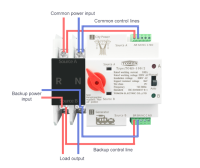
TOMZN Din Rail 2P 3P ATS Dual Power Automatic Transfer Switch Electrical Selector Switches Uninterrupted Power 63A 100A 125A 220V
₱1,955.00₱5,000.00
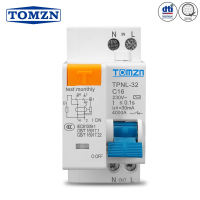
【TOMZN Brand】TPNL DPNL 230V 1P+N Residual current Circuit breaker with over and short current Leakage protection RCBO MCB TPNL-32
₱299.00₱1,000.00
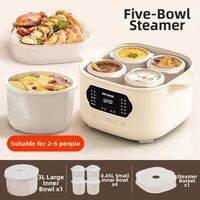
Tonze | Automatic 3-level Water-bathing Steamer for 2 People
₱4,650.00₱6,474.00
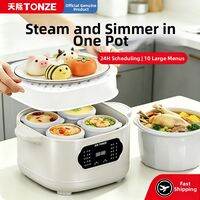
Tonze | Ceramic Multi-functional Slow Cooker
₱4,048.00₱5,324.00
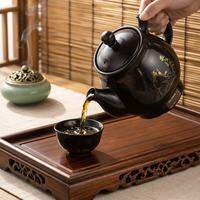
Tonze | Automatic Herbal Medicine Cooking Pot 3L
₱1,803.00₱2,927.00
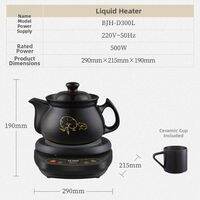
Tonze | Multifunctional Automatic Herbal Cooking Pot
₱3,631.00
Buy on Lazada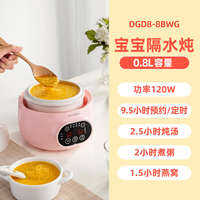
Tonze | Automatic Electric Pot for Birds Nest Stewing
₱1,431.00₱4,366.00
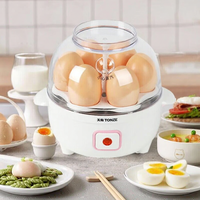
Tonze | Automatic Shut-off Multi-functional Egg Cooker
₱1,495.00₱2,058.00
About Tonze
Brand Overview
Tonze (known as Tianji in China) is a Chinese consumer appliance manufacturer best known for its ceramic slow cookers, electric stew pots, ceramic rice cookers, health pots, steamers, and other small kitchen appliances. The brand is particularly associated with the use of ceramic cooking vessels and traditional Chinese “water-stewing” techniques combined with electric temperature control 1.
The parent business traces its origins to 1996 in Shantou, Guangdong, China. It has since expanded from kitchen appliances into a broader corporate group that also maintains a substantial new-energy materials business 1.
Quick Facts
| Item | Information |
|---|---|
| Brand | Tonze |
| Chinese name | 天际 |
| Founded | 1996 |
| Origin | Shantou, Guangdong, China |
| Core industry | Small household/kitchen electrical appliances |
| Best known for | Ceramic electric stew pots and slow cookers |
| Major categories | Slow cookers, rice cookers, steamers, kettles, baby appliances, multifunction cookers |
| Corporate group | TONZE New Energy Technology Co., Ltd. / Tianji |
| Stock listing | Shenzhen Stock Exchange, A-share, 002759 |
| Certifications claimed | ISO 9001, ISO 14001; product certifications include 3C, CE, CB, UL and SGS |
| International markets | Includes the U.S., U.K., Japan, Korea, Singapore, Malaysia and other markets |
| Business model | Consumer brand + OEM/ODM manufacturing |
Brand Identity and Philosophy
Tonze is essentially a health-oriented kitchen appliance brand whose identity was built around slow cooking and ceramic cookware. Unlike brands focused primarily on frying, coffee, air frying, or high-speed food processing, Tonze historically differentiated itself through slow cooking. This approach combines ceramic inner pots, low-temperature cooking, water-bath-style heating, soup and stew preparation, traditional Chinese cooking concepts, and automatic electric temperature and timing control.
The company describes itself as an early developer of the ceramic electric slow cooker, stating that it introduced ceramic into electric slow cooking in 1999 1. This innovation became the foundation of the Tonze brand identity.
Tonze positions itself around health, food, and quality of life rather than simple convenience. Its international website describes its objective as focusing on health and helping people enjoy the natural qualities of food and life, with the slogan “Enjoy Health and Wonderful Life” 1. This positioning explains why its portfolio has historically concentrated on products associated with healthy cooking, slow cooking, soups, stews, ceramic cookware, baby food, and wellness appliances, rather than high-powered cooking methods.
Corporate Structure
The appliance business is associated with Shantou Tonze Electric Appliance Industry Co., Ltd., while the broader listed corporate entity is now TONZE New Energy Technology Co., Ltd. 2. The company was founded in 1996 in Shantou, Guangdong Province, initially concentrating on small household appliances before developing its distinctive ceramic cooking technology 1. It was later listed on the Shenzhen Stock Exchange in 2015 under stock code 002759 2.
A key distinction exists between the consumer brand and the corporate group: Tonze is the consumer-facing appliance brand, while the listed corporate group has expanded considerably beyond kitchen appliances. Today, the group operates both a home-appliance division and a new-energy division 2.
The parent company has expanded into new-energy materials, particularly lithium hexafluorophosphate (LiPF₆), an important electrolyte salt used in lithium-ion batteries. The company states that its new-energy operations expanded substantially during the 2020s, with planned and actual production capacity reaching tens of thousands of tons 1. Consequently, searching for the corporate entity may yield information about batteries and chemicals unrelated to consumer Tonze appliances.
History
1996–1999: Foundation and Ceramic Innovation
Tonze’s predecessor was established in Shantou, Guangdong, in 1996 1. In 1997, the company developed its first domestic electric kettle products, establishing its position in China’s small-appliance market 1. The most significant milestone occurred in 1999 when Tonze took the lead in developing ceramic electric stew pots, using ceramic in an electric slow-cooking application for the first time 1. This technology became closely associated with the brand.
2002–2008: Technology Expansion
In 2002, Tonze introduced its first “water stew” cooker, combining traditional cooking methods with electric technology 1. This concept differs from simply placing a ceramic pot inside an electric heating base; water-bath-style cooking allows food to be heated indirectly through surrounding water. In 2005, the company developed a ceramic-lined rice cooker and ceramic cooking appliances intended for baby food, broadening the brand from a slow-cooking specialist toward health-oriented household appliances 1. The following year, Tonze introduced a stew-pot configuration incorporating multiple ceramic pots 1. By 2008, the company became involved in the development of national and industry standards for ceramic cooking appliances 1.
2015–Present: Diversification
Tonze’s parent company entered China’s A-share market on the Shenzhen Stock Exchange in 2015 2. From 2016 onward, the group made a major strategic move into new-energy materials 1. During the 2020s, the appliance division expanded into Western-style small appliances, mother-and-baby products, and multifunctional kitchen appliances while continuing to develop its traditional ceramic cooking products 1.
Products and Technology
Ceramic Electric Stew Pots
Ceramic electric stew pots remain Tonze’s signature category. A typical Tonze stew pot consists of an electric heating body surrounding or supporting one or more ceramic inner pots. Depending on the model, users can prepare soup, chicken soup, pork or rib soup, congee, desserts, herbal preparations, bird’s-nest-style dishes, slow-cooked meat, and baby food. Some models use multiple smaller ceramic pots, allowing different foods to be cooked simultaneously 1.
Water-Stewing Concept
One of the most distinctive concepts associated with Tonze is ge shui dun (隔水炖), roughly translated as water-bath stewing or steaming over water. Instead of placing food directly over the heating element, water surrounds the cooking vessel. The heating sequence is heating element → water → ceramic pot → food, rather than heating element → cooking pot → food. This method provides gentler and more controlled heating.
Tonze developed proprietary technologies around this concept, including water-sealing technology for ceramic cooking vessels 1. This technology is a primary reason Tonze maintains a different identity from conventional electric pressure cookers or ordinary slow cookers.
Product Categories
Tonze’s current international product portfolio is considerably broader than its original stew-pot business 3:
- Slow cookers: Remains the signature category, including conventional electric slow cookers and ceramic slow-cooking systems 1.
- Electric stew pots: Feature ceramic inner pots, multiple cooking vessels, digital controls, preset cooking programs, keep-warm functions, delayed start, and specific soup or congee programs 1.
- Ceramic rice cookers: Developed relatively early, beginning around 2005 1.
- Steamers: Includes electric food steamers and multifunctional steaming appliances 1.
- Electric kettles: Among Tonze’s earliest products 1.
- Health pots: Known as yangsheng hu (养生壶) in Chinese, these are designed for herbal drinks, tea, soups, and other heated beverages 2.
- Baby appliances: Includes baby food cookers, milk warmers, bottle sterilizers, baby steamers, and portable feeding-related appliances 1.
- Multifunctional cookers: Includes electric hot pots, electric lunch boxes, electric grills, blenders, and juicers 1.
Research, Development, and Manufacturing
Tonze places considerable emphasis on research and development. The company reports holding over 500 national patents, alongside a network covering more than 160 sales cities and more than 200 service outlets. These figures are company-reported rather than independently audited 1.
Its testing center operates according to ISO/IEC 17025 and holds CNAS and CMA accreditation. Testing capabilities include electronic circuit testing, temperature-control testing, EMC testing, automatic drop and safety testing, intelligent simulation, and product-performance testing 1.
Unlike brands that outsource all production, Tonze operates 10 full production lines with in-house capabilities covering injection molding, electronics, hardware, printing, and ceramic production. Its ceramic production base is located in Chaozhou, Guangdong, an area particularly associated with ceramics. The company reports an annual manufacturing capacity of approximately 8 million units on its international corporate site 1.
OEM and ODM Services
Tonze is not solely a retail consumer brand; it also offers OEM and ODM services, allowing other companies to manufacture appliances under their own brands. Services include new product design, functional customization, mold development, customized power cords and plugs, customized logos, packaging design, and carton design 1. This dual operation as both a consumer brand and an appliance manufacturing and technology supplier is significant when evaluating the company.
International Presence
Tonze states that its products are sold in markets including the United States, United Kingdom, Japan, South Korea, Singapore, Malaysia, and other international markets 1. The company has specifically highlighted the popularity of its ceramic slow cookers, stew pots, and multifunctional cookers in Southeast Asian markets 1. This makes Tonze particularly relevant in regions where traditional soup, porridge, herbal food, and slow-cooking habits overlap with modern electric appliances.
Certifications and Quality Standards
Tonze reports holding or working with a range of certifications and testing standards. The company’s international site lists ISO 9001 for quality management, ISO 14001 for environmental management, as well as 3C, CE, CB, UL, and SGS certifications 1. The exact applicability of each certification depends on the individual product, model, and market; these listings should not be interpreted as meaning every Tonze product carries every certification.
Market Position
Tonze is characterized as a specialist-to-mainstream Chinese kitchen appliance brand rather than a luxury appliance brand. Its competitive identity is built around specific technology and categories rather than premium aesthetics.
Strengths
- Long history in ceramic cooking appliances
- Strong specialization in electric stew pots
- Large manufacturing base with in-house ceramic production capability
- Significant R&D and patent portfolio according to company figures
- OEM/ODM capabilities
- Broadening international presence
- Strong fit for soup, stew, and slow-cooking cultures
Limitations
- Less globally recognizable than major multinational appliance brands
- Differentiation concentrated around a relatively specific cooking philosophy
- Product availability and after-sales support can vary significantly by country
- Some product specifications and certifications are model- or market-specific
Significance and Current Status
From a historical perspective, Tonze helped modernize traditional Chinese slow-cooking techniques. Rather than replacing traditional methods with entirely different technologies such as pressure cooking or high-speed heating, Tonze’s approach evolved from traditional ceramic cooking to water-bath slow stewing, then to electric heating with automatic temperature and timer control, resulting in a modern household appliance. This combination remains the core of the brand, making its development of ceramic electric stew pots in the late 1990s more central to its identity than its later expansion into generic appliances 1.
As of 2026, Tonze remains an active appliance brand with a broad catalog spanning slow cookers, ceramic cooking products, rice cookers, steamers, kettles, multifunctional appliances, and baby products. Its international operation actively promotes OEM/ODM cooperation and global distribution 1. The company’s international site continued publishing new product-related material in 2026, including large household steamers and portable baby-food products, indicating that the appliance business continues to expand beyond its traditional stew-pot niche 1.