Shop on Lazada
Trinx products
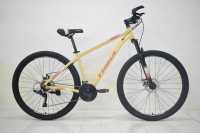
2026 Trinx M116 26″ | 27.5″ | 29″ Mechanical Mountain Bike
₱8,050.00
Buy on Lazada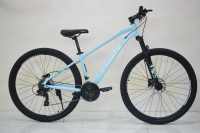
Trinx Edge Elite 27.5 | Quest 29 | Edge 26 24s Hydraulic Alloy Mountain Bike
₱9,150.00
Buy on Lazada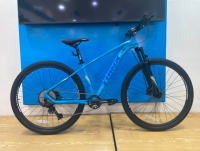
2026 Trinx DVY 2.0 27.5 & 29″ Mountain Bike
₱14,300.00
Buy on Lazada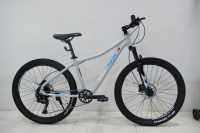
2026 Trinx N700 26 1x9 Speed Ladies Mountain Bike
₱13,100.00
Buy on Lazada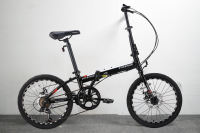
Trinx Intense 20″ Folding Bike
₱8,250.00
Buy on Lazada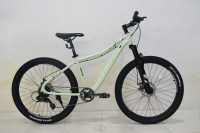
Trinx N106 26″ Ladies Bike Alloy Mountain Bike
₱9,150.00
Buy on Lazada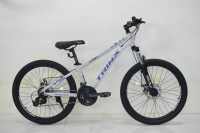
2026 Trinx M134 24″ Mechanical Alloy Mountain Bike
₱8,650.00
Buy on Lazada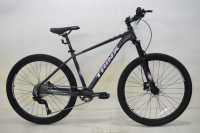
2026 DVY 1.0 27.5 | 29 Hydraulic Mountain Bike
₱12,200.00
Buy on LazadaAbout Trinx
Trinx (stylized as TRINX) is a Chinese bicycle brand owned by Trinity Group, a manufacturer headquartered in Guangzhou, Guangdong, China. The brand specializes in recreational, sport, and performance bicycles, with product lines covering mountain bikes, road bikes, city bikes, folding bikes, children’s bicycles, and electric bicycles.1 Trinx has established a significant international presence through distributors, joint ventures, and production operations in several countries, including the Philippines and India.1
The distinction between the parent company’s history and the brand itself is notable: while Trinity Group traces its corporate origins to 1990, TRINX was launched as a self-owned bicycle brand in 2006.1
History
Origins: 1990–1999
The history of Trinx is rooted in the development of its parent company, Trinity. In 1990, Trinity’s predecessor, Sanhuan Hardware, was established to manufacture mountain bike components. This was followed in 1995 by the establishment of Leonis, which focused on higher-end mountain bike frames, suspension components, and folding bike equipment.1
In 1999, Trinity was formally established and began producing and selling complete bicycles within the Chinese domestic market.1 The company subsequently expanded outside China, entering overseas markets in 2002, a move that laid the groundwork for Trinx’s eventual international identity.1
Launch of TRINX: 2006
2006 marked the official establishment of TRINX as Trinity’s self-owned bicycle brand. It was positioned as a leisure-sports brand emphasizing youthful design, sporting use, and accessible performance.1 The brand identifies its core values as Youth, Vigor, and Bravery. While initially focused heavily on mountain bikes, the range later expanded to include road, city, children’s, and electric bicycles.1
Expansion and technology: 2014–2017
Trinity introduced carbon-fiber frame production technology in 2014, signaling a shift toward advanced, high-performance manufacturing.1 During this period, the company also established a joint-venture operation in the Philippines, strengthening its presence in Southeast Asia.1
In 2015, automated welding technology for steel and aluminum frames was introduced. By 2016, Trinity had expanded manufacturing cooperation in India and developed electric bike technology in collaboration with the Chinese e-bike company TSINOVA. That same year, Trinx introduced the V1000 carbon mountain bike, which gained significant attention through a crowdfunding campaign in China.1
In 2017, Trinx showcased its e-bike range and the iVelos bicycle-customization platform at the China International Bicycle & Motor Fair.1
Brand name
The name Trinx is closely associated with its parent company, Trinity. While some secondary sources suggest “TRINX” is derived from “Trinity,” official materials primarily present it as the self-owned brand established in 2006 rather than an acronym. Claims that the name officially stands for a specific five-word phrase should be treated with caution.1
Product range
Trinx maintains a broad portfolio catering to various cycling disciplines.
Mountain bikes
Mountain bikes have historically been one of Trinx’s strongest categories. The company produces both hardtail and full-suspension models, ranging from affordable recreational bicycles to high-specification carbon racing machines.1
Road bikes
The road bike lineup targets riders interested in fitness, commuting, and sport riding. The range includes conventional drop-bar models as well as more accessible options for recreational cyclists.1
City and lifestyle bikes
City bikes are designed for everyday transportation, fitness, and leisure. This category aligns with Trinx’s positioning as a leisure-sports brand rather than one focused exclusively on professional racing.1
Folding bikes
Folding bicycles have been part of the wider Trinity/Trinx product history since before the Trinx brand launched, stemming from the company’s earlier manufacturing operations.1
Children’s bikes
Trinx maintains a dedicated Kid category with products specifically aimed at younger riders.1
Electric bikes
E-bikes have become an increasingly important part of the portfolio. Development intensified in the mid-2010s, including collaboration with TSINOVA, and current categories now include E-Bike products alongside conventional bicycles.1
Manufacturing and technology
Trinx is backed by Trinity Group’s capabilities as a bicycle development and manufacturing organization. These include aluminum frame manufacturing, carbon-fiber frame development, fork production, automated welding and painting, assembly, component testing, and R&D.1
Trinity operates 13 complete-bicycle assembly lines and 14 painting production lines, with a stated annual capacity of approximately 2 million complete bicycles, 1.5 million frames, and 1 million forks. The company also employs a large technical workforce and operates a dedicated bicycle testing center. These figures represent the Trinity manufacturing group as a whole rather than Trinx-branded production alone.1
Carbon-fiber development
The introduction of carbon-fiber frame manufacturing in 2014 allowed Trinx to evolve beyond predominantly aluminum and steel recreational bikes. The V1000 carbon mountain bike was a notable product from this era; according to Trinx, its 2016 crowdfunding campaign reached its ¥500,000 target in one day.2
Racing and the TRINX Factory Team
Although traditionally positioned as a leisure-sports brand, Trinx has invested in competitive cycling through the TRINX Factory Team. Established in 2019 as a dedicated racing-bike R&D program, the team’s bicycles have undergone multiple generations of development driven by competition feedback.1
Technical priorities for racing machines include lightweight construction, high rigidity, and optimized geometry. Development involves carbon-fiber technology and collaboration with external design specialists. Trinx has reported victories in international categories, including an Elite Women’s win at an Andalucía race in 2020 and a U19 victory at the 2025 Italia Bike Cup. A fifth-generation racing bike is being developed for 2026.1
Presence in the Philippines
The Philippines is particularly significant to Trinx’s international strategy. Trinity established a Philippine joint venture associated with Trinx in the 2010s. Company history lists One Trinity as a joint venture established in 2014, while Philippine government material identifies Onetrinity Corporation as the authorized distributor formed in 2013.1
The Philippine Board of Investments has reported that Onetrinity sold approximately 35,000 Trinx bicycles annually, describing it as one of the domestic market leaders at the time. This local business presence explains why Trinx is more visible in the Philippine bicycle market compared to many other Chinese brands.1
International presence
Trinity began exploring overseas markets in 2002, with the Trinx brand expanding internationally after its 2006 creation. Strategic bases and partnerships have been established in countries including the Philippines and India, supported by a broader manufacturing and distribution network.1
International business approaches include:
- Joint ventures, such as the Philippine operations.
- International distributors and agents for individual markets.
Trinx states that its bicycles are sold in numerous countries and regions worldwide.1
Brand positioning
Trinx is not positioned as an ultra-premium boutique racing brand but rather as a mass-market sports and recreational manufacturer with increasingly serious performance products. Its strategy spans from entry-level to racing:
entry-level → recreational → enthusiast → performance → racing
This allows the brand to target beginners and everyday riders while maintaining higher-end products for experienced cyclists. The official philosophy centers on Youth, Vigor, and Bravery, recreational sport, technological development, and international expansion.1
Current product categories
The official Trinx website organizes bicycles into the following major categories:
- E-Bike
- Full Suspension
- Hardtail
- Road
- Kid
- City
Model families listed by Trinx include FREE, LIFE, FLYBIRD, DOLPHIN, WARWOLF, TOURING, CUTE, TIGER, and Fightingeagle, though availability varies by market.1
Components and specifications
Like many manufacturers, Trinx uses components from third-party suppliers. Individual models may feature parts from companies such as Shimano, KMC, RockShox, DT Swiss, or Bafang, depending on the specification.1
It is useful to distinguish between Trinx as the frame and bicycle manufacturer and companies like Shimano or SRAM as component suppliers. Consequently, the quality and performance of a Trinx bicycle depend heavily on the specific model and its component specification.
Design and engineering philosophy
Engineering development has evolved from conventional mass production toward sophisticated frame engineering. Key focuses include:
- Aluminum and carbon-fiber technology
- Frame geometry and weight reduction
- Stiffness and manufacturing automation
- Testing and e-bike technology
- Competition-derived development
The Factory Team program illustrates this evolution, progressing from a 2019 racing prototype to independently developed carbon racing platforms.1
Corporate structure
Trinx operates within the following organizational structure:
Trinity Group
↓
TRINX (self-owned consumer bicycle brand)
↓
Mountain / Road / City / Folding / Kids / E-bike products
Trinity serves as the manufacturing and technology organization, while TRINX functions as the consumer-facing brand established in 2006.1
Reputation and market position
Trinx is especially recognizable in China and Southeast Asian markets, including the Philippines. Its advantages are generally associated with:
- Broad product selection and competitive pricing
- Large-scale manufacturing capabilities
- Availability of mountain bikes
- Increasingly sophisticated frame technology
- Strong presence in developing cycling markets
- Local distribution and support in countries like the Philippines
Because the company produces everything from basic recreational bicycles to advanced carbon racing machines, differences between individual models can be substantial. A low-cost Trinx mountain bike and a high-end carbon race bike may share little beyond the logo.
Notable milestones
| Year | Milestone |
|---|---|
| 1990 | Sanhuan Hardware, Trinity’s predecessor, established |
| 1995 | Leonis established; mountain/folding-bike frame development expands |
| 1999 | Trinity established for complete-bicycle production and sales |
| 2002 | Overseas market expansion begins |
| 2006 | TRINX brand established |
| 2014 | Carbon-fiber technology introduced; Philippine joint-venture development |
| 2015 | Automated frame-welding technology introduced |
| 2016 | E-bike development expands; V1000 carbon MTB crowdfunding success |
| 2017 | E-bike range and iVelos customization platform showcased |
| 2019 | TRINX Factory Team racing-bike R&D project begins |
| 2021 | Factory Team develops its own carbon racing frame |
| 2025 | Fourth-generation Factory Team racing platform announced |
| 2026 | Fifth-generation racing bike planned |