Shop on Lazada
Ultra Suede products

Camry Model Specific Suede Interior Trim Panel 24-26 Models
₱7,461.00₱14,532.00
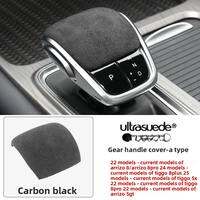
Ultra Suede | Suitable for Chery Tiggo 8 5X 3X Arrizo 5GX 5PLUS Suede Gear Shift Cover
₱501.90₱933.09

Ultra Suede | Interior Upgrade Kit For Haval 2nd Generation Dog Central Console Shifter Frame Door Lift Panel Suede Parts
₱10,938.59₱21,793.99
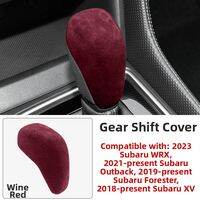
Ultra Suede | Interior Modification Protection Cover Shift Knob Cover
₱689.24₱1,321.15

Ultra Suede | Mazda Steering Wheel Decorative Trim
₱1,301.96₱2,198.13
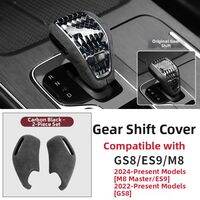
Ultra Suede | Leather Shifter Knob Cover For GAC Trumpchi GS8 M6 M8 GS4
₱773.00₱1,461.00
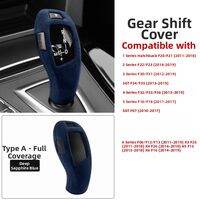
Ultra Suede | Suede All Cover Shift Boot Cover
₱714.94₱1,346.85
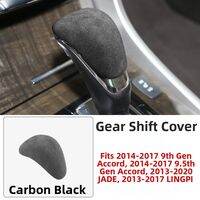
Ultra Suede | Car Gear Shift Cover Protection Fit for 9th and 9.5th Gen Accord Jade Lingpai Plush Material
₱529.00₱977.00
About Ultra Suede
Overview
Ultra Suede, formally registered as Ultrasuede®, is a premium synthetic-suede material brand developed and manufactured by Toray Industries, Inc.1 It is distinguished by its soft texture, fine microfiber construction, durability, and extensive application across fashion, interiors, automotive and aircraft cabins, footwear, accessories, consumer goods, and industrial design.2 Unlike conventional fashion labels, Ultra Suede is a material brand rather than a clothing manufacturer.
Originally developed in the late 1960s and introduced commercially in 1970, Ultra Suede was among the first high-performance materials engineered to replicate the tactile and visual qualities of natural suede without using animal hide.3 The technology was pioneered by Toray researchers, including scientist Miyoshi Okamoto, whose work on ultra-fine fibers became fundamental to the material’s development.3
History
The origins of Ultra Suede lie in Toray’s research into ultra-fine synthetic fibers during the 1960s. The company developed a non-woven material capable of producing a texture resembling natural suede while offering characteristics that conventional leather could not easily provide. Patents for the underlying technology were filed beginning in 1969, followed by the commercial launch in 1970.3
Historically, the material was marketed under different brand identities depending on the region. In Japan, it was known as Ecsaine®, while Ultra Suede became the principal brand name in the United States. Toray later consolidated its strategy to strengthen both Ultra Suede and Alcantara as its two primary global suede-like material brands. Today, Ultra Suede remains part of Toray’s advanced-materials business and is marketed globally as a high-performance luxury material of Japanese origin.
Material and Technology
Unlike conventional suede produced from animal hide, Ultra Suede is a synthetic non-woven microfiber material. Its construction combines extremely fine polyester fibers with polymers in a dense three-dimensional structure, a technology Toray describes as fundamentally different from ordinary woven or knitted textiles.1
A distinctive characteristic of these fibers is their minute diameter; Toray notes that a strand of the polyester ultra-fine fiber longer than 900 km could weigh less than one gram. These fibers are processed into the dense structure responsible for the material’s characteristic hand and appearance.1 Formulations vary by product line: some versions utilize recycled polyester microfiber, while newer iterations incorporate plant-derived materials as part of Toray’s sustainability initiatives.3
Characteristics
Ultra Suede occupies a niche between luxury textiles and technical materials. Its principal characteristics include:2
- Soft texture: Engineered to reproduce the tactile sensation of premium suede.
- Suede-like appearance: A fine, uniform surface lacking the natural irregularities of animal hide.
- Durability: Designed for demanding applications and long-term use.
- Colorfastness: Resistant to fading and discoloration across various applications.
- Easy maintenance: Certain varieties are easier to clean than conventional suede.
- Breathability: The structure allows for air and moisture permeability.
- Wide color selection: Available in an extensive range of colors.
- Reversibility: Some constructions feature highly similar surfaces on both sides.
- Low-maintenance luxury: Combines aesthetic appeal with functional performance.
These properties allow Ultra Suede to bridge the gap between fashion, luxury, industrial design, and advanced materials.
Applications
Fashion
Ultra Suede is widely used in clothing, footwear, bags, and accessories. Its ability to mimic the appearance and softness of suede while providing consistent color and easier maintenance makes it attractive to designers.1 The material can be cut, sewn, shaped, printed, embossed, and otherwise processed for diverse design applications.
Furniture and Interiors
Interior design represents one of the material’s major application areas. Common uses include sofas, lounge chairs, dining chairs, ottomans, wall coverings, display surfaces, and luxury interiors.4 Its resistance to fading and relatively easy-care characteristics make it particularly suitable for upholstered furniture and commercial spaces.
Automotive
In the automotive sector, Ultra Suede is used for seats, interior trim, dashboards, headliners, and other surfaces. Automotive-grade versions are specifically developed to meet the rigorous performance and safety requirements associated with vehicle interiors.3
Aviation and Marine
The material is utilized in aircraft interiors, including corporate, VIP, and commercial applications. Specialized versions can receive flame-retardant treatments to comply with aviation safety standards.1 It is also employed in marine interiors due to its durability, cleanability, and resistance to fading and mildew.
Consumer Products
Beyond traditional textiles, Ultra Suede has expanded into smartphone and electronic-device accessories, bags, cases, sports equipment, luxury-goods displays, watch and jewelry presentation, and lifestyle accessories. Toray describes its application field as extending from fashion and interiors into automotive, aircraft, sports, electronics, and industrial products.2
Brand Identity
It is important to distinguish that Ultra Suede is not simply a generic term for fake suede. Ultrasuede® is a trademarked brand representing a specific family of materials produced through Toray’s proprietary technology.5 While other synthetic suede materials exist under different brands, Ultra Suede refers exclusively to Toray’s product.
The brand is positioned around the concept of combining technology with luxury and design. Rather than presenting itself merely as a leather imitation, Toray promotes Ultra Suede as an independent advanced material with distinct aesthetic and functional qualities.
Relationship with Alcantara®
Ultra Suede is closely related technologically and historically to Alcantara®, another well-known premium suede-like synthetic material. Both trace their origins to Toray’s ultra-fine-fiber research and the work of Miyoshi Okamoto. However, they evolved into distinct brands serving different markets. Around 2013, Toray adopted a strategy of strengthening Ultra Suede and Alcantara as two separate global brands.
| Ultrasuede® | Alcantara® | |
|---|---|---|
| Origin | Japan | Italy/Japan technology lineage |
| Technology | Toray microfiber technology | Toray-derived microfiber technology |
| Main identity | Japanese advanced material | Italian luxury material brand |
| Typical uses | Fashion, interiors, automotive, industrial | Automotive, fashion, interiors, luxury goods |
| Relationship | Toray brand | Separate Toray-associated company/brand |
Despite sharing technological roots, the two should not be treated as identical products under different names.
Sustainability
Sustainability has become integral to Ultra Suede’s development. Product lines now incorporate recycled polyester, while others use polyester and polyurethane partially derived from plant-based sources. Toray has stated ambitions to increase the proportion of plant-derived materials used in the technology. This reflects a shift from the original concept of synthetic suede as merely an alternative to animal leather toward a broader vision of high-performance, lower-impact advanced materials.
Manufacturing and Corporate Ownership
Ultra Suede is a brand of Toray Industries, a major Japanese chemical and advanced-materials company headquartered in Tokyo. Toray operates internationally, developing materials spanning fibers, textiles, chemicals, composites, films, pharmaceuticals, and other advanced technologies.1 In North America, the brand is represented through Toray International America Inc., while Toray maintains dedicated Ultra Suede operations and marketing organizations in Japan and other regions.
Cultural and Design Significance
The significance of Ultra Suede in design stems from its unique combination of luxury aesthetics and industrial performance. While traditional suede is valued for softness and luxury associations, Ultra Suede retains these qualities while adding the consistency, durability, color control, and manufacturing flexibility of a synthetic technical material. This makes it particularly attractive to designers seeking a luxurious surface that can withstand practical applications where natural suede may fail.
Toray’s design-focused TALKING Ultrasuede® project, established in 2016, documents designers and creators who have selected the material, exploring its creative possibilities.2
Name
The name Ultra Suede combines ultra, suggesting advanced or extremely fine technology, with suede, referring to the material’s resemblance to natural suede. The registered form of the brand is Ultrasuede®.
Usage in Popular Understanding
Colloquially, “Ultra Suede” is sometimes used as a synonym for synthetic suede. Strictly speaking, however, Ultrasuede® refers to Toray’s specific branded material, whereas terms like synthetic suede, faux suede, microfiber suede, and microsuede describe a broader category of materials produced by various manufacturers.3
Legacy
More than five decades after its introduction, Ultra Suede stands as a notable example of Japanese materials technology becoming integrated into global fashion and design culture. Its development demonstrated that synthetic fibers could be engineered not merely as inexpensive substitutes for natural materials, but as premium materials in their own right.
Today, the brand’s identity rests on three overlapping pillars: Japanese materials science, luxury-oriented design, and high-performance functionality. Its continued use across fashion, furniture, automotive interiors, aviation, electronics, and industrial design reflects the enduring breadth of the original innovation.2