Shop on Lazada
Vanguard products

Combinex Wound Spray 150ml
₱395.00
Buy on Lazada
Enteral Feeding Tube
₱169.00₱195.00
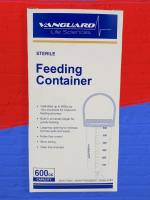
FEEDING CONTAINER AND FEEDING TUBE
₱695.00
Buy on Lazada
enteral Feeding Tube
₱170.00
Buy on Lazada
Enteral Feeding Container
₱675.00
Buy on Lazada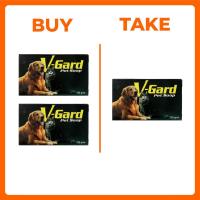
Vanguard Bundle Pack - 2pcs Dog Soap + 1pc Dog Soap 135grams
₱160.00
Buy on Lazada
Feeding Tube for Enteral Feeding Container
₱170.00
Buy on Lazada
Vanguard Nylon Quality Strap With Zipper Belt for Men Women
₱95.00₱120.00
About Vanguard
Vanguard is a prominent American investment management firm recognised globally for pioneering low-cost index investing and operating under a distinctive investor-owned corporate structure. Established in 1975 by John C. Bogle, Vanguard has expanded to become one of the world’s largest asset managers, serving over 50 million investors and managing approximately $11.9 trillion in assets as of 31 March 2026. 1
The firm’s influence extends significantly beyond its own product suite, having played a pivotal role in making index funds, low-cost investing, and broad diversification mainstream concepts for retail investors worldwide.
Basic information
| Vanguard | |
|---|---|
| Full name | The Vanguard Group, Inc. |
| Industry | Asset management / financial services |
| Founded | 1975 |
| Founder | John C. Bogle |
| Headquarters | Malvern, Pennsylvania, United States |
| CEO | Salim Ramji |
| President & CIO | Greg Davis |
| Employees | ~20,000 worldwide |
| Investors | 50+ million |
| Funds worldwide | 465, as of 28 Feb 2026 |
| Assets under management | ~$11.9 trillion, as of 31 Mar 2026 |
| Ownership | Vanguard’s funds, which are owned by their fund shareholders |
| Best known for | Index funds, ETFs, low fees, long-term investing |
The figures presented above are derived primarily from Vanguard’s own 2026 disclosures. 2
Business overview
Vanguard operates as an asset manager, managing investments on behalf of clients rather than primarily deploying its own corporate balance sheet. Investors can access a wide array of financial products and services through the firm, including:
- Mutual funds
- Exchange-traded funds (ETFs)
- Brokerage services
- Retirement accounts and workplace plans
- Financial advice services
- Institutional investment services
- Target-date retirement funds
- Bond and fixed-income products
- Actively managed funds
- Index funds
- Personalised and direct-indexing solutions
While often synonymous with passive investing, Vanguard is a comprehensive financial services and investment management organisation. Nevertheless, index investing and low-cost investment products remain central to its identity. 3
Ownership structure
A defining characteristic of Vanguard is its ownership model, which differs fundamentally from most large publicly traded asset managers that have outside shareholders expecting profit maximisation. Vanguard’s structure operates as follows:
Investors → own Vanguard funds → funds own Vanguard
Specifically, Vanguard is owned by its member funds, which are in turn owned by their shareholders. 4 This investor-owned structure eliminates external corporate shareholders demanding profits from the management company. Instead, the firm states this allows it to focus exclusively on the interests of fund investors, shaping a business philosophy where lower costs ensure more investment returns remain with the investor. Consequently, Vanguard describes itself as a company “of the investor, by the investor, and for the investor.” 5
Founding and history
The history of Vanguard is intrinsically linked to John Clifton “Jack” Bogle. Previously associated with Wellington Management, Bogle identified a fundamental flaw in the conventional mutual fund industry: investors were paying excessive fees for investment management despite the extreme difficulty of consistently beating the market. His solution was radical for the era: rather than attempting to select winning investments, investors should simply own the entire market at minimal cost. Vanguard commenced operations on 1 May 1975. 6
The 1976 index fund revolution
In 1976, Vanguard launched the First Index Investment Trust, which later became the Vanguard 500 Index Fund. This marked the first index mutual fund made available to individual investors. 7 The concept bypassed active stock selection in favour of tracking the S&P 500, embodying the principle of owning the market rather than seeking winners. Although initially criticised and considered a failure by many industry observers, this approach eventually transformed the global investment landscape.
“Buy the haystack” philosophy
Bogle’s investment philosophy is frequently summarised by the metaphor: “Don’t look for the needle in the haystack. Just buy the haystack.” 8 Rather than predicting individual corporate winners, investors are encouraged to purchase a diversified collection of securities to capture overall market returns. This philosophy rests on diversification, low costs, long-term investing, avoiding unnecessary trading, accepting market returns, and compounding. These principles became strongly associated with Vanguard and the broader Bogleheads investing movement.
Low-cost philosophy and industry impact
While indexing is Vanguard’s most famous innovation, low cost is arguably its most critical competitive advantage. Investment fees compound significantly over decades; therefore, Vanguard has spent decades driving down expense ratios. Historical data indicates the asset-weighted average expense ratio of its US mutual funds and ETFs fell to 0.07% for 2025. 9 In 2026, Vanguard reported that cost reductions implemented since February 2025 were on track to save investors more than $500 million, including nearly $250 million in expected savings for 2026 alone. 10
The “Vanguard Effect”
Vanguard’s fee reduction strategy has had a profound impact on the wider industry, forcing competitors to lower costs in response. Vanguard terms this phenomenon the “Vanguard Effect.” Historical comparisons demonstrate that average investment expenses across the US industry have fallen substantially alongside Vanguard’s own reductions since the firm began operations. 11 This competition helped normalise inexpensive index funds and ETFs, making Vanguard historically significant even for investors who do not hold its products.
Investment approach and products
Contrary to the misconception that Vanguard focuses solely on passive investing, the firm offers both passive and active strategies.
Passive and active management
Passive funds track indices such as the S&P 500, total US and international stock markets, bond markets, and various sector or factor indexes. Simultaneously, Vanguard operates actively managed stock and bond funds, arguing that active management has a role when implemented carefully and at reasonable costs. Its business combines indexing, active management, and asset-allocation strategies. 12 As of March 2026, Vanguard reported that 83% of its actively managed funds had outperformed their average competitors over the preceding 10 years, though this statistic does not guarantee future performance. 13
Major products
Key investment products include:
- Vanguard 500 Index Fund (VFIAX): Tracks the S&P 500 and serves as the successor to the original 1976 index fund. 14
- Vanguard Total Stock Market Index Fund (VTSAX): Provides broad exposure to the US equity market.
- Vanguard Total International Stock Index Fund (VTIAX): Offers exposure to non-US stocks.
- Vanguard Total Bond Market Index Fund (VBTLX): Covers the US investment-grade bond market.
- Vanguard ETFs: A vast lineup covering equities, bonds, sectors, and factors. The company reported 465 funds worldwide as of 28 February 2026. 14
Target-date retirement funds and ETFs
Vanguard is a leading provider of target-date funds, which automatically adjust asset allocation from equities to conservative assets as a specific retirement year approaches. These are widely used in employer-sponsored retirement plans. Additionally, Vanguard helped make ETFs mainstream with products focused on broad diversification and low operating costs, such as VOO, VTI, VXUS, BND, VEA, and VWO.
Investment philosophy
Vanguard advocates several core principles for investors:
- Goals first: Invest based on specific objectives like retirement or education.
- Diversify: Avoid over-reliance on single companies, sectors, or asset classes.
- Keep costs low: Minimise fees to preserve returns.
- Stay disciplined: Avoid emotional portfolio changes during market volatility.
- Think long term: Evaluate outcomes over decades rather than days.
- Use asset allocation: Balance stocks, bonds, and other assets to manage risk.
- Avoid confusing activity with success: Recognise that frequent trading is rarely beneficial.
Global expansion and scale
Vanguard began its international expansion in the 1990s, opening Vanguard Investments Australia in Melbourne in 1996. It subsequently entered markets in Europe, Canada, India, and Mexico. 15 Today, while its US business remains central to its scale, Vanguard operates globally. Current figures cite over 50 million investors, approximately 20,000 employees, 465 funds worldwide, and roughly $11.9 trillion in AUM as of 31 March 2026. 16 This immense scale creates economies of scale that further reduce operating costs per unit of assets.
Leadership
Salim Ramji serves as CEO, having assumed the role in July 2024 after more than 25 years in senior financial services roles. 17 Greg Davis acts as President and Chief Investment Officer, overseeing investment management and enterprise risk management with approximately 25 years of tenure at the firm. 18 The transition from Bogle’s era involves maintaining the traditional emphasis on low costs and investor interests while expanding capabilities in technology, advice, and personalisation.
Modern developments and milestones
In the 2020s, Vanguard has invested heavily in digital experiences, financial advice, direct indexing, artificial intelligence, and institutional services. The firm utilises AI to assist employees in software development, research, and content creation while emphasising human judgement. 19 It has also introduced Personalized Indexing and other technology-enabled capabilities. 20
2025 marked Vanguard’s 50th anniversary, reinforcing its mission to serve investors. In 2026, the firm celebrated 50 years since the launch of its first index fund. 21 These milestones highlight two distinct revolutions: changing how investment companies are structured (1975) and transforming how ordinary people invest (1976).
Industry influence
Vanguard’s significance lies in altering the economics of investing. Before low-cost index funds, investors faced higher expenses, sales commissions, and less diversified options. Vanguard demonstrated that an investment company could compete through scale, simplicity, diversification, low costs, and long-term discipline. An independent Morningstar analysis cited by Vanguard estimated that its funds created $4.6 trillion in wealth and shareholder value during the 10 years ending 31 December 2024, more than double the next-leading fund family. 22
Criticisms and controversies
Vanguard’s size makes it a significant shareholder in many publicly traded companies, sparking debates regarding corporate governance, proxy voting, shareholder activism, and the concentration of ownership among large asset managers. Issues surrounding environmental, social, and governance (ESG) factors and the power exercised by passive managers are also prominent. In response, Vanguard developed programs offering investors greater choice in proxy voting. In 2026, its Investor Choice program expanded to 32 funds, covering approximately 22 million eligible investors and nearly $4 trillion in Vanguard assets. 23
Comparison with peers
| Vanguard | BlackRock | Fidelity | |
|---|---|---|---|
| Core identity | Investor-owned asset manager | Global asset manager | Investment & financial-services company |
| Famous for | Low-cost index investing | iShares ETFs + institutional asset management | Brokerage + active management + retirement |
| Founded | 1975 | 1988 | 1946 |
| Ownership | Investor/fund-owned structure | Public company | Privately held |
| Index investing | Central | Central | Important |
| ETFs | Major provider | World’s largest ETF brand via iShares | Major provider |
| Brokerage | Yes | Not primarily retail brokerage | Major business |
| Advice | Yes | Institutional/wealth focus | Major business |
| Bogle philosophy | Foundational | No | No |
Unlike competitors, Vanguard commercialised and popularised low-cost indexing for individual investors at massive scale, helping transform it into a mainstream approach.
Brand identity
Vanguard’s brand distinguishes itself by emphasising trust, simplicity, fairness, discipline, long-term thinking, and low cost, rather than exclusivity or sophistication. The name suggests being at the forefront of lower-cost investing, reinforced by a restrained corporate design and red “V” logo. The firm’s stated purpose is “To take a stand for all investors, to treat them fairly, and to give them the best chance for investment success.” 24 This proposition has remained consistent for five decades.
Timeline
1929
The Wellington Fund, Vanguard’s oldest fund, is launched.
1975
Vanguard begins operations.
1976
Vanguard launches the First Index Investment Trust, now the Vanguard 500 Index Fund—the first index mutual fund available to individual investors. 25
1996
Vanguard opens its first international office in Australia. 26
2024
Salim Ramji becomes CEO.
2025
Vanguard celebrates its 50th anniversary and continues major reductions in investment expenses.
2026
Vanguard marks 50 years of index investing, with more than 50 million investors and approximately $11.9 trillion in AUM.
References
- Responsibly scaling AI to better serve our clients | Vanguard
- Vanguard by the numbers | Vanguard
- Management team and board of directors | Vanguard
- Investment products | Vanguard
- Who we are | Vanguard
- Our focus, day in and day out, is on our investors and their goals | Vanguard
- Of the investor. By the investor. For the investor. Since 1975. | Vanguard
- Vanguard’s history | Vanguard
- 50 years. 50 facts. Indexing since 1976. | Vanguard
- About indexing | Vanguard
- Vanguard delivers landmark cost savings | Vanguard
- Get the facts: Vanguard’s role as a passive investment manager | Vanguard
- A new way to participate in Vanguard Investor Choice | Vanguard
- A behind-the-scenes look at Vanguard 500 Index Fund | Vanguard
- Our unwavering commitment to you | Vanguard
- New voice-activated access to Vanguard Investor Choice | Vanguard
- Meet the five Vanguard leaders on Barron’s top 100 | Vanguard
- Statement on Texas settlement | Vanguard
- Vanguard Adds 17 New Funds to Vanguard Investor Choice | Vanguard
- Beyond beta: Charting the evolution of index investing | Vanguard
- Vanguard’s future participation in the PRI | Vanguard
- Vanguard Adds Three New Funds – Including Vanguard 500 Index Fund (VFIAX/VOO) – to Vanguard Investor Choice | Vanguard
- Vanguard Announces Largest Ever Expense Ratio Reduction | Vanguard
- Vanguard to Change Benchmarks for Dividend Funds | Vanguard
- What sets us apart from other asset management firms | Vanguard
- Discipline that delivers | Vanguard