Shop on Lazada
Varta products
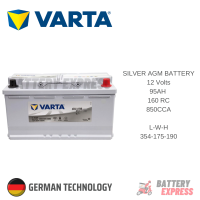
Varta AGM Battery LN3 / LN4 / LN5 - For BMW / Mercedes Benz / Porsche / Volkswagen and more - Silver Dynamic German Technology
₱21,000.00
Buy on Lazada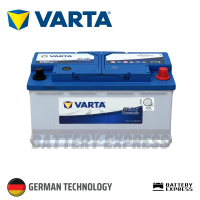
Varta Battery DIN100 / LN5 / 60044 Maintenance Free Blue Dynamic - Premium Car Battery
₱9,180.00₱11,000.00
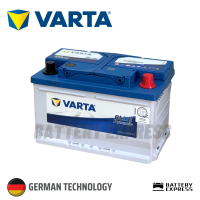
Varta Battery DIN75 / LN3 / 57539 Maintenance Free Blue Dynamic - Premium Car Battery
₱7,580.00₱8,000.00
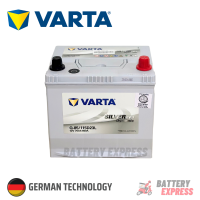
Varta Silver EFB Battery Q85 / 1SM / NS50L (Top of the line) - Car Battery 115D23L (Start & Stop Ready)
₱7,980.00₱9,000.00
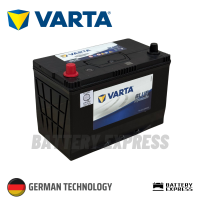
Varta Battery 3SM (REVERSE) / N70Z / 95D31R Maintenance Free Blue Dynamic - Premium Car Battery
₱5,880.00₱6,800.00
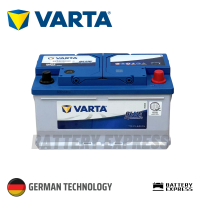
Varta Battery DIN77 / DIN80 / LN4 / 58014 Maintenance Free Blue Dynamic - Premium Car Battery
₱9,800.00
Buy on Lazada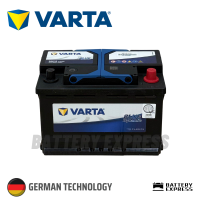
Varta Battery DIN66 / LN3 / 56618 Maintenance Free Blue Dynamic - Premium Car Battery
₱6,800.00₱8,300.00
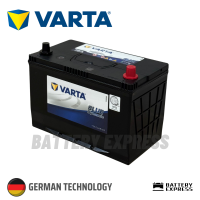
Varta Battery 3SM / N70L / 95D31L Maintenance Free Blue Dynamic - Premium Car Battery
₱6,000.00
Buy on LazadaAbout Varta
Overview
VARTA AG is a historic German battery brand with origins dating back to 1887. The VARTA name is associated with rechargeable batteries, automotive batteries, consumer batteries, microbatteries, lithium-ion technology, and energy-storage systems. However, “VARTA” today does not refer to one single corporate entity. The former VARTA business was separated into different companies; the VARTA Automotive brand is now owned and operated by Clarios, while today’s VARTA AG operates other battery businesses.1
| Field | Information |
|---|---|
| Brand | VARTA |
| Origin | Germany |
| Historical origin | 1887, Hagen, Germany |
| Founder | Adolf (Adolph) Müller |
| Original industry | Accumulators / rechargeable batteries |
| Major products historically | Automotive batteries, consumer batteries, microbatteries, rechargeable batteries |
| Current VARTA AG headquarters | Ellwangen, Baden-Württemberg, Germany |
| VARTA AG businesses today | Consumer batteries, microbatteries, lithium-ion cells/packs, energy storage |
| VARTA Automotive owner/operator | Clarios |
| Automotive headquarters of parent | Clarios, Glendale, Wisconsin, USA |
| Global presence | VARTA products/brands are sold internationally |
| Historical founding year | 1887 |
| VARTA name introduced | 1904 |
What is VARTA?
VARTA is best understood as a German battery brand with more than 135 years of history rather than simply as a single modern battery company.
Its history began with Adolf Müller, who founded Büsche & Müller in Hagen in 1887. The business became associated with accumulator technology—the rechargeable battery technology that would become the foundation of VARTA’s later activities.1
Over the following century, VARTA became particularly well known for automotive lead-acid batteries, while also developing consumer and miniature battery businesses.
A major corporate restructuring in the 2000s fundamentally changed the meaning of the VARTA name. Businesses that once belonged to the historic VARTA group were separated and ultimately ended up under different corporate ownership. Today, VARTA AG and VARTA Automotive/Clarios are separate corporate groups.1
The Origins: 1887
The story starts in 1887 in Hagen, Germany.
Adolf Müller established Accumulatoren-Fabrik Tudorschen Systems Büsche & Müller OHG. This company is regarded by VARTA AG and VARTA Automotive as the historical origin of VARTA.1
The timing was significant. Europe was entering an extraordinary period of electrical and industrial development. Electric lighting, electrical machinery, early automobiles, and telecommunications were creating demand for ways of storing electrical energy.
Rechargeable lead-acid batteries, commonly called accumulators, were particularly important because they could store electricity and then release it when required. This gave the young company an important technological market to develop.
AFA and the Development of the VARTA Business
In the 1890s, major German electrical companies including AEG and Siemens became involved with the predecessor business. The resulting company became known as Accumulatorenfabrik AG (AFA).3
AFA became the central historical corporate predecessor of VARTA. The company’s batteries were used in a variety of applications, including:
- Automobiles
- Industrial equipment
- Transportation
- Electrical systems
- Portable equipment
- Military applications
- Early electric vehicles
One particularly interesting historical episode occurred in 1896, when AFA batteries were used on Fridtjof Nansen’s polar expedition. VARTA’s historical account says the batteries were subjected to extremely low-temperature conditions during the expedition.
Origin of the Name
The VARTA name was introduced in 1904.
VARTA’s own historical materials explain the name as an acronym derived from German words associated with the business:
Vertrieb
Aufladung
Reparatur
Transportabler
Akkumulatoren
In English, this broadly conveys the ideas of distribution, charging, and repair of transportable accumulators.13
The name was originally associated with portable rechargeable batteries and subsequently became a major international battery brand.
VARTA and the Automobile
The automobile became one of VARTA’s most important markets.
Early automobiles required batteries to start their engines and operate electrical equipment. VARTA developed lead-acid batteries specifically suited to automotive starting applications.
By 1914, VARTA lead-acid batteries were becoming increasingly important for starting automobile engines.3
Another milestone came in 1936, when VARTA introduced automotive batteries in standardized sizes. Standardization made replacement significantly easier because batteries could be designed around common vehicle requirements.3
This helped establish VARTA’s long-term identity as a major automotive battery brand.
Expansion Beyond Car Batteries
Although automotive batteries became one of its best-known products, the historical VARTA group was much broader.
Over time, VARTA-related businesses developed products including:
- Household batteries
- Rechargeable consumer batteries
- Hearing-aid and microbatteries
- Specialty batteries
- Industrial batteries
- Lithium-ion cells
- Battery packs
- Energy-storage systems
The company therefore evolved from a traditional accumulator manufacturer into a diversified battery and energy-technology group.
VARTA’s historical timeline includes another notable achievement: VARTA batteries were used in equipment associated with the Apollo 11 mission, including the camera used by Neil Armstrong.
The Major Corporate Split
Understanding the current status of VARTA requires recognizing a significant structural change. For much of its history, VARTA was a large corporate group with several different battery businesses. Beginning in the late 20th and early 21st centuries, those businesses underwent substantial restructuring and ownership changes.
During the 2000s, the historic VARTA group was broken up into economically independent businesses. Those businesses subsequently became part of different corporate groups.1
Consequently:
VARTA AG ≠ VARTA Automotive
They share historical roots and the VARTA name, but they are separate corporate groups today.1
This distinction is particularly important for anyone researching VARTA as a company, purchasing a VARTA battery, or studying its corporate history.
VARTA Automotive Today
The VARTA Automotive brand is currently part of Clarios, a US-based company specializing in low-voltage battery technologies for vehicles.
Clarios states that it owns, manufactures, and distributes VARTA Automotive batteries. It operates independently from VARTA AG.3
VARTA Automotive focuses primarily on vehicle batteries for:
- Passenger cars
- Commercial vehicles
- Motorcycles and powersports
- Recreational vehicles
- Leisure applications
- Vehicles equipped with start-stop systems
- Modern vehicles with high electrical demands
Its products include conventional lead-acid batteries as well as technologies such as AGM (Absorbent Glass Mat) and EFB (Enhanced Flooded Battery).1
Clarios describes VARTA as one of its premium global automotive brands. Its portfolio also includes brands such as OPTIMA, Heliar, LTH, and Delkor.
VARTA Automotive Technology
Modern vehicles place much greater demands on their batteries than older cars. A battery may need to support engine starting, start-stop systems, lighting, infotainment, electric steering, braking-related systems, driver-assistance systems, electronic control units, comfort features, and security systems.
VARTA Automotive markets different battery technologies according to these vehicle requirements.
AGM
AGM, or Absorbent Glass Mat, is a high-performance lead-acid battery design in which the electrolyte is absorbed into a glass-mat separator. It is particularly suited to vehicles with demanding start-stop and electrical systems.
EFB
EFB, or Enhanced Flooded Battery, is an enhanced form of flooded lead-acid technology. It is commonly used for vehicles with moderate start-stop requirements.
Conventional Batteries
Traditional flooded lead-acid batteries remain important for vehicles without the electrical demands of modern start-stop systems.
VARTA Automotive also emphasizes its PowerFrame grid technology, which is designed to improve durability and resistance.3
VARTA AG Today
The modern VARTA AG is a separate German company headquartered in Ellwangen, Baden-Württemberg.
According to VARTA’s corporate website, its current business structure includes:
- Consumer Batteries
- Micro Batteries
- Lithium-Ion Small Cells
- Lithium-Ion Battery Packs
- Energy Storage Systems
When someone refers to a “VARTA battery,” they could potentially be referring to very different products depending on the market. For example, a VARTA-branded AA battery and a VARTA Automotive car battery may carry the same historic brand but belong to different corporate organizations.
Consumer Batteries
VARTA has a major consumer-battery presence, particularly in Europe. Its consumer products include batteries designed for everyday devices such as remote controls, toys, flashlights, cameras, household electronics, and portable devices. The consumer side also includes rechargeable battery products. This part of the business belongs to the modern VARTA organization rather than Clarios’ automotive operation.
Microbatteries
Another important part of VARTA’s technological heritage is microbattery technology. These are much smaller batteries designed for specialized electronic products.
Applications can include medical devices, wearables, electronics, sensors, hearing-related devices, miniature consumer products, and industrial equipment. VARTA AG operates VARTA Microbattery as part of its current corporate structure.
Lithium-Ion Technology
VARTA AG has expanded beyond traditional alkaline and lead-acid battery technology into lithium-ion cells and battery packs. Lithium-ion technology is particularly important for modern portable electronics and energy-storage applications because it offers high energy density relative to its weight. VARTA AG lists lithium-ion small cells and lithium-ion battery packs among its current business areas.
Energy Storage
VARTA AG also operates in energy-storage systems. This represents a broader evolution of the traditional battery company: rather than simply producing batteries for individual devices, modern battery companies increasingly provide systems capable of storing electrical energy for later use. This can include stationary energy-storage applications associated with renewable energy and electricity management.
Reputation and Market Position
VARTA’s strongest historical reputation has traditionally been associated with German engineering, reliability, and battery technology.
The automotive VARTA brand is positioned by Clarios as a premium automotive battery brand. VARTA Automotive states that it is particularly strong among European vehicle manufacturers, workshops, and installers.3
Clarios says its VARTA automotive batteries are sold across markets including Europe, China, Asia, and South America. The brand therefore has a particularly strong association with European automotive engineering.
Environmental and Recycling Efforts
Battery recycling is particularly important for lead-acid automotive batteries because lead is both valuable and environmentally hazardous if improperly handled.
Clarios describes its automotive battery business as operating a closed-loop recycling model, with collected vehicle batteries being recycled and their materials reused in new batteries. It reports that more than 100% of lead batteries from vehicles in Europe are collected and recycled, reflecting collection of batteries beyond the number newly sold in the relevant system.3
VARTA Automotive also highlights reductions in energy and water consumption during battery production.3
VARTA and Electric Vehicles
A common misconception is that electric vehicles do not need traditional automotive batteries. In reality, most modern electric vehicles use a high-voltage traction battery for propulsion but also require a low-voltage electrical system, commonly around 12 V, for many vehicle functions.
VARTA Automotive notes that its 12-volt batteries can provide power for functions such as safety systems, braking-related functions, power steering, windshield wipers, vehicle electronics, and other key-off functions.3
Thus, the transition toward electric vehicles does not necessarily eliminate the need for low-voltage automotive battery technology.
Major Historical Timeline
1887
Adolf Müller establishes the company in Hagen that becomes the historical foundation of VARTA.
1890
AEG and Siemens invest in the predecessor business, contributing to the formation and growth of AFA.3
1893
AFA batteries are associated with early electric-vehicle activity in Germany.3
1896
AFA batteries are used during Nansen’s polar expedition.
1904
The VARTA brand name is established.3
1914
VARTA lead-acid batteries gain importance in automotive starting applications.3
1936
VARTA introduces standardized automotive battery sizes.3
1969
VARTA batteries are used in equipment associated with the Apollo 11 mission.
1990s
VARTA expands its activities in microbattery and rechargeable-battery technologies.
1997
VARTA establishes NiMH production in Ellwangen.
2000s
The historic VARTA group undergoes major restructuring and separation of its different businesses.1
2014
Johnson Controls expands the VARTA Automotive lineup with AGM and EFB technologies.3
2019
Johnson Controls’ Power Solutions business becomes Clarios, taking the VARTA Automotive business with it.3
Today
VARTA AG and VARTA Automotive/Clarios operate as separate organizations, despite their common historical heritage.1
Ownership and Corporate Structure Today
A simplified way of viewing the modern VARTA landscape distinguishes between the two primary entities derived from the historical group founded in 1887:
- VARTA AG: A modern German AG focusing on Consumer Batteries, Micro Batteries, and Lithium-Ion & Energy Storage.
- VARTA Automotive: An automotive battery brand operated by Clarios.
This is a simplified representation rather than a legal corporate chart, but it illustrates the key distinction. VARTA itself now explicitly directs visitors separately toward VARTA AG and VARTA Automotive, stating that the automotive business belongs to Clarios.
Distinguishing Characteristics
Several characteristics distinguish the brand:
Long History
With roots going back to 1887, VARTA has one of the longest histories among major European battery brands.
German Origins
The brand originated in Germany and developed during the country’s early electrical and industrial expansion.
Automotive Heritage
VARTA became particularly influential in automotive starting batteries and remains a major automotive battery brand through Clarios.
Technological Diversification
The historical company moved from traditional accumulators into consumer batteries, microbatteries, rechargeable technologies, lithium-ion technology, and energy storage.
Multiple Corporate Identities Today
Unlike many brands, VARTA’s historical corporate identity is no longer identical to its current ownership structure. Understanding the separation between VARTA AG and VARTA Automotive/Clarios is essential.
Entity Comparison
| Name | What it is today | Main focus |
|---|---|---|
| VARTA | Historic/global brand name | Battery technology broadly |
| VARTA AG | German battery technology company | Consumer, micro, lithium-ion, energy storage |
| VARTA Consumer Batteries | VARTA AG business | Household/consumer batteries |
| VARTA Microbattery | VARTA AG business | Small/specialized batteries |
| VARTA Automotive | Automotive battery brand | Vehicle batteries |
| Clarios | US-based owner/operator of VARTA Automotive | Low-voltage automotive battery technology |
Brand Identity
VARTA’s identity has historically revolved around a simple proposition: stored electrical energy that people can rely on.
Over more than a century, that proposition has appeared in very different forms—from enormous lead-acid accumulators and early automobile batteries to tiny electronic cells and modern lithium-ion systems.
The brand’s historical German heritage is a major part of its identity, while its modern corporate structure is much more international. For automotive customers specifically, VARTA is marketed as a premium, technologically advanced battery brand.3
Summary
VARTA is a German-origin battery brand founded on the work of Adolf Müller in 1887. Beginning with rechargeable accumulator technology, it developed into one of Europe’s historically important battery businesses and became particularly famous for automotive batteries. Over the 20th century, VARTA expanded into consumer, industrial, microbattery, and other battery technologies. During restructuring in the 2000s, the historic VARTA group was divided into separate businesses. Today, VARTA AG in Germany focuses on consumer batteries, microbatteries, lithium-ion technology, and energy storage, while VARTA Automotive is a separate business owned and operated by Clarios. Despite this corporate separation, both retain the heritage of the original VARTA brand, whose history stretches back more than 135 years.2