Shop on Lazada
Venum products
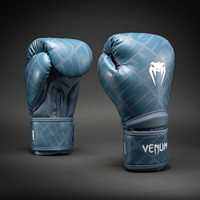
Venum | Adult and Kids Boxing Gloves for Training Sparring
₱4,404.25
Buy on Lazada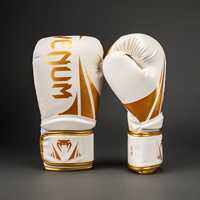
Venum | Adult Training Sanda Thai Boxing MMA Boxing Gloves
₱4,512.15
Buy on Lazada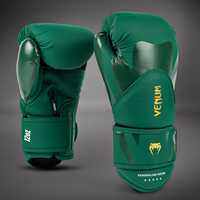
Venum | Boxing Gloves
₱6,205.25
Buy on Lazada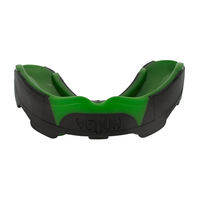
Venum | Multi-sport Teeth Protection Guard
₱1,976.59
Buy on Lazada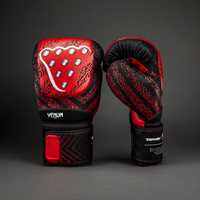
Venum | Mishima Heihachi Design Boxing Gloves
₱12,068.85
Buy on Lazada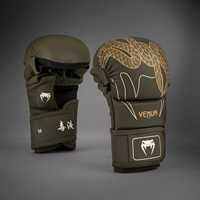
Venum | Combat Gloves for Mixed Martial Arts Training
₱5,243.64
Buy on Lazada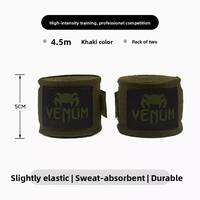
Venum | Boxing Wraps 4m
₱1,423.44
Buy on Lazada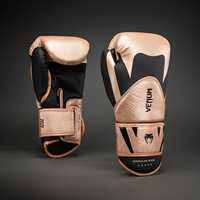
Venum | Challenger 4.0 Scaled Boxing Gloves
₱7,046.71
Buy on LazadaAbout Venum
Venum is a French combat sports brand best known for its mixed martial arts (MMA), boxing, Muay Thai, Brazilian jiu-jitsu (BJJ), and fitness equipment and apparel. Founded in the mid-2000s, the company grew from a niche MMA-focused label into one of the most recognizable global combat sports brands. Its biggest breakthrough came through its partnership with the Ultimate Fighting Championship (UFC), for which Venum has been the exclusive global outfitting partner since 2021 and, following a 2024 extension, through 2029.1
Basic information
| Field | Information |
|---|---|
| Brand | Venum |
| Industry | Combat sports / sportswear |
| Origin | France |
| Established | 2005–2006 |
| Founder / CEO | Franck Dupuis |
| Main focus | MMA, boxing, Muay Thai, BJJ and other combat sports |
| Major partnership | UFC |
| Best known for | Fight shorts, gloves, protective equipment, training apparel and UFC fight kits |
| Positioning | Performance-oriented combat sports + lifestyle |
| Official UFC outfitter | Since April 2021 |
| Current UFC agreement | Extended through 2029 |
There is a slight difference in how Venum’s origin is dated. Venum’s own current corporate material describes its beginning in Paris in 2005, while UFC materials commonly describe the brand as having been serving combat sports since 2006. Venum’s historical material indicates that Franck Dupuis conceived the new brand in 2005 and that the business developed into Venum in 2006.2
History
Origins: Paris and the early MMA boom
Venum emerged during a particularly important period for mixed martial arts. In the mid-2000s, MMA was rapidly developing from a relatively niche combat sport into a global entertainment and sporting phenomenon. Franck Dupuis was involved in the combat sports retail and distribution business and recognized an opportunity: much of the existing European market did not offer the combination of technical performance, distinctive design, and strong combat sports identity that he wanted.
Venum’s own historical account says Dupuis decided in summer 2005 to create a new brand focused on the qualities he believed the market lacked: high quality and original design.3 The company subsequently developed its first products around MMA culture, including ripstop fight shorts and cotton T-shirts. Venum also established a workshop in Rio de Janeiro, connecting the young European brand with Brazil’s rapidly developing MMA and Brazilian jiu-jitsu scene.4
This Franco-Brazilian connection became an important part of Venum’s identity.
Founding and ownership
Franck Dupuis is the central figure in Venum’s history. According to Venum’s historical material, Dupuis initially worked on the business himself before bringing in Jean-François Bandet, a former IBM colleague, as a partner in 2006. The two worked together for almost a decade. Bandet left the business in 2014, after which Dupuis became the brand’s sole chairman and shareholder according to Venum’s historical account.5
This is worth noting because some secondary sources describe Venum’s founders differently. For example, Wikipedia currently lists Franck Dupuis and André Vieira as founders, while Venum’s own detailed historical account emphasizes Dupuis and Jean-François Bandet.6 Consequently, the most accurate description is that Franck Dupuis is the principal founder and long-standing leader of Venum, while the company’s early development involved several individuals and strong connections to Brazil’s combat sports community.
The Venum concept
From the beginning, Venum tried to distinguish itself through two primary pillars:
Performance
The products were designed for people actually training and competing in combat sports rather than merely using combat sports as a fashion theme.
Visual identity
Venum deliberately adopted a much more aggressive and recognizable visual style than many traditional sports brands. Its products frequently use large graphics, snake and serpent imagery, dark color palettes, stylized typography, bold logos, camouflage and geometric patterns, and strong black/red/white combinations. The result was a brand that could function both as technical equipment and as combat sports fashion. This combination became one of Venum’s major competitive advantages.
Why the name “Venum”?
The name Venum is essentially a stylized form of “venom.” That choice fits the brand’s identity extremely well. The snake/venom concept communicates ideas such as danger, aggression, speed, precision, intimidation, survival, and fighting instinct. The snake also became one of the most recognizable visual elements associated with Venum, which is why the Venum logo and snake imagery are so closely associated with MMA culture.
Early growth in MMA
Venum positioned itself extremely aggressively within the emerging MMA market. Rather than competing primarily through traditional sports retail, it became closely associated with fighters, gyms, competitions, and MMA culture. The company began sponsoring notable fighters relatively early in its development. Its historical material mentions athletes such as Denis Kang, Jeff Monson, and Pequeno among its early sponsored fighters, followed by major names including Wanderlei Silva, José Aldo, Lyoto Machida, and Mauricio “Shogun” Rua.7
This was strategically important. A combat sports brand’s credibility depends heavily on whether actual fighters trust its equipment. Venum therefore used professional athletes not merely as conventional celebrities but as proof that the equipment belonged inside the sport.
Expansion beyond MMA
Although MMA remains at the center of Venum’s identity, the company has expanded into a much broader combat sports ecosystem. Its product categories include equipment and apparel for:
MMA
- MMA gloves
- Fight shorts
- Rash guards
- Compression clothing
- Training apparel
- Protective equipment
Boxing
- Boxing gloves
- Hand wraps
- Headgear
- Boxing apparel
- Training equipment
Muay Thai
- Muay Thai shorts
- Gloves
- Shin guards
- Protective equipment
- Training apparel
Brazilian Jiu-Jitsu
- BJJ gi
- No-gi apparel
- Rash guards
- Grappling shorts
- Belts and accessories
Fitness and training
- Gym apparel
- Compression clothing
- Training shoes
- Bags
- Accessories
Venum’s product strategy therefore extends from the professional fighter to the ordinary person who trains several times a week.
The UFC partnership
The most important event in Venum’s corporate history was its partnership with the UFC. In July 2020, UFC announced that Venum would become its exclusive global outfitting and apparel partner, replacing Reebok after Reebok’s UFC outfitting agreement ended. The new Venum partnership officially began in April 2021.8
This transformed Venum’s visibility. Before 2021, Venum was already a major combat sports brand. But after becoming the official UFC outfitter, millions of viewers around the world saw Venum equipment and apparel every time UFC fighters entered the Octagon. In effect, Venum went from being a major MMA brand to becoming part of the visual identity of the world’s largest MMA promotion.
The UFC Fight Kit
One of the most visible products resulting from the partnership is the UFC Fight Kit. The fight kits are designed specifically for UFC athletes competing inside the Octagon. Venum says the apparel is designed around the physical requirements of MMA competition, including lightweight materials, freedom of movement, flexible construction, minimal seams, moisture management, close-fitting designs, and durability. UFC specifically highlighted Venum’s lightweight microfiber fight shorts and construction designed to provide freedom of movement.9
The partnership also covers Fight Week apparel, including clothing worn during training, media events, weigh-ins, open workouts, fighter walkouts, and fight night.
UFC partnership renewal
The initial partnership proved successful enough that UFC and Venum renewed their agreement in 2022.10 Then, on March 7, 2024, UFC announced a much longer extension. Under that agreement, Venum remains the exclusive global outfitting partner of UFC through 2029.11 This is probably the strongest indication of Venum’s importance to the modern UFC ecosystem. The agreement isn’t limited to fight shorts. Venum also supplies apparel associated with UFC’s Performance Institute facilities, including locations in Las Vegas, Shanghai, and Mexico City.12
Relationship with fighters
A major part of Venum’s marketing philosophy is its connection with actual athletes. Rather than positioning itself like a conventional fashion company that happens to sell sportswear, Venum has historically built credibility through fighters and combat sports communities. Some of the prominent fighters associated with the brand over its history include José Aldo, Wanderlei Silva, Lyoto Machida, Mauricio “Shogun” Rua, Frankie Edgar, Michael Bisping, Max Holloway, and Jorge Masvidal. UFC itself has highlighted Venum’s association with several major MMA fighters.13
This creates a feedback loop: fighters lead to credibility, which attracts fans, driving product sales, enabling more fighter sponsorship, and strengthening the brand. That model is particularly effective in combat sports.
Brand identity and design language
Venum’s brand identity can broadly be described as aggressive, technical, urban, and combat-oriented. Compared with traditional sports brands such as Nike or Adidas, Venum’s identity is much more specifically tied to fighting. Compared with older martial arts equipment companies, Venum is generally more fashion-conscious and visually aggressive. Its branding frequently combines combat culture, performance technology, and streetwear, allowing someone to wear a Venum T-shirt or hoodie even when they aren’t training.
The Venum aesthetic is one of the easiest aspects of the brand to recognize. Common elements include:
- Snake imagery: The snake represents the core metaphor behind the brand name.
- Black: Black is probably the dominant color associated with Venum, reinforcing the brand’s aggressive and premium appearance.
- Large logos: Venum frequently uses oversized logos and graphics rather than subtle branding.
- Technical graphics: Many products have patterns inspired by scales, armor, claws, snakes, tribal graphics, camouflage, and geometric shapes.
- Performance-first construction: Even when a product is designed as lifestyle clothing, Venum generally tries to retain a connection to athletic performance.
Comparison with traditional sportswear
Venum occupies an interesting position in the sportswear industry.
| Brand | Core identity |
|---|---|
| Nike | General athletic sportswear |
| Adidas | General athletic + lifestyle |
| Under Armour | Performance sportswear |
| Everlast | Boxing + combat sports |
| Hayabusa | Combat sports |
| Venum | MMA + combat sports + lifestyle |
Venum’s competitive advantage is specialization. Nike can sell MMA products, but MMA is not Nike’s core identity. For Venum, it is. That’s why seeing Venum on an elite UFC fighter carries significantly more brand meaning than simply seeing a large sportswear company’s logo.
Business model
Venum operates across several interconnected areas: product development, combat sports equipment, apparel, professional athlete partnerships, UFC licensing, direct-to-consumer sales, and retail/distribution. This model lets the company monetize the same combat sports audience in several ways. For example, a person might first discover Venum through a UFC fighter, then buy a UFC-branded T-shirt, then purchase Venum gloves for training, and eventually buy Venum lifestyle clothing.
Global presence
Venum has developed from a French-origin company into a global combat sports brand. Its official online presence currently includes regional operations such as the United States, Europe, Asia, and Latin America. The company’s website provides regional shopping and distribution infrastructure, while its products are sold through retailers and online channels around the world. Its UFC relationship has naturally accelerated this international exposure.
Connection to Brazil
Brazil has a particularly important place in Venum’s story. Brazil was one of the most important centers of the global MMA and BJJ movement during Venum’s formative years. The company established a workshop in Rio de Janeiro and developed early products there.14 This gave Venum a connection to the culture of Brazilian jiu-jitsu, MMA, Muay Thai, Brazilian fight gyms, and professional fighters. The relationship between France and Brazil is therefore part of Venum’s historical DNA.
Move into other contact sports
Venum is no longer presenting itself purely as an MMA company. Its current corporate strategy explicitly discusses moving “from cage to gridiron,” with the company seeking to expand its expertise into other contact sports, including American football.15 The underlying idea is straightforward: if Venum can design equipment capable of surviving a five-round MMA fight, it can apply the same philosophy of protection and performance to other high-contact sports.
This represents an important evolution in the brand. The historical Venum was essentially MMA leading to combat sports. The emerging Venum strategy is combat sports leading to all contact sports.
Key associations
If someone mentions Venum in the sports industry, the strongest associations are probably:
- UFC
- MMA
- Fight shorts
- MMA gloves
- Boxing equipment
- Muay Thai
- BJJ
- Aggressive snake-inspired design
- Professional fighter sponsorship
- UFC Fight Kits
The UFC partnership is unquestionably the brand’s largest mainstream exposure.
Significance in MMA
Venum’s importance isn’t simply that it sells MMA equipment. It has played a role in the commercial development of MMA culture. During the 2000s, MMA was becoming increasingly global, but the sport’s apparel identity was still fragmented. Venum helped establish a recognizable visual language for modern MMA: fighter plus performance equipment plus distinctive graphics plus lifestyle apparel. Its partnership with UFC then took that identity to a much larger audience. The result is that Venum has become one of the brands most closely associated with modern professional MMA.
Current status
As of 2026, Venum remains a major global combat sports brand and the exclusive global outfitting partner of UFC through 2029.16 Its business has expanded beyond traditional fight equipment into broader performance apparel and other contact sports, while MMA remains central to the brand. Venum itself currently describes its ambition as building a broader ecosystem of protection and performance across contact sports.17
Timeline
- 2005: Franck Dupuis develops the idea for a new combat sports brand in Paris.18
- 2006: Venum develops its early product line and establishes a connection with Rio de Janeiro’s combat sports scene.19
- Late 2000s: Rapid expansion through MMA products, fighter sponsorships, and international distribution.
- 2010s: Venum becomes increasingly established as a major MMA/combat sports brand.
- 2020: UFC announces Venum as its future exclusive global outfitting and apparel partner.20
- April 2021: Venum UFC Fight Kits officially debut.21
- 2022: UFC and Venum renew their partnership.22
- 2024: UFC announces a long-term extension keeping Venum as exclusive outfitting partner through 2029.23
- 2026: Venum continues expanding beyond combat sports, including an explicit push toward other contact sports such as American football.24
Strategic positioning
From a business and brand perspective, Venum’s story is particularly interesting because it didn’t try to become “another Nike.” Instead, it built authority by owning a specific culture first: MMA leading to fighters, gyms, UFC, and finally a global combat sports audience. Its UFC partnership then became a powerful amplifier for everything that Venum had built since the 2000s. Today, Venum sits at the intersection of combat sports equipment, performance apparel, athlete culture, and sports lifestyle, with the UFC relationship providing its most recognizable global platform.25
References
- The UFC + Venum Era Arrives | UFC
- UFC And Venum Announce Long-term Extension Of Exclusive Global Outfitting And Apparel Partnership | UFC
- VENUM – FROM CAGE TO GRIDIRON
- Highlights CN
- Our story – Venum Latam
- Venum
- UFC Names Venum New Exclusive Outfitting Partner | UFC
- UFC And Venum Announce Renewal Of Exclusive Global Outfitting And Apparel Partnership | UFC
- Venum, The World’s leading combat sports brand.
- Venum Team: Gloria Peritore, on Kickboxing and Finding Strength
- Behind The Scenes Of The VENUM Launch | UFC
- Privacy Policy – Venum Asia
- UFC announces deal with Venum Brazil | MMA Fighting
- Venum Brasil wants to be brought into fold, says UFC doesn’t have rights in country | MMA Fighting
- UFC inks apparel deal with Venum that will begin in 2021 – ESPN
- UFC NOMEIA VENUM COMO NOVA PARCEIRA EXCLUSIVA DE EQUIPAMENTO E VESTUÁRIO | UFC
- VENUM станет новым эксклюзивным производителем экипировки UFC | UFC
- Brand Story – Venum – Venum
- About Venum Football – Venum France
- Sales Agreements – Venum Asia
- Products Archive – Venum
- Venum – The World’s leading combat sports brand.
- Sales agreements
- Coco Monogram Boxing Gloves
- About Venum Football – Venum – Venum