Shop on Lazada
Vertiv products
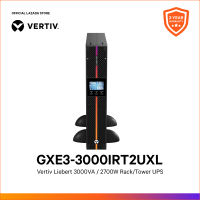
Vertiv™ Liebert® GXE3 3000VA / 2700W Rack/Tower UPS (GXE3-3000IRT2UXL)
₱86,099.00₱89,999.00
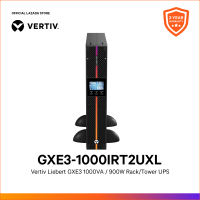
Vertiv™ Liebert® GXE3 1000VA / 900W Rack/Tower UPS (GXE3-1000IRT2UXL)
₱33,099.00
Buy on Lazada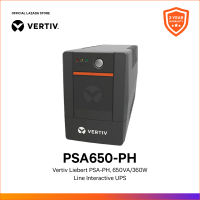
Vertiv™ Liebert® PSA-PH 650VA / 360W Line Interactive UPS (PSA650-PH)
₱2,119.00₱2,400.00
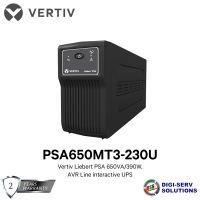
Vertiv™ Liebert® PSA 650VA / 390W AVR Line interactive UPS (PSA650MT3-230U)
₱6,329.00₱7,769.00
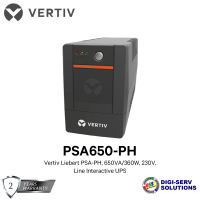
Vertiv™ Liebert® PSA650-PH 650VA/360W 230V Line Interactive UPS
₱2,119.00₱2,280.00
About Vertiv
Overview
Vertiv Holdings Co., commonly known as Vertiv, is an American multinational corporation that designs, manufactures and services critical digital infrastructure. These physical systems ensure that data centres, telecommunications networks and other computing environments remain powered, cooled, connected and operational. The company’s portfolio encompasses uninterruptible power supplies (UPS), power distribution, switchgear, thermal management and liquid cooling, racks and enclosures, monitoring and management software, integrated infrastructure solutions and lifecycle services.1
Vertiv has gained particular prominence as the rapid expansion of artificial intelligence (AI) and high-performance computing drives demand for high-density computing, advanced power systems and liquid cooling technologies.1
Key facts
| Category | Information |
|---|---|
| Company | Vertiv Holdings Co. |
| Common name | Vertiv |
| Industry | Critical digital infrastructure / Data-centre infrastructure |
| Founded / heritage | 1965, through the founding of Liebert Corporation |
| Headquarters | Westerville, Ohio, United States |
| Stock exchange | New York Stock Exchange |
| Ticker | VRT |
| FY2025 revenue | Approximately $10.23 billion |
| Employees | Approximately 34,000 |
| Countries served | 130+ |
| Primary customers | Data centres, cloud/hyperscale operators, telecom companies, enterprises, industrial organisations and other mission-critical facilities |
| Major focus today | Data-centre power, cooling, AI infrastructure and high-density computing |
For the fiscal year ended 31 December 2025, Vertiv reported net sales of $10.2299 billion and employed approximately 34,000 people. Its operations are organised geographically into three segments: Americas, Asia Pacific, and Europe/Middle East/Africa (EMEA).2
Role in digital infrastructure
Vertiv provides the physical infrastructure required to keep modern computing environments functional. A typical data centre contains vast quantities of server equipment that requires reliable electricity, backup power, power distribution, cooling, physical containment, monitoring, IT management and ongoing technical support. Vertiv supplies many of the systems surrounding these servers rather than the compute hardware itself.1
In a hyperscale facility running thousands of AI servers, for example, Vertiv may provide UPS systems to protect against power interruptions, switchgear to distribute electricity, cooling systems to remove heat generated by GPUs, rack infrastructure to house equipment, monitoring platforms and maintenance services.1 This distinguishes Vertiv from companies such as NVIDIA, which primarily supply computing technology; Vertiv supplies much of the infrastructure necessary to operate that technology at scale.
History
Liebert Corporation and Emerson era
The company’s origins date to 1965 with the founding of Liebert Corporation, an early pioneer in precision computer-room air conditioning (CRAC) designed specifically for computing environments rather than general buildings. Computers generate substantial heat and are sensitive to temperature fluctuations, making specialised cooling essential.1
Emerson acquired Liebert in 1987 and spent subsequent decades expanding its capabilities in power protection, thermal management and data-centre technologies. In 2000, Emerson established Emerson Network Power (ENP), consolidating various critical infrastructure businesses under one organisation. ENP grew through acquisitions including Marconi’s outside-plant and power systems, Knürr (enclosure technologies), Avocent (IT management and KVM technologies) and other businesses covering power, cooling, racks and monitoring.1
Formation of Vertiv
By 2016, Emerson Network Power had assembled a broad portfolio spanning power, cooling, racks, monitoring and services. That year, Emerson sold the business to Platinum Equity, and it was subsequently renamed Vertiv. The new name signified the transformation of a collection of infrastructure businesses into a standalone company focused exclusively on critical digital infrastructure.1
Vertiv became a publicly traded company in 2020 through a business combination with GS Acquisition Holdings Corp., listing on the New York Stock Exchange under the ticker VRT.1
Expansion through acquisitions
Since becoming independent, Vertiv has continued to expand its portfolio through strategic acquisitions. Notable transactions have involved Energy Labs, Geist, E&I Engineering, BMarko, Strategic Thermal Labs, Great Lakes Data Racks & Cabinets, Waylay, CoolTera, ThermoKey and PurgeRite. These acquisitions reflect a strategic direction increasingly centred on complete data-centre infrastructure capable of supporting high-density AI computing.1
Products and services
Critical power
Data centres require systems that condition, distribute, protect and back up electrical power rather than connecting servers directly to the grid. Vertiv supplies UPS systems, DC power systems, power distribution units, static transfer switches, switchgear and switchboards, busway and busduct, battery energy storage systems, and power monitoring and control solutions.1
UPS systems protect equipment from electrical supply problems and provide temporary power during outages. Even brief interruptions can be extremely costly for data centres. Vertiv’s Liebert heritage is particularly relevant here, as the brand has long been associated with critical power and cooling infrastructure.1
Thermal management and cooling
Cooling has become as critical as power provision. While traditional enterprise servers consume hundreds of watts each, modern AI systems generate extremely high heat densities, especially when large numbers of GPUs are concentrated in single racks. Vertiv’s thermal management portfolio includes room cooling, in-row cooling, rack cooling, liquid cooling, chillers, heat rejection systems, free cooling, evaporative cooling, thermal control and monitoring, and custom thermal solutions.1
Liquid cooling is particularly important for AI-era infrastructure. Rather than relying solely on air to carry heat away from processors, liquid cooling uses coolant to transfer heat more efficiently. Vertiv has expanded aggressively in this area, offering products such as the Vertiv CoolChip CDU for high-density liquid-cooling applications. The company also acquired CoolTera to enhance liquid-cooling capabilities and completed the acquisition of ThermoKey in June 2026 to strengthen heat-rejection and heat-exchange technologies.1
Racks and integrated infrastructure
Vertiv supplies IT racks, cabinets, enclosures, containment systems, rack power distribution and integrated infrastructure. The company has increasingly moved towards integrated and prefabricated infrastructure rather than selling isolated components, responding to operator demand for faster facility deployment. Standardised infrastructure modules combining power, cooling, racks and other systems allow operators to avoid designing every component independently. Vertiv SmartRun exemplifies this approach.1
Monitoring and IT management
Beyond hardware, Vertiv offers software and management technologies for device management, monitoring, KVM switching, serial consoles, IT infrastructure management, remote monitoring and predictive analytics. Significant IT-management capabilities were inherited through the Avocent acquisition.2
Monitoring and analytics enable operators to assess UPS health, detect rack overheating, identify cooling system limits, track battery degradation and flag abnormal electrical component operation. Installing power and cooling equipment alone is insufficient without visibility into system performance.
Services
Vertiv maintains a substantial services business alongside equipment manufacturing. Services include installation, maintenance, commissioning, liquid-cooling services, UPS and battery services, thermal services, electrical safety and compliance, digital services, fluid-management services, training and lifecycle management.1
This service capability is strategically valuable because data-centre equipment often remains operational for many years after installation, enabling Vertiv to generate revenue throughout the equipment’s operational life rather than only at point of sale.
Artificial intelligence strategy
The growth of generative AI, large language models and GPU-based computing is fundamentally changing data-centre infrastructure. AI servers require significantly more power and generate far more heat than conventional enterprise servers, creating major infrastructure challenges in both power delivery and cooling capacity.1
Vertiv positions its strategy around end-to-end infrastructure for AI, combining power, cooling, IT infrastructure and services. Its Vertiv 360AI offering integrates these technologies specifically for AI infrastructure deployments. The company also collaborates with NVIDIA, Ansys, Compass Datacenters and Polar on AI infrastructure development.1
Relationship with NVIDIA
NVIDIA’s GPUs provide computing power for many AI systems but consume substantial electricity and generate significant heat. Increased GPU deployment therefore drives greater demand for power and cooling infrastructure. Vertiv has developed power and cooling solutions specifically aimed at AI platforms, including infrastructure for NVIDIA’s high-density computing environments.1 This relationship explains why Vertiv attracts attention as an AI infrastructure company despite not manufacturing AI processors.
Brands
While Vertiv serves as the corporate brand, the portfolio incorporates several established technology brands identified in the company’s 2025 annual report:2
- Vertiv
- Liebert – Associated with precision cooling, UPS, power protection and data-centre infrastructure; essentially the foundation from which modern Vertiv evolved
- Avocent – Associated with KVM, serial consoles, IT management and data-centre management technologies
- Geist – Particularly associated with rack power distribution units (rPDUs)
- NetSure
- Energy Labs
- ERS
- Albér
Customers and markets
Vertiv serves customers across multiple industries:1
- Hyperscale data centres – Large cloud companies operating massive facilities requiring extensive power and cooling
- Colocation providers – Companies operating data centres and renting capacity to third parties
- Telecommunications companies – Requiring reliable power and environmental management, particularly at network edge locations
- Enterprises – Banks, hospitals, manufacturers and technology companies operating mission-critical computing environments
- Industrial customers – Environments increasingly dependent on continuously operational digital infrastructure
The company identifies AI, high-performance computing, telecommunications, manufacturing and healthcare as key markets.1
Geographic presence
As of late 2025, Vertiv served customers in more than 130 countries and employed approximately 34,000 people.1 Fiscal 2025 net sales of approximately $10.23 billion were distributed geographically as follows:2
- Americas: 62%
- Asia Pacific: 20%
- Europe, Middle East & Africa: 18%
This global footprint reflects the worldwide construction of data centres across North America, Europe, Asia and emerging markets.
Headquarters and stock listing
Vertiv’s principal executive offices are located at 505 N. Cleveland Ave., Westerville, Ohio 43082, near Columbus.2
The company is publicly traded on the New York Stock Exchange under the ticker VRT, providing investors exposure to the expanding data-centre infrastructure market.
Business model
Vertiv operates on a design-manufacture-deploy-monitor-maintain model, increasingly providing entire infrastructure ecosystems rather than individual components. For a customer building an AI data centre, Vertiv may design infrastructure, supply power systems, switchgear, UPS, energy storage, racks and liquid cooling, implement monitoring, perform installation and provide ongoing maintenance and lifecycle services. This integrated approach constitutes a major competitive advantage.1
Competitive landscape
Competitors vary by product category and include Schneider Electric, Eaton, ABB, Delta Electronics, Johnson Controls, Trane Technologies, STULZ, Rittal and Legrand. No single company overlaps perfectly with Vertiv across all categories. Schneider Electric, for example, offers extensive data-centre solutions but operates as a broader electrical-energy-management and industrial technology company, whereas Vertiv focuses more narrowly on critical digital infrastructure.1
Vertiv’s primary competitive advantages are its breadth of infrastructure expertise—spanning electrical infrastructure, power protection, cooling, liquid cooling, racks, monitoring, integrated systems, installation and maintenance—and its six decades of experience in critical computing infrastructure dating to 1965.1
Impact of the AI boom
The AI boom is altering the physical architecture of data centres, not merely increasing server volumes. AI clusters require dramatically higher rack power densities than traditional data centres were designed for, resulting in higher power consumption, greater heat generation, challenges for conventional air cooling, increased adoption of direct-to-chip and other liquid-cooling technologies, and growing demand for modular and prefabricated infrastructure to accelerate deployment. These trends align closely with Vertiv’s portfolio, prompting the company to position itself as an AI infrastructure provider rather than a traditional UPS and cooling manufacturer.1
Recent acquisitions demonstrate expansion from individual components towards complete high-density data-centre systems. Strategic Thermal Labs strengthened liquid-cooling capabilities; CoolTera expanded liquid-cooling technology; Great Lakes Data Racks & Cabinets enhanced rack and whitespace capabilities; Waylay added AI-powered digital services; and ThermoKey, acquired in June 2026, expanded heat-rejection and heat-exchange capabilities for AI data centres. The overall strategy is to build a vertically integrated infrastructure platform for increasingly dense computing.1
Financial performance
Sustainability
Data centres consume enormous quantities of electricity and water, making efficiency increasingly important. Vertiv focuses on technologies intended to improve infrastructure efficiency, including high-efficiency power systems, free cooling, liquid cooling, heat rejection, energy storage, thermal optimisation, monitoring and control, and water-management technologies. The company also maintains corporate environmental and responsible-business programmes.1
PurgeRite NearZero exemplifies this focus: a fluid-management service designed to reduce water, wastewater and hauling requirements associated with commissioning closed-loop hydronic systems.1
Comparison with NVIDIA
| Aspect | Vertiv | NVIDIA |
|---|---|---|
| Core business | Digital infrastructure | Computing/AI technology |
| Famous products | UPS, cooling, power systems, racks | GPUs, CPUs, networking, AI platforms |
| Main problem solved | Keep computing infrastructure powered and cooled | Perform computation |
| AI exposure | Infrastructure required by AI | AI compute hardware/software |
| Major technology | Power + thermal management | GPUs + accelerated computing |
| Typical data-centre role | Behind/around the servers | Inside the servers / compute fabric |
NVIDIA builds much of the computing capability; Vertiv helps build the environment in which that computing capability can run reliably.1