Shop on Lazada
Vibal products
About Vibal
Vibal is a Philippine publishing and knowledge organization best known for its extensive work in educational publishing, textbooks, reference materials, Philippine history, culture, and digital learning. The name is most closely associated with Vibal Group, Inc. (formerly Vibal Publishing House, Inc.) and the affiliated Vibal Foundation, a nonprofit organization dedicated to education, cultural preservation, and open knowledge.1
Overview
| Field | Information |
|---|---|
| Name | Vibal / Vibal Group, Inc. |
| Former name | Vibal Publishing House, Inc. |
| Founded | 1953 |
| Founders | Hilarion P. Vibal and Esther Asuncion-Vibal |
| Country | Philippines |
| Headquarters | Quezon City, Metro Manila |
| Industry | Publishing, education, digital learning, cultural publishing |
| Major areas | Textbooks, educational materials, reference books, Philippine studies, digital content |
| Related organization | Vibal Foundation, Inc. |
| Current leadership | Gaspar A. Vibal (President, Vibal Group) |
| Known for | Educational publishing and publications concerning Philippine history and culture |
The company’s principal office is located at 1253 Gregorio Araneta Avenue, Quezon City, as cited in a 2024 contract with the Department of Education.2
History
Founding
Vibal traces its origins to 1953, when journalist Hilarion P. Vibal and his wife, Esther Asuncion-Vibal, established the publishing company. Hilarion Vibal, one of the early English-language Filipino journalists, leveraged his background in journalism to build an enterprise that would become a significant participant in Philippine educational publishing.1
The company’s early growth paralleled the expansion of formal education in the Philippines. Rather than focusing primarily on literary works, Vibal developed a substantial business centered on school textbooks and instructional materials.
Development of educational publishing
During the 1960s and 1970s, Vibal produced textbooks covering subjects such as science, health, mathematics, English, and values education. Titles documented in the company’s history include Science and Health for Everyone, Science and Health for Better Living, New Adventures in Arithmetic, School Time, and English Reader.1
By 1978, Vibal marked its 25th anniversary by inaugurating a four-storey complex at the corner of EDSA and Quezon Avenue, reflecting the company’s expansion during that period.1
Expansion into multimedia and digital education
Around the turn of the 21st century, Vibal began diversifying beyond conventional printed textbooks. In 2000, it expanded into multimedia educational materials, including VHS and CD formats. In 2004, it published Science & Technology Modular Approach I–IV, which company histories describe as the country’s first full-color textbook.1
The company subsequently became involved in digital education and electronic learning. In 2011, Vibal partnered with Procter & Gamble on initiatives involving digital classrooms and lower-cost educational tablets as part of a broader effort to integrate technology into Philippine education.1
Vibal Foundation
A central component of the wider Vibal identity is the Vibal Foundation, Inc. Established as a nonprofit organization, it emphasizes education, culture, literacy, technology, and Philippine knowledge. Its mission encompasses free and open knowledge, print and digital literacy, cultural awareness and preservation, and the improvement of teaching and learning.3
The foundation’s work has been significant in moving Vibal beyond conventional textbook publishing into Philippine cultural and historical scholarship. Its activities have included:
- Philippine history and cultural publications
- Digital libraries and repositories
- Open educational resources (OER)
- Online Philippine reference materials
- Digitization and preservation of historical materials
- Scholarly and academic publishing
- Educational technology
- Support for teachers and learners
Research identifies the foundation as a major Philippine advocate of open educational resources. Key projects have included Filipiniana.net, WikiPilipinas, the Philippine Online Chronicles, and E-turo.3
Filipiniana and Philippine cultural knowledge
A distinctive characteristic of Vibal is its emphasis on Filipiniana—materials relating to the Philippines, its history, people, literature, arts, languages, and culture.
The foundation’s open-knowledge activities began in the mid-2000s. According to research on the organization, Gaspar Vibal introduced the Wikipedia-style “copyleft” approach through Filipiniana.net and subsequently WikiPilipinas. The objective was to make Philippine-oriented knowledge more accessible online and to provide alternatives to a web perceived as disproportionately Western-centric.4
This dual focus makes Vibal unusual among traditional publishers, as it operates simultaneously as a commercial educational publisher and an institution involved in the preservation and dissemination of Philippine knowledge.
Publishing program
Vibal’s publications are broadly divided into several categories.
Educational publishing
Educational publishing remains one of Vibal’s core areas. The company produces materials such as:
- School textbooks
- Supplementary learning materials
- Reading materials
- Reference materials
- Teacher-oriented resources
- Digital educational content
- E-books and other electronic learning resources
Its continuing relationship with the Philippine education system is illustrated by a 2024 Department of Education procurement contract for reading-enrichment and storybook materials.2
Philippine history
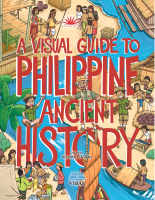
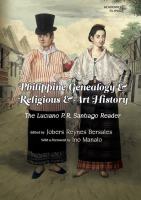
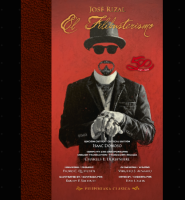
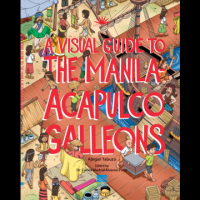
Vibal has developed a substantial catalog devoted to Philippine history, encompassing both original scholarship and historical documentation. The company and foundation have published works examining subjects ranging from colonial-era printing and publishing to political, social, religious, and cultural history.
For example, the Vibal Foundation published Lino L. Dizon’s Imprenta de Ramírez y Giraudier, a study of a major 19th-century Philippine printing establishment. The University of Santo Tomas described the publication as an important contribution to understanding Philippine intellectual history and the development of the Propaganda Movement and the Philippine Revolution.5
Arts and culture
Vibal’s catalog extends into Philippine arts and popular culture. One notable title is Philippine Cinema, 1897–2020 by Gaspar A. Vibal and Dennis S. Villegas, which examines more than a century of Philippine cinema, including its history, genres, narratives, filmography, and relationship with Western cinematic conventions.6
Spanish-Philippine studies
Another significant area is the historical relationship between Spain and the Philippines. The Vibal Foundation’s Academica Filipina+ imprint has published scholarly works dealing with Spanish-language and Hispano-Filipino culture.
A recent example is Gaspar Vibal’s El Español en Filipinas: The History of the Spanish Language, the Academia Filipina, and Hispano-Filipino Culture, 1924–2024, published by Vibal Foundation in 2025. The work examines the history of Spanish-language culture in the Philippines and the Academia Filipina de la Lengua Española.6
Academic and cultural publishing
The Academica Filipina+ imprint is representative of Vibal’s scholarly output. According to the organization’s publication materials, the imprint is intended for interdisciplinary works dealing with the past, present, and future of the Philippines.6
This gives Vibal’s publishing portfolio two distinct identities:
- Vibal as an educational publisher: Textbooks, school materials, and learning resources.
- Vibal as a cultural publisher: History, heritage, arts, literature, languages, scholarship, and Filipiniana.
The combination of these roles is a defining aspect of the company’s identity.
Digital initiatives
Vibal’s digital strategy has evolved over several decades. The organization has experimented with various technologies, including:
- Multimedia educational materials
- CD-based educational products
- Digital classrooms
- Educational tablets
- E-books
- Online educational resources
- Digital repositories
- Open educational resources
- Online encyclopedic and reference projects
The Vibal Foundation’s open-knowledge projects were particularly notable for attempting to use the internet not merely to sell books, but to make Philippine information and educational resources publicly accessible.3
Relationship between Vibal Group and Vibal Foundation
While closely related, the two entities serve different functions:
- Vibal Group, Inc. is the commercial publishing organization that develops and distributes educational and general-interest publications and related products.
- Vibal Foundation, Inc. is the nonprofit cultural arm focused on education, open knowledge, cultural preservation, and Philippine scholarship.
The foundation grew out of the broader Vibal publishing ecosystem but maintains a distinct institutional purpose. Research literature identifies the foundation as having been established by Vibal Publishing House and highlights its role in developing open educational and cultural resources.3
Notable people
Hilarion P. Vibal
Hilarion P. Vibal was a journalist, publisher, and co-founder of the company. His background in journalism influenced the organization’s enduring connection with publishing and the dissemination of knowledge.7
Esther Asuncion-Vibal
Esther Asuncion-Vibal, Hilarion’s wife and co-founder, played a major role in building the publishing business. Historical accounts credit both Hilarion and Esther Vibal with founding the organization in 1953.1
Gaspar A. Vibal
Gaspar A. Vibal represents a later generation of leadership and has been particularly associated with the organization’s expansion into digital publishing, Filipiniana, historical scholarship, and cultural publishing. He is also an author whose recent publications include works on Philippine cinema and the history of Spanish-language culture in the Philippines.6
Significance in the Philippines
Vibal’s significance in the Philippine context can be understood on three levels:
- Educational: It has been a long-standing participant in Philippine textbook and learning-resource publishing, operating continuously since the 1950s.
- Technological: It has repeatedly adapted publishing to new media, transitioning from traditional textbooks to multimedia, electronic publishing, online education, and digital resources.
- Cultural: Through its foundation and publishing program, it has contributed to the preservation and publication of Philippine historical and cultural materials. Its work on Filipiniana, open knowledge, history, arts, and language extends its role beyond ordinary commercial textbook publishing.3
Vibal today
As of 2026, Vibal remains an active Philippine publishing organization with activities spanning educational publishing, books, digital content, and cultural and academic publications. Its contemporary catalog demonstrates the breadth of this approach; alongside educational material, Vibal publishes substantial works on subjects such as Philippine cinema, printing history, Spanish-language culture, and Philippine heritage.6
Its continuing participation in government educational procurement indicates that the educational publishing sector remains a vital part of its business.2
1953: Educational publisher → textbooks and school materials
↓
1970s–1990s: Major publishing house → expanded educational catalog
↓
2000s: Multimedia/digital transition → CDs, e-learning, online resources
↓
2000s onward: Knowledge and culture → Filipiniana, open knowledge, digital archives
↓
Today: Broad publishing group → education + books + Philippine history + culture + digital knowledge
Describing Vibal simply as a “textbook publisher” is incomplete; its modern identity encompasses both the commercial Vibal Group and the educational and cultural mission represented by the Vibal Foundation.3
References
- Vibal Publishing House
- Republic of Philippines
- (PDF) Open Knowledge Initiatives in the Philippines: The Vibal Foundation
- The Foundation is guided by the following mission: (i) revitalise education through interactive and web-based delivery platforms, (ii) stimulate creativity and cultural excellence by creating multimedia platforms and (iii) share knowledge about the Philippines. The Vibal Foundation’s products presently include books, information, news and educational resources.
- Vibal Foundation, UST Library launch book on 19th-century printing, publishing – University of Santo Tomas
- Philippine Cinema, 1897-2020
- iBlog: The 15th Philippine Blogging Summit #iblog15 | Gold Sponsor: Vibal Foundation