Shop on Lazada
Viva Records products
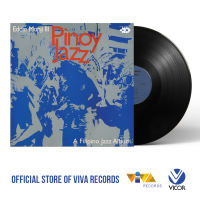
Eddie Munji III - Pinoy Jazz Vinyl Album
₱1,900.00
Buy on Lazada
Pinoy Pop and Jazz Vinyl Bundle BO5 #11
₱7,500.00
Buy on Lazada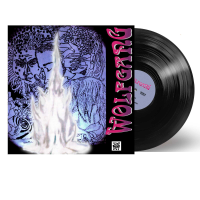
Wolfgang - Wolfgang Vinyl Album
₱1,900.00
Buy on Lazada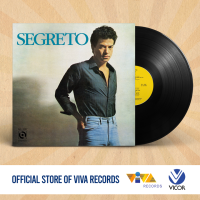
Ric Segreto - Segreto Vinyl Album
₱1,900.00
Buy on Lazada
MYMP - Beyond Acoustic Vinyl Album
₱1,900.00
Buy on Lazada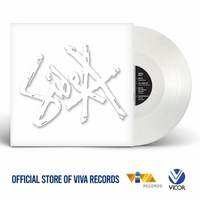
Side A - Side A White Vinyl Album
₱1,900.00
Buy on Lazada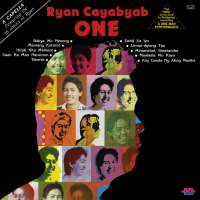
Ryan Cayabyab One Vinyl Album
₱1,900.00
Buy on Lazada
Cecile Azarcon - The Music of Cecile Azarcon Vinyl Album
₱1,900.00
Buy on LazadaAbout Viva Records
Viva Records, formally Viva Records Corporation, is a major Philippine record label and one of the longstanding music companies within the Viva Entertainment group. It is widely recognized for its pivotal role in the development, production, marketing, and distribution of Original Pilipino Music (OPM), as well as for launching and managing the careers and recordings of numerous Filipino singers, bands, and entertainers.1
Closely associated with Vicor Music within the broader Viva music business, the label maintains an extensive catalog that spans classic OPM, pop, ballads, R&B, rock, novelty music, rap, soundtracks, and contemporary Filipino pop.
Note on founding date: Public sources are inconsistent regarding the exact founding year, with references variously citing 1982, 1986, and 1988. While 1988 is a commonly cited modern reference, the label’s own historical materials suggest a longer operational history. Consequently, it is most accurate to describe Viva Records as having been established in the 1980s rather than asserting a single unqualified date.
Overview
| Field | Information |
|---|---|
| Name | Viva Records |
| Legal name | Viva Records Corporation |
| Industry | Music / Recording |
| Country | Philippines |
| Parent group | Viva Music Group / Viva Entertainment |
| Founder | Vicente “Vic” del Rosario Jr. |
| Primary market | Philippine music / OPM |
| Status | Active |
| Headquarters / base | Metro Manila, Philippines |
| Notable role | Record production, artist development, music distribution and catalog management |
Viva characterizes the label as the primary music-production and distribution entry point of the Viva group, emphasizing its mandate to advance OPM and develop artists across diverse musical styles.1
History
Origins
Viva Records emerged from the expansion of Vic del Rosario Jr.’s interests in music and entertainment. Del Rosario was previously associated with Vicor Music, a significant Philippine record company and one of the major repositories of Filipino music.
The establishment of Viva Records provided the growing Viva organization with its own major platform for recording and distributing music. Over the subsequent decades, the label expanded from a recording operation into a vital component of the larger Viva entertainment enterprise.
Growth during the OPM era
During the late 1980s and 1990s, Viva Records became increasingly prominent within the Philippine recording industry. Its roster grew to include singers representing mainstream pop, ballads, adult contemporary, rock, novelty music, and other genres.
At various points in their careers, the label was associated with artists such as Sharon Cuneta, Regine Velasquez, Vina Morales, Donna Cruz, Lani Misalucha, Zsa Zsa Padilla, Jaya, Freestyle, and Ogie Alcasid.1
This period cemented Viva’s reputation as a “star-making” record company—an organization capable not only of releasing records but also of developing performers into major commercial and entertainment personalities.
Expansion into soundtracks and entertainment
Viva’s music business has always been closely connected to the company’s film and television operations. As a result, movie soundtracks constitute a significant portion of the label’s catalog.
This synergy continues in the digital era, where Viva’s official catalog includes albums and singles tied to films and other Viva productions.
The Sarah Geronimo era
One of the most significant chapters in Viva Records’ modern history is its association with Sarah Geronimo.
Geronimo became one of the defining recording artists of the label’s 2000s generation. Her relationship with Viva extended beyond recording into the company’s broader entertainment and artist-management operations.
Her catalog with Viva includes numerous albums and compilations. Notably, OPM, released by Viva Records in 2008, compiled Filipino songs from her earlier recordings and was subsequently certified Platinum in the Philippines.2
The label’s broader catalog from this era also features recordings from other major stars, including Mark Bautista, Rachelle Ann Go, The Company, and Freestyle.
Viva Records and OPM
A defining characteristic of Viva Records is its emphasis on Original Pilipino Music, commonly abbreviated as OPM.
Rather than specializing in a single genre, the label’s catalog covers a wide spectrum:
- Filipino pop
- Ballads
- R&B
- Rock
- Alternative music
- Hip-hop and rap
- Novelty music
- Acoustic music
- Dance/pop
- Movie soundtracks
- Contemporary P-pop
This genre diversity contributes significantly to the importance of Viva’s catalog. Its historical recordings connect several generations of Filipino music, while newer releases introduce contemporary artists to the same ecosystem.1
Notable artists
Throughout its history, Viva Records has worked with a vast number of Filipino performers. Some of the most recognizable names associated with the label include:
Major legacy artists
- Sharon Cuneta
- Regine Velasquez
- Lani Misalucha
- Zsa Zsa Padilla
- Jaya
- Donna Cruz
- Vina Morales
- Ogie Alcasid
- Kuh Ledesma
- Pops Fernandez
- Rico J. Puno
- Wency Cornejo
- Freestyle
- The Company
- Andrew E.
Later-generation artists
- Sarah Geronimo
- Mark Bautista
- Rachelle Ann Go
- Rivermaya
- Itchyworms
- Nina
- James Reid
- Nadine Lustre
- Sam Concepcion
- Billy Crawford
- Janno Gibbs
Contemporary artists and acts
Viva’s catalog has expanded to include newer Filipino pop and independent-oriented acts. Names such as ALAMAT, ALLMO$T, The Juans, This Band, Arthur Nery, Just Hush, mrld, LITZ, and Because appear in the catalog, although some artists maintain relationships with Viva through affiliated labels or arrangements rather than straightforward exclusive contracts.1
Music catalog
Viva Records possesses a comprehensive catalog covering several generations of Filipino recordings.
Its holdings include:
- Original studio albums
- Compilation albums
- Greatest-hits collections
- Singles
- EPs
- Film soundtracks
- Television-related recordings
- Reissues and archival material
The breadth of the catalog is evident in releases ranging from Sharon Cuneta and Regine Velasquez compilations to contemporary works by newer acts. For example, Apple Music’s Viva Records catalog lists releases involving Regine Velasquez, Sarah Geronimo, James Reid, Freestyle, The Juans, and numerous other artists.1
Viva also maintains an online records library through its corporate website, where its albums and singles are systematically cataloged.
Relationship with Vicor Music
Understanding Viva Records requires acknowledging its relationship with Vicor Music.
Vicor represents an earlier generation of Philippine recording history, with a catalog containing major figures and recordings from the classic OPM era. Viva Records, meanwhile, rose to prominence in subsequent generations of Philippine popular music.
Both music operations are associated with the wider Viva Music Group, allowing the organization to maintain a continuous catalog stretching from older Filipino recordings to contemporary music.
This structure gives the Viva music business an unusually broad historical footprint: classic OPM → 1980s–1990s pop → 2000s mainstream pop → contemporary Filipino music.
Role within Viva Entertainment
Viva Records functions as part of the larger Viva entertainment ecosystem rather than as an isolated record company.
The Viva organization holds interests across multiple sectors, including:
- Film production
- Television
- Music recording
- Artist management
- Concerts and live entertainment
- Digital entertainment
- Music publishing
- Distribution
- Streaming and online content
This integrated structure has historically allowed Viva to promote artists across various forms of entertainment. A singer signed to Viva Records could potentially appear on a movie soundtrack, act in a Viva film, appear on television, perform in concerts, and have their music promoted through the company’s other entertainment channels.
Business model
Viva Records’ activities traditionally encompass several stages of the music business:
Artist development → Recording → Production → Marketing → Distribution → Catalog exploitation
Consequently, the company functions as more than just a studio or distributor. Its historical identity is tied to artist development and commercial music production. Viva describes production, marketing, and distribution as integral parts of its role in supporting Filipino music.
In the digital era, the distribution side of the business has expanded to include streaming platforms and digital music stores. Viva Records maintains an established catalog presence on services such as Apple Music.1
Digital era
Like much of the global recording industry, Viva Records has transitioned from a predominantly physical-record business into a digital-first catalog and release operation.
Instead of relying exclusively on CDs and other physical formats, its music is now distributed primarily through streaming and digital platforms. The label’s catalog contains both archival releases and newer singles and albums.
Its official online catalog demonstrates this transition, presenting releases as individual digital singles, EPs, and albums.
Brand identity
Viva Records’ identity centers on three core pillars:
OPM heritage.
The label is deeply associated with Filipino music and has participated in multiple generations of OPM.
Star development.
Viva has historically positioned itself as a company capable of developing performers into major mainstream stars. Its long association with artists such as Sharon Cuneta, Regine Velasquez, and Sarah Geronimo is central to this reputation.
Entertainment integration.
Unlike independent record labels operating solely within music, Viva Records exists within a broader entertainment company, allowing music to intersect with film, television, artist management, and other media.
Cultural significance
Viva Records occupies an important position in the history of Philippine popular music because its catalog represents several generations of Filipino performers.
Its significance extends beyond the sheer volume of records released. The company has participated in the careers of artists who became significant figures in Filipino pop culture, while its catalog preserves recordings from different periods of OPM.
In this sense, Viva Records functions both as a contemporary record label and as a custodian of a substantial portion of Philippine commercial music history.
Viva Records today
Viva Records remains an active part of the Viva music business. Its official catalog continues to feature albums, singles, and soundtracks, while the label’s artist ecosystem encompasses both established performers and newer Filipino acts.
The label serves as a bridge between the traditional Philippine recording industry and the modern streaming era: its historical catalog contains some of the biggest names in OPM, while its current activities continue to introduce and distribute newer Filipino music.
In popular-culture terms, Viva Records is one of the Philippines’ major homegrown record labels, closely associated with the development of OPM and with generations of Filipino music stars. Its story is inseparable from the wider narrative of Viva Entertainment, Vic del Rosario Jr., OPM, and the evolution of Philippine popular music from the physical-record era into today’s streaming-driven industry.
Ultimately, Viva Records is not merely a label with a large Filipino catalog; it has been one of the key institutions through which Filipino commercial music has been recorded, marketed, distributed, and transformed into mainstream pop culture for several decades.1