Shop on Lazada
Wago products
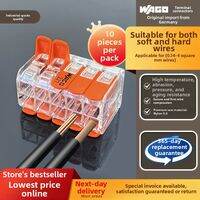
Wago | Rapid Wiring Electrical Connector 221
₱1,342.84₱3,600.99
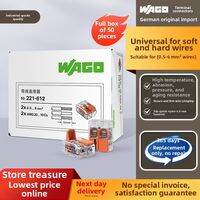
Wago | Quick Connection Terminal Wire Connector
₱7,185.04
Buy on Lazada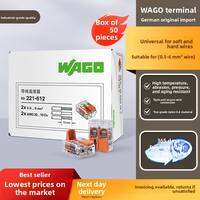
Wago | Quick Wire Connector for Hard and Soft Wires
₱6,578.10
Buy on Lazada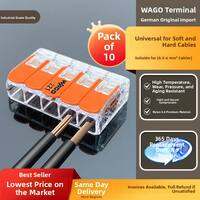
Wago | High-Power Air Conditioner Water Heater Wire Connector Quick Terminal Block
₱2,941.81
Buy on Lazada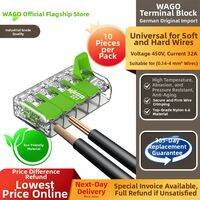
Wago | Soft Hard Wire Environmental Friendly Quick Connect Terminal 0.14-4 sqmm
₱2,071.96
Buy on Lazada
Wago | Split and Connect Wire Connector
₱116.02₱190.32
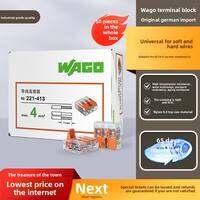
Wago | Quick Wire Connector 50 Pieces
₱1,696.87₱3,317.16
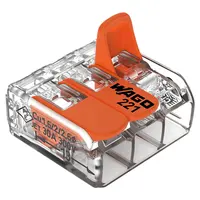
Wago | High-Power Quick-Connect Terminal Block
₱236.59
Buy on LazadaAbout Wago
Overview
Wago is a German, family-owned technology company recognized globally for its innovations in electrical interconnection, industrial automation, interface electronics, and spring-pressure connection technology. Established in 1951 in Minden, Germany, the firm has evolved from a specialist manufacturer of screwless terminal blocks into a comprehensive supplier of technologies designed to connect, distribute, measure, control, and automate electrical and data systems.1
| Attribute | Information |
|---|---|
| Company name | Wago |
| Original legal name | WAGO Klemmenwerk GmbH |
| Founded | April 27, 1951 |
| Founders | Heinrich Nagel and Friedrich Hohorst |
| Headquarters | Minden, North Rhine-Westphalia, Germany |
| Ownership | Family-owned |
| Industry | Electrical engineering, industrial automation, electronics |
| Core technologies | Spring-pressure connection, electrical interconnection, automation, interface electronics |
| Major markets | Industrial automation, building technology, energy, manufacturing, lighting, process industries, transportation and infrastructure |
| Global presence | More than 7,500 employees, with operations spanning numerous countries |
| Known for | Wago terminal blocks, CAGE CLAMP®, TOPJOB® S, 221 Series lever connectors, I/O systems and automation technology |
The company defines its operational role as connecting, measuring, controlling, and interlinking systems worldwide. Its stated corporate vision is to serve as the “backbone of a sustainable and smart connected world.”
History
Origins: 1950–1951
The origins of Wago date to 1950, when brothers-in-law Heinrich Nagel and Friedrich Hohorst acquired the rights to a patent for a screwless electrical connection utilizing a spring mechanism and push buttons.1 Recognizing that screwless connections could offer superior installation speed, reliability, and ease of use compared to traditional screw-terminal technology, they founded WAGO Klemmenwerk GmbH in Minden, Germany, on April 27, 1951.1
Early product offerings included SUPRAFIX terminal strips and modular terminal blocks. By 1957, the company had introduced its first family of rail-mounted terminal blocks featuring spring-clamp technology designed for standardized DIN rails.
Expansion during the 1960s
The 1960s marked a significant period of technological maturation for the company. Wolfgang Hohorst joined the firm in 1961, helping to establish the core principle that spring-pressure connection technology should be continuously improved to become safer, more economical, and technically superior.
In 1966, Wago achieved a materials milestone by transitioning its rail-mounted terminal-block housings from thermoset materials to polyamide 6.6, a move described as a global first at the time. During this decade, the company also expanded its portfolio to include PCB terminal blocks, lighting components, capacitor connections, electronic ballasts, and additional spring-clamp applications, effectively moving its spring technology beyond basic terminal blocks and into the lighting industry.
Global growth and technological eras
Over subsequent decades, Wago internationalized its operations significantly. The company’s historical development is categorized into distinct phases:
- 1951–1959: Foundation and introduction of initial spring-pressure products
- 1960–1969: International expansion and diversification into new applications
- 1970–1979: Broadening of spring-pressure connection technology
- 1980–1989: Development and market breakthrough of CAGE CLAMP®
- 1990–1999: Expansion into next-generation electrical and automation technologies
- 2000–2009: Accelerated international and technological growth
- 2010–2019: Advancement of automation and digital technologies
- 2020–present: Strategic focus on energy transition, electrification, and smart connected systems
Core Technology Areas
Wago organizes its business activities into three primary technology sectors.
Electrical Interconnection Technology
This sector represents the foundation of the Wago brand. The company manufactures products engineered to connect electrical conductors rapidly and reliably without conventional screw terminals. The portfolio encompasses DIN-rail terminal blocks, installation terminal blocks, field-wiring connectors, PCB terminal blocks, pluggable connectors, feedthrough components, marking systems, lever-operated connectors, and spring-clamp connection systems. These technologies are deployed across electrical panels, industrial machinery, building infrastructure, lighting systems, and various other applications.
Automation Technology
Wago serves as a significant supplier of industrial automation technology. Its automation portfolio includes I/O systems, controllers, PLC-related technologies, industrial communication solutions, displays and panels, measurement and control systems, automation software, and networking technologies. These products enable machines and industrial systems to sense parameters, communicate data, process information, and control equipment. This positions the company at the intersection of traditional electrical engineering and modern industrial automation.
Interface Electronics
The third major technology area involves interface electronics, which bridge different electrical or electronic systems. Products in this category perform signal conditioning, switching, isolation, voltage conversion, relay control, optocoupling, power supply, and system wiring functions. These components are essential in control cabinets and industrial automation environments where signals from sensors, controllers, and machinery require reliable connection and conditioning.
Key Technologies and Products
CAGE CLAMP®
CAGE CLAMP® is one of the most significant technological developments in the company’s history. Introduced as a defining technology during the 1980s, this spring-pressure connection system maintains electrical contact via a spring mechanism rather than screw tightening. Key advantages of this technology include fast installation, consistent contact pressure, reduced maintenance requirements, resistance to vibration-induced loosening, compatibility with various conductor types, and lower installation labor costs. It remains a fundamental reason for the company’s recognition within the electrical engineering industry.
Wago 221 Series
The 221 Series lever-operated connector is among the most recognizable product families. Designed for connecting electrical conductors via a small lever mechanism instead of a screw terminal, it features a transparent housing that allows for visual inspection of the connection. The lever facilitates easy insertion and release of conductors. This series gained widespread adoption in residential electrical work, lighting installations, building services, electrical maintenance, DIY applications, and small-scale electrical installations, helping to extend awareness of spring-connection technology beyond industrial engineers and panel manufacturers.
Industrial Automation Applications
While frequently associated with connectors, Wago provides components that form part of complete industrial control architectures. A typical system configuration follows the path: Sensor → Wago I/O → Controller → Industrial network → Actuator.
For example, in a factory setting, sensors may detect temperature, pressure, or position. Wago I/O modules acquire these signals, while a controller processes the data and issues commands to motors, valves, or other actuators. This capability supports the broader industry transition from traditional electrical panels toward connected, software-driven industrial systems.
Industries Served
Wago technology is utilized across diverse industrial and commercial sectors.
Industrial Manufacturing
Products are integrated into machinery, production equipment, control cabinets, and factory automation systems.
Building Automation
Solutions are applied in HVAC control, lighting control, building-management systems, electrical distribution, and smart-building applications.
Energy
Technologies support renewable-energy systems, power distribution, energy management, solar installations, and grid-related applications.
Process Industries
Automation and signal-interface technologies are used in chemical processing, water and wastewater treatment, food and beverage production, pharmaceuticals, and oil and gas operations.
Transportation and Infrastructure
Products are deployed in infrastructure and transportation applications requiring reliable electrical connections and automation capabilities.
Global Presence
Although headquartered in Minden, Germany, Wago operates as an international enterprise. The Wago Group employs more than 7,500 people worldwide, with a primary production and logistics hub located in Sondershausen. The Minden headquarters continues to serve as a central site for production, development, and administration. The global network encompasses operations across Europe, North America, Asia, and other regions, including international production facilities, sales companies, and representatives.
Ownership and Corporate Culture
Wago remains a family-owned company, distinguishing it from many large publicly traded electrical technology firms. The corporate culture emphasizes long-term thinking, innovation, partnership, reliability, sustainability, employee involvement, and engineering expertise. The company’s philosophy centers on the concept that strong connections create trust, reflecting the foundational nature of electrical connections in its business.
Sustainability Initiatives
In recent years, the company has aligned its strategy with the transition toward sustainable and connected energy systems. Relevant application areas include renewable energy, energy monitoring, energy efficiency, smart buildings, industrial efficiency, electrification, digitalization, and automation. The long-term vision supports a sustainable and smart connected world, with reliable electrical and data connections serving as critical infrastructure.
Competitive Position
Wago competes in several highly contested markets against major electrical and automation companies such as Phoenix Contact, Weidmüller, Siemens, Schneider Electric, ABB, and Rockwell Automation. However, its identity remains strongly linked to spring connection technology.
The company’s market position is best understood as a combination of electrical connections, automation, and interface technology, rather than solely as an electrical connector manufacturer. This distinction reflects its status as both an automation provider and an industrial technology company.
Comparison with Traditional Screw Terminals
The engineering philosophy behind Wago can be illustrated by comparing spring connections with traditional screw terminals.
| Feature | Traditional screw terminal | Wago spring connection |
|---|---|---|
| Connection mechanism | Screw pressure | Spring pressure |
| Installation | Requires tightening | Generally faster |
| Contact pressure | Determined by screw tightening | Maintained by spring |
| Vibration considerations | Can require attention to torque | Spring maintains pressure |
| Maintenance | May require retightening/inspection depending on application | Generally maintenance-free |
| Installation speed | Moderate | Typically fast |
| Typical applications | Broad electrical installations | Electrical, industrial and automation applications |
While specific performance varies by product and application, the underlying principle consistently utilizes spring force to maintain a reliable electrical connection.
Important Milestones
- 1950 — Founders acquire rights to a screwless spring-connection technology.1
- 1951 — WAGO Klemmenwerk GmbH is founded in Minden.1
- 1952–1954 — Early SUPRAFIX connection products are developed.
- 1957 — Introduction of rail-mounted terminal blocks for standardized DIN rails.
- 1961 — Wolfgang Hohorst joins the company.
- 1966 — Introduction of polyamide 6.6 housings for rail-mounted terminal blocks.
- 1968–1969 — Spring technology expands into lighting applications.
- 1980s — CAGE CLAMP® becomes a major technological milestone.
- 1990s — Expansion into electronics and automation.
- 2000s — Acceleration of international and technological expansion.
- 2010s — Increasing importance of automation, digitalization, and smart technologies.
- 2020s — Focus shifts toward energy transition, digitalization, and connected infrastructure.
- 2026 — Company marks 75 years since founding and continues operating as a global family-owned technology group.
Current Status
As of 2026, Wago has evolved from a terminal block manufacturer into a broad electrical engineering and industrial automation technology group. Its core value proposition is summarized as Connect → Measure → Control, where electrical connections provide physical infrastructure, interface electronics handle signals and power, and automation technology enables system monitoring and control.
This combination addresses applications in industrial automation, smart buildings, energy systems, electrification, and the Industrial Internet of Things (IIoT). The global organization comprises more than 7,500 employees, with international production operations, sales organizations, and representatives in over 80 countries.