Shop on Lazada
WEIBO products
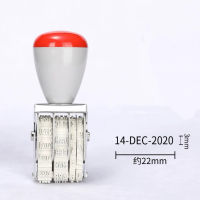
Wheel English Date Stamp(Year 2024-2035)
₱48.00₱68.00

WEIBO 12pcs/Box Pencil HB-2 Soft Medium Hard Pencil Lapis Drawing Pencil Set School Supplies
₱315.00₱1,575.00
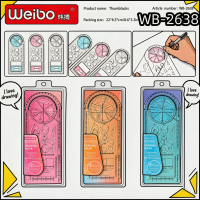
MULTIFUNCTIONAL DRAWING RULER
₱60.00₱120.00

WEIBO Correction Tape 36 M With FREE 4 Refills - 2 Sets
₱99.00₱129.00
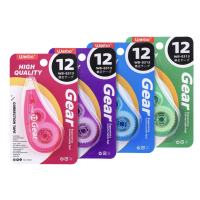
Weibo WB-8313 Correction Tape 12M
₱28.00₱45.00
About WEIBO
WEIBO (Chinese: 微博; literally “microblog”) is a prominent Chinese social media and microblogging platform operated by Weibo Corporation. It serves as one of China’s primary public social networks, integrating short-form posting, social networking, trending topics, multimedia content, celebrity engagement, news discussion, and brand marketing.1
Note: The name “WEIBO” may refer to unrelated businesses. This article concerns Weibo / Sina Weibo (微博), the Chinese social media company, rather than consumer brands in clothing, stationery, or other sectors that use the WEIBO name.4
Overview
| Field | Information |
|---|---|
| Chinese name | 微博 |
| English name | |
| Former/common name | Sina Weibo |
| Meaning | “Microblog” |
| Industry | Internet / Social media |
| Founded / launched | August 2009 |
| Original creator | Sina Corporation |
| Corporate entity | Weibo Corporation |
| Headquarters | Beijing, China |
| Platform type | Social networking / microblogging |
| Primary market | China |
| Stock ticker | NASDAQ: WB |
| Parent/control history | Launched by Sina; Alibaba became a major strategic investor |
| Official platform | weibo.com |
| Corporate information | Weibo Corporation Investor Relations weibocorporation.gcs-web.com2 |
Weibo Corporation describes the service as a platform where users create, share, and discover content online, combining real-time public expression with social interaction, content aggregation, and distribution.2
Platform definition
WEIBO is fundamentally a large-scale public social media network centred on microblogging. While historically compared to Twitter/X, it has evolved into a broader ecosystem incorporating elements of Facebook, Instagram, Reddit-style discussions, entertainment portals, and trending news services.
Users can publish posts, attach photographs or videos, share long-form content, follow accounts, comment, like, repost, and participate in trending discussions. A defining characteristic is its asymmetric following model, which allows users to follow celebrities, companies, politicians, media organisations, influencers, athletes, and ordinary users without requiring reciprocal follows. This structure facilitates the rapid spread of content across the network.1
Name and etymology
The Chinese term 微博 (wēibó) translates literally to “microblog”:
- 微 (wēi) means micro or small.
- 博 (bó) relates to broadness or blogging in this context.
During its early development, the service was commonly known as Sina Weibo (新浪微博) because it was created by Sina Corporation, the internet company behind Sina.com. Over time, “WEIBO” became the dominant brand name, while the corporate entity was established as Weibo Corporation.
History
2009: Launch
Sina launched WEIBO in August 2009 amidst the rapid expansion of social media and microblogging in China. The decision responded to the growing popularity of microblogging as an online communication format. Originally a platform for short messages and user interaction, its early development helped establish microblogging as a significant component of Chinese internet culture.1
2010–2011: Expansion
WEIBO gradually expanded beyond text-based microblogging to include enhanced social networking functions, multimedia publishing, recommendation systems, open-platform developer tools, content discovery features, and improved interaction between users and public figures. In 2011, the platform was upgraded with further social networking capabilities and an improved open-platform architecture.1
2012: Corporate restructuring
The corporate structure evolved during this period. T.CN Corporation, established to hold assets associated with the business, was renamed Weibo Corporation in 2012.1
2013: Alibaba investment
In April 2013, Alibaba Group invested approximately US$585.8 million in WEIBO through a wholly owned subsidiary. This investment represented approximately 18% of outstanding shares on a fully diluted basis at the time.1 The partnership strategically connected WEIBO’s social media audience with Alibaba’s e-commerce ecosystem and advertising business.
2014: Initial public offering
WEIBO completed its initial public offering in April 2014, listing on the NASDAQ Global Select Market under the ticker WB.1 This transitioned the business from a unit within Sina’s ecosystem to a separately listed public company.
2017 onwards
From 2017, WEIBO increasingly positioned itself as a content and social media ecosystem rather than solely a microblogging service. Development emphasised short video, live streaming, entertainment, celebrity accounts, news, sports, gaming, e-commerce, advertising, influencer marketing, and personalised content recommendations. The platform also developed an international presence, particularly among Chinese-speaking communities outside mainland China.
Corporate structure
Weibo Corporation is the publicly traded entity operating the platform. Notably, the listed company is incorporated in the Cayman Islands, while operations in China are conducted through Chinese subsidiaries and variable-interest entities (VIEs). This structure is common among Chinese internet companies listed overseas.1 Principal headquarters are located in Beijing, China. Regulatory filings describe the company as a leading Chinese social media platform for creating, discovering, and distributing content.1
Core functionality
The user experience centres on a feed of posts containing text, photographs, video, links, hashtags, polls, long-form articles, and other multimedia. Users can follow accounts, like posts, comment, repost, mention others, search for topics, participate in hashtags, and track trending discussions.
The repost function is particularly significant, enabling content to move from one user’s followers to another network rapidly. This mechanism has historically made WEIBO a powerful tool for viral information and public discourse.1
Trending topics
A defining feature of WEIBO is its trending-topic ecosystem. Topics gain high visibility when discussed by large numbers of users, covering breaking news, entertainment, celebrities, television dramas, films, sports, fashion, technology, politics, consumer products, social controversies, and major events. This gives the platform a central role in China’s online public discussion environment. For brands, association with trending conversations can generate substantial exposure.
Celebrities and influencers
WEIBO is essential for Chinese celebrities and public figures. Actors, singers, athletes, influencers, and entertainment companies maintain verified accounts that function as official communication channels, fan communities, promotional platforms, and publicity tools. Celebrities use the platform to announce projects, release content, interact with fans, promote products, and address controversies directly to large audiences, making WEIBO deeply intertwined with China’s entertainment industry.
Key Opinion Leaders (KOLs)
Key Opinion Leaders (KOLs) are influential users with substantial audiences in specific fields, including beauty, fashion, technology, food, travel, finance, entertainment, and sports. Brands collaborate with these accounts to reach targeted demographics, making WEIBO a critical component of Chinese digital marketing.
Brand marketing
Companies utilise WEIBO for brand awareness, product launches, advertising, customer interaction, influencer campaigns, crisis communication, event promotion, and entertainment marketing. The platform is particularly effective for generating public visibility. A typical marketing cycle involves an official account posting content, amplified by celebrity or KOL promotion, linked to a hashtag, elevated to a trending topic, generating user discussion and reposts, and attracting media coverage. Marketing analysis continues to identify WEIBO as a vital public-facing platform for Chinese brands, distinguishing it from private, messaging-oriented platforms like WeChat.3
Comparison with WeChat
WEIBO and WeChat serve distinct purposes within the Chinese internet ecosystem:
| Feature | ||
|---|---|---|
| Primary concept | Public social media | Messaging/social ecosystem |
| Public discussion | Very strong | Less central |
| Trending topics | Extremely important | Less central |
| Celebrity communication | Very strong | Important but less public |
| Private messaging | Available | Core feature |
| Viral public content | Very strong | Strong but network-dependent |
| Brand marketing | Major platform | Major platform |
| Typical experience | Public feed/discovery | Messaging + feeds + services |
Essentially, WEIBO facilitates public conversation and content discovery, whereas WeChat focuses on messaging, private social networks, and integrated digital services.
User scale
WEIBO maintains a massive user base. In December 2024, the company reported approximately 590 million monthly active users (MAUs) and 260 million average daily active users (DAUs). The majority of users access the service via mobile devices.1 Quarterly and annual operating data, including the 2025 annual report and 2026 quarterly results, are published on the investor relations site.2
Business model
Revenue is primarily generated through advertising and marketing services:
- Advertising: Companies pay to expose products and campaigns to users.
- Promoted content: Accounts pay for increased visibility.
- KOL/influencer marketing: Brands cooperate with influential users for promotions.
- Social campaigns: Hashtags, events, and interactive campaigns designed for engagement.
- Other services: Additional commercial products within the social media ecosystem.
The fundamental business model converts user attention and content into advertising and marketing value.
Role in Chinese internet culture
WEIBO is a significant part of China’s digital public sphere, used for discovering news, discussing entertainment, following celebrities, tracking events, participating in debates, finding viral content, following sports, discussing consumer products, and promoting cultural trends. Popular stories often spread from WEIBO to traditional media and other social platforms.
Censorship and regulation
As a Chinese internet platform, WEIBO operates within China’s regulatory environment and is subject to laws governing online content. The platform employs systems for content moderation, account management, removal of prohibited material, handling user reports, and regulatory compliance. It has faced criticism regarding censorship and restrictions on sensitive content. Consequently, WEIBO operates within a legal, regulatory, and political environment substantially different from Western counterparts.
Relationship with Sina
WEIBO is historically connected to Sina Corporation, which launched the platform in 2009. Although now a separate publicly traded company, regulatory filings still describe SINA as the parent company and controlling shareholder in relevant corporate contexts.1
Relationship with Alibaba
Alibaba plays a significant strategic role following its 2013 investment. The relationship connects social media, advertising, and e-commerce, leveraging social activity to influence product discovery, brand awareness, consumer interest, celebrity marketing, and online shopping. This illustrates the interconnected nature of major Chinese internet ecosystems.
International presence
While primarily focused on China, WEIBO has users in Chinese communities across more than 190 countries.1 Its international relevance is notable among overseas Chinese communities, Chinese-language audiences, international fans of Chinese celebrities, and those interested in Chinese popular culture. However, it remains fundamentally a China-focused platform.
Brand identity
The WEIBO brand is associated with a distinctive red-and-orange colour scheme and a stylised eye-like logo, emphasising communication, visibility, connection, information, and real-time interaction. The Chinese name 微博 descriptively identifies it as China’s major microblogging platform.
Competitors
WEIBO operates in a competitive environment alongside:
- WeChat (Tencent)
- Douyin (ByteDance)
- Kuaishou (Kuaishou Technology)
- Xiaohongshu (RED) (lifestyle/social discovery)
- Bilibili (video/youth community)
- Zhihu (knowledge/discussion)
- Douban (interest-based communities)
These platforms are not direct substitutes. WEIBO’s primary differentiation remains public conversation, trending topics, and its celebrity/media ecosystem, whereas competitors focus on algorithmic short video, messaging, or lifestyle discovery.
Factors influencing success
WEIBO’s prominence stems from several factors:
- Early entry: Launched in 2009 during rapid market development.
- Celebrity adoption: Attracted massive audiences through public figures.
- Public conversations: Designed for visible public content unlike private messaging apps.
- Viral distribution: Reposts and recommendations enable rapid spread.
- Trending topics: Makes emerging conversations highly visible.
- Multimedia: Supports text, photos, video, and long-form content.
- Commercial ecosystem: Strong incentives for brands, advertisers, celebrities, and influencers.
Cultural significance
Historically, WEIBO shaped public communication among Chinese internet users, contributing to internet slang, online celebrity culture, fan communities, viral marketing, digital activism, social media journalism, KOL culture, hashtag culture, and celebrity-brand collaborations. It functions as a cultural institution within China’s internet ecosystem.
Current status
As of 2026, WEIBO remains an active major Chinese social media company. Corporate disclosures list the 2025 annual report and 2026 quarterly results, confirming continued operation as a publicly listed business.2 While short-video platforms and other services have captured significant user attention, WEIBO retains its advantage in public, real-time, topic-driven conversation.
Timeline
- 2009: Sina launches WEIBO as a microblogging service.1
- 2010: Corporate structure established around the business.
- 2011: Social networking and open-platform functions expanded.
- 2012: T.CN Corporation renamed Weibo Corporation.
- 2013: Alibaba invests approximately US$585.8 million.
- 2014: IPO completed; trading begins on NASDAQ under WB.1
- 2017 onwards: Evolution into a multimedia social-content and entertainment platform.
- 2024: Reports 590 million MAUs and 260 million DAUs for December.1
- 2025–2026: Continues operating as a major publicly traded platform with ongoing financial reporting.2