Shop on Lazada
Winsor & Newton products
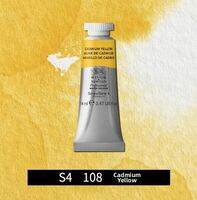
Artist Grade Watercolor Paint
₱1,375.00
Buy on Lazada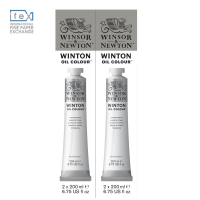
Winsor & Newton Winton Oil Colors 200ml Titanium White Twin Pack
₱2,020.00
Buy on Lazada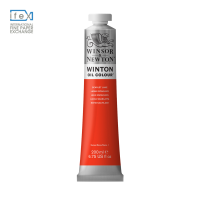
Winsor & Newton Winton Oil Colors 200ml
₱1,370.00
Buy on Lazada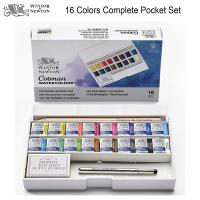
Winsor & Newton Cotman 16 colors Watercolor Paint Complete Pocket Set Water Color Pigment
₱2,025.05₱2,600.00
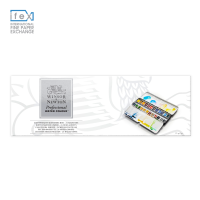
Winsor & Newton Artists Watercolor L/W Metal Box 24HP
₱9,685.00
Buy on Lazada
Winsor&Newton 12 colors Cotman Water Colors Paints Field Pocket Set WaterColor Pigment
₱1,895.05₱2,150.00

WINSOR & NEWTON Artists Odorless THINNER 500ml bottle
₱558.00₱620.00
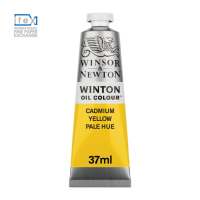
Winsor & Newton Winton Oil Colors 37ml
₱430.00
Buy on LazadaAbout Winsor & Newton
Winsor & Newton is a British art-materials brand established in London in 1832, widely recognised for its professional-grade paints, brushes, drawing media, papers, and other supplies for fine artists. The company was founded through the partnership of William Winsor, a chemist, and Henry Newton, an artist. Today, Winsor & Newton operates under Colart, a global group of art-material brands owned by the Swedish family investment firm Lindéngruppen.1
Overview
| Attribute | Details |
|---|---|
| Brand | Winsor & Newton |
| Founded | 1832 |
| Founded in | London, England |
| Founders | William Winsor and Henry Newton |
| Industry | Fine-art materials |
| Parent company | Colart |
| Ultimate ownership | Lindéngruppen |
| Best known for | Watercolour, oil colour, brushes, drawing materials |
| Main users | Professional artists, students, illustrators, hobbyists |
| Heritage | Nearly two centuries |
| Current positioning | Premium/professional art-materials brand |
Colart identifies Winsor & Newton as one of its principal brands, noting that it maintains one of the most extensive portfolios of art materials available globally.2
History
Founding
Winsor & Newton commenced operations in 1832 at 38 Rathbone Place, London. William Winsor contributed scientific and chemical expertise, while Henry Newton provided practical experience as a practising artist. Their shared objective was to produce superior and more consistent materials for the artistic community.1 This synthesis of scientific rigour and artistic sensibility became fundamental to the company’s identity. Rather than merely manufacturing traditional colours, Winsor & Newton developed increasingly sophisticated methods regarding pigment selection, formulation, permanence, consistency, and packaging.
The firm subsequently emerged as one of Britain’s most significant artists’ colourmen, a traditional term for specialist suppliers of artists’ materials. The National Portrait Gallery notes that Winsor & Newton eventually became the most substantial firm among British art suppliers.2
Early innovation
A key historical advantage of Winsor & Newton was its integration of traditional artistic practice with chemical and manufacturing technology. Among its most significant developments was the commercialisation of moist watercolour. Historical records indicate that Henry Newton and William Winsor introduced the first moist watercolours in 1841, an innovation that greatly enhanced the portability and convenience of the medium for artists.3
This foundation helped establish the brand’s reputation across several categories, including watercolour, oil colour, artists’ brushes, drawing materials, pigments, mediums, varnishes, papers, and painting accessories. Consequently, Winsor & Newton is frequently associated with the development of the modern professional art-materials market.
Royal Warrant and Series 7 brushes
In 1841, Queen Victoria commissioned Winsor & Newton to produce what would become the Series 7 brush. Colart identifies this commission as the company’s first Royal Warrant, and the Series 7 remains one of the brand’s most iconic products.3 These Kolinsky sable watercolour brushes are particularly renowned for their capacity to hold fluid while maintaining a precise point. This royal endorsement significantly reinforced the brand’s standing as a supplier of high-quality professional materials.
Relationship with artists
The history of Winsor & Newton is intrinsically linked to prominent figures in the art world. According to Colart, notable artists who have used the brand include J. M. W. Turner, Pablo Picasso, and David Hockney.11 This relationship extended beyond mere promotion; from the earliest years, artists provided essential feedback on colour, handling, permanence, and brush performance. This collaborative approach continues today, with Winsor & Newton describing its modern development process as a partnership between artists and scientists.10
Expansion and industrialisation
Throughout the nineteenth and twentieth centuries, Winsor & Newton expanded significantly. Manufacturing operations grew to include facilities at Wealdstone, Harrow, while the company retained its historic London connections. By developing a broad catalogue rather than focusing on a single medium, the firm became a major supplier to professional painters, illustrators, designers, and educational institutions. The National Portrait Gallery records that the company operated manufacturing facilities for colours and brushes and later established a research laboratory staffed by chemists,2 marking its evolution from a Victorian colourmaker into a technologically advanced manufacturer.
Corporate ownership
Winsor & Newton is no longer an independent family-owned entity and has undergone several significant ownership changes.
Reckitt & Colman
In 1976, Winsor & Newton was acquired by Reckitt & Colman,4 integrating the brand into a larger corporate group and altering its relationship with other British art brands.
Colart and Lindéngruppen
In 1990, the brand was acquired by the Swedish-based group that became Colart.4 Colart subsequently assembled a portfolio of major art-material brands, including Winsor & Newton, Liquitex, Lefranc Bourgeois, Conté à Paris, Snazaroo, and Reeves.5 Today, Colart is part of Lindéngruppen, a Swedish family-owned business group, which serves as the ultimate parent company.6 The current corporate structure places Winsor & Newton under Colart, which in turn is owned by Lindéngruppen.
Manufacturing transformation
While Winsor & Newton historically maintained substantial manufacturing operations in Britain, production has since been consolidated within Colart’s international network. According to the National Portrait Gallery, production of Winsor & Newton materials was transferred to the Lefranc Bourgeois facility in Le Mans, France, in 2010, leading to the closure of the historic Wealdstone factory in 2011.7 Although founded in Britain, the brand now operates as an international business within a global manufacturing and distribution infrastructure.
Product range
Winsor & Newton offers a comprehensive range of fine-art materials spanning painting, drawing, graphics, and accessories.8
Watercolour
Watercolour is the medium most closely associated with the brand. Key ranges include Professional Water Colour, which emphasises pigment quality, transparency, and permanence, and Cotman Water Colour, positioned as an accessible option for students and those seeking a lower-cost entry point. The portfolio also encompasses watercolour mediums, accessories, and specialised brushes.
Oil colour
As a major oil paint manufacturer, Winsor & Newton offers Artists’ Oil Colour as its premium professional line and Winton Oil Colour as a more economical alternative. The range is supported by various oil mediums, varnishes, solvents, and painting accessories.
Acrylic and gouache
The company produces acrylic colours and mediums designed for rapid drying, versatility, and strong colour, although Liquitex serves as Colart’s specialist acrylic brand. Additionally, Winsor & Newton manufactures both professional and student-grade gouache, an opaque water-based paint widely used by illustrators, designers, botanical artists, and graphic artists.
Drawing, illustration, and brushes
Beyond traditional painting, the portfolio includes drawing pencils, fineliners, graphic markers, inks, and technical drawing materials.9 Brushes remain a historically vital category, led by the Series 7 watercolour brush,14 alongside ranges for oil, acrylic, gouache, illustration, and general studio use.
Paper and surfaces
The brand also supplies watercolour paper, canvas-related products, and various painting and drawing surfaces, functioning as a complete fine-art-materials supplier rather than solely a paint manufacturer.
Professional and student tiers
Winsor & Newton deliberately segments its offerings into professional and student ranges to serve diverse user needs without compromising its premium identity.
| Professional-oriented | Student/access-oriented |
|---|---|
| Artists’ Oil Colour | Winton Oil Colour |
| Professional Water Colour | Cotman Water Colour |
| Series 7 brushes | Cotman brushes |
| Higher pigment concentration | More economical formulations |
This tiered approach allows the brand to accommodate varying budgets and experience levels while maintaining its status as a professional standard.11 Colart explicitly describes the brand as serving a broad spectrum of artists, from professionals to hobbyists.12
Brand philosophy and reputation
The core philosophy of Winsor & Newton is defined by artistic tradition supported by scientific development, a principle derived directly from its founding partnership between a chemist and an artist.1 Modern product development continues this legacy through teams comprising both artists and scientific specialists.10
The brand occupies a distinctive position as a heritage professional manufacturer, with a reputation built on longevity dating back to 1832, sustained professional use, deep expertise in pigment formulation, and a breadth of coverage across the artist’s studio. Historical associations with figures such as Turner, Picasso, Hockney, and Queen Victoria further reinforce its identity.11
Sustainability and global presence
Colart has integrated sustainability into its corporate strategy, focusing on responsible sourcing, energy and water reduction, waste minimisation, and packaging improvements. As a Certified B Corporation, the group emphasises environmental and social impact alongside commercial objectives.12
Although British in origin, Winsor & Newton is now a truly international brand. Colart states that its products are available in over 130 countries, with Winsor & Newton specifically sold in more than 100 markets,13 making it familiar to artists across Europe, North America, Asia, and beyond.
Major timeline
| Year | Event |
|---|---|
| 1832 | William Winsor and Henry Newton establish Winsor & Newton in London. |
| 1841 | Queen Victoria commissions the Series 7 brush; the company receives its first Royal Warrant. |
| 19th century | The company expands its colour, brush, and artists’ materials business. |
| 20th century | Winsor & Newton becomes one of Britain’s leading artists’ suppliers. |
| 1976 | Acquired by Reckitt & Colman. |
| 1990 | Acquired by the Swedish-based group that became Colart. |
| 2010 | Production moves from the UK to Le Mans, France. |
| 2011 | Historic Wealdstone factory closes. |
| 2010s–2020s | International product portfolio continues to expand. |
| 2023 | Emphasis placed on B Corp certification and sustainability. |
| 2026 | Remains one of Colart’s principal global art-material brands. |
Historical dates are supported by Colart, Winsor & Newton archival material, and research from the National Portrait Gallery.15
Corporate identity
Contemporary Winsor & Newton is best understood as a heritage brand managed within a global corporate structure rather than a standalone British manufacturer. Its identity combines British origins and professional fine-art materials with international reach and management under Colart and Lindéngruppen. It sits alongside specialist creative brands such as Liquitex, Lefranc Bourgeois, Conté à Paris, Snazaroo, and Reeves within the Colart portfolio.16
Summary
Winsor & Newton is a British-founded fine-art materials brand established in London in 1832 by chemist William Winsor and artist Henry Newton. Starting as an artists’ colour supplier, it evolved into one of the world’s most influential manufacturers of professional paints, watercolours, brushes, drawing materials, mediums, and papers. Its history encompasses collaborations with artists such as J. M. W. Turner, the creation of the Series 7 brush for Queen Victoria, and pivotal developments in watercolour technology. Following acquisition by Reckitt & Colman, the brand joined Colart in 1990. Today, Winsor & Newton remains a globally recognised professional art-materials brand under Colart and Lindéngruppen, combining nearly two centuries of artistic heritage with modern colour science and sustainability initiatives.17
References
- Winsor & Newton | Colart
- About us – Winsor & Newton NA
- Perfecting the Fine Art
- New Winsor & Newton website | Colart
- Terms & Conditions – Winsor & Newton NA
- Winsor & Newton – 柯雅中国
- 品牌 – 柯雅中国
- WINSOR & NEWTON LTD persons with significant control – Find and update company information – GOV.UK
- WINSOR & NEWTON LTD filing history – Find and update company information – GOV.UK
- WINSOR & NEWTON LTD overview – Find and update company information – GOV.UK
- About us – Winsor & Newton NA
- Winsor & Newton – Since 1832 – Winsor & Newton NA
- Winsor & Newton – Since 1832 – Winsor & Newton NA
- Watercolour – Winsor & Newton NA
- Five Winsor & Newton watercolour innovations throughout history – Winsor & Newton EU
- Winsor & Newton – Since 1832 – Winsor & Newton NA
- Winsor & Newton – Since 1832 – Winsor & Newton UK